Positive Crankcase Ventilation: Description and Operation
Crankcase Ventilation Valve Flow:
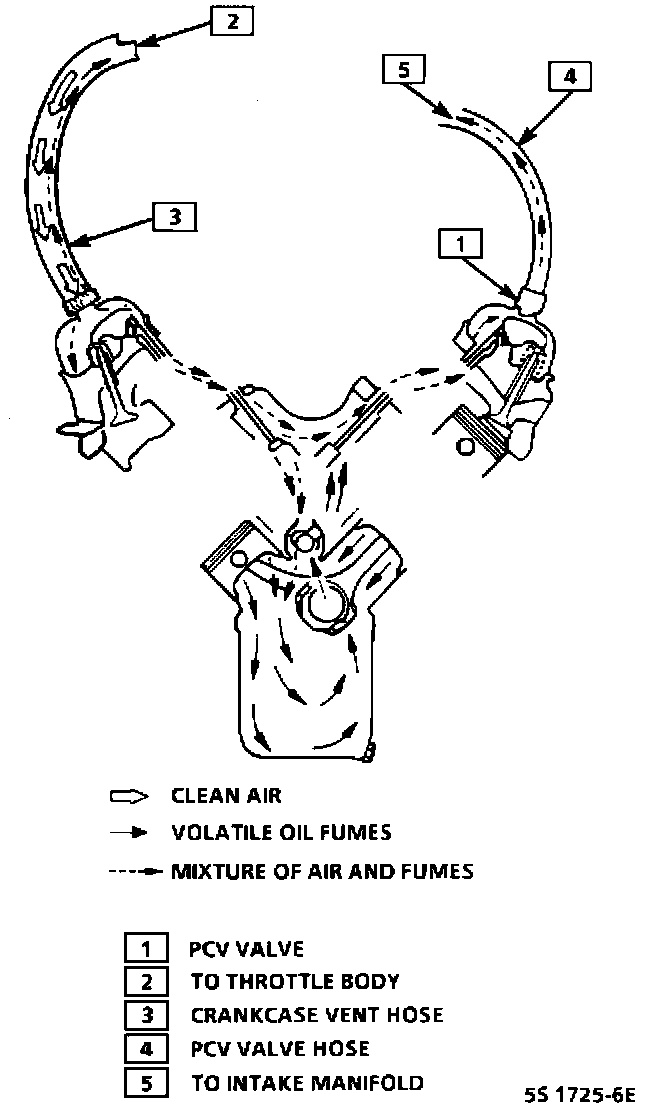
Positive Crankshaft Ventilation (PCV) System:
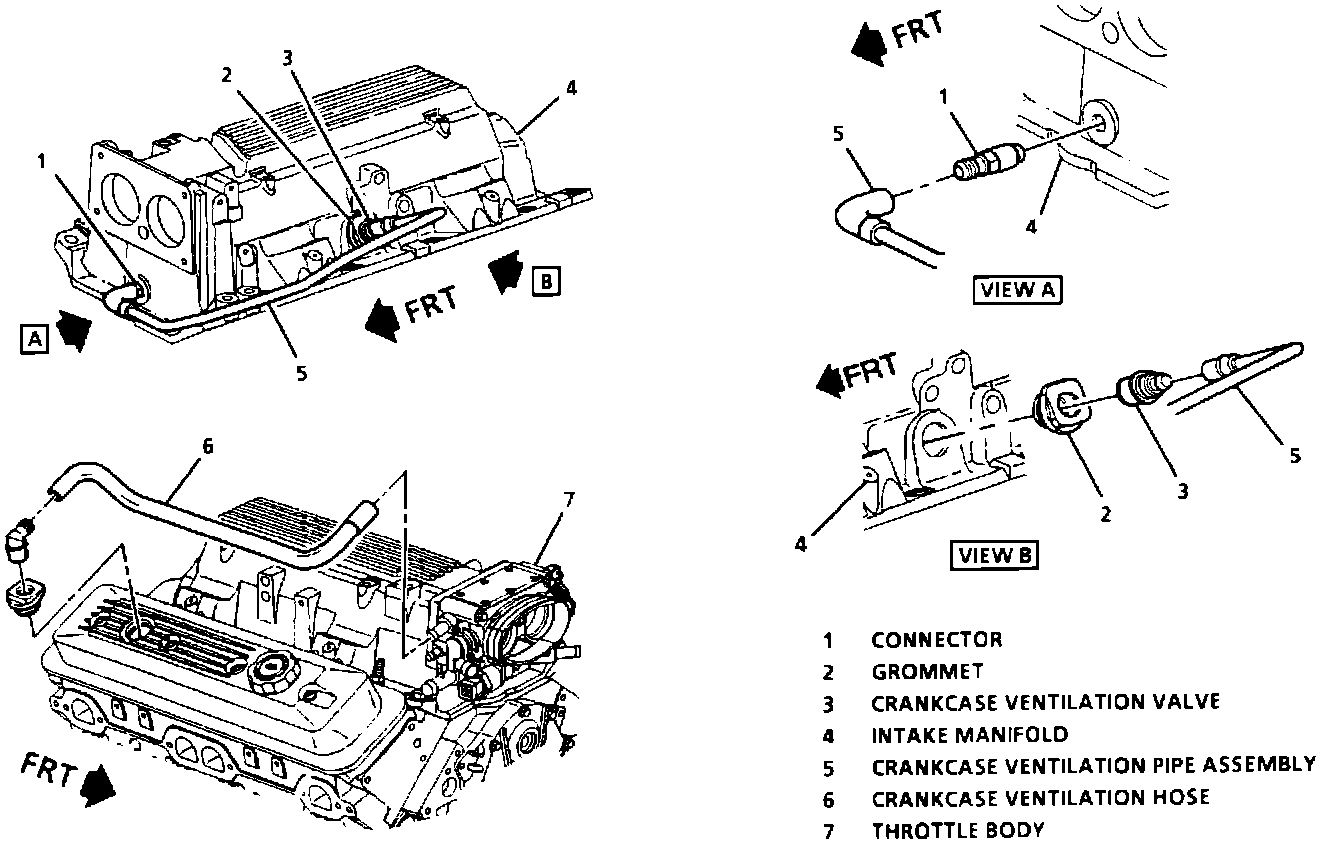
PURPOSE
The PCV system prevents blow-by gases from escaping to atmosphere by routing them through a vacuum controlled ventilation valve, into the intake manifold. The blow-by gases combine with the air/fuel mixture and are burned in the combustion chamber. When the engine is running, fresh air is drawn into the crankcase through a tube or hose connected to the air cleaner housing.
OPERATION
The PCV valve, consists of a needle valve, spring and housing. When the engine is off, the spring holds the needle valve closed to stop vapors from entering the intake manifold. When the engine is running, manifold vacuum lifts the valve off its seat and allows crankcase vapors to enter the intake manifold.
To maintain idle quality, the PCV valve restricts the flow when the intake manifold vacuum is high. In case of an engine backfire, in the intake manifold, the valve closes. This stops the backflow of gases and prevents the ignition of fuel vapor in the crankcase.
During certain engine conditions, more blow-by gases are produced than the PCV valve can handle. In this case, the excess gases are returned through the air intake tube to the air cleaner or intake manifold, where they are burned in the combustion chamber.