Solenoid
Testing Solenoid Windings:
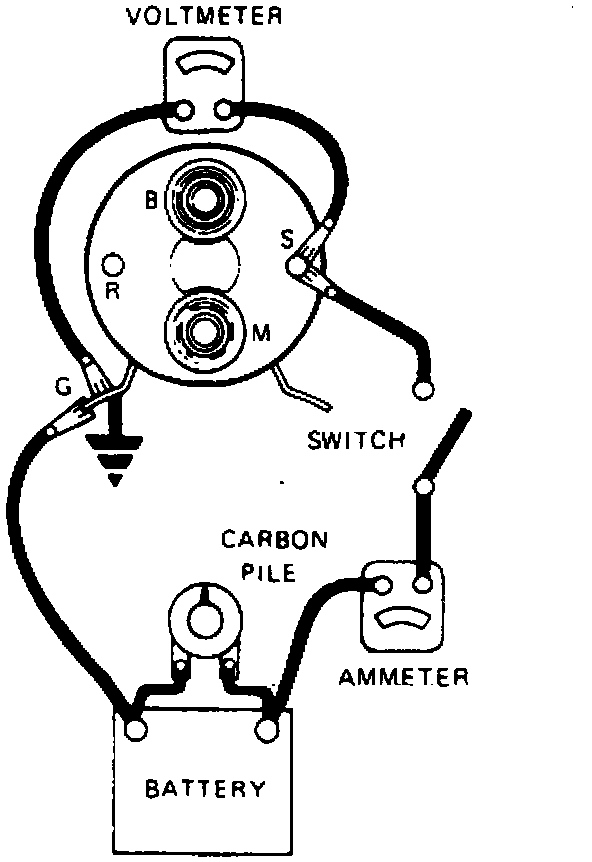
CAUTION: If checking solenoid while still on the starting motor, keep fingers, tools, and other objects away from opening in Drive End (DE) housing during checks. The strong shifting action of the solenoid could cause personal injury or damage as the drive pinion moves into cranking position.
NOTE: Do not allow solenoid pull-in current to flow for more than 15 seconds at a time during the following check. The windings can be damaged due to over-heating. Also, current draw readings will decrease as windings heat up.
1. Solenoid may be checked either on or off of the starter motor. To check while still assembled to motor, remove starter motor solenoid to field lead nut and insulate field lead from solenoid motor terminal.
2. With switch "open" and carbon pile load turned "OFF", make electrical connections.
A. Turn switch on and adjust carbon pile load so that voltmeter reads 10 volts. Read hold-in coil current draw on ammeter, then turn off carbon pile and open switch. If the reading is not 10-20 amperes, replace the starter solenoid.
B. Add ground lead to solenoid field terminal. Turn switch back on and adjust carbon pile load so that the voltmeter reads 10 volts. Read combined pull-in and hold-in current draw on ammeter, then turn off carbon pile and open switch. Reading should be 60-85 amperes. If not, replace the starter motor solenoid.