Converter Housing Fluid Leak
CONVERTER HOUSING FLUID LEAK
When diagnosing converter housing fluid leaks, two items must be established before repair.
1. Verify that a leak condition actually exists.
2. Determined the true source of the leak.
Some suspected converter housing fluid leaks may not be leaks at all. They may only be the result of residual fluid in the converter housing, or excess fluid spilled during factory fill or fill after repair. Converter housing leaks have several potential sources. Through careful observation, a leak source can be identified before removing the transmission for repair. Torque converter seal leaks tend to move along the drive hub and onto the rear of the converter. Pump cover seal leaks tend to run down the cover and the inside surface of the bellhousing.
Some leaks, or suspected leaks, may be particularly difficult to locate. If necessary, a Mopar(R) approved dye should be used to locate and confirm a leak.
TORQUE CONVERTER LEAK POINTS

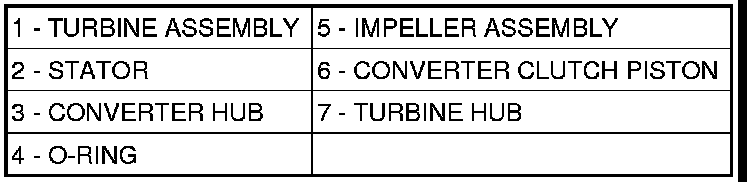
Possible sources of converter leaks are:
1. Leaks at the weld joint around the outside diameter weld.
2. Leaks at the converter hub weld.
In most cases, a torque converter which is wet from transmission fluid indicates a leak at one of these areas.