Fuel Injector Coil Test
Fuel Injector Coil Test:
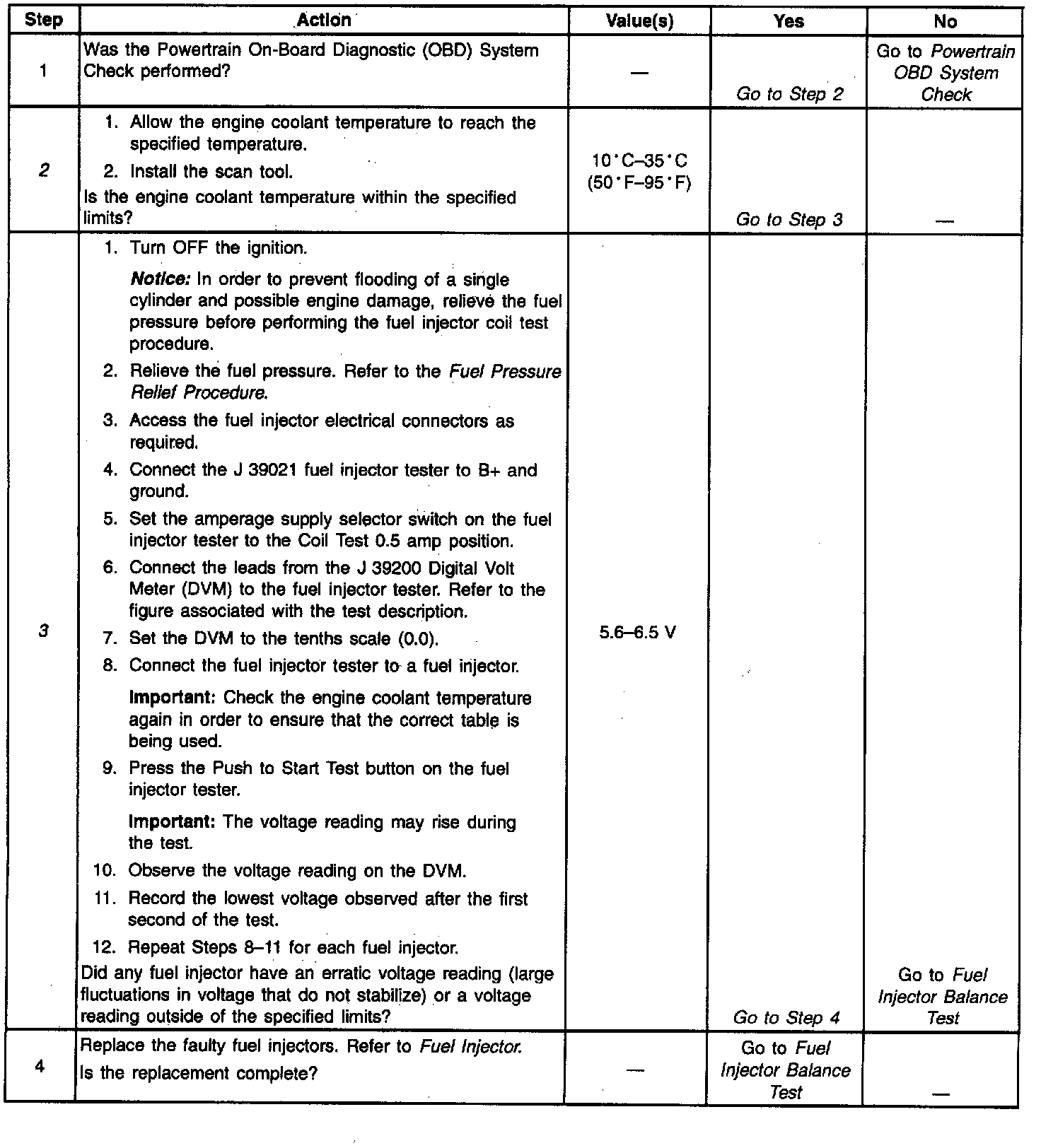
Fuel Injector Coil Test:
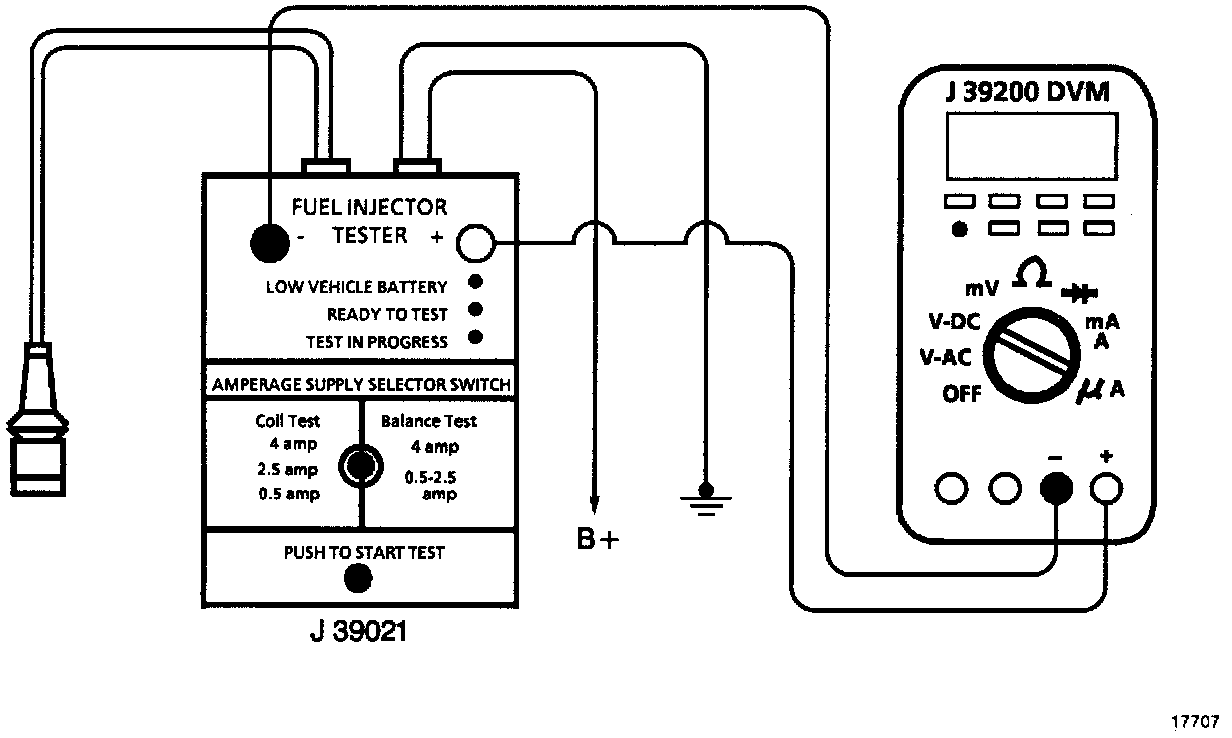
Test Description
The numbers below refer to the step numbers in the diagnostic table.
WARNING: Relieve the fuel system pressure before servicing fuel system components In order to reduce the risk of fire and personal injury. After relieving the system pressure, a small amount of fuel may be released when servicing the fuel lines or connections. In order to reduce the chance of personal injury, cover the regulator and the fuel line fittings with a shop towel before disconnecting. This will catch any fuel that may leak out. Place the towel In an approved container when the disconnection Is complete.
2. The engine coolant temperature affects the ability of the fuel injector tester to detect a faulty fuel injector. If the engine coolant temperature is NOT between 1O°C and 35°C (50°F and 95°F), allow the engine to warm or cool as needed.
3. The first second of the voltage displayed by the Digital Volt Meter (DVM) may be inaccurate due to the initial current surge; therefore, record the lowest voltage displayed by the DVM after the first second of the test. The voltage displayed by the DVM should be within the specified range (refer to the example). The voltage displayed by the DVM may increase throughout the test as the fuel injector windings warm and the resistance of the fuel injector windings changes. An erratic voltage reading (large fluctuations in voltage that do not stabilize) indicates an intermittent connection within the fuel injector.