Removal and Replacement
PISTON & CONNECTING RODREMOVAL
NOTE: Refer to the connecting rod Description before beginning repair.
1) Disconnect negative cable from battery.
2) Remove the cylinder heads.
3) Remove the oil pan.
4) Remove the top ridge of cylinder bores with a reliable ridge reamer, if necessary, before removing pistons from cylinder block. Be sure to keep tops of pistons covered during this operation. Pistons and connecting rods must be removed from top of cylinder block. When removing piston and connecting rod assemblies from the engine, rotate crankshaft so that each connecting rod is centered in cylinder bore.
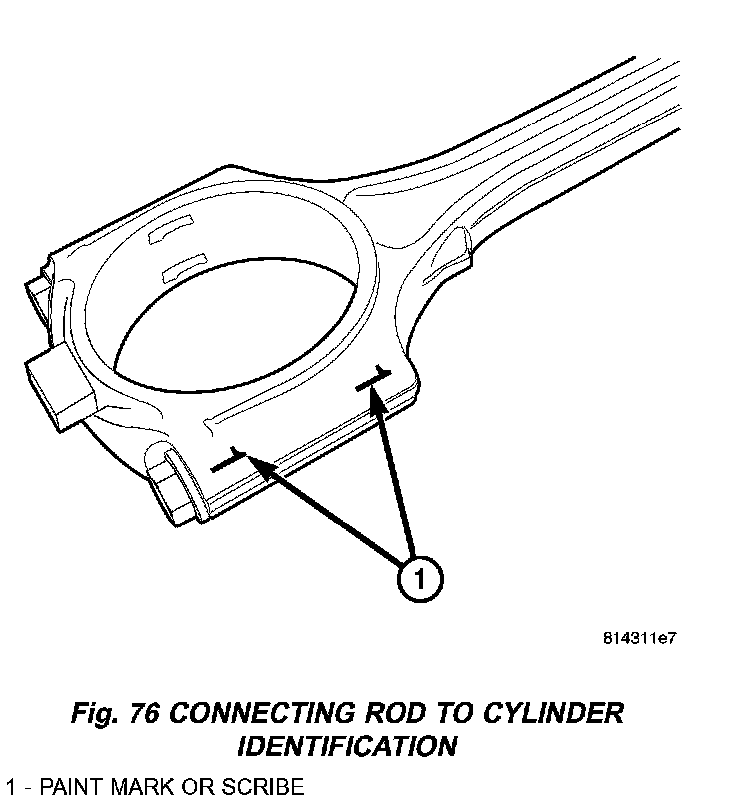
5) Inspect connecting rods and connecting rod caps for cylinder identification. Identify them with a paint mark or scribe, if necessary (Fig. 76).
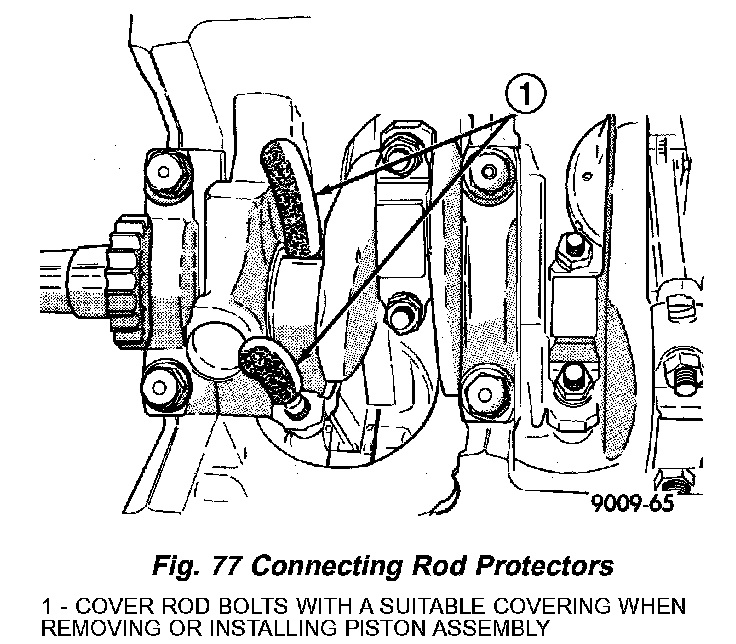
6) Remove connecting rod cap. Install connecting rod bolt protectors (Fig. 77). on connecting rod bolts or use special tool #8189 to guide cracked connecting rod.
7) Remove each piston and connecting rod assembly out of the cylinder bore.
NOTE: Be careful not to nick crankshaft journals.
8) After removal, install bearing cap on the mating rod.
INSTALLATION
NOTE: Refer to the connecting rod Description before beginning repair.
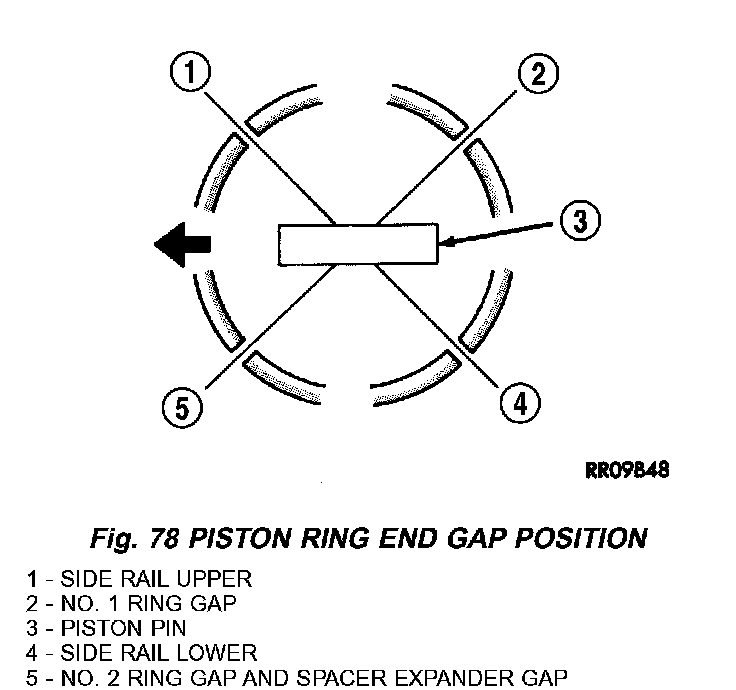
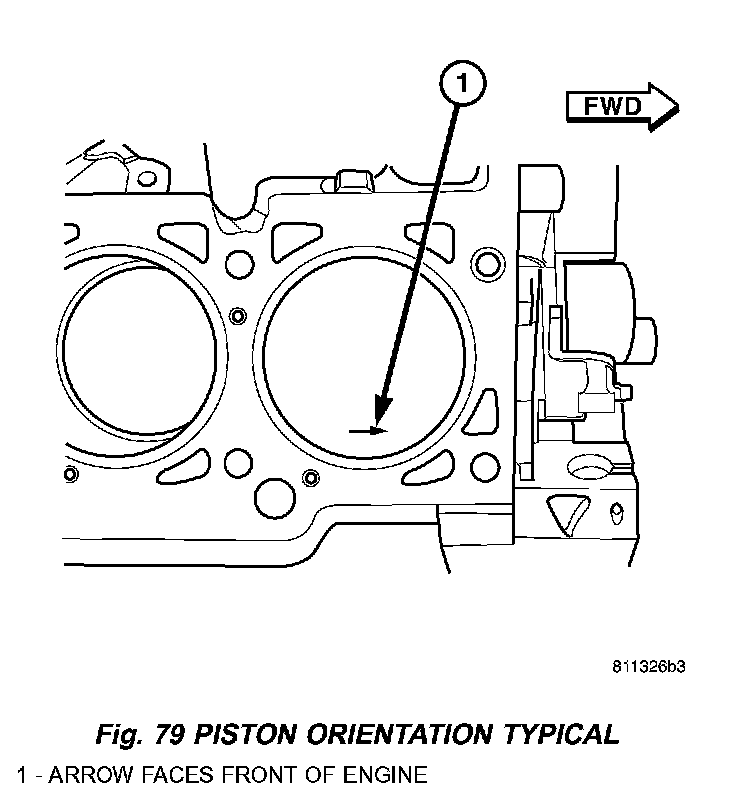
1) Before installing pistons and connecting rod assemblies into the bore, ensure that compression ring gaps are staggered so that neither is in line with oil ring rail gap (Fig. 78)and that the arrow on top of the piston is facing the front of the engine, if equipped (Fig. 79).
2) Before installing the ring compressor, ensure the oil ring expander ends are butted and the rail gaps located as shown in (Fig. 78).
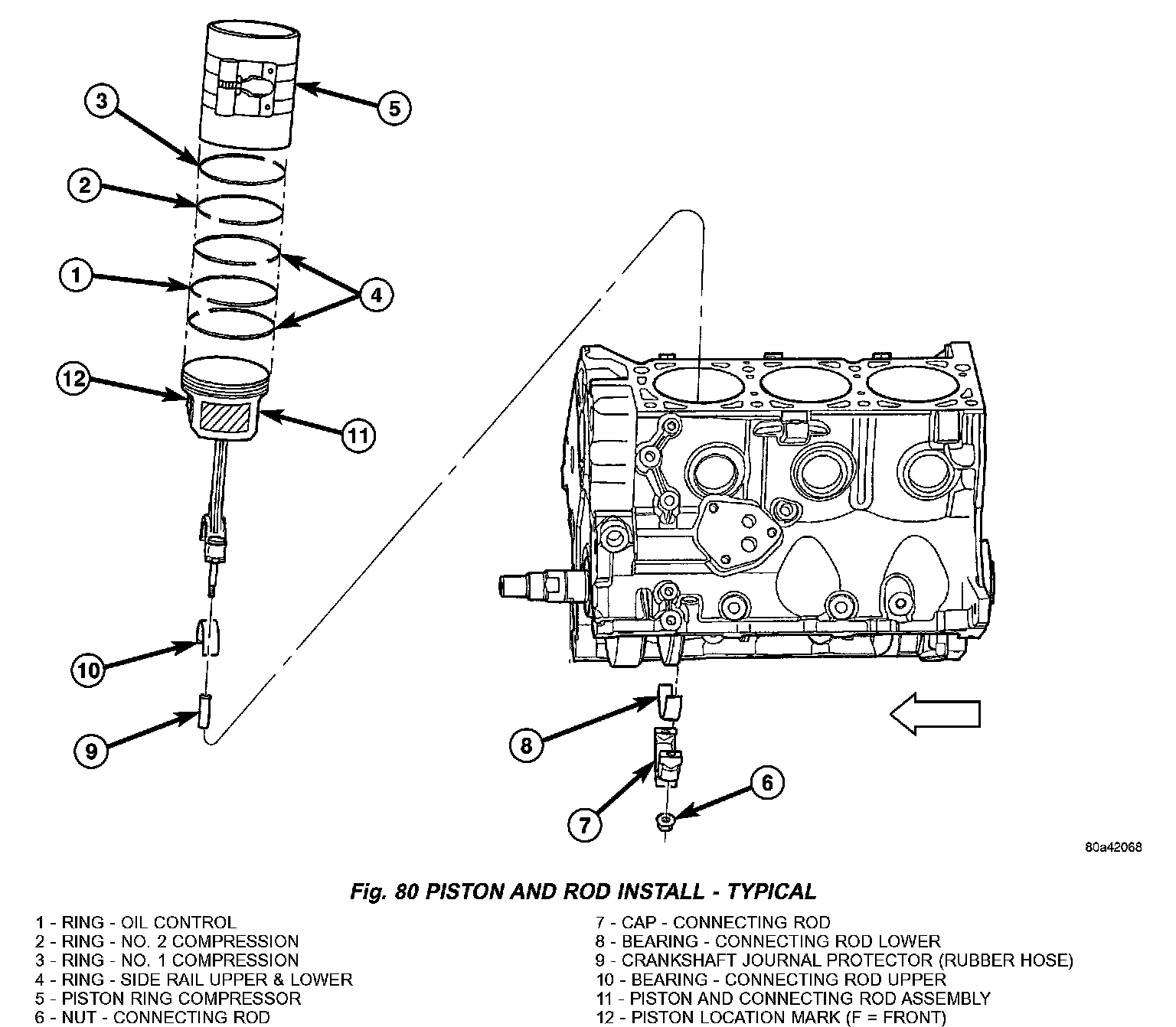
3) Lubricate the piston and rings with clean engine oil. Position a ring compressor over the piston and rings, and tighten the compressor (Fig. 80). Be sure position of rings does not change during this operation.
4) Position upper bearing onto connecting rod. Lubricate bearing with oil.
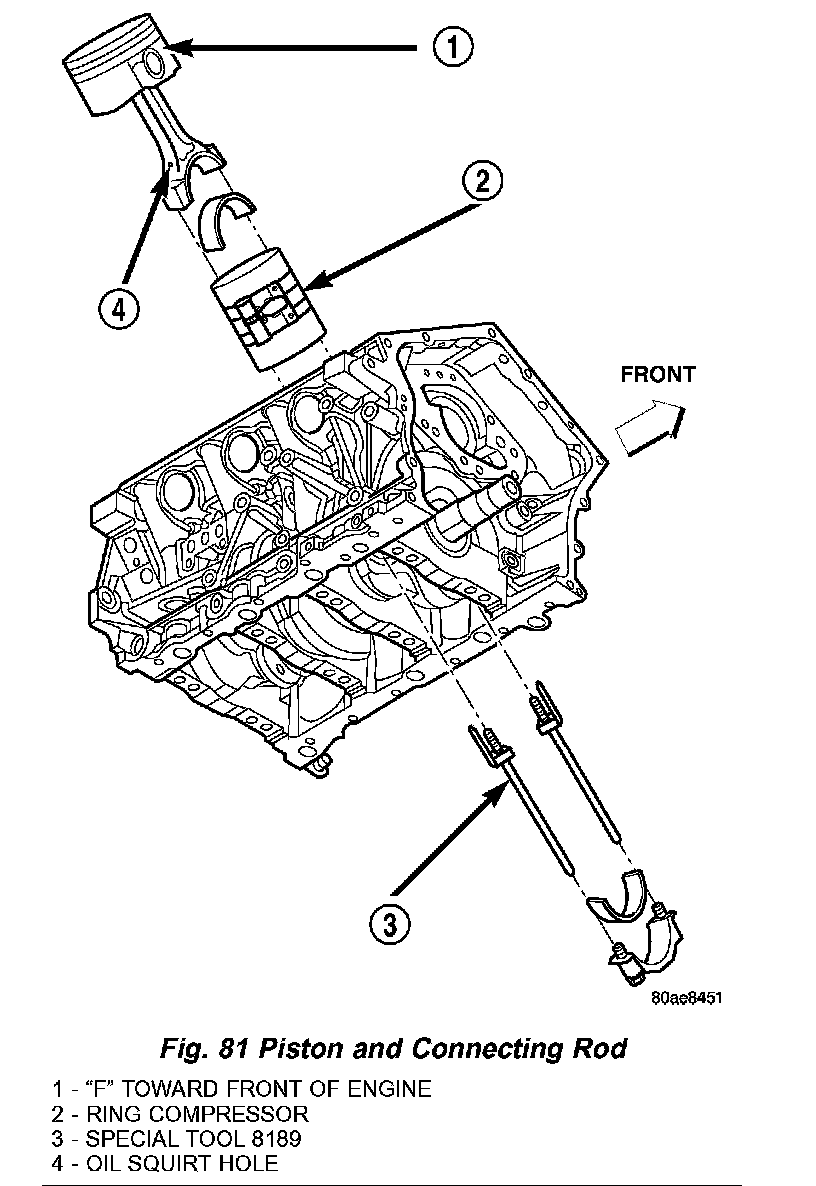
5) Install connecting rod bolt protectors (rubber hose or equivalent) (Fig. 80). on the connecting rod bolts, or use special tool (Fig. 81) #8189 for cracked cap design
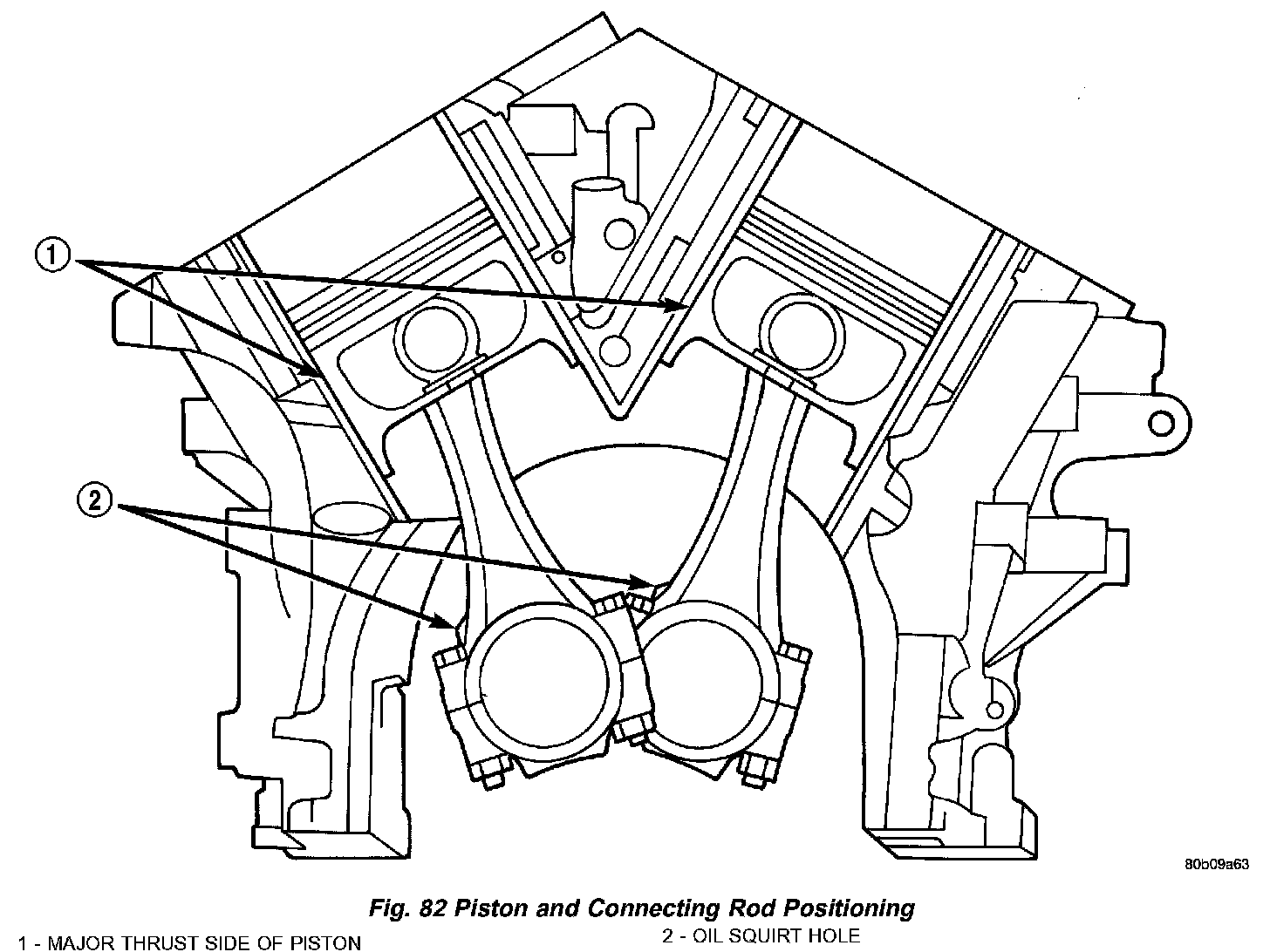
6) The pistons are marked with a "F" located near the piston pin, or an arrow on top of the piston. Install piston with this mark positioned to front of engine on both cylinder banks. The connecting rod oil squirt hole faces the major thrust (right) side of the engine block (Fig. 82).
7) Rotate crankshaft until the connecting rod journal is located in the center of the cylinder bore. Insert connecting rod and piston into cylinder bore by tapping down on the piston using a hammer handle. At the same time, guide connecting rod into position on connecting rod journal. (Fig. 80).
8) Install lower bearing shell and the appropriate connecting rod cap (Fig. 80).
9) Install connecting rod cap retaining nuts on cleaned and oiled rod bolts and tighten to 54 Nm (40 ft. lbs.) PLUS 1/4 turn. Install connecting rod bolts and tighten to 7 Nm (5 ft. lbs.) initially Tighten the bolts an additional 21 Nm (15 ft. lbs.) and then turn each bolt 90° to final clamping load.
10) Repeat procedure for each piston and connecting rod installation.
11) Install the cylinder heads.
12) Install the oil pan.
13) Fill engine crankcase with proper oil to correct level.
14) Connect negative cable to battery.