Pressure Test
1. Fit the charging and test equipment.
2. Start the engine.
3. Run the engine at 1,000 to 1,200 rpm with the heat control set to cold (blue) zone. Cut off the air supply to the dash vents using the left hand lever. Move the slider levers to air conditioning ON and fan speed to maximum.
A/C Pressure Chart:
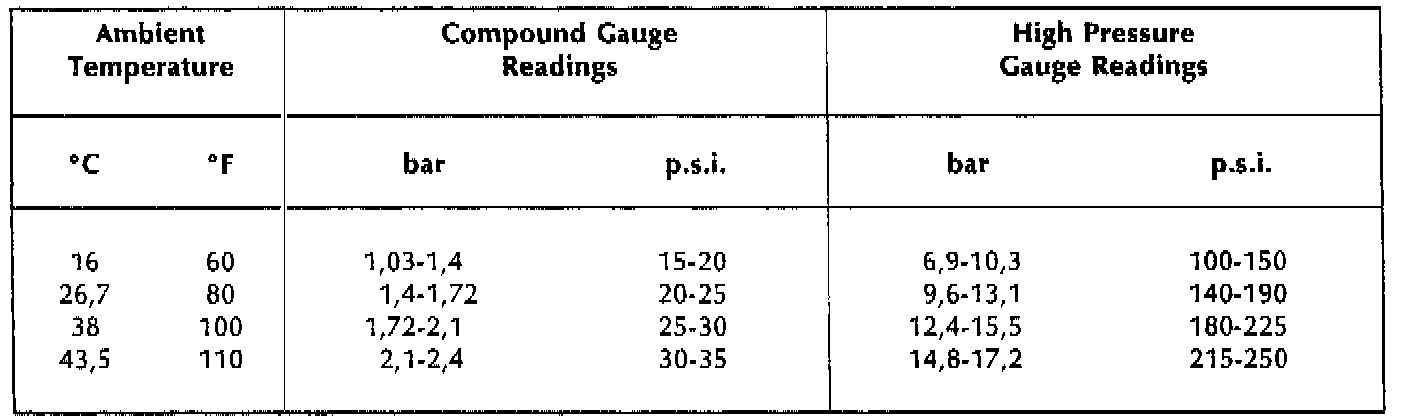
A/C Pressure Chart
4. Note the ambient air temperature in the immediate test area in front of the vehicle and check the high pressure gauge readings (discharge side) against A/C Pressure Chart.
The pressure gauge readings will vary within the range quoted with the rate of flow of air over the condenser, the higher readings resulting from a low air flow. It is recommended that a fan is used for additional air flow over the condenser if the system is to be operated for a long time. Always use a fan if temperatures are over 26.7°C (80°F), so that a consistent analysis can be made of readings
5. If the pressure readings are outside the limits quoted, refer to the fault diagnosis charts. Symptom Related Diagnostic Procedures
6. Stop the engine.
7. Close both service ports (turn fully counter-clockwise) and close all valves on the charging and test equipment. Disconnect the charging lines from the compressor. Refit the dust caps to the compressor valve stems, port connections and charging lines.
8. Close the hood.