Torque Converter Clutch Solenoid Valve Test
Torque Converter Clutch Solenoid Valve Test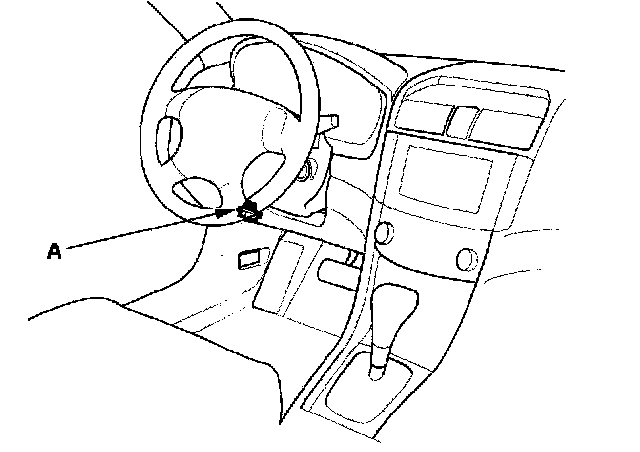
1. Connect the HDS to the DLC (A).
2. Choose Lockup Solenoid Test in Miscellaneous Test Menu on the HDS.
3. Check that the torque converter clutch solenoid valve operates with the HDS. A clicking sound should be heard.
- If a clicking sound heard, the valve is OK.
- If no clicking sound heard, go to step 4.
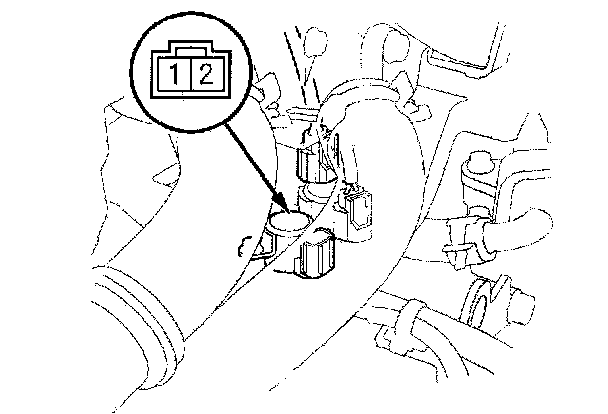
4. Disconnect the torque converter clutch solenoid valve connector, and check the connector for good pin fit, corrosion, dirt, and oil. If the connector is OK, go to step 5. If the connector is not OK, repair the connector and do the test again.
5. Measure the resistance between the torque converter clutch solenoid valve connector terminals.
Standard: 12 - 25 Ohms
6. Replace the torque converter clutch solenoid valve if the resistance is out of standard.
7. If the resistance is within the standard, connect the battery negative terminal to torque converter clutch solenoid valve connector terminal No. 2, and connect the battery positive terminal to the terminal No. 1.
- If a clicking sound is heard, the valve is OK.
- If no clicking sound is heard, replace the torque converter clutch solenoid valve.
8. If a clicking sound is heard, the solenoid is OK. Check the YEL wire from the PCM to the torque converter clutch solenoid valve for a short or open. If the wire is OK, substitute a known-good PCM and retest.