Front
Front Brake Caliper Replacement
Tools Required
- J 28662 Brake Pedal Effort Gauge
Removal Procedure
Caution: Avoid taking the following actions when you service wheel brake parts:
- Do not grind brake linings.
- Do not sand brake linings.
- Do not clean wheel brake parts with a dry brush or with compressed air.
Some models or aftermarket brake parts may contain asbestos fibers which can become airborne in dust. Breathing dust with asbestos fibers may cause serious bodily harm. Use a water-dampened cloth in order to remove any dust on brake parts. Equipment is available commercially in order to perform this washing function. These wet methods prevent fibers from becoming airborne.
Caution: Brake fluid may irritate eyes and skin. In case of contact, take the following actions:
- Eye contact--rinse thoroughly with water.
- Skin contact--wash with soap and water.
- If ingested--consult a physician immediately.
1. Inspect the fluid level in the brake master cylinder reservoir.
2. If the brake fluid level is midway between the maximum-full point and the minimum allowable level, then no brake fluid needs to be removed from the reservoir before proceeding. If the brake fluid level is higher than midway between the maximum-full point and the minimum allowable level, then remove brake fluid to the midway point before proceeding.
3. Raise and support the vehicle.
4. Remove the tire and wheel.
5. Install two wheel lug nuts to retain the rotor to the hub.
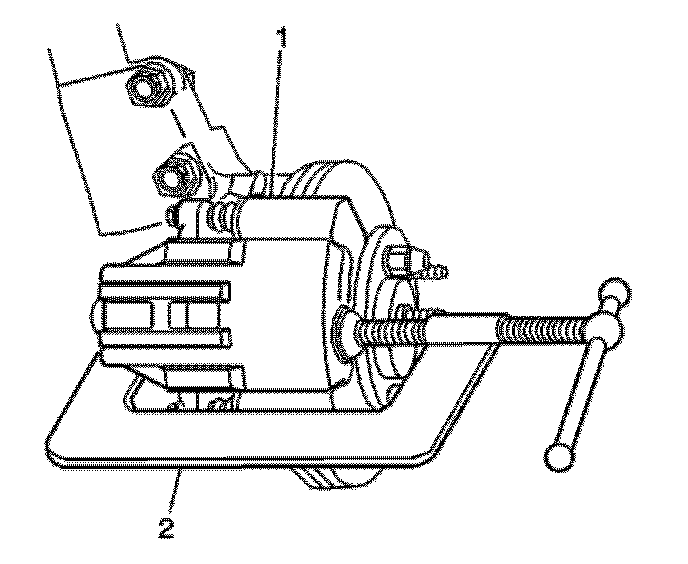
6. Install a large C-clamp (2) over the top of the brake caliper and against the back of the outboard brake pad.
7. Tighten the C-clamp until the caliper piston is pushed into the caliper bore enough to slide the caliper off the rotor.
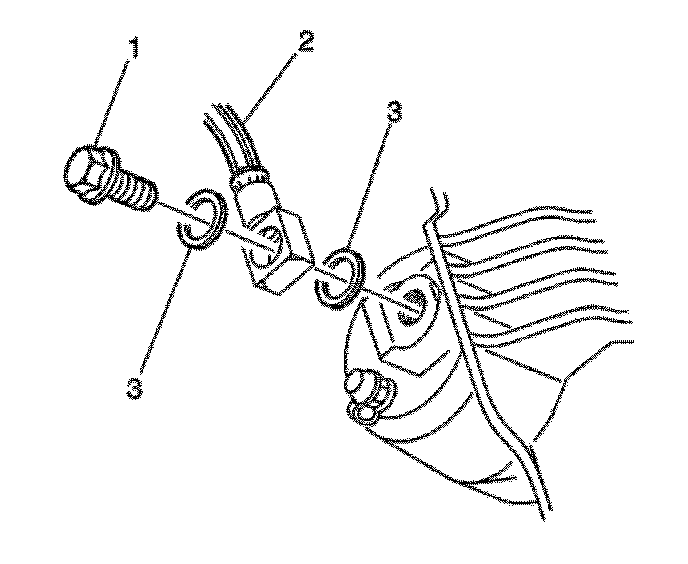
8. Remove the brake hose bolt (1).
9. Remove the brake hose (2) from the brake caliper.
10. Remove and discard the two copper brake hose gaskets (3). These gaskets may be stuck to the brake caliper and/or the brake hose end.
11. Plug the openings in the brake caliper and the brake hose in order to prevent brake fluid loss and contamination.
12. Clean off any dirt or corrosion on the brake caliper near the brake hose fitting.
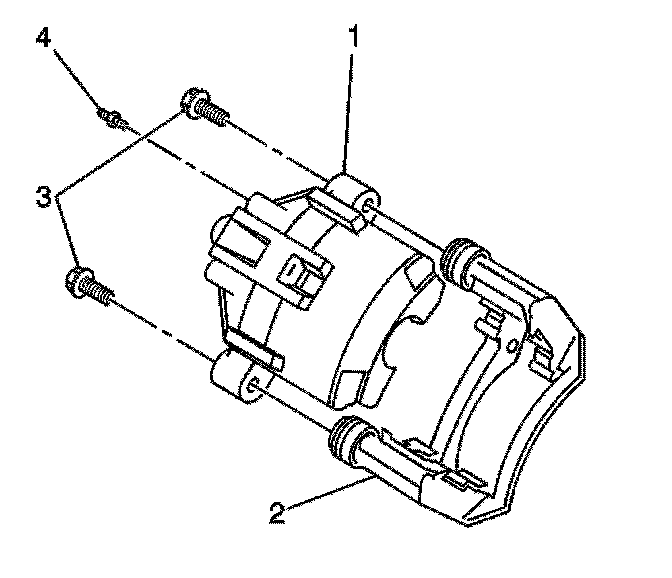
13. Remove the brake caliper bolts (3).
14. Remove the brake caliper from the brake caliper bracket.
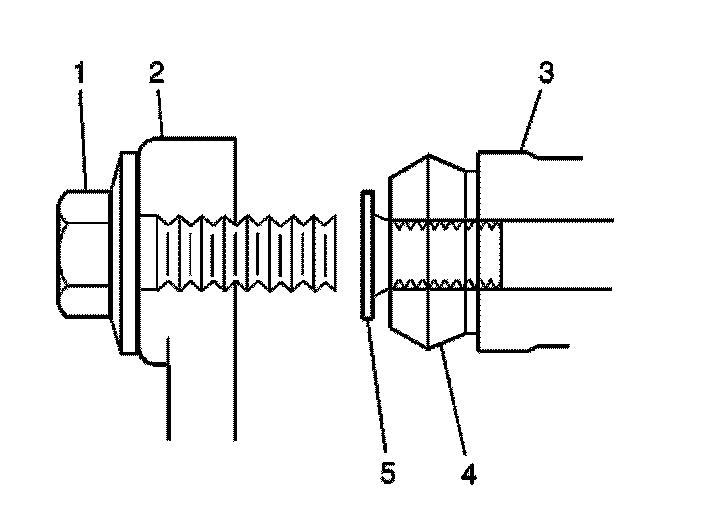
15. Inspect the brake caliper pin boots (4) for the following components:
- Cuts
- Tears
- Deterioration
- Replace the bolt boots if damage exists.
16. If the caliper pin boots are damaged, inspect the caliper pins for corrosion or damage. If corrosion is found on the brake caliper pin shaft, replace the brake caliper pin and the brake caliper pin boot. Do not attempt to polish away the corrosion.
Installation Procedure
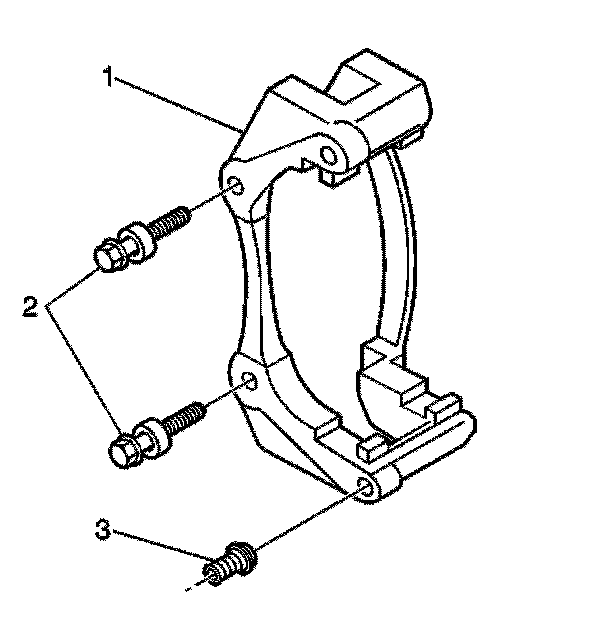
1. Ensure that the caliper bolt boots (3) are properly installed.
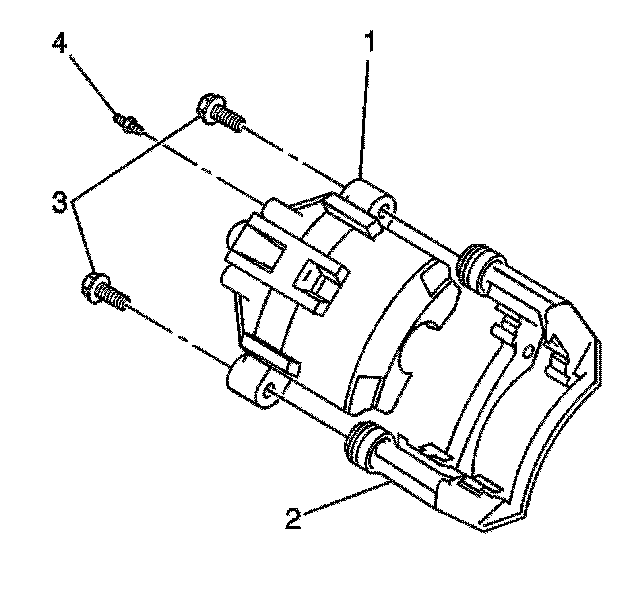
2. Install the caliper (1) to the caliper bracket (2).
Notice: Use the correct fastener in the correct location. Replacement fasteners must be the correct part number for that application. Fasteners requiring replacement or fasteners requiring the use of thread locking compound or sealant are identified in the service procedure. Do not use paints, lubricants, or corrosion inhibitors on fasteners or fastener joint surfaces unless specified. These coatings affect fastener torque and joint clamping force and may damage the fastener. Use the correct tightening sequence and specifications when installing fasteners in order to avoid damage to parts and systems.
3. Install the brake caliper bolts.
Tighten
Tighten the bolts to 54 Nm (40 lb ft).
4. Remove the plugs in the brake hose end.
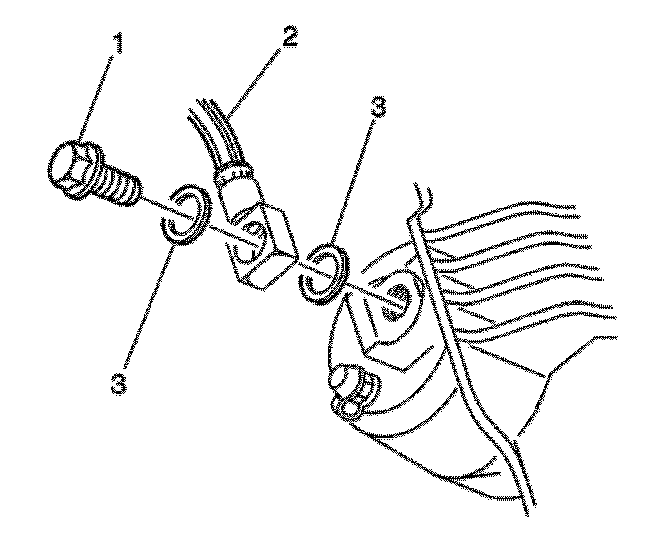
Important: Install NEW copper brake hose gaskets (3).
5. Assemble the brake hose bolt (1) and the NEW copper brake hose gaskets (3) to the brake hose (2).
6. Install the brake hose bolt to the brake caliper.
Tighten
Tighten the bolt to 54 Nm (40 lb ft).
7. Remove the nuts securing the rotor to the hub.
8. Install the tire and wheel.
9. Lower the vehicle.
10. Fill the master cylinder to the proper level. Refer to Master Cylinder Reservoir Filling.
11. Bleed the brake system. Refer to Hydraulic Brake System Bleeding.
12. Using the J 28662 apply approximately 778 Nm (175 lb ft) of force to the brake pedal for 10 seconds.
13. Inspect the brake caliper and hydraulic brake system for brake fluid leaks.