Positive Crankcase Ventilation: Description and Operation
Crankcase Ventilation System Description (LCV)
General Description
A crankcase ventilation system is used to consume crankcase vapors in the combustion process instead of venting them to atmosphere. Fresh air from the intake system is supplied to the crankcase, mixed with blow by gases and then passed through a calibrated orifice into the intake manifold.
Operation
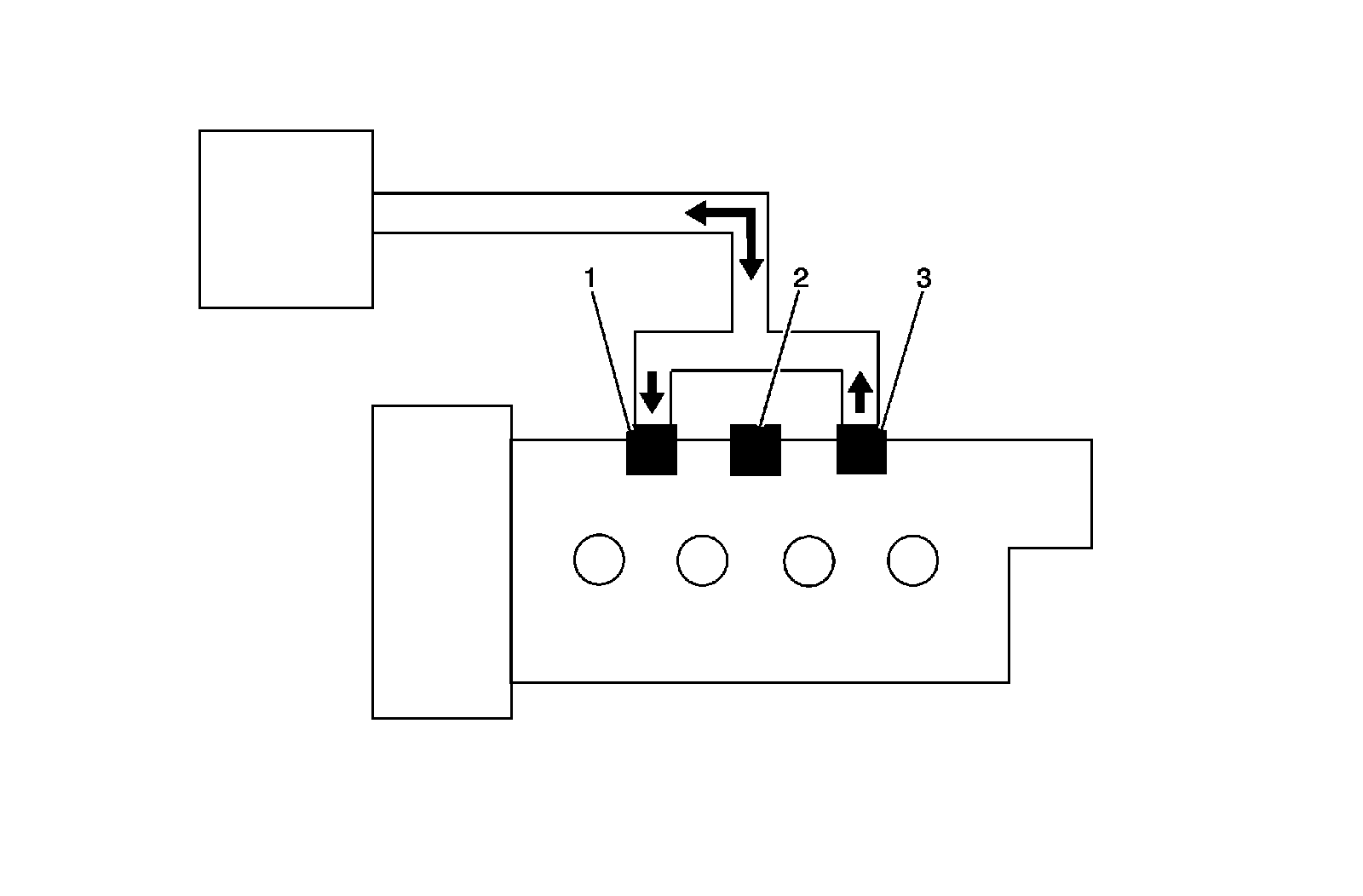
The primary control is through the positive crankcase ventilation (PCV) valve (2) which meters the flow at a rate depending on intake manifold vacuum. The PCV valve is an integral part of the camshaft cover. Fresh air is introduced to the engine through PVC (1) under normal operating conditions. If abnormal operating conditions occur, the system is designed to allow excessive amounts of blow by gases to back flow through the crankcase vent valve (3) into the intake system to be consumed by normal combustion.
Results of Incorrect Operation
A plugged orifice may cause the following conditions:
* Rough idle
* Stalling or slow idle speed
* Oil leaks
* Sludge in engine
A leaking orifice may cause the following conditions:
* Rough idle
* Stalling
* High idle speed