Refrigerant Temperature Sensor: Testing and Inspection
Electronic Temperature Cycling Switch Test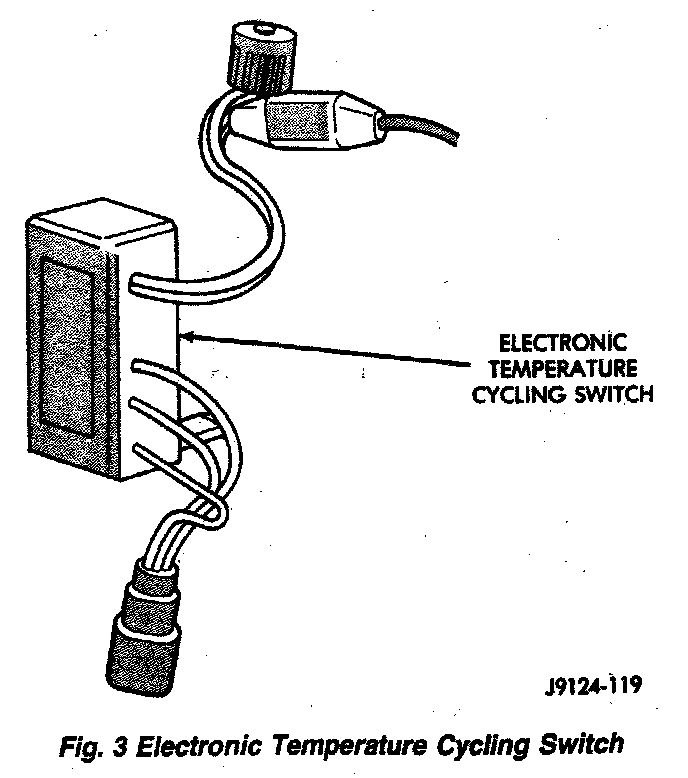
The electronic temperature cycling switch is located on the refrigerant plumbing, suction line near the H-valve. It electrically inputs to the engine controller on gasoline vehicles and in series with the clutch coil on diesel vehicles. The switch turns the compress6r on and off depending on the temperature in the suction line. The switch is sealed, specially calibrated unit and if found defective, must be replaced.
1. Remove the wires (boot connector) from the electronic temperature cycling switch.
2. Check continuity of the switch. Switch contacts are closed at temperatures above 45°F (7°C); If no continuity, replace switch.
3. If contacts are closed, verify switch operation as follows:
a. Connect wires to pressure cycling switch.
b. Set temperature control lever to fill cool position.
c. Set A/C blower motor on low speed and push A/C button.
d. Operate engine at 1,300 RPM for approximately 5 minutes to stabilize the A/C system and verify that refrigerant system is full.
e. If compres8or clutch cycles 3 to 10 times per minute with temperature between 20°C-32°C (68°F- 90°F), the pressure cycling switch is normal. If the compressor clutch fails to engage, check for continuity in the electrical circuit. Ahove 32°C (90°F) the compressor clutch may be continuously engaged (non-cycling) due to the high heat load. This condition is normal.