CVT Road Test
Service Information
CVT Road Test
Test
1. HDS DLC - Connection
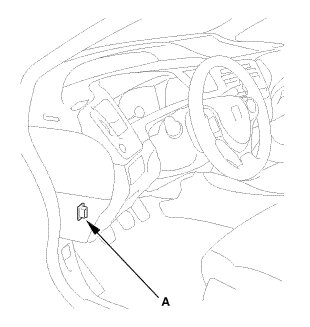
1. Connect the HDS to the data link connector (DLC) (A) located under the driver's side of the dashboard.
2. Turn the ignition switch to ON (II).
3. Make sure the HDS communicates with vehicle. If it does not communicate, go to the DLC circuit troubleshooting.
2. Warm Up The Engine
1. Start the engine, and warm it up to normal operating temperature (the radiator fan comes on twice).
3. CVT Road - Test
1. Apply the parking brake, and block all four wheels.
2. Start the engine, then shift to D while pressing the brake pedal. Press the accelerator pedal, and release it suddenly; the engine should not stall.
3. Repeat step 2 in all shift lever positions.
4. Prepare the HDS and the MVCI to take a HIGH SPEED SNAPSHOT (refer to the HDS user's guide for more details if needed):
5. Find a suitable level road. When you are ready to do the test, press OK with the HDS.
6. Accelerate quickly until APP Sensor A reads 1.21 V. Maintain a steady throttle at 1.21 V until the vehicle reaches a reasonable speed, then slow the vehicle, and come to a stop.
7. Save the snapshot if the entire event was recorded, or increase the recording time setting as necessary, and repeat step 6.
8. Adjust the Parameter setting to 2.30 V. Test-drive the vehicle again. While monitoring the HDS, accelerate quickly until APP Sensor A reads 2.31 V. Maintain a steady throttle at 2.31 V until the vehicle reaches a reasonable speed, then slow the vehicle, and come to a stop.
9. Save the snapshot if the entire event was recorded, or increase the recording time setting as necessary, and repeat step 8.
10. Accelerate quickly until the accelerator pedal is to the floor. Maintain a steady pedal until the vehicle reaches to reasonable speed, then slow to a stop, and save the snapshot.
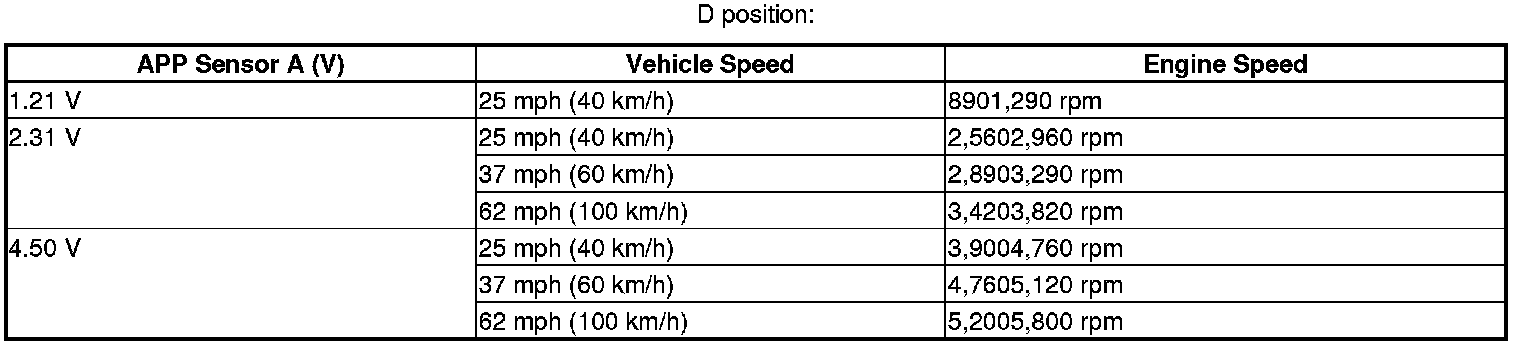
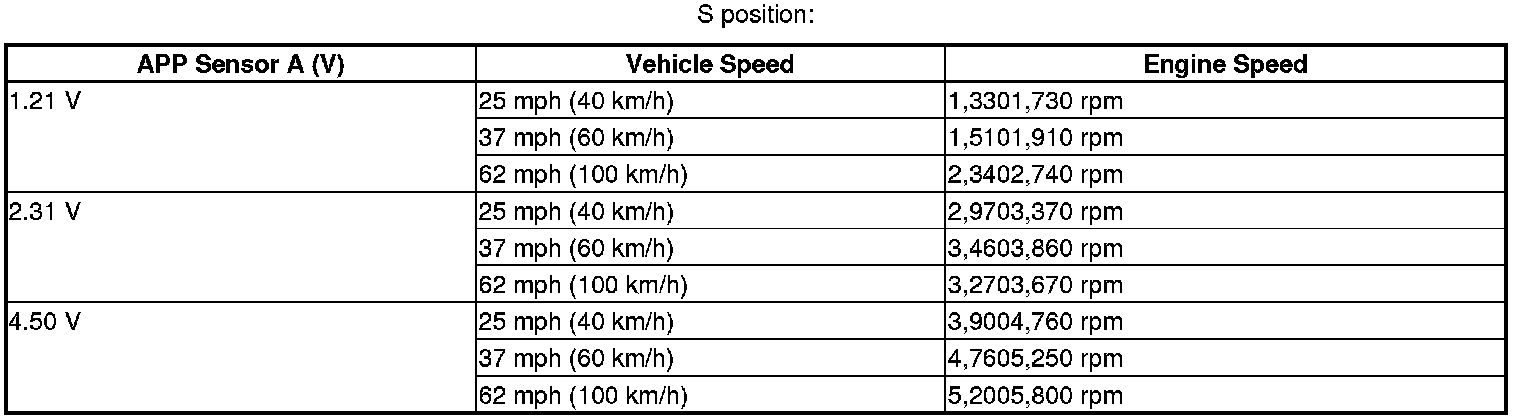
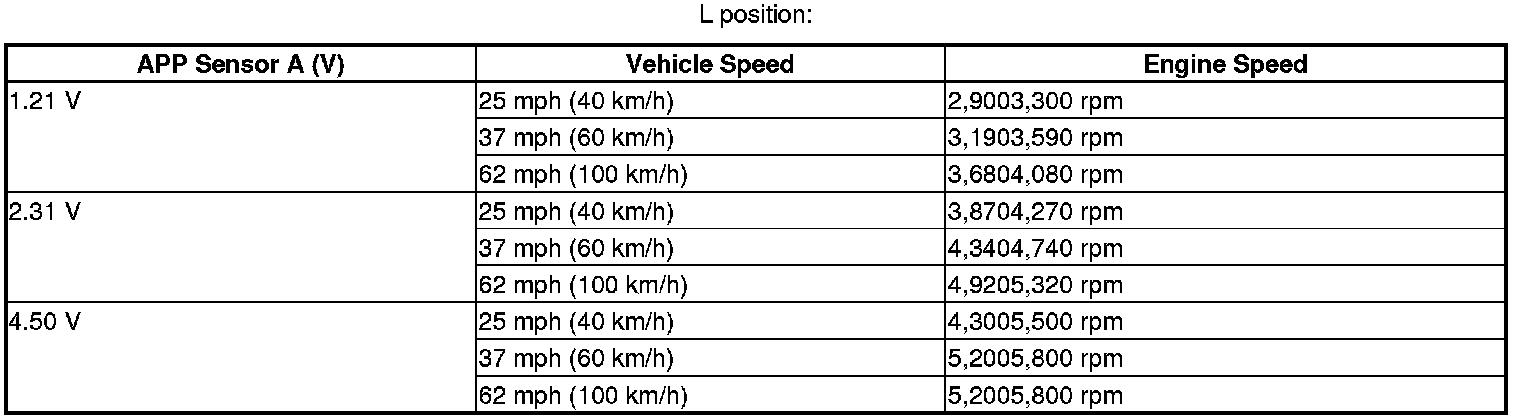
11. Review each snapshot individually, and compare APP Sensor A (V), the Vehicle Speed, and the Engine Speed to the following table:
12. Park the vehicle on a slope (about 16 degrees), apply the brake, and shift into P. Release the brake; the vehicle should not move.
NOTE; Always use the brake to hold the vehicle, when stopped on an incline in gear. Depending on the grade of the incline, the vehicle could roll if the brake is released.