Rear
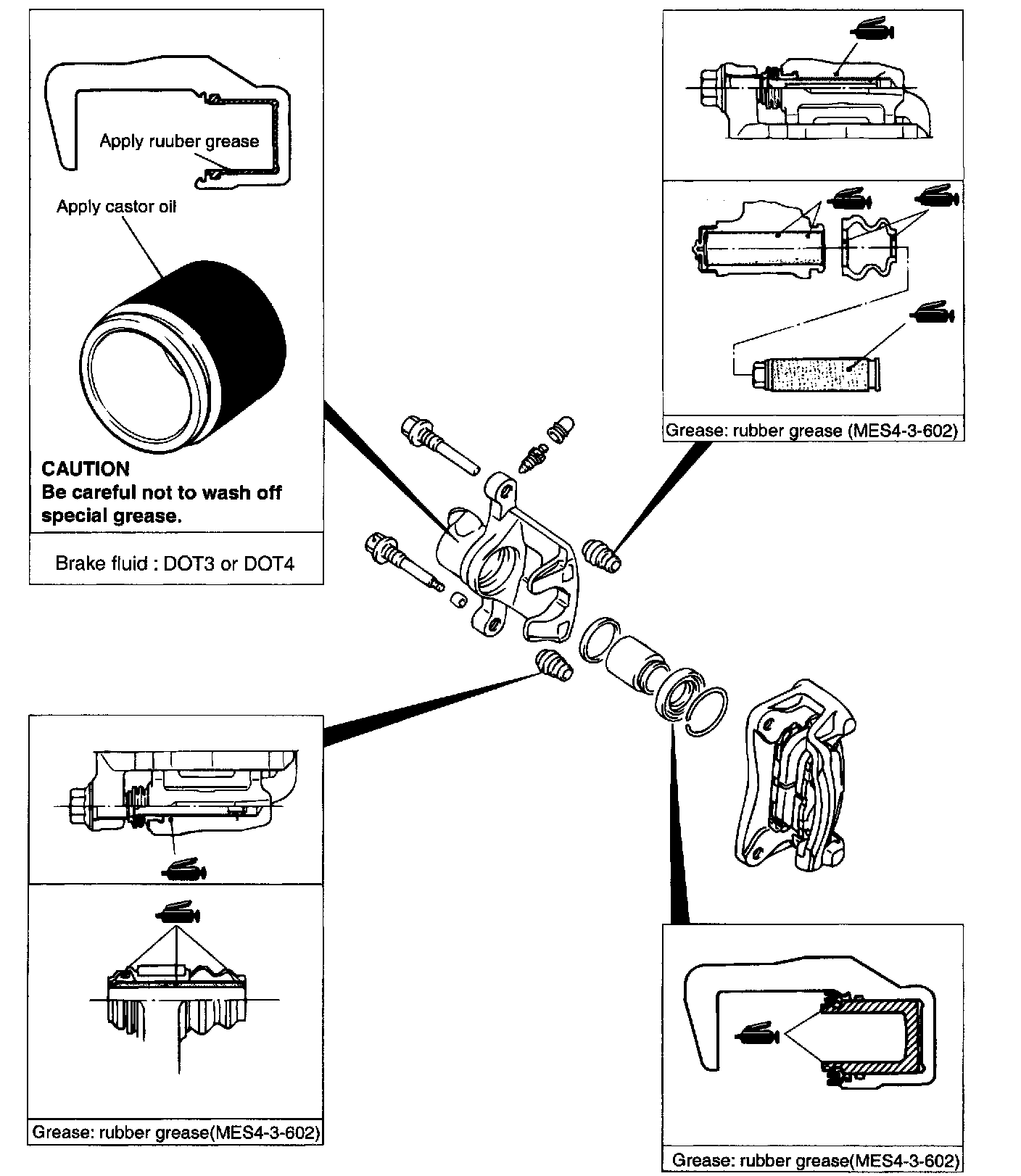
LUBRICATION POINTS
REMOVAL
1. Remove the wheel.

2. Remove the guide bolt, lift up the caliper assembly, and remove the pad assembly.
DISASSEMBLY
Rear disc brakes should be disassembled separately as a set of left and right.
1. Remove the piston boot/piston. Wrap the caliper body with a rag. Blow compressed air into the brake hose, opening and remove the piston and the piston boot.

CAUTION: Blow air slowly.
2. Remove the piston seal.

1. Remove the piston seal with your finger.
CAUTION: Do not use a screwdriver or another tool in order to avoid damage inside the cylinder.
2. Clean the piston surface and the inside of the cylinder using alcohol or the specified brake fluid.
CHECKING
1. Check the cylinder for wear, damage and rust.
2. Check the piston surface-for wear, damage and rust.
3. Check the caliper body and sleeve for wear.
4. Check that grease is applied, and the pad and backing metal are damaged.
INSPECTION
1. Check the pads for wear or oil contamination and replace if necessary.
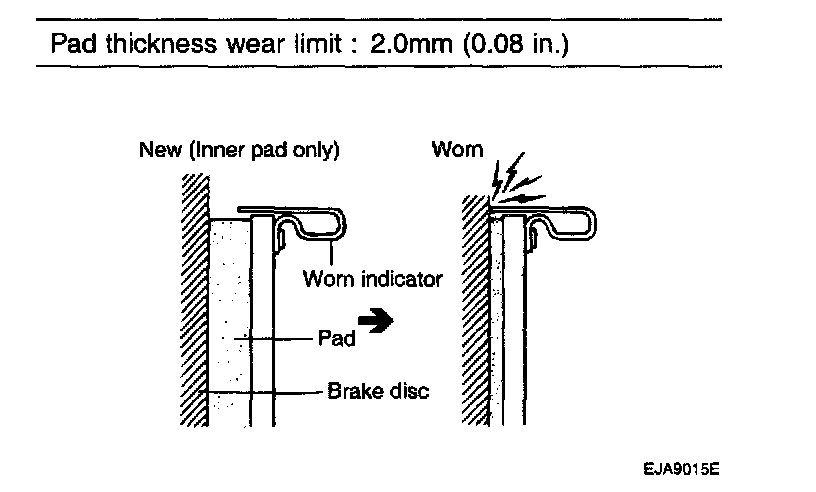
NOTE: The pads for the right and left wheels should be replaced at the same time.
2. Check for worn or damaged dust boots. If dust or mud had entered the caliper assembly through this seal, the caliper assembly must be replaced or rebuilt.
INSTALLATION
1. Before replacing the brake pads, drain brake fluid from the master cylinder reservoir until it is half full.
2. Install two caliper guide rods and tighten to the specified torque.
Specified torque 22 - 32 Nm (220 - 320 kg-cm, 16.3 - 23.7 ft. lbs.)
3. After filling the master cylinder reservoir with the fluid, bleed the brake line.
Recommended brake fluid : DOT 3, DOT 4