Reassembly
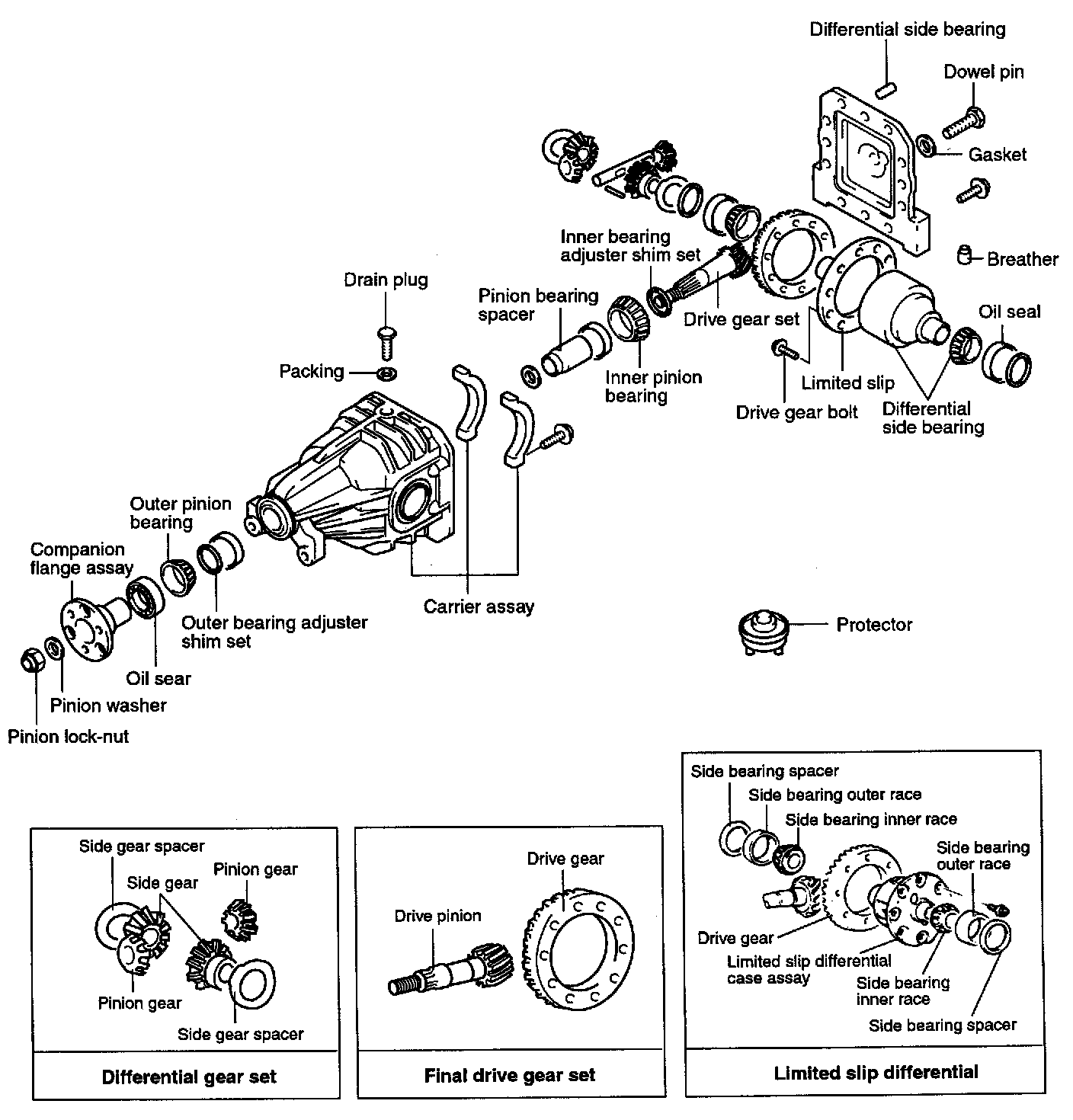
DIFFERENTIAL CARRIER
REASSEMBLY
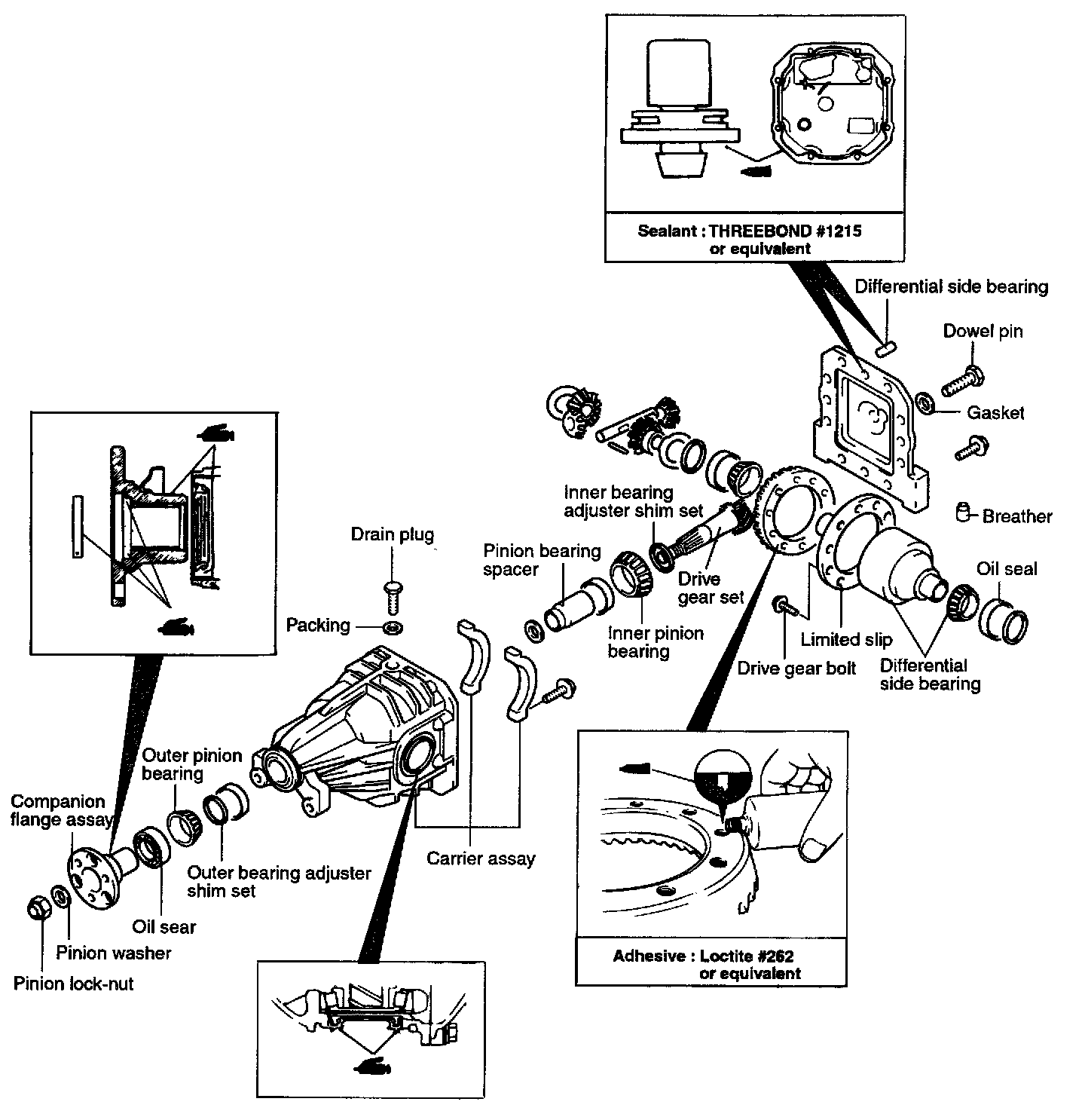
LUBRICATION AND ADHESIVE POINTS
SERVICE POINTS OF REASSEMBLY
1. PRESS-FITTING OF OIL SEAL
a. With the special tool, press fit the oil seal to the end of the gear carrier.
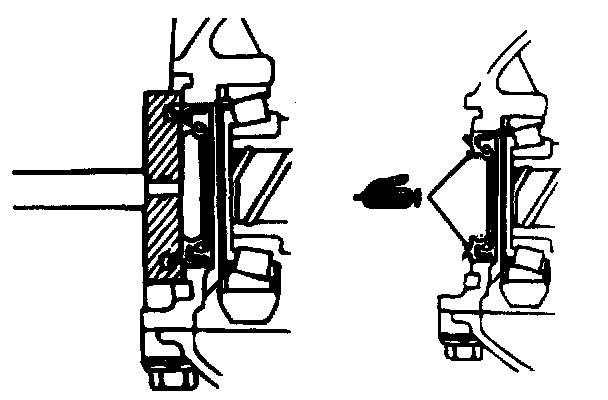
b. Apply multipurpose grease to the oil seal lip.
c. Install the drive pinion rear bearing outer race and drive pinion front bearing outer race using the special tool.
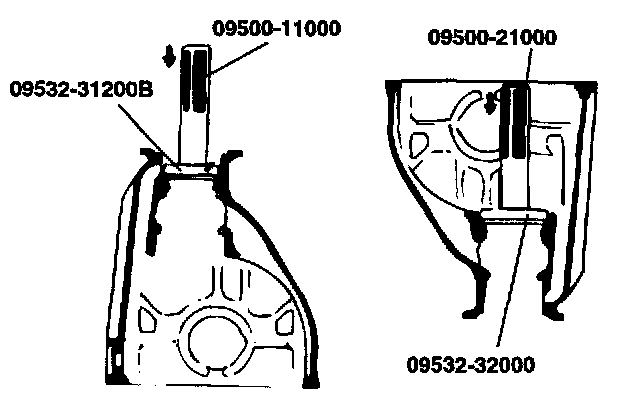
CAUTION: Be careful not to press in the outer race when it is inclined.
ADJUSTMENT OF PINION HEIGHT
Adjust the drive pinion height according to the following procedures:
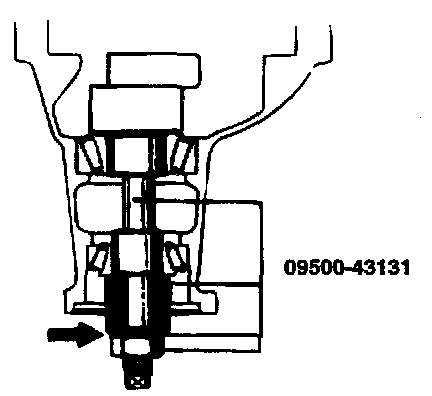
1. Install the drive pinion inner and outer bearing races to the special tool in sequence.
NOTE: Apply a thin coat of the multipurpose grease on the mating face of the washer of the special tool.
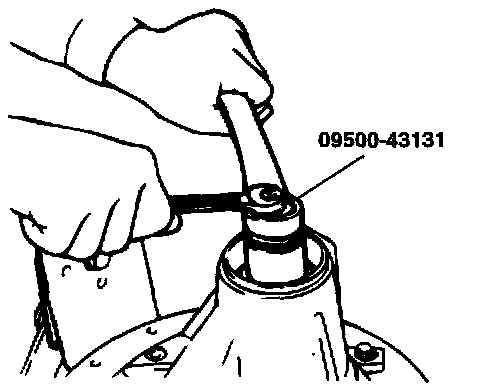
2. Tighten the nut of the special tool slowly until the standard value of drive pinion turning torque is obtained.
3. Measure the drive pinion turning torque (without the oil seal) using the special tool.
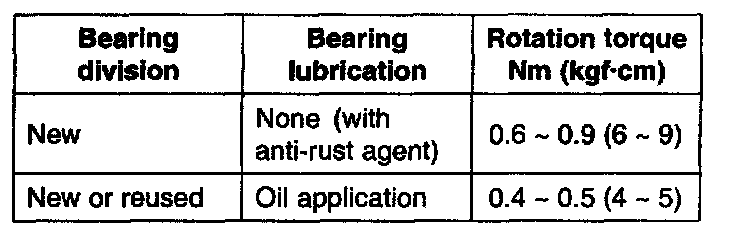
STANDARD VALUE
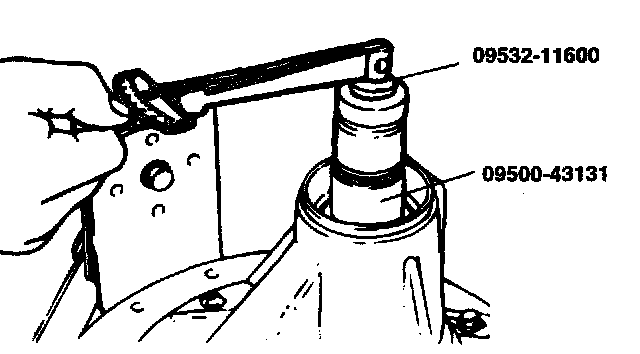
NOTE:
^ Gradually tighten the nut of the special tool while checking the drive pinion turning torque.
^ Because the special tool cannot be fumed one rotation, turn it several times within the range that it can be turned. After obtaining smooth hearing operation, measure the rotation torque.
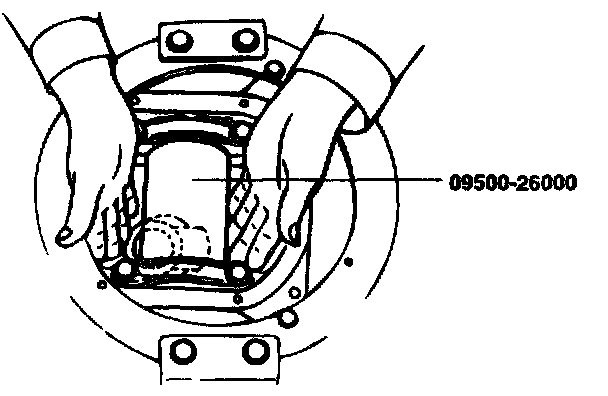
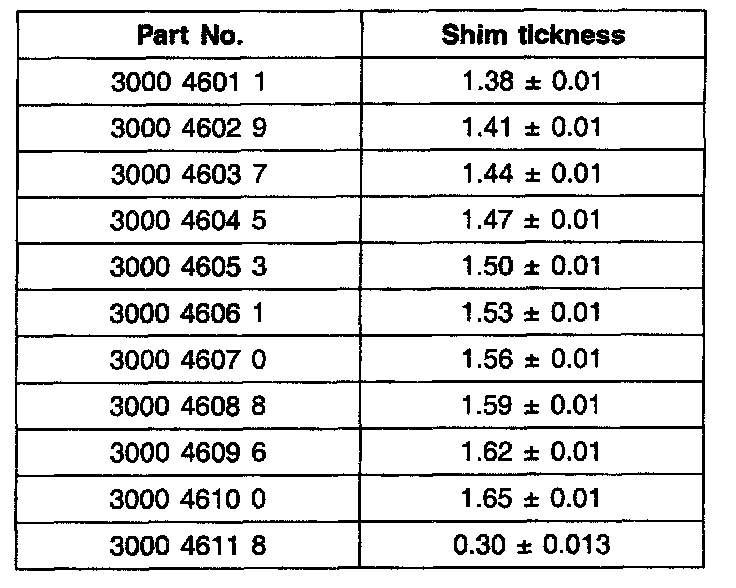
4. Position the special tool in the side bearing seat of the gear carrier and select a drive pinion rear shim of a thickness which corresponds to the gap between the special tools.
NOTE:
^ Clean the side bearing seat thoroughly When positioning the special tool, confirm that the cut-out sections of the special tool touch the side bearing seat very closely.
^ When selecting the drive pinion rear shims, use the fewest number of shims necessary.
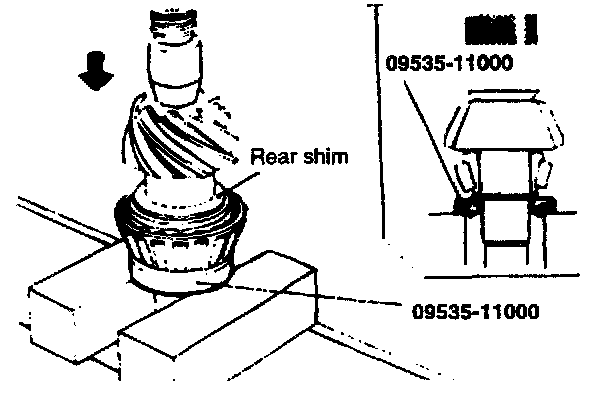
5. Fit the selected drive pinion rear shim(s) to the drive pinion, and press-fit the drive pinion rear bearing inner race using the special tool.
ADJUSTMENT OF DRIVE PINION PRELOAD
Adjust the drive pinion turning torque according to the following procedures:
1. Fit the drive pinion front shim(s) between the drive pinion spacer and the drive pinion front bearing inner race.
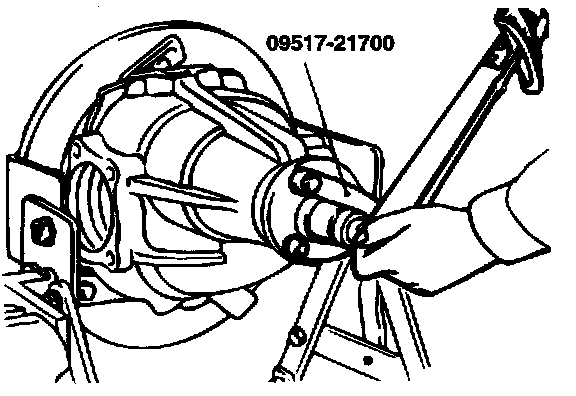
2. Tighten the companion flange to the specified torque using the special tool.
NOTE: Do not install the oil seal.
3. Measure the drive pinion turning torque. (without the oil seal using the special tool)
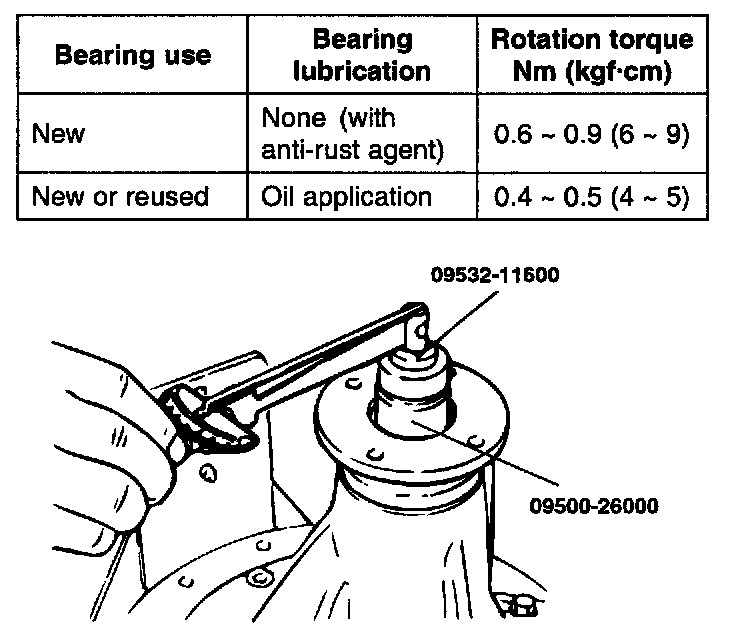
STANDARD VALUE
4. If the drive pinion turning torque is not within the range of the standard value, adjust the turning torque by replacing the drive pinion front shim(s) or the drive pinion spacer.
NOTE: When selecting the drive pinion front shim pack use the minimum number of shims.
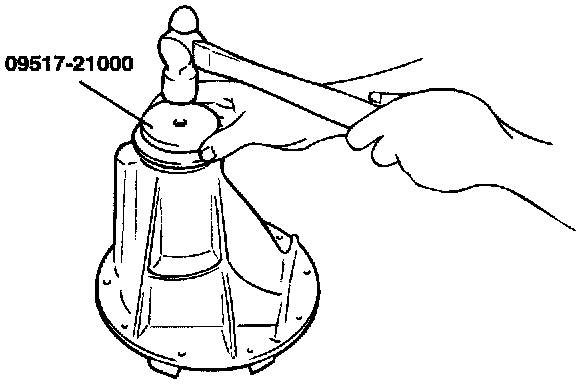
5. Remove the companion flange and drive pinion once again.
^ Insert the oil seal into the gear carrier front lip using the special tool.
^ Apply multipurpose grease to the oil seal lip.
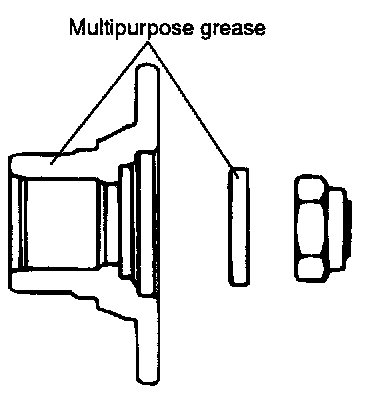
6. Apply a thin coat of multipurpose grease to the contacting surface of the oil seal in the companion flange and contacting surface of the washer of the flange before installing the drive pinion assembly.
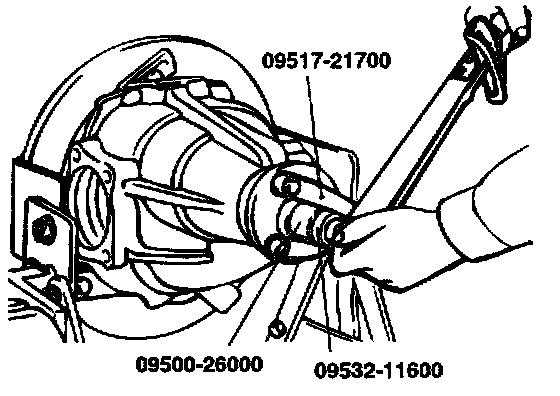
7. Install the drive pinion assembly, shim packs and companion flange with matchmarks properly aligned, and tighten the companion flange self-locking nut to the specified torque by using the special tool.
8. Measure the drive pinion turning torque (with oil seal) by using the special tool to verify that the drive pinion turning torque is within the standard value.
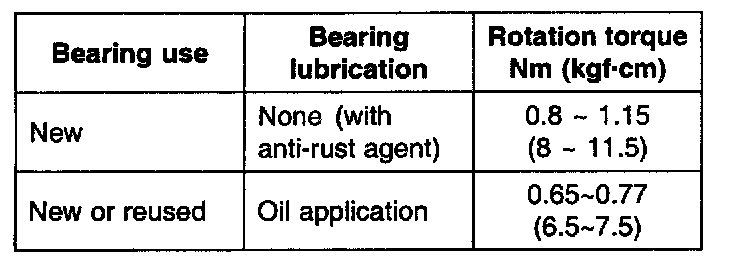
STANDARD VALUE
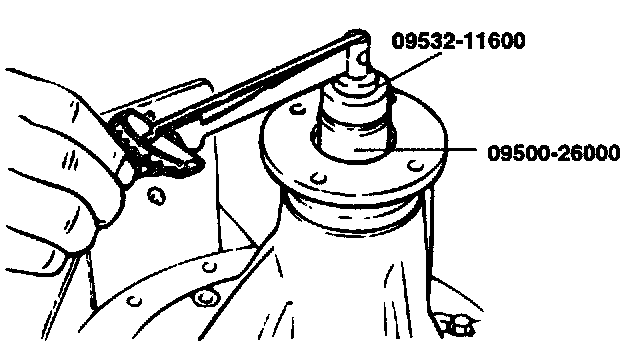
^ If it is beyond the standard value, verify the torque of the companion flange self-locking nut, or the fit of the lock seal.
ADJUSTMENT OF DIFFERENTIAL GEAR BACKLASH
Adjust the differential gear backlash according to the following procedures:
1. Assemble the side gears, side gear spacers, pinion gears, and pinion washers into the differential case.
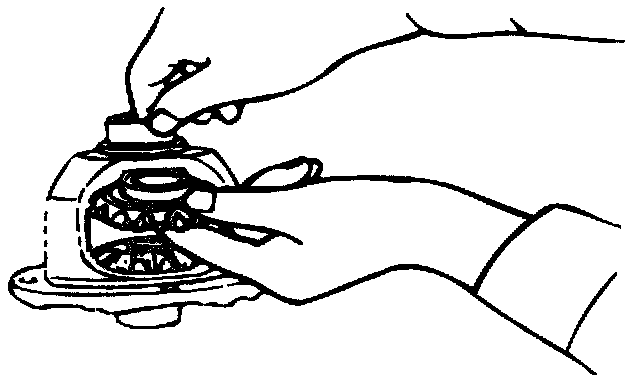
2. Temporarily install the pinion shaft.
NOTE: Do not install the lock pin yet.
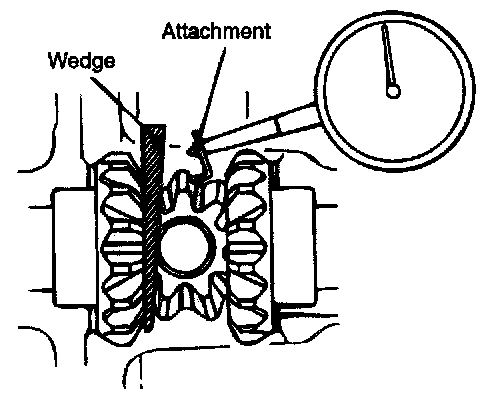
3. Insert a wedge in the side gear and measure the differential gear backlash with a dial indicator on the pinion gear.
NOTE: Measure both pinion gears separately.
Standard value: 0 - 0.076 mm (0 - 0.0003 inch)
Limit: 0.2 mm (0.008 inch)
4. If the differential gear backlash exceeds the limit, ad just the backlash by installing thicker side gear thrust spacers.
5. Measure the differential gear backlash once again, and confirm that it is within the limit.
NOTE
^ After adjustment, check that the backlash is within the limit and the differential gear rotates smoothly.
^ When adjustment is impossible, replace the side gear and the pinion gear as a set.
6. Installation of the lock pin
a. Align the pinion shaft lock pin hole with the differential case lock pin hole, and drive in the lock pin.
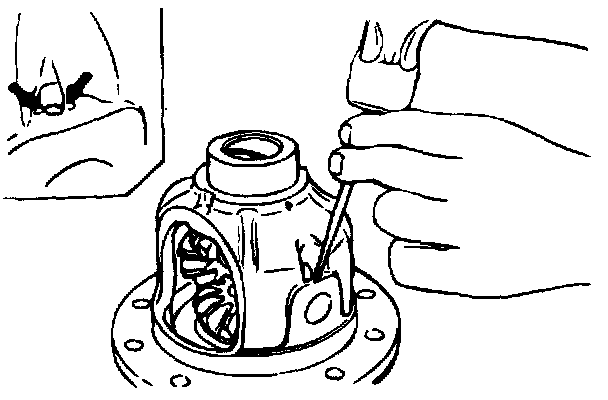
b. Fix the lock pin in place by staking two points around the lock pin hole with a punch.
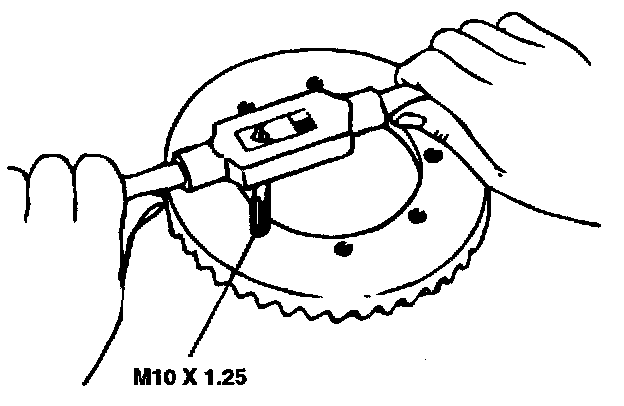
7. Installation of the drive gear
a. Clean the drive gear attaching bolts.
b. Remove the adhesive on the threaded holes of the drive gear use a tap (M10 1.25), and then clean the threaded holes with compressed air.
c. Apply the specified adhesive to the threaded holes of the drive gear.
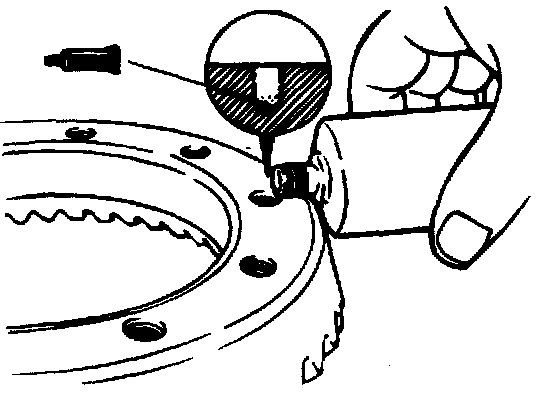
d. Install the drive gear in the differential case with the matchmarks properly aligned. Tighten the bolts to the specified torque (800 - 900 kgf-cm) in a diagonal sequence.
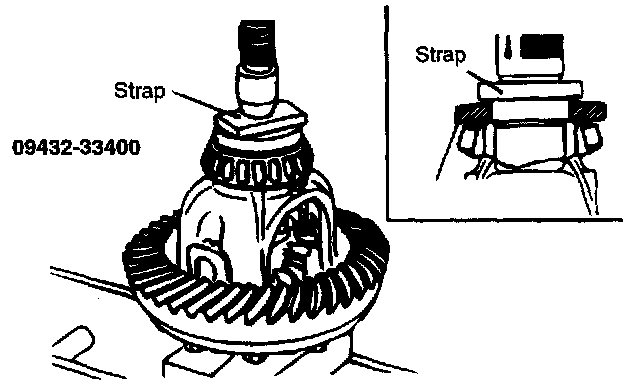
8. Press the side bearing inner race
ADJUSTMENT OF FINAL DRIVE GEAR BACKLASH
Adjust the final drive gear backlash according to the following procedures:
1. Install side bearing spacers which are thinner than those removed, to the side bearing outer races, and then mount the differential case assembly into the gear carrier.
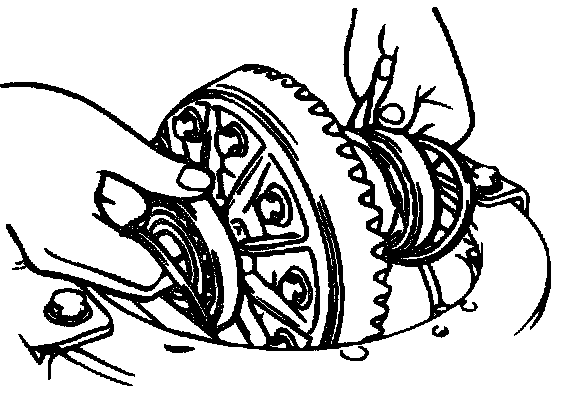
NOTE: Select side bearing spacers with the same thickness for both the drive pinion side and the drive gear side.
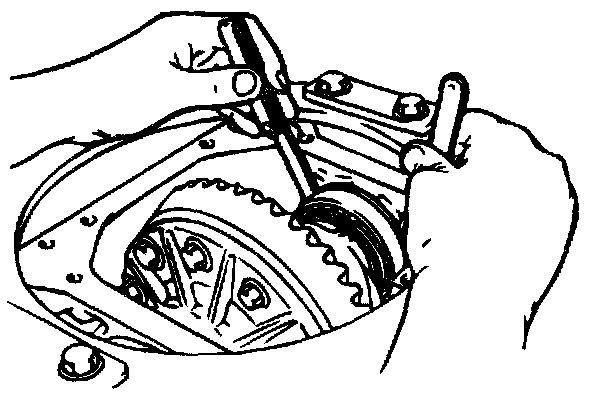
2. Push the differential case to one side, and measure the clearance between the gear carrier and the side bearing with a feeler gauge.
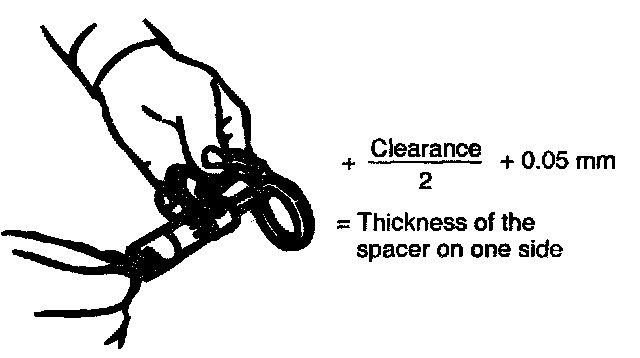
3. Select two pairs of spacers which correspond to the value calculated according to the expression in the illustration. Install one pair each to the drive pinion side and the drive gear side.
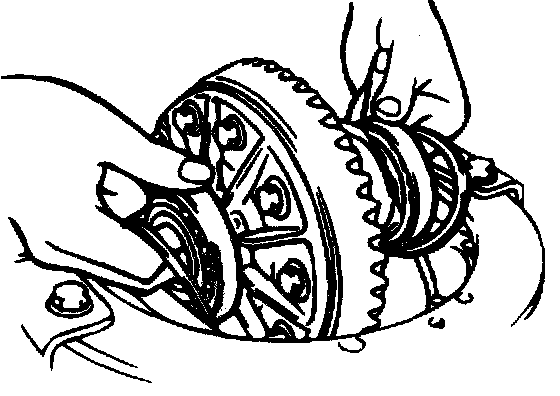
4. Install the side bearing spacers and differential case assembly to the gear carrier.
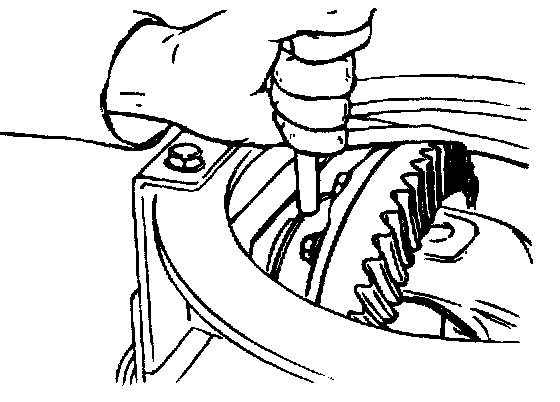
5. Tap the side bearing spacers with a brass bar to fit them to the side bearing outer race.
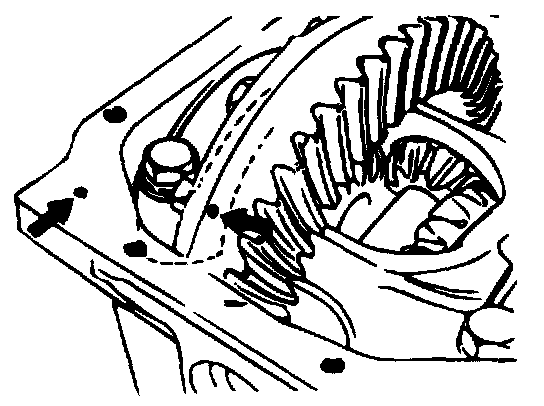
6. Align the matchmarks on the gear carrier and the bearing cap and tighten the bearing cap.
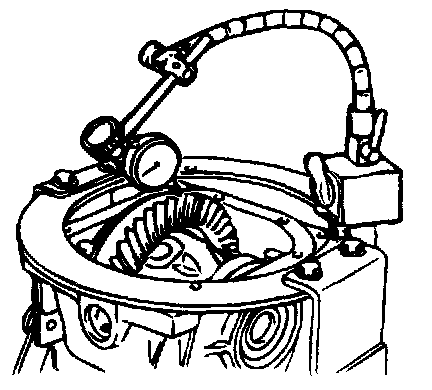
7. With the drive pinion locked in place, measure the final drive gear backlash with a dial indicator on the drive gear.
NOTE: Measure at four points or more on the circumference of the drive gear.
Standard value: 0.08 - 0.13 mm (0.003 - 0.005 inch)
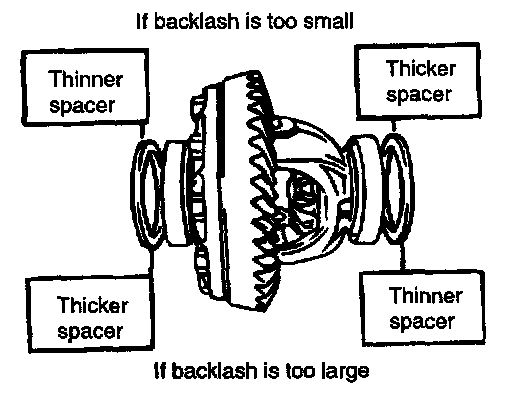
8. Change the side bearing spacers as illustrated and then adjust the final drive gear backlash between the drive gear and the drive pinion.
NOTE: When increasing the number of side bearing spacers, use the same number for each and as few as possible.
9. Check the drive gear and drive pinion for tooth contact. If poor contact is evident, adjust again.
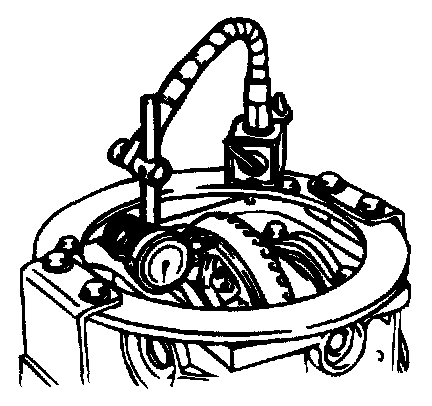
10. Measure the drive gear runout at the shoulder on the reverse side of the drive gear.
Limit: 0.05 mm (0.002 inch)
11. If the drive gear runout exceeds the limit, reinstall by changing the position of the drive gear and differential case, and remeasure.