Suspension - Alternate Spring Selection Method
84amcjeep02SEPTEMBER 1984 000 294
CHEROKEE/WAGONEER 70 SERIES
10E
SUSPENSION Attention: Workshop, Parts Department
SPRING IDENTIFICATION APPLICATION
Information
This addendum to I.S. Note 10E contains updated servicing information on selecting springs for Cherokee/Wagoneer 70 Series models built after January 23, 1984.
The original spring selection method (for models built prior to January 23, 1984) was based on the various front/rear Gross Axle Weight Ratings (G.A.W.R.) that were printed on the Safety Certification label. Because models built after this date will only provide a standardized (single) rating for each axle, an alternate method of selecting springs is provided in this addendum.
The suspension is available in three classifications: Standard, Soft Ride, and Heavy Duty.
The Standard suspension is designed for moderate off-road operation as well as normal everyday driving. The Soft Ride suspension offers a smoother ride on models operated principally on paved road surfaces. The Heavy Duty is recommended for trailer towing, snow plowing and extended offroad operation along with normal everyday driving.
VEHICLE RIDING HEIGHT:
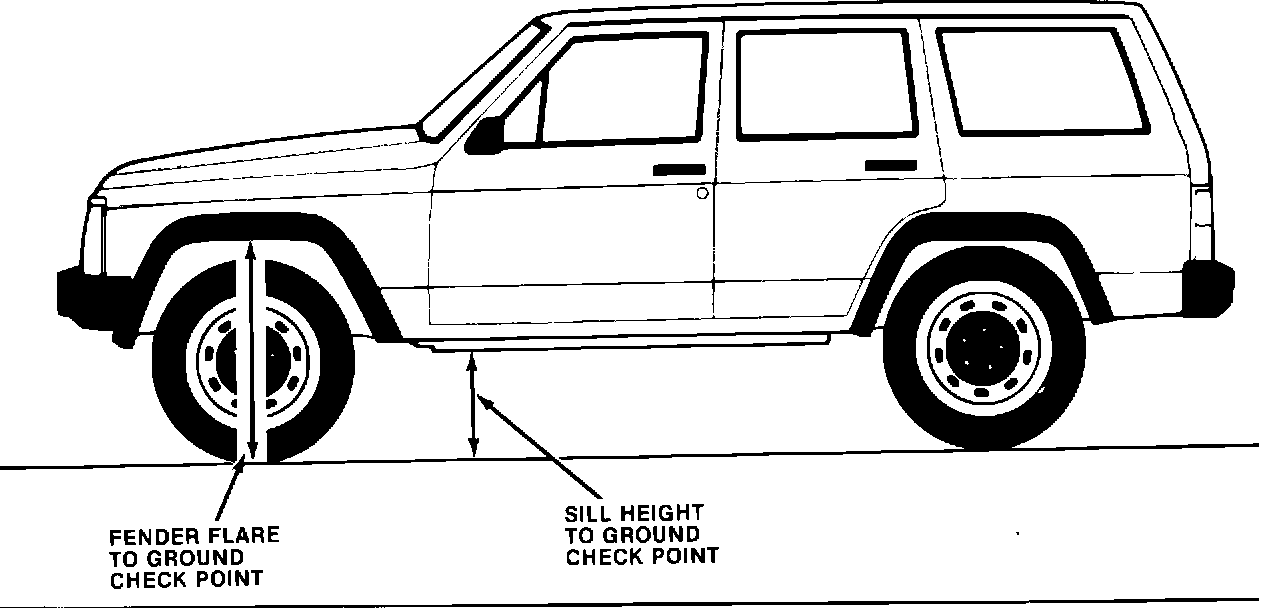
Vehicle Attitude
The slight forward rake is by design and is not to be misdiagnosed as a front or rear spring problem. In addition, a side-to-side body height variance of approximately 19 mm (3/4 in.) at the sills (measured from sill to ground) and 22 mm (1 in.) at the fender flares (measured from flare to ground) (see illustration), is acceptable.
Spring Identification
The front and rear springs are identified by a two letter alpha code.
^ The front coil spring code on production and replacement front springs is printed on a plastic tag attached to one of the spring coils.
^ The rear leaf spring code on production and replacement rear springs is stamped on the bottom of the main leaf or the spring clip.
Spring codes and approximate capacities are outlined in the spring application charts. Refer to the parts microfiche for spring part numbers (the codes/part numbers are cross referenced in the microfiche).
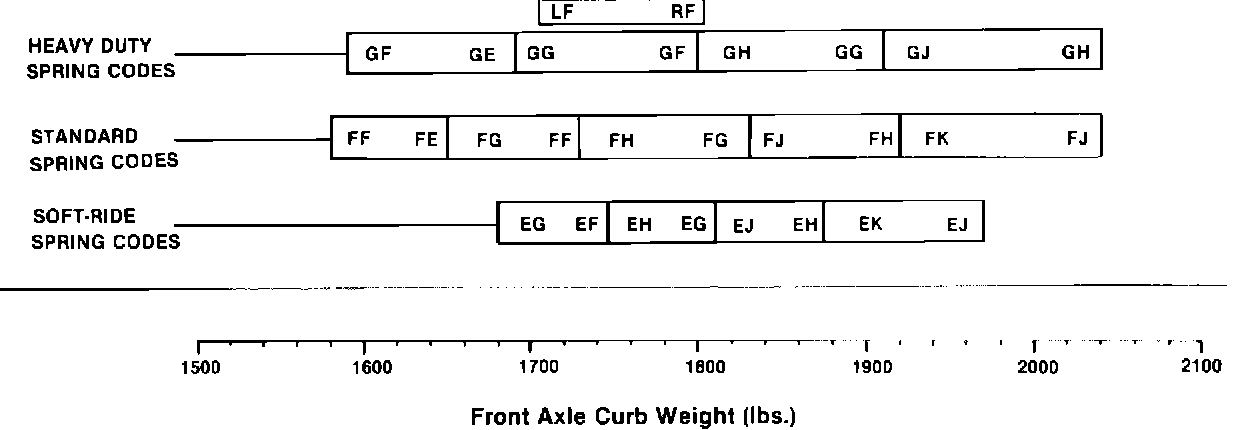
1984 CHEROKEE/WAGONEER FRONT COIL SPRING CHART:
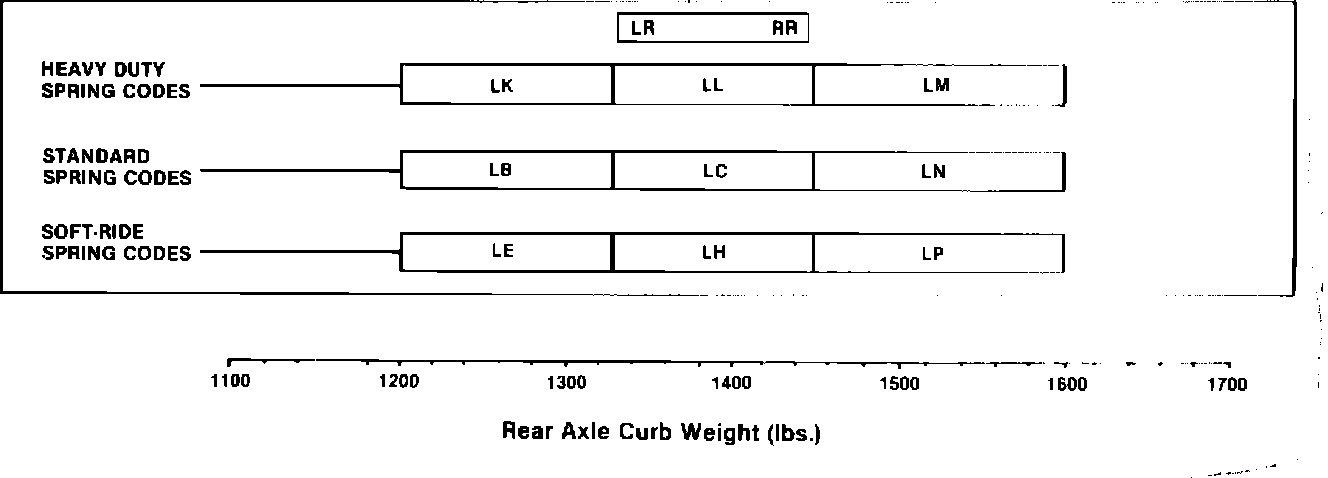
1984 CHEROKEE/WAGONEER REAR LEAF SPRING APPLICATION CHART:
Spring Application Charts
The following spring charts outline application and approximate capacity based on the curb weight of the front or rear of the vehicle. The charts can be used as a guide in determining if the vehicle is equipped with the proper springs.
To verify proper spring usage, perform the following:
1. Note the front or rear spring alpha codes.
2. Weigh the front or rear of the vehicle on a commercial weigh scale (vehicle must have full tank of fuel) and record weight.
3. Refer to curb weight figures at bottom of front or rear spring application chart. Compare weight of vehicle front or rear with springs in boxes directly above curb weight. For example, if vehicle front end weight is 1640 lbs., and vehicle is equipped with heavy duty springs, correct front springs would be marked GF and GE. Or, if vehicle is equipped with standard springs, correct front springs would be marked FF and FE.
Adding Accessory Options
Suspension springs are factory selected to be compatible with regular production options. For example, a vehicle ordered with V-6 engine, automatic transmission, and air conditioning requires higher rate springs to accommodate the extra weight and maintain proper ride height and quality.
When additional weight is added to the front or rear axle such as installation of a winch, A/C kit, extra fuel tank, etc., it may be necessary to install springs with a higher weight rating. To determine spring requirements and selection, perform the following:
1. Determine if accessory weight will be on the front or rear axle.
2. Determine the weight of the accessory.
3. Record the front or rear axle spring codes.
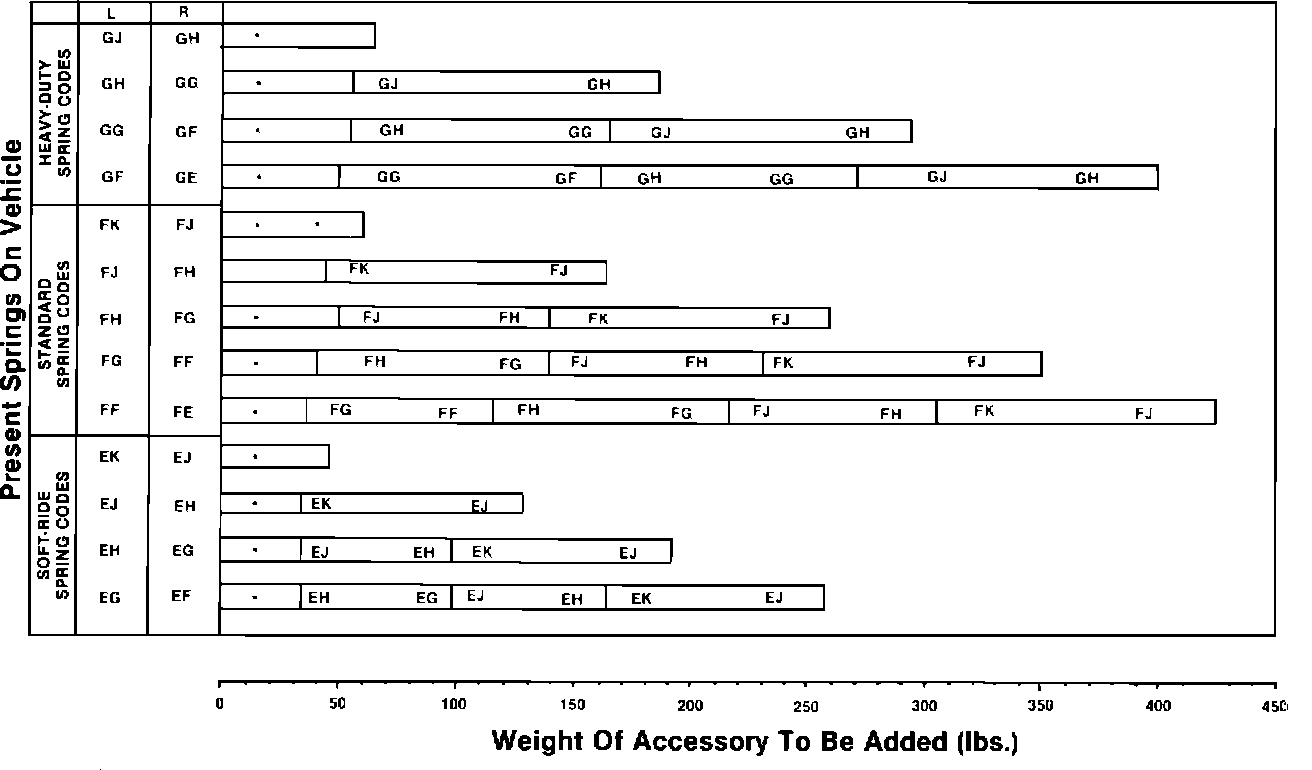
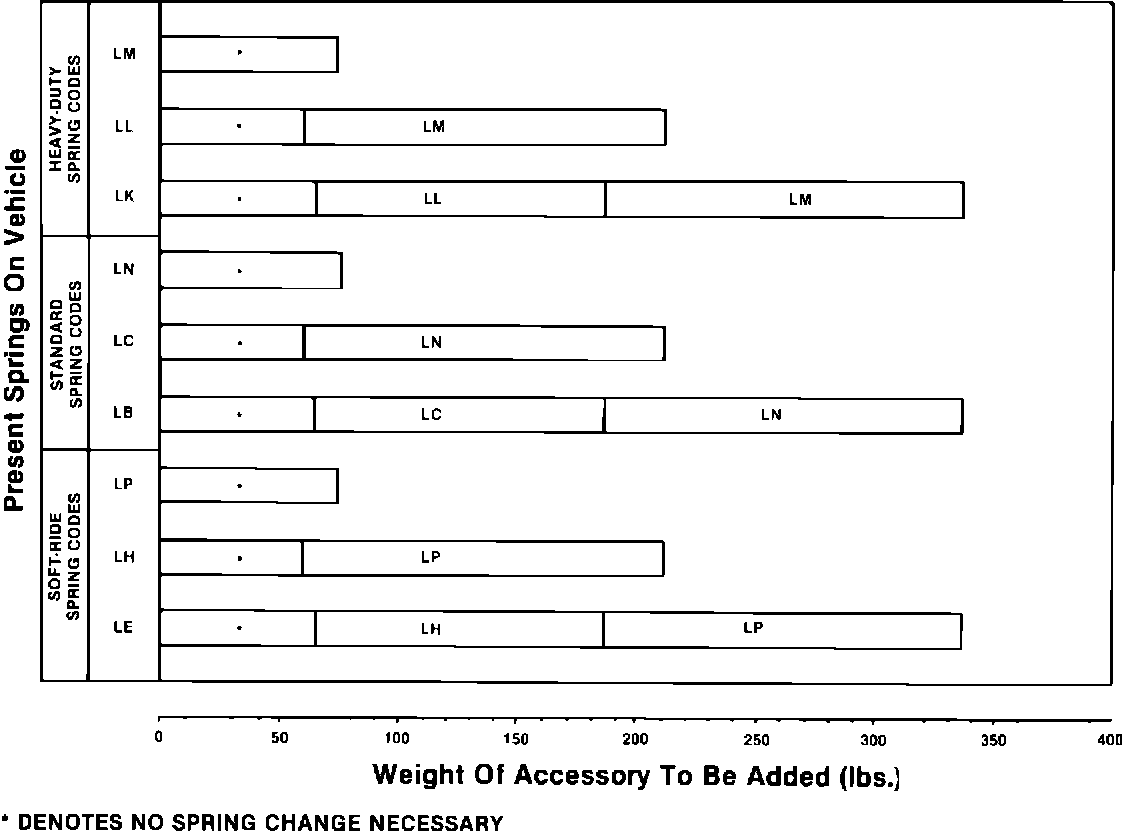
4. Compare the existing spring codes with the weight of the accessory being added in the following chart. A spring change is necessary only when the accessory weight exceeds the capacity of the existing springs.
1984 CHEROKEE/WAGONEER FRONT SPRING SELECTION GUIDE:
1984 CHEROKEE/WAGONEER REAR SPRING SELECTION GUIDE:
Example
1. Front axle will carry accessory weight.
2. Accessory weight is 100 lbs.
3. Vehicle has FH-FG Standard suspension front springs.
4. Refer to the chart FH-FG Standard spring maximum accessory capacity is 50 lbs. Installing accessory will exceed front spring capacity. Front springs should be updated to FJ-FH front springs.
Filing Instructions:
Record this I.S. Note on pages J1, J11 and J13, and file it in your M.R. 244 binder in front of I.S. Note 10E.