Exhaust Gas Recirculation: Description and Operation
EGR Valve:

The purpose of the EGR system is to limit the formation of oxides of nitrogen (NOx) by diluting the fresh intake charge with a metered amount of exhaust gas, thereby reducing the peak temperatures of the burning gases in the engine combustion chambers.
The valve is held in a normally closed position by a coiled spring located above the diaphragm. A special fitting is provided at the throttle body to route ported (above throttle) vacuum through hose connections to a fitting on the valve which is located above the diaphragm. A passage in the intake manifold directs exhaust gas from the exhaust passage to the EGR valve. When the diaphragm is actuated by vacuum, the valve opens and meters exhaust gas through another passage in the intake manifold to the floor of the manifold below the throttle plate.
EGR/Canister Purge Solenoid Operation:
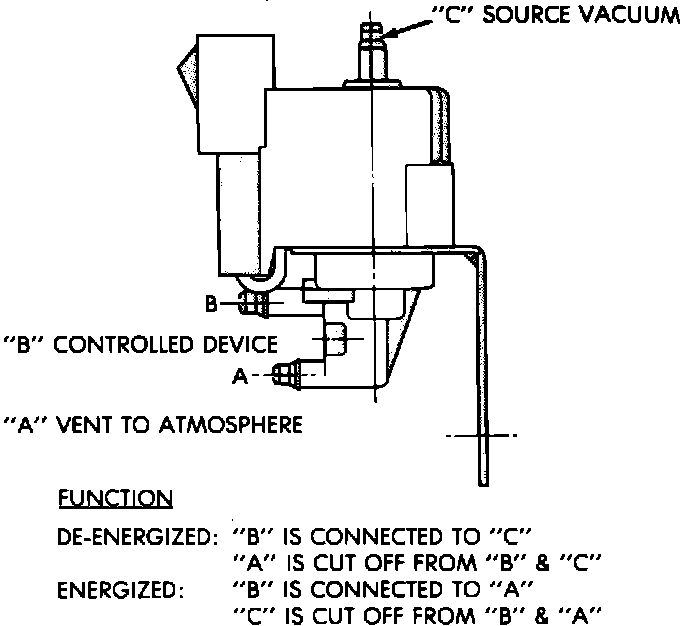
EGR SOLENOID
The EGR solenoid controls the vacuum supply to the EGR valve. The solenoid is controlled by the Electronic Control Unit (ECU). When energized by the ECU the solenoid closes and prevents vacuum from reaching the EGR valve. When not energized, the solenoid is open and vacuum is applied to the EGR valve. The ECU monitors engine coolant temperature and other operating conditions to determine when EGR operation is desired.