Evaporative Emissions System: Description and Operation
Evaporative Emission Control System (EVAP):
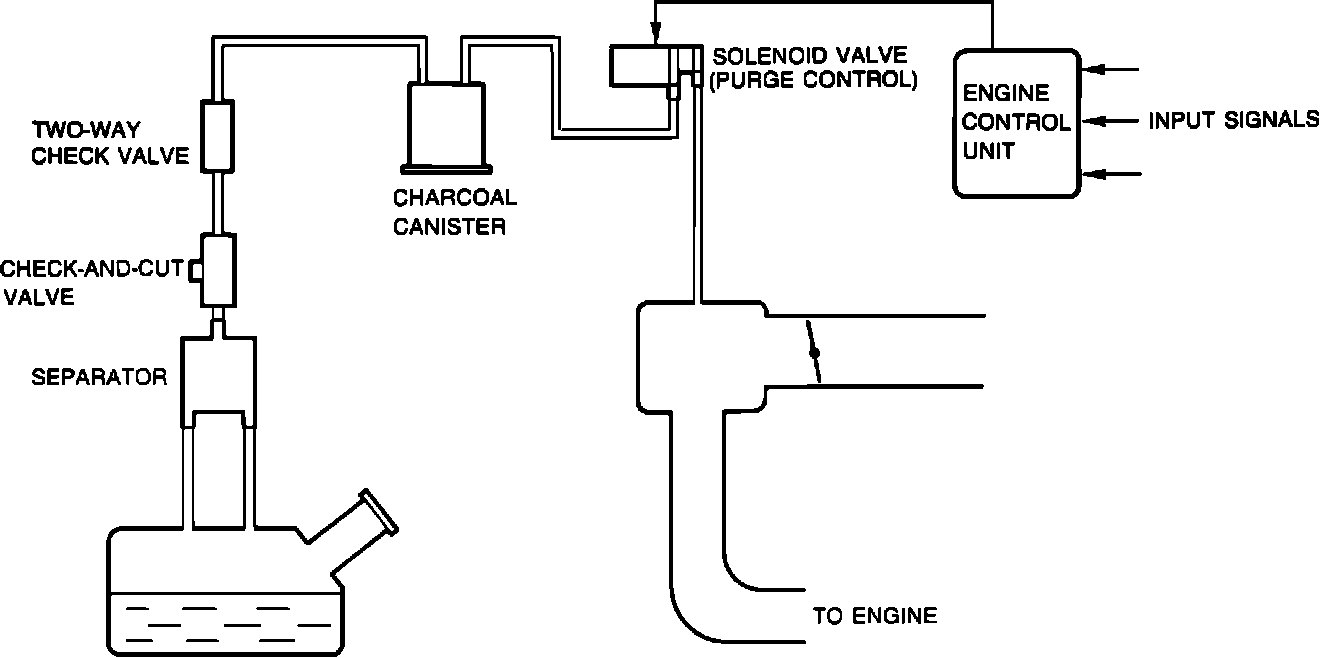
The evaporative emission control system stores fuel vapor generated in the fuel tank in the cannister when the engine is not running. The fuel vapor is stored in the cannister until it is drawn into the dynamic chamber and burned when the engine is started.
The evaporative emission control system consists of the fuel/vapor separator, check and cut valve, two-way check valve, charcoal cannister, purge control solenoid valve, engine control unit, and the input devices. The amount of evaporative fumes introduced into the engine and burned is controlled by the solenoid valve to correspond to the engine's operating conditions. To maintain the best engine performance, the solenoid valve is controlled by the engine control unit.
The purge control solenoid valve is controlled by duty signals from the engine control unit to perform purging of the charcoal cannister. Purging is done when these conditions are met:
1. After warm-up
2. Driving in gear
3. Accelerator pedal depressed (idle switch off)
4. Oxygen sensor functioning normally
FUEL/VAPOR SEPARATOR
The fuel/vapor separator is mounted outside the fuel tank and prevents liquid fuel from entering the charcoal cannister.
CHECK AND CUT VALVE AND TWO-WAY CHECK VALVE
The check and cut valve works with the two-way check valve to control the pressure in the fuel tank.
CHARCOAL CANISTER
The charcoal cannister stores gasoline vapors when the engine is not running.
PURGE CONTROL SOLENOID VALVE
The purge control solenoid valve controls the flow of evaporative fumes from cannister to the intake manifold.
ENGINE CONTROL UNIT
The engine control unit detects signals from input sensors and switches and controls the purge control solenoid valve.