Exhaust Gas Recirculation: Testing and Inspection
NOTE: Troubleshoot with Self-Diagnosis Checker before performing the following steps. Check condition of wiring harness, vacuum lines, and connectors before checking sensors or switches.1. Check vacuum hose routing.
2. If incorrect connection, clogging, or leakage is found, repair as needed.
3. Warm up engine and run at idle.
Disconnecting EGR System:

4. Disconnect vacuum hose from EGR valve and plug it.
5. Verify that engine runs smoothly.
6. If not, check EGR control valve.
Measuring EGR Vacuum:
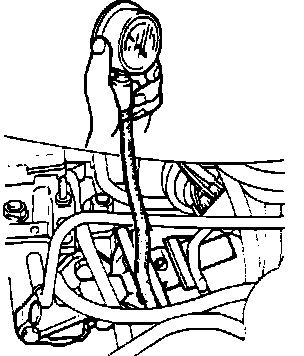
7. Connect vacuum gauge to EGR hose.
8. Verify that gauge shows no vacuum.
9. Accelerate engine and verify that gauge shows vacuum.
10. Decelerate engine and verify that gauge again shows no vacuum.
11. If a problem is found, check duty solenoid valve and ECU terminals "2L" and "2K."
Measuring EGR Vacuum:
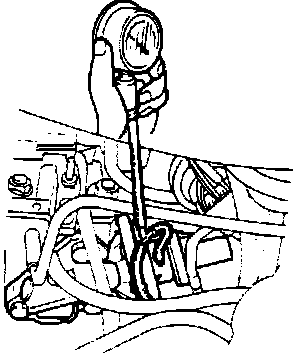
12. Connect vacuum gauge between duty solenoid valve and EGR control valve.
13. Accelerate engine and note amount of vacuum.
14. Disconnect vacuum hose at EGR valve and plug it.
15. Accelerate and verify that gauge shows higher vacuum than in step 13.
16. If not, check EGR position sensor, ECU terminal "1F," and duty solenoid valve.
Jumpering Coolant Temperature Switch Harness:
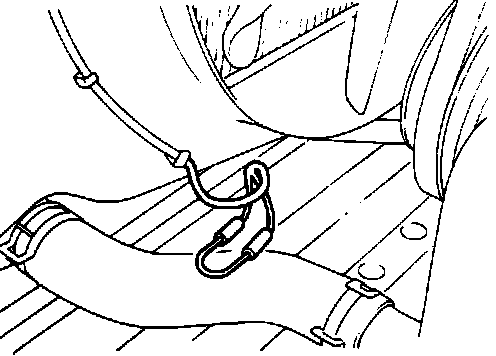
17. Unplug connectors from water temperature switch and connect them with a jumper wire.
18. With vacuum hose "A" plugged, verify that gauge shows no vacuum when engine is accelerated.
19. If it shows vacuum, check the duty solenoid valve and ECU terminal "1Q."