Evaporative Emissions System: Testing and Inspection
Without Using SST-New Generation Star Tester (NGS)1. Warm up the engine to normal operating temperature and let it idle.
2. Disconnect the vacuum hose from the charcoal canister side of the PRG solenoid valve.
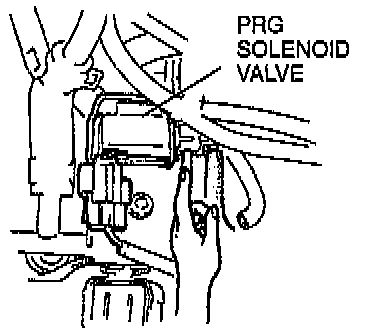
3. Put a finger on the port of the PRG solenoid valve and verify that there is no vacuum.
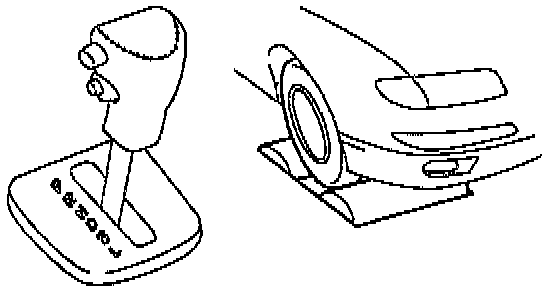
4. Position the vehicle on a chassis roller and shift the selector lever to D.
5. Run the engine at approx. 1,200 rpm.
6. Verify that vacuum is felt approx. 10 sec. after the engine starts.
7. If not as specified, inspect following.
- ECM terminal voltages
3E (Mass air flow sensor)
3X (Closed throttle position switch)
3Q (Engine coolant temperature sensor)
4AH, 4AL (Crankshaft position sensor)
- PRG solenoid valve
- Vacuum hose for damage or looseness
- TCM (Inhibitor signal)
Using SST-New Generation Star Tester (NGS)

1. Connect the SST to the data link connector-2.
2. Warm up the engine to normal operating temperature and let it idle.
3. Disconnect the vacuum hose from the charcoal canister side of the PRG solenoid valve.
4. Put a finger on the port of the PRG solenoid valve and verify that there is no vacuum.
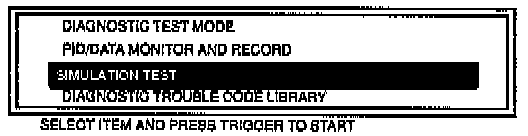
5. Select the SIMULATION TEST function of the NGS.
6. Select "PRG" on the NGS display, increase the PRG solenoid valve duty value. Verify that vacuum is felt.
7. If not as specified, turn off the engine.
8. Turn the ignition switch to ON.
9. Using the SIMULATION TEST function, check the operation sound of the PRG solenoid valve.
10. If the operation sound is heard, check following:
- Vacuum hose for damage or looseness
11. If the operation sound is not heard, inspect the PRG solenoid valve.