Hydraulic System: Testing and Inspection
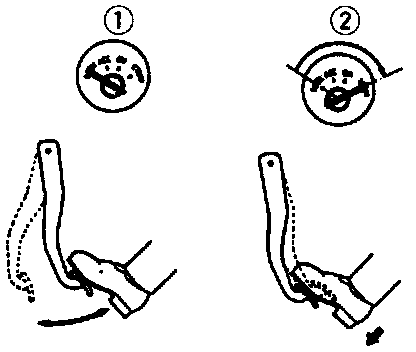
STEP 1
1. With the engine stopped, depress the pedal a few times.
2. With the pedal depressed, start the engine.
3. If the pedal moves down slightly immediately after the engine starts, the unit is operating.
STEP 2
1. Start the engine.
2. Stop the engine after it has run for 1 or 2 minutes.
3. Depress the pedal with the usual force.
4. If the first pedal stroke is long and becomes shorter with subsequent strokes, the unit is operating.
5. If a problem is found, inspect the check valve and vacuum hose for damage and examine the installation. Repair if necessary, and inspect it again.

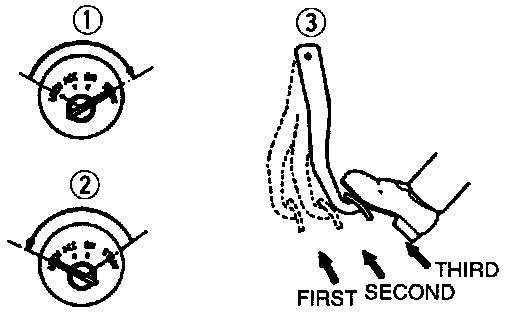
STEP 3
1. Start the engine.
2. Depress the pedal with the usual force.
3. Stop the engine with the pedal depressed.
4. Hold the pedal down for about 30 seconds.
5. If the pedal height does not change, the unit is operating.
6. If there is a problem, check the check valve and vacuum hose for damage, and check the connection. Repair if necessary and check again.
NOTE: If the nature of the problem is still not clear after the 3 steps, follow the more detailed check described in inspection using gauges.
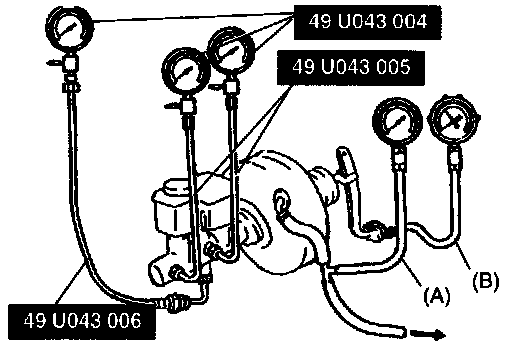
INSPECTION USING GAUGES
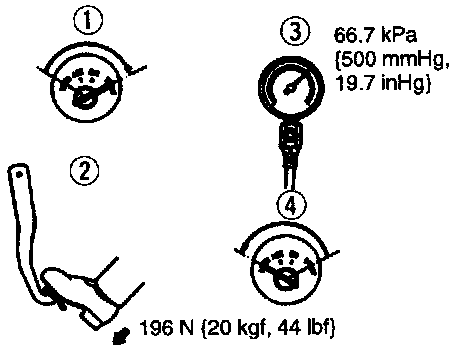
Connect the special service tools gauges, vacuum gauge (A), and pedal depression force gauge (B) as shown. Bleed the air from the special service tools gauges before performing the following tests.
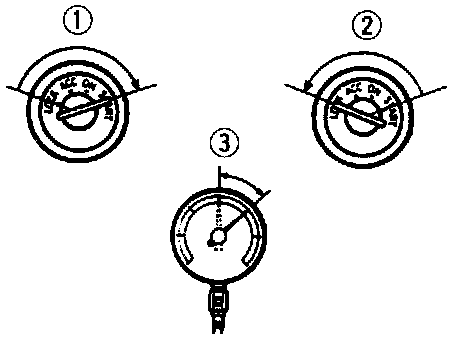
Checking For Vacuum Loss
Unloaded Condition
1. Start the engine.
2. Stop the engine when the vacuum gauge reading reaches 66.7 kPa (19.7 inch Hg).
3. Observe the vacuum gauge for 15 seconds. If the gauge shows 63.3-66.7 kPa (18.7-19.7 inch Hg), the unit is operating.
Loaded Condition
1. Start the engine.
2. Depress the brake pedal with a force of 196 N (44 lbs.).
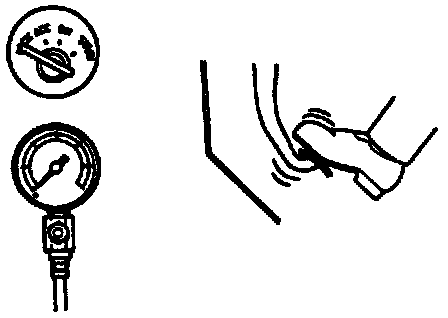
3. With the brake pedal depressed, stop the engine when the vacuum gauge reading reaches 66.7 kPa (19.7 inch Hg).
4. Observe the vacuum gauge for 15 seconds. If the gauge shows 63.3-66.7 kPa (18.7-19.7 inch Hg), the unit is operating.
Checking For Hydraulic Pressure
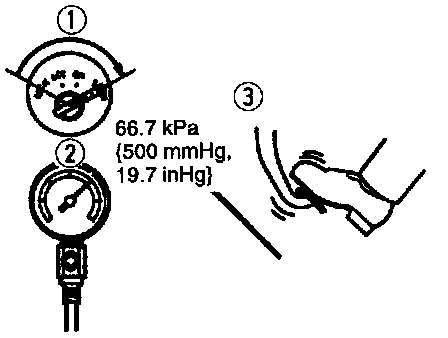
1. If the fluid pressure is within the specification when the engine is stopped (vacuum 0 kPa (0 inch Hg)), the unit is operating.
^ If Pedal force is 196 N (44 lbs) then the fluid pressure will be 883 kPa (128 psi).
2. Start the engine. Depress the brake pedal when the vacuum reaches 66.7 kPa (19.7 inch Hg). If the fluid pressure is within the specification, the unit is operating.
^ If the pedal force is 196 N (44 lbs.) fluid Pressure will be 7061 kPa (1024 psi.) min. on MTX, 8826 N (1280 lbs.) on ATX.