Cylinder Balance Test Procedure
Purpose
The purpose of the cylinder balance test is to find weak or non-contributing cylinders. In this test, the high-tension leads are disconnected one by one to shut off the ignition in each cylinder while the engine is running. By carrying out the cylinder balance test, a total judgment of the compression pressure, air/fuel mixture, and ignition is possible.
Warning
- High voltage in ignition system can cause strong electrical shock. Avoid direct contact to the vehicle body during the cylinder balance test.
- High-voltage spark will negatively effect the engine control. To prevent this, ground the high-tension leads and keep away from sensors and harnesses.
CAUTION:
- Cylinder balance test can overheat and damage the three way catalytic converter.
Procedure
NOTE:
- Diagnostic trouble codes (No. P0300, P0301, P0302, P0303, P0304, P0305 and P0306) will be stored in the PCM memory during the cylinder balance test. Carry out "After Repair Procedure" and erase these codes after this test. Clearing Diagnostic Trouble Codes
Procedure
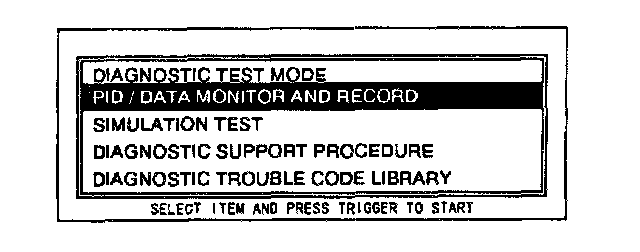
1. Connect the SSTs (NGS tester) to the data link connector-2 and select the PID/DATA MONITOR AND RECORD function.
2. Select the "RPM" on the NGS tester display.
3. Start the engine and let it idle.
4. Disconnect each high-tension lead and measure the engine speed.
5. Compare the engine speed decrease amounts.