Engine - Coolant Temperature Sensor/Switch: Testing and Inspection
NOTE: Perform the following test only when directed.Resistance Inspection
1. Drain the engine coolant.
2. Remove the ECT sensor.
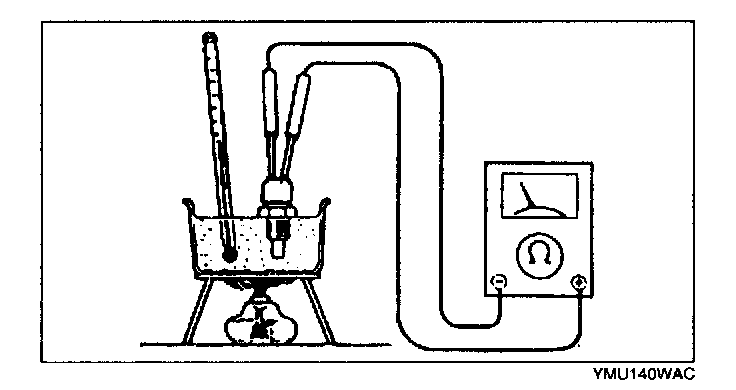
3. Place the ECT sensor in water with a thermometer, and heat the water gradually.
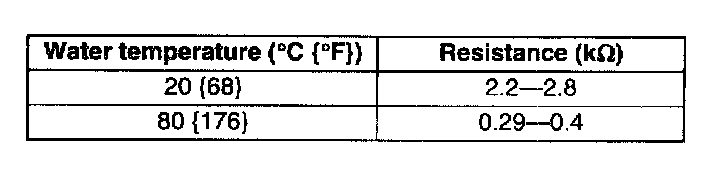
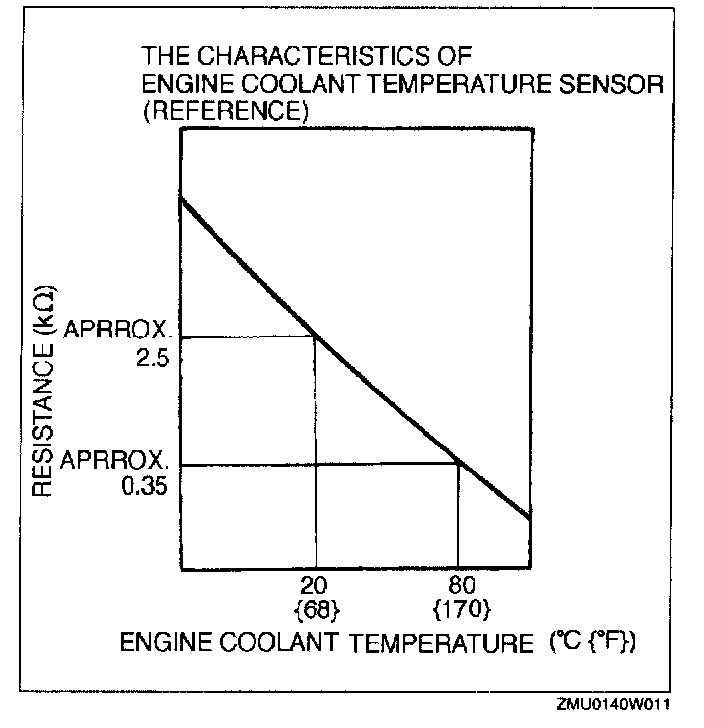
4. Measure the resistance between the ECT sensor terminals using an ohmmeter.
- If not as specified, replace the ECT sensor.
- If the ECT sensor is okay, but PID value or PCM terminal 38 voltage are out of specification, perform the "Circuit Open/Short Inspection".
Circuit Open/Short Inspection
1. Disconnect the PCM connector.
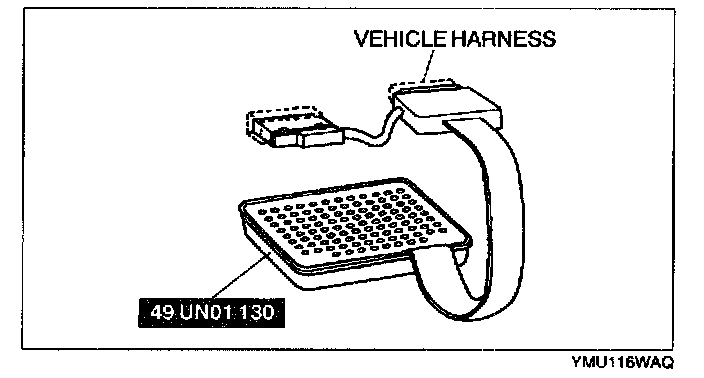
2. Connect the SST (104 Pin Breakout Box) with the PCM disconnected.
3. Tighten the connector attaching bolt.
Tightening torque
3.0 - 5.4 N.m (30 - 56 kgf.cm, 27 - 48 in.lbf}
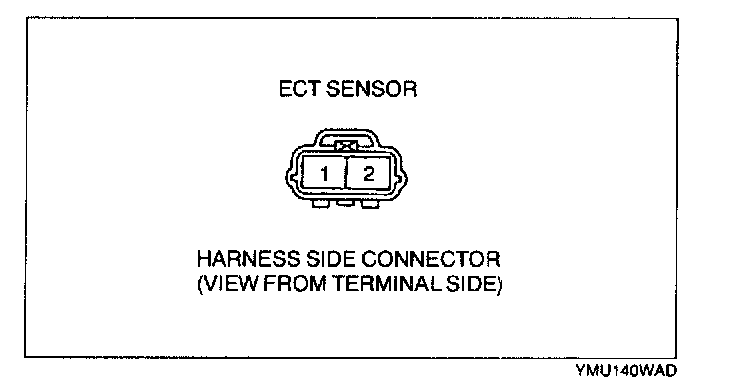
4. Inspect the following wiring harness for open or short (Continuity check).
Open circuit
- If there is no continuity, the circuit is open. Repair or replace the harness.
- ECT sensor terminal 1 (harness-side) and 104 pin breakout box terminal 38
- ECT sensor terminal 2 (harness-side) and 104 pin breakout box terminal 91
Short circuit
- If there is continuity, the circuit is shorted. Repair or replace the harness.
- ECT sensor terminal 1 (harness-side) and power supply
- ECT sensor terminal 1 (harness-side) and body ground
- ECT sensor terminal 2 (harness-side) and power supply