Component Tests and General Diagnostics
SPARK PLUG INSPECTION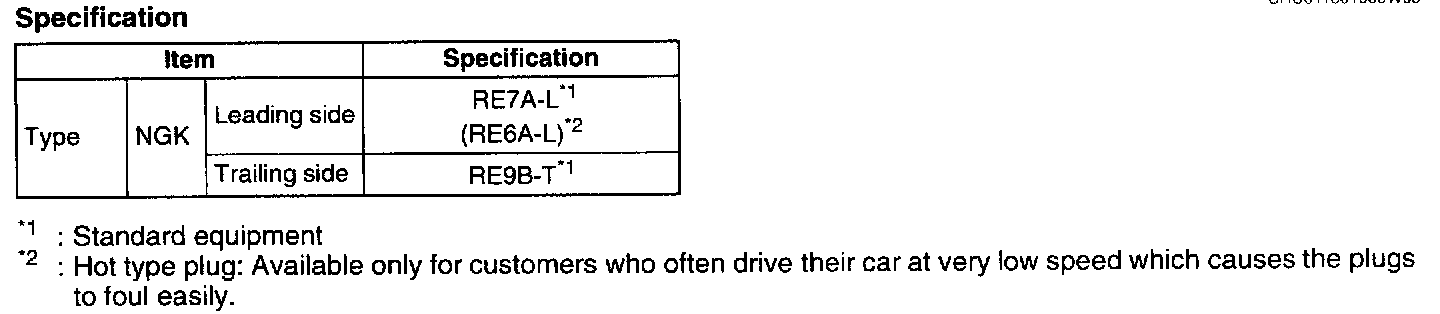
Plug Gap Inspection
CAUTION:
- To avoid possible damage to the tip, do not adjust the plug gap.
- To prevent damaging the tip, use wire type plug gap gauge when inspecting the plug gap.
1. Measure the spark plug gap using wire type plug gap gauge.
- If it is more than the maximum specification, replace the spark plug.
Standard plug gap: 1.15 - 1.25 mm {0.046 - 0.049 in}
Maximum plug gap
Leading side: 1.5 mm {0.059 in}
Trailing side: 1.4 mm {0.055 in}
Cleaning
CAUTION: To avoid possible damage to the tip, do not use a wire brush to clean the plug.
NOTE: To avoid possible damage to the tip, use gasoline to clean the spark plugs after removing dirt.
Visual inspection
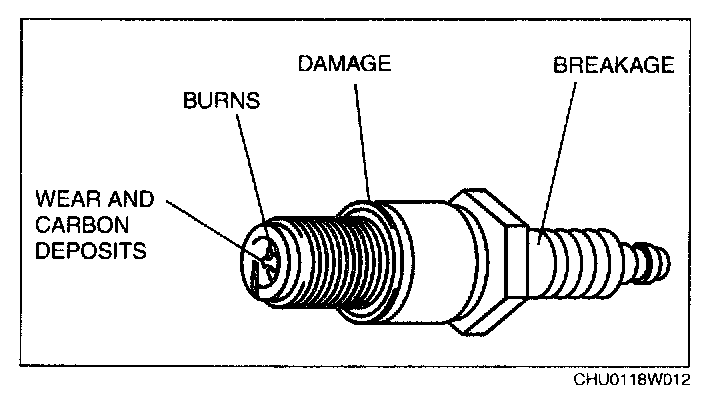
1. Inspect the following items:
- If there is any malfunction, replace the spark plug.
- Insulator breakage
- Worn electrode
- Damaged gasket
- Badly burned insulator (sparking side)
Resistance Inspection
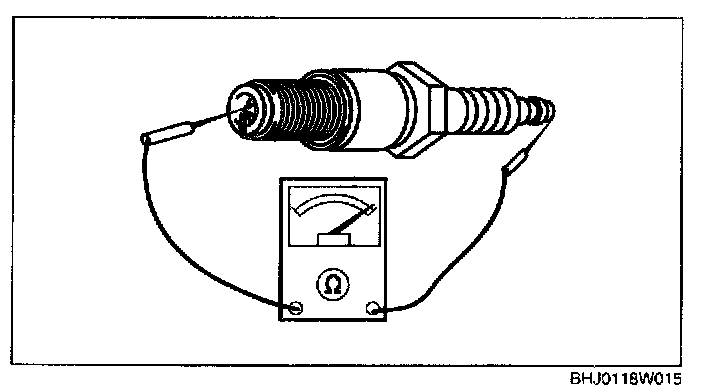
1. Measure the resistance of the spark plug using a tester as shown in the figure.
- If not within the specification, replace the spark plug.
Resistance: 3.0 - 7.5 kOhms [25 °C {77 °F}]