Fuel Pressure Release: Service and Repair
FUEL SYSTEM PRESSURE RELEASEWARNING:
- Do not smoke or carry lighted tobacco or open flame of any type when working on or near any fuel-related component. Highly flammable mixtures are always present and may be ignited. Failure to follow these instructions may result in serious personal injury.
- Do not carry personal electronic devices such as cell phones, pagers or audio equipment of any type when working on or near any fuel related components. Highly flammable mixtures are always present and may be ignited. Failure to follow these instructions may result in serious personal injury.
- Fuel in the fuel system remains under high pressure, even when the engine is not running. Before servicing or disconnecting any of the fuel lines or fuel system components, the fuel system pressure must be relieved to prevent accidental spraying of fuel. Failure to follow these instructions may result in serious personal injury.
1. With the vehicle in NEUTRAL, position it on a hoist. See LIFTING.
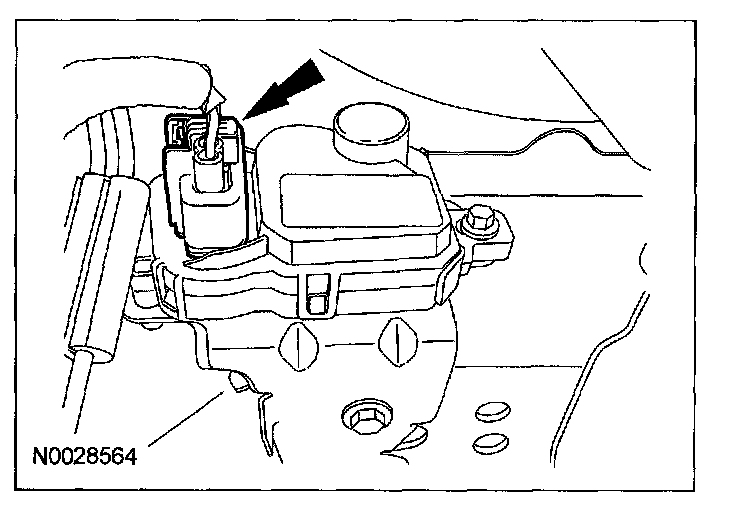
2. Disconnect the fuel pump (FP) driver module electrical connector.
3. Start the engine and allow it to idle until it stalls.
4. After the engine stalls, crank the engine for approximately 5 seconds to make sure the fuel injection supply manifold pressure has been released.
5. Turn the ignition switch to the OFF position.
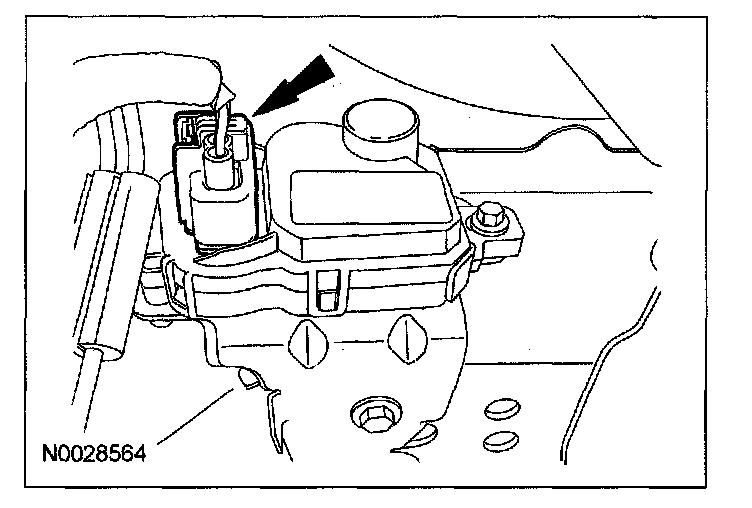
6. When fuel system service is complete, connect the FP driver module electrical connector.
7. Cycle the ignition key and wait 3 seconds to pressurize the fuel system. Check for leaks before starting the engine.
NOTE: It may take more than one key cycle to pressurize the fuel system.
8. Start the vehicle and check the fuel system for leaks.