Pinpoint Test 5: The Power Seat Does Not Move Horizontally/Vertically
PINPOINT TEST 5: THE POWER SEAT DOES NOT MOVE HORIZONTALLY/VERTICALLYNormal Operation
When pressed in one of 6 available directions, the power seat switch supplies battery voltage and ground to one of three seat track assembly motors through horizontal motor circuits (G/V) and (G), front height motor circuits (GY) and (W/V) or rear height motor circuits (Y/L) and (L/BR). The power seat switch is normally closed to ground on all 6 of the power seat motor assembly, left circuits, so if one circuit becomes closed to power, the circuit on the opposite side of the same motor is still closed to ground. The power seat motor assembly will then operate, moving the seat track in the selected direction. Moving the power seat switch in the opposite direction reverses polarity to the power seat motor assembly which causes the power seat motor assembly to move the seat track in the opposite direction.
Possible Causes
- Wiring, terminals or connectors
- Power seat switch
- Seat track
Diagnostic Procedures
NOTE:
- The air bag warning indicator illuminates when the restraints control module (RCM) fuse is removed and the key is in the ON position. This is normal operation and does not indicate a supplemental restraint system (SRS) fault.
- The supplemental restraint system (SRS) must be fully operational and free of faults before releasing the vehicle to the customer.
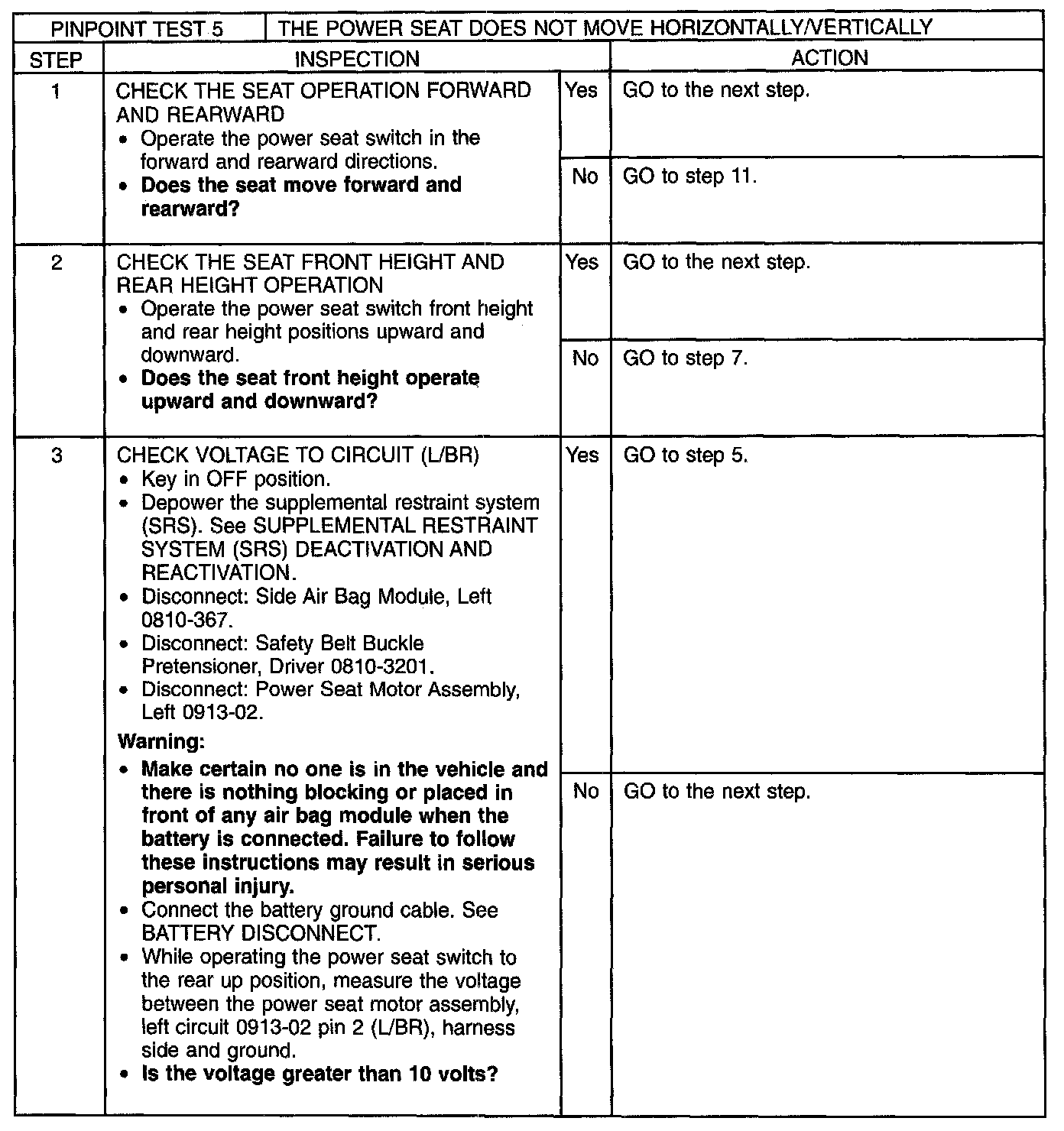
Step 1-Step 3:
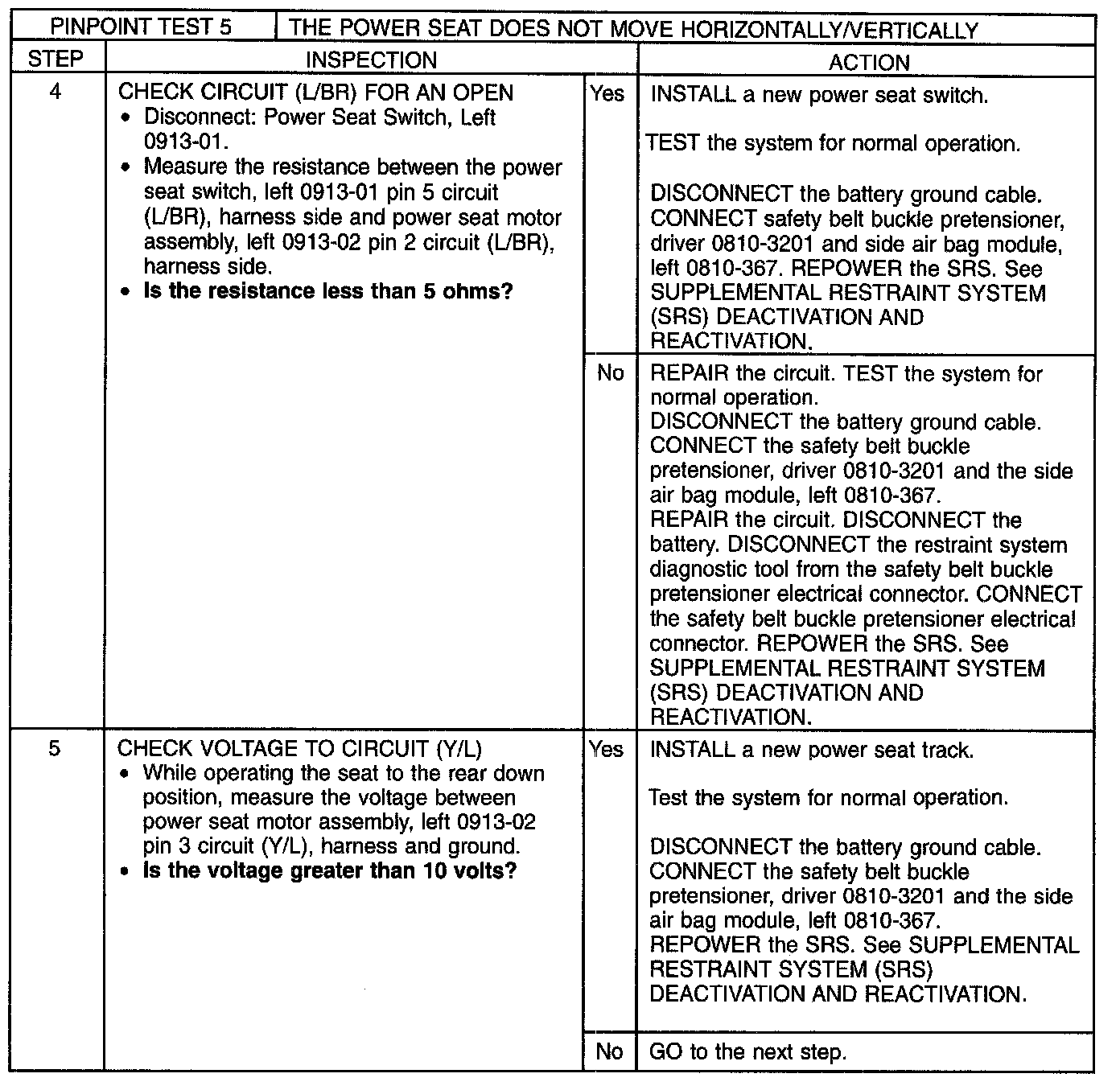
Step 4-Step 5:
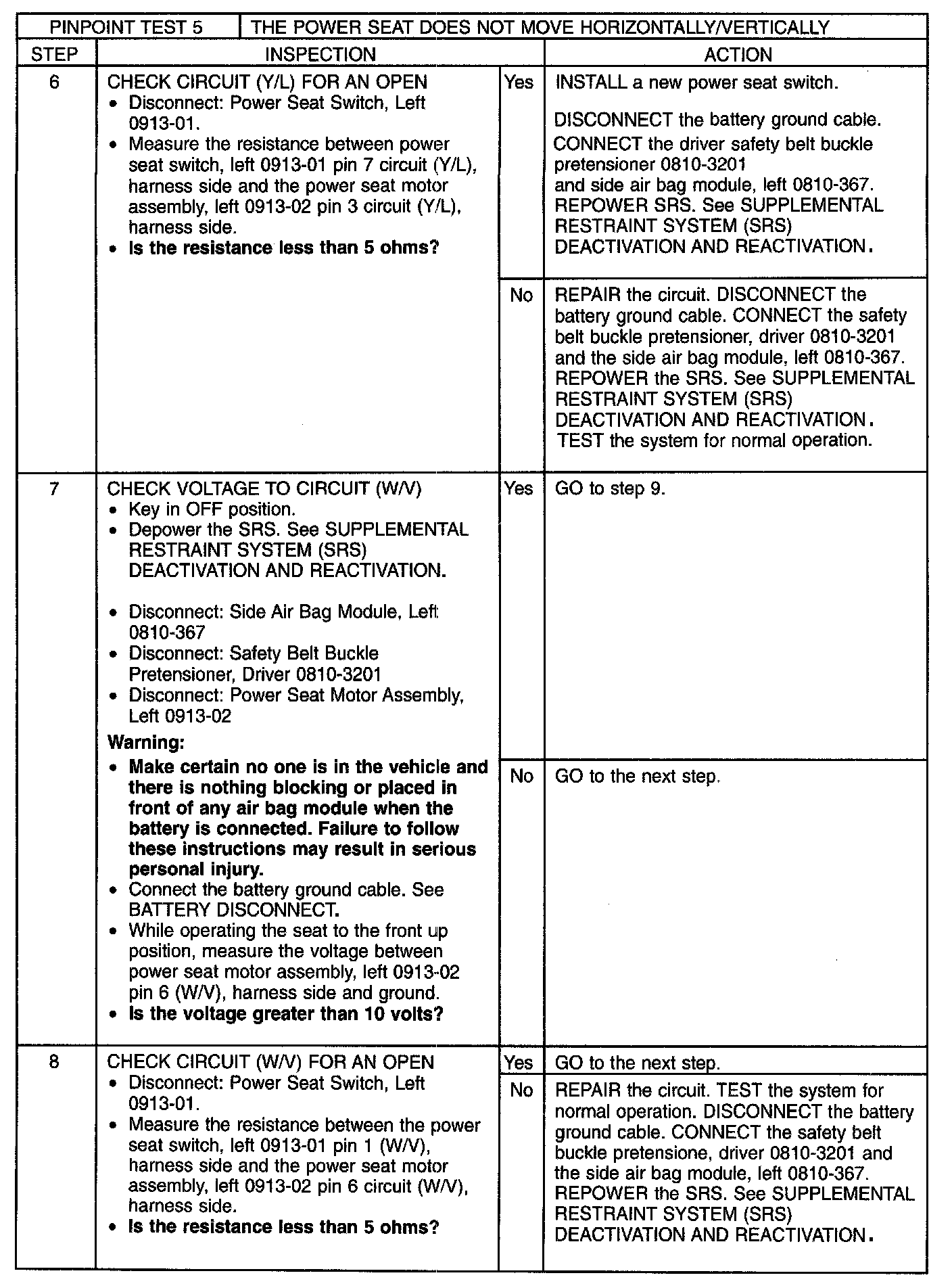
Step 6-Step 8:
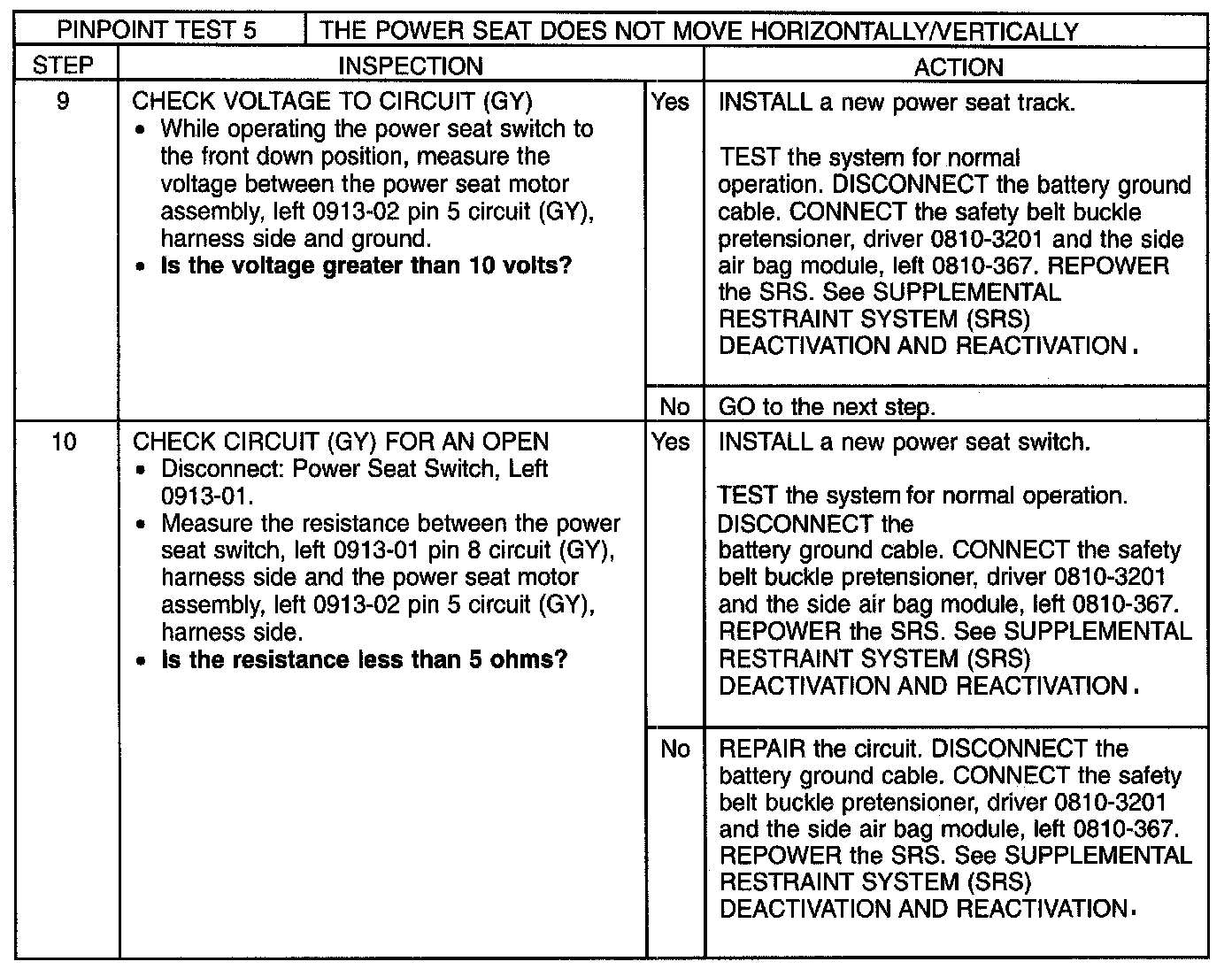
Step 9-Step 10:
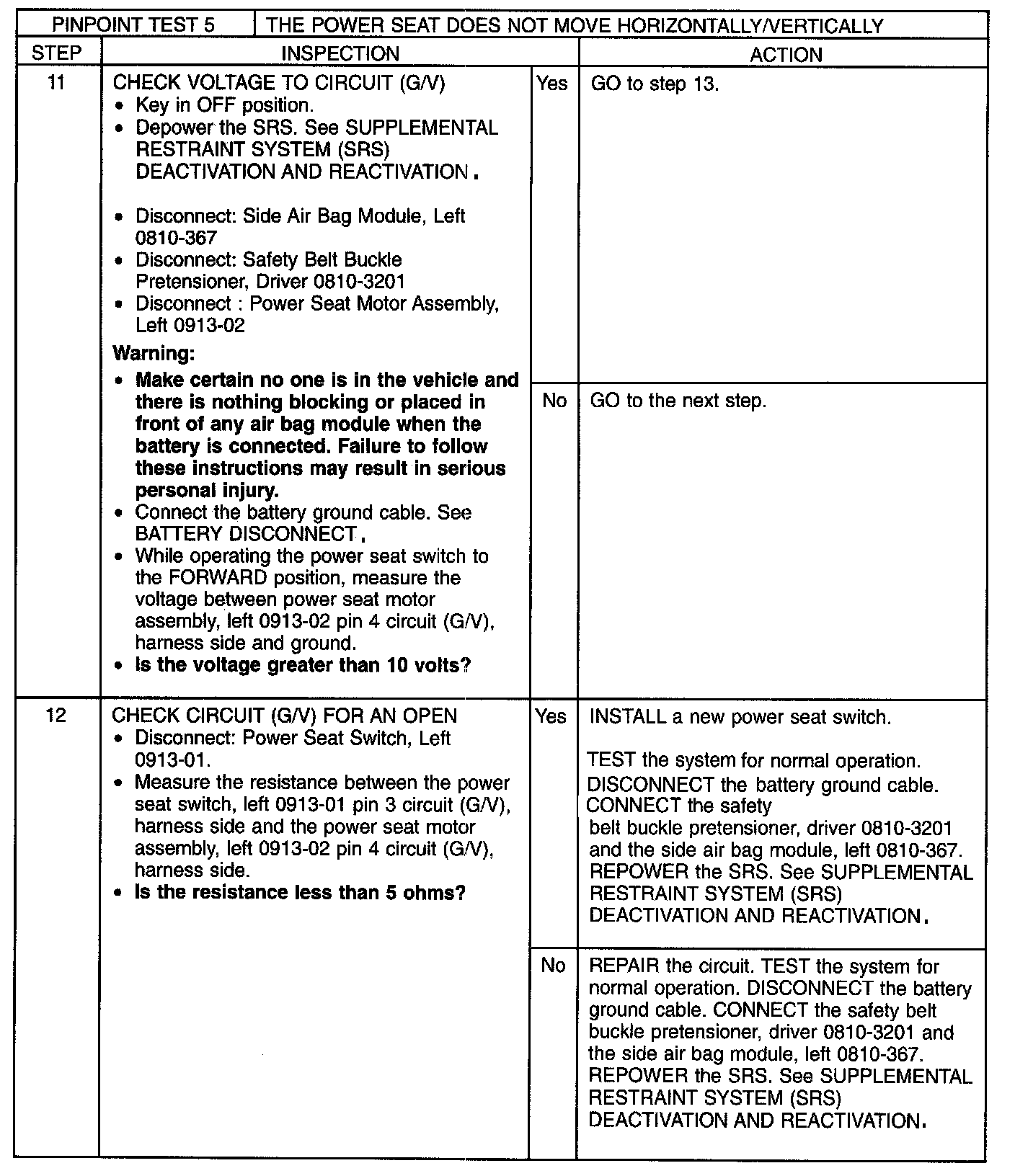
Step 11-Step 12:
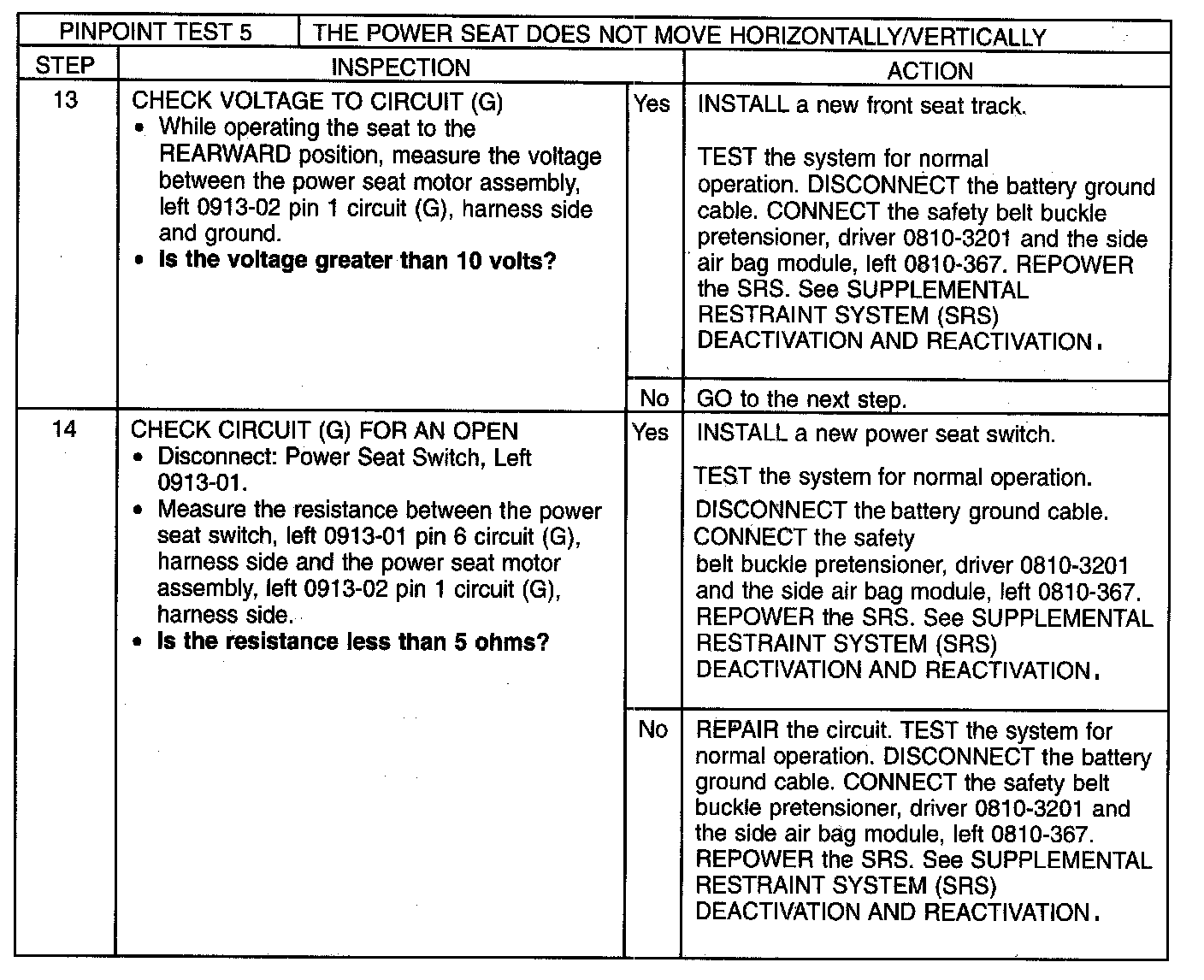
Step 13-Step 14: