Pinpoint Test 4: DTC B2290 - Occupant Classification System (Ocs) Fault
PINPOINT TEST 4: DTC B2290 - OCCUPANT CLASSIFICATION SYSTEM (OCS) FAULTNOTE: DTC B2290 reported by the restraints control module (RCM) is informational only and indicates the presence of a fault in the occupant classification sensor (OCS) module. Refer to the Supplemental Restraints System (SRS) DTC Chart when DTC B2290 is reported by the RCM for diagnostic instructions. The following pinpoint test must only be used to diagnose DTC B2290 when reported by the OCS module.
Normal Operation
The occupant classification sensor (OCS) is used to classify the front passenger seat occupant in the event of a deployable impact. See AIR BAG AND SAFETY BELT PRETENSIONER SUPPLEMENTAL RESTRAINT SYSTEM (SRS).
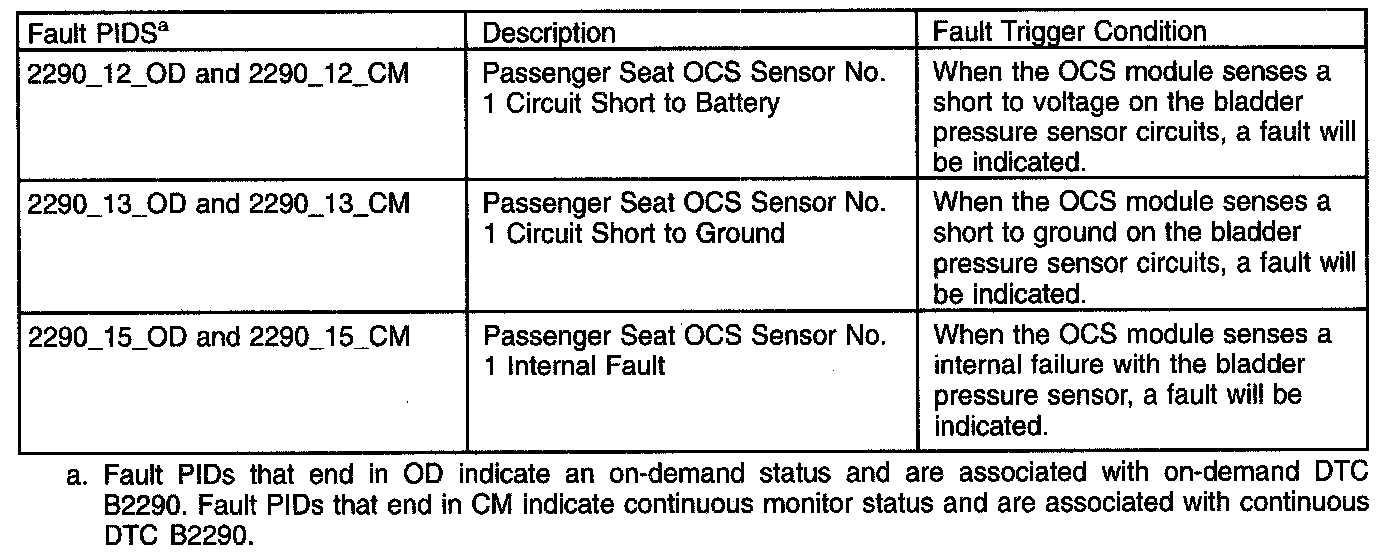
The OCS module monitors the pressure sensor and circuity for faults. If the OCS module detects a fault with the sensor or circuitry, it will store DTC B2290 in memory and send a message to the restraints control module (RCM) which will store DTC B2290 in memory and send a message to the instrument cluster module to illuminate the air bag warning indicator.
The OCS system components (seat cushion foam pad, bladder with pressure sensor and electronic control unit) are calibrated to each other and are serviced as an assembly. The OCS system components are not to be installed separately. If a new OCS system, OCS system component or seat cushion foam pad are needed, a new OCS system service kit (seat wiring harness, seat cushion frame, seat cushion foam pad, bladder with pressure sensor and electronic control unit) must be installed as an assembly.
Possible Causes
- Wiring, terminals or connectors
- Faulty OCS system component
- Pressure sensing fault
- Faulted module mounting condition
Diagnostic Procedure
WARNING:
- Do not handle, move or change the original horizontal mounting position of the restraints control module (RCM) while the RCM is connected and the ignition switch is ON. Failure to follow these instructions may result in the accidental deployment of the safety canopy and the risk of serious personal injury.
- Never probe the connectors on the air bag module. Failure to follow this instruction may result in the accidental deployment of the air bag and the risk of serious personal injury.
- The safety belt pretensioner and adaptive load limiting retractor are pyrotechnic devices. Always wear safety glasses when repairing an air bag equipped vehicle and when handling a safety belt buckle pretensioner or safety belt retractor pretensioner/adaptive load limiting retractor. Never probe a pretensioner or adaptive load limiting retractor electrical connector. Failure to follow these instructions may result in the accidental deployment of the safety belt pretensioner, adaptive load limiting retractor or air bag module and may result in serious personal injury.
CAUTION: Use the correct probe adapter(s) when taking measurements. Failure to use the correct probe adapter(s) may damage the connector.
NOTE:
- Most faults are due to connector and/or wiring concerns. Carry out a thorough inspection and verification before proceeding with the pinpoint test.
- The supplemental restraint system (SRS) must be fully operational and free of faults before releasing the vehicle to the customer.
- To identify between a production occupant classification sensor (OCS) system and an OCS system service kit (OCS service kit), inspect the OCS module electrical connector.
- A production OCS system allows the disconnect of the electrical connector from the OCS module.
- An OCS system service kit has the OCS module electrical connector glued to the module. It cannot and should not be disconnected or altered.
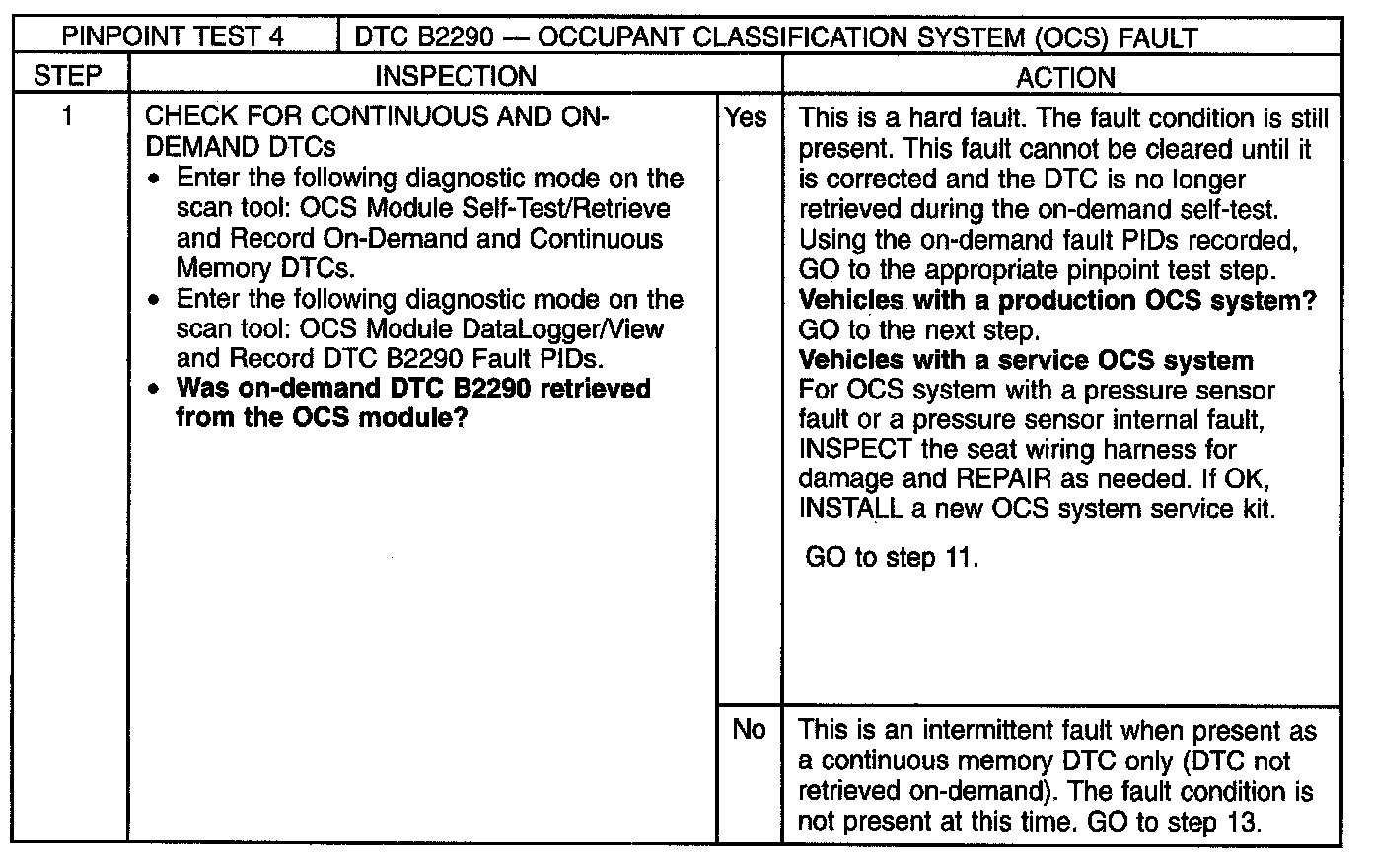
Step 1:
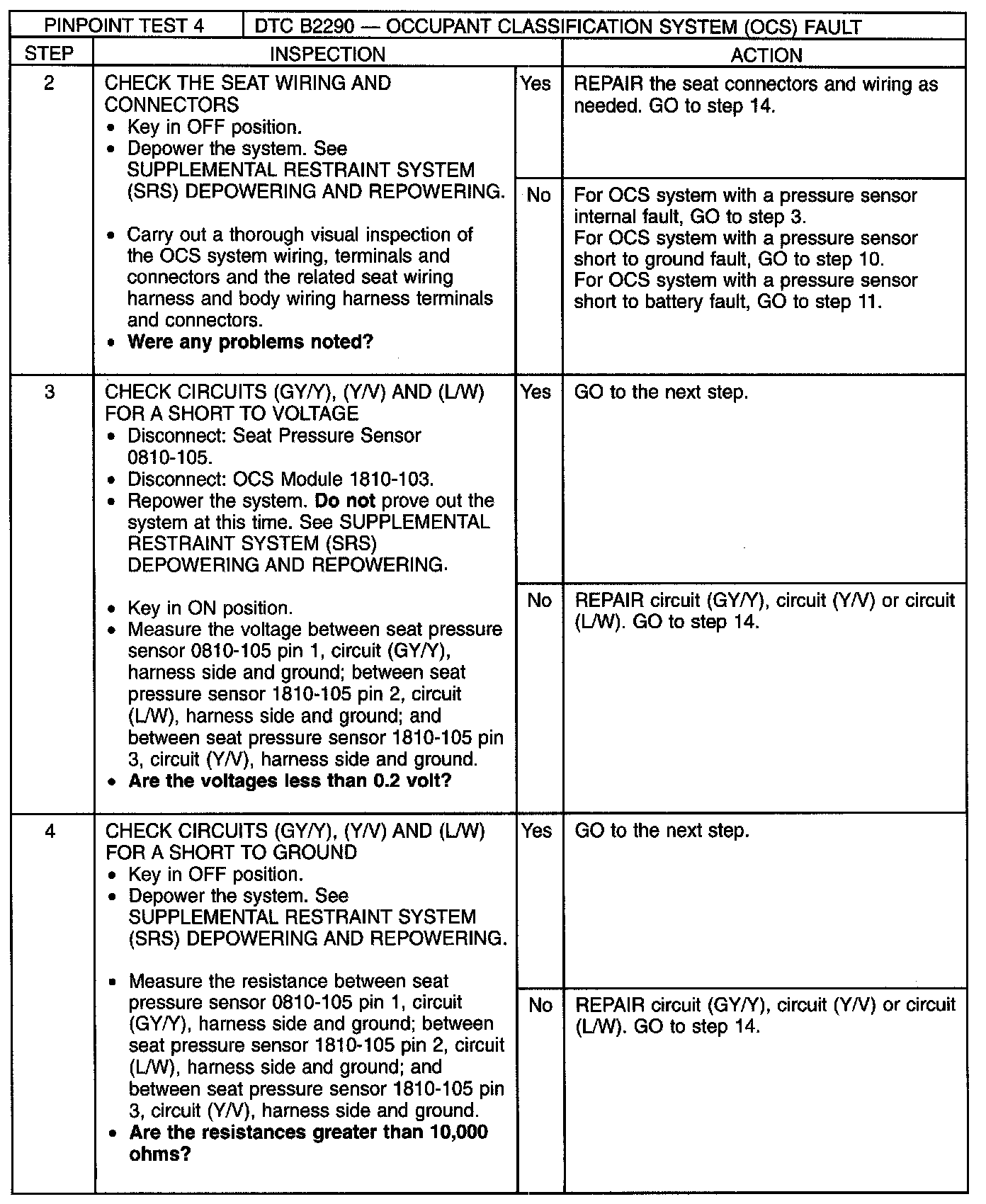
Step 2-Step 4:
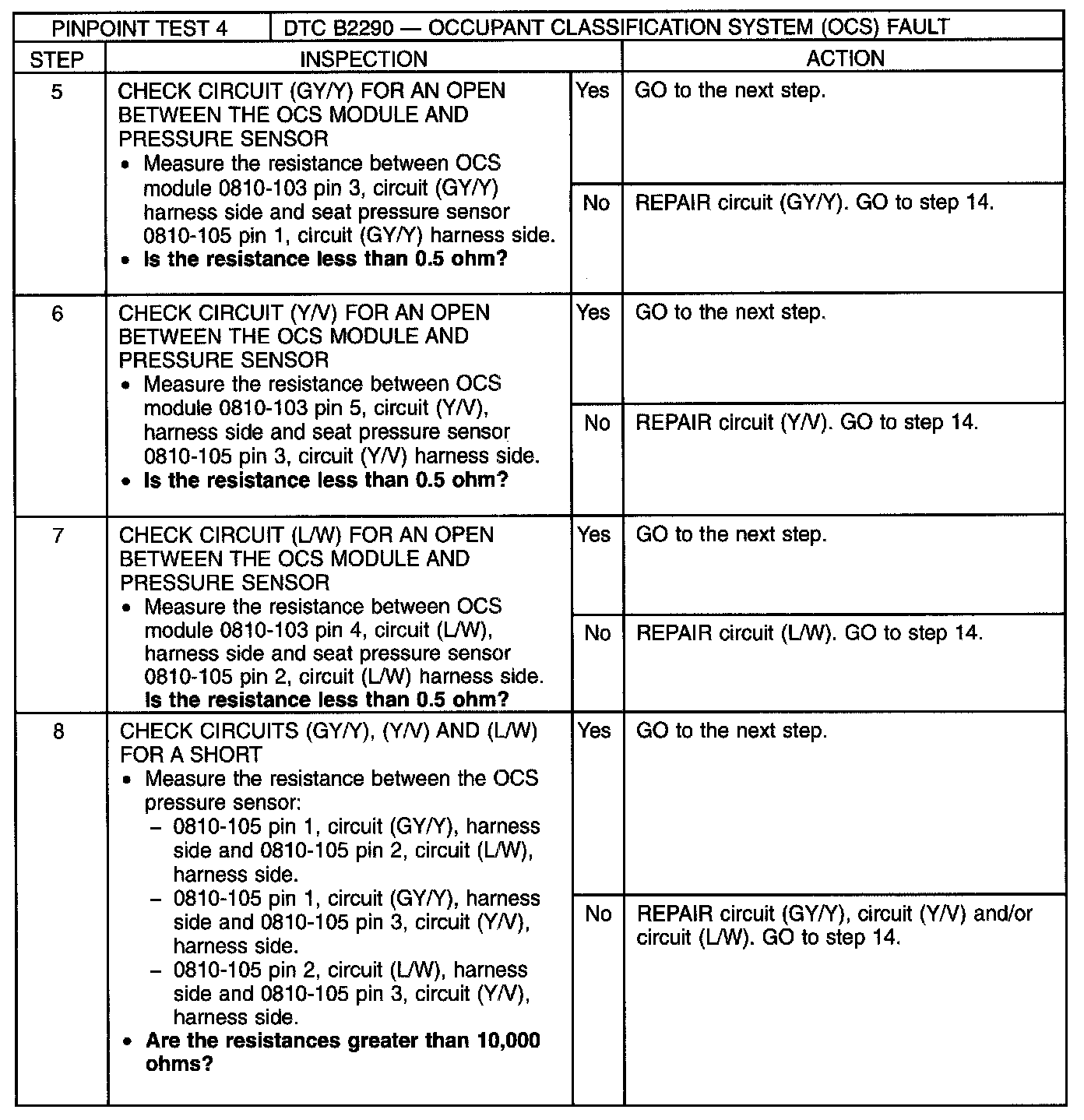
Step 5-Step 8:
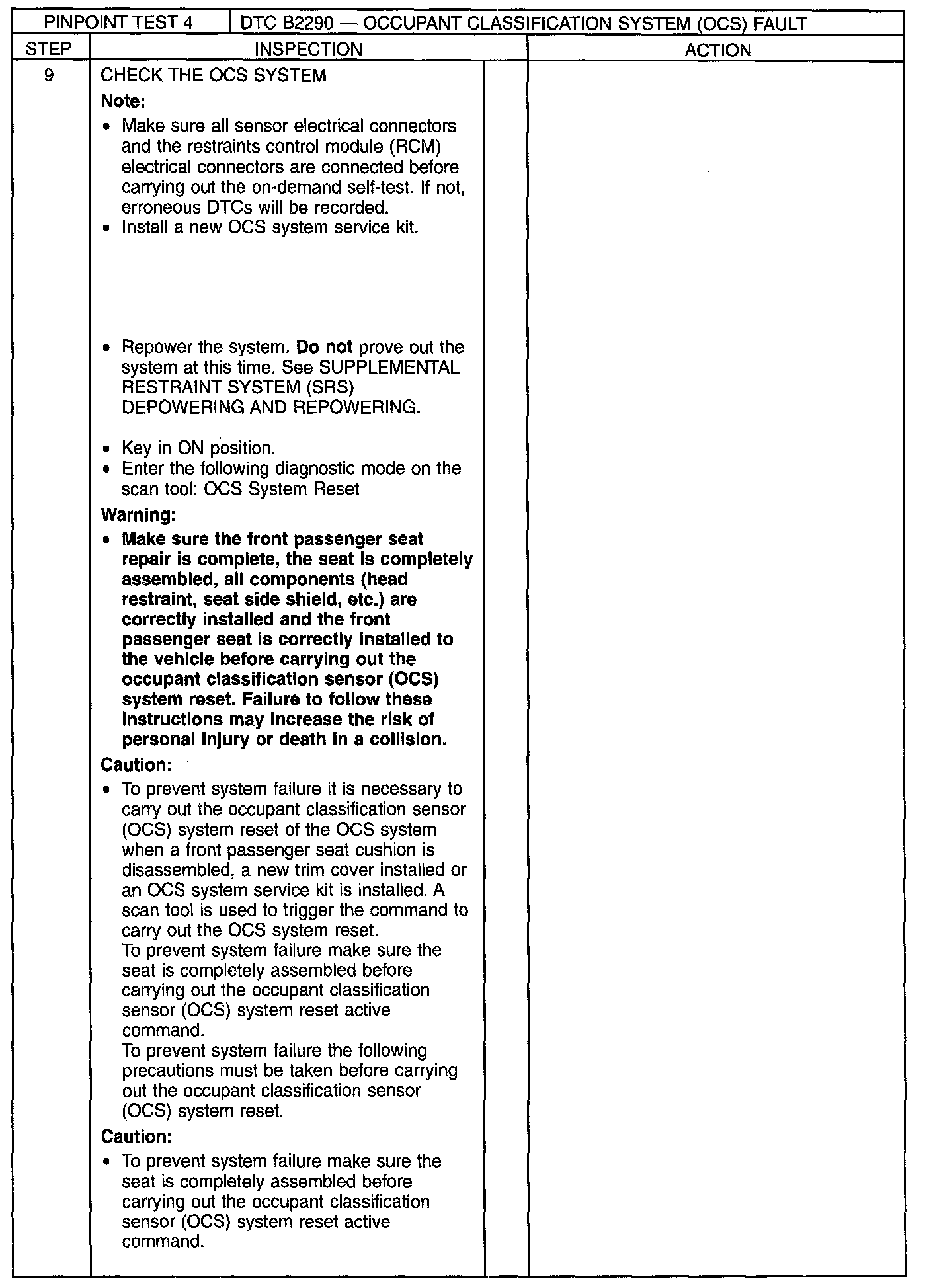
Step 9:
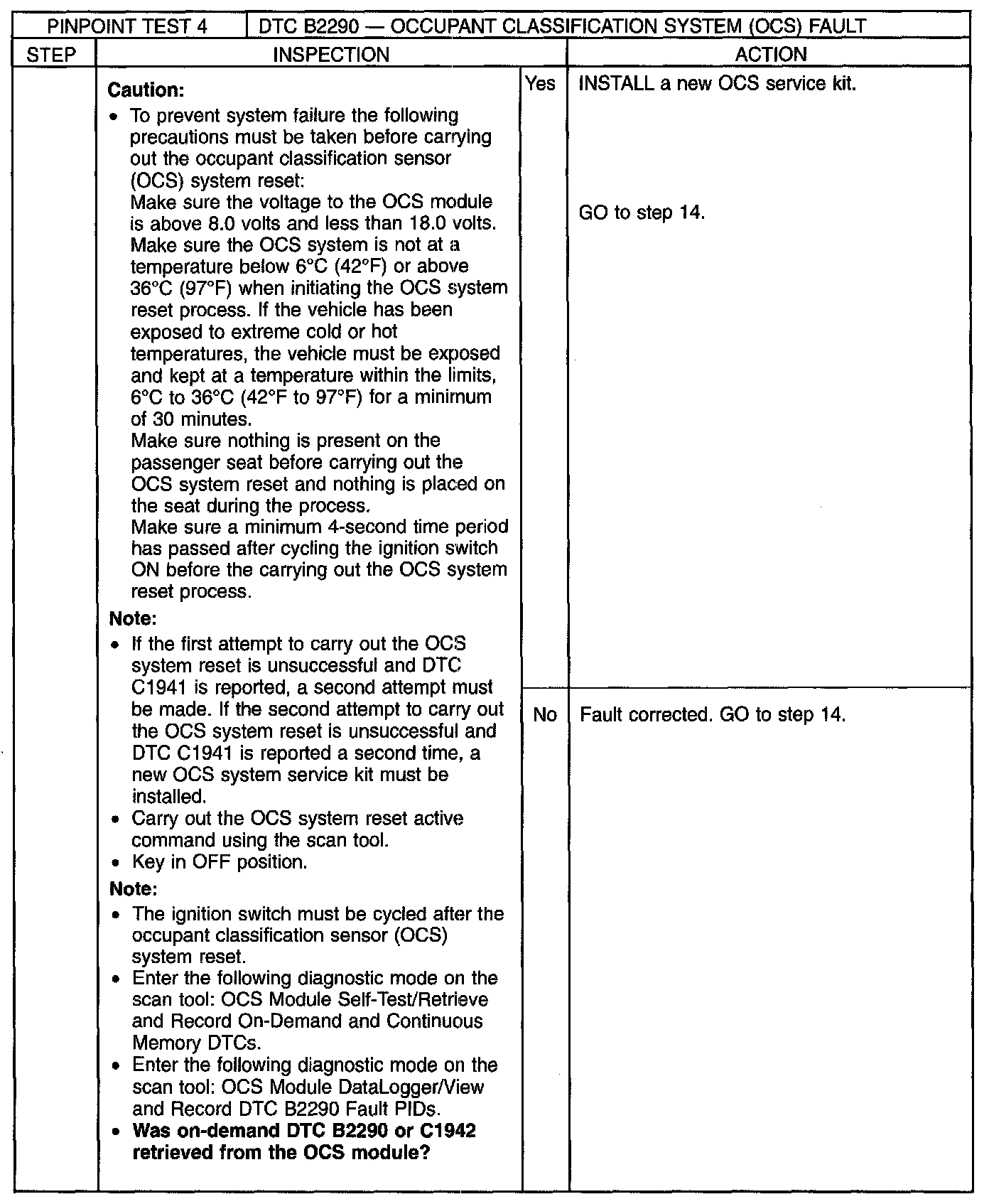
Step 9 (Continued):
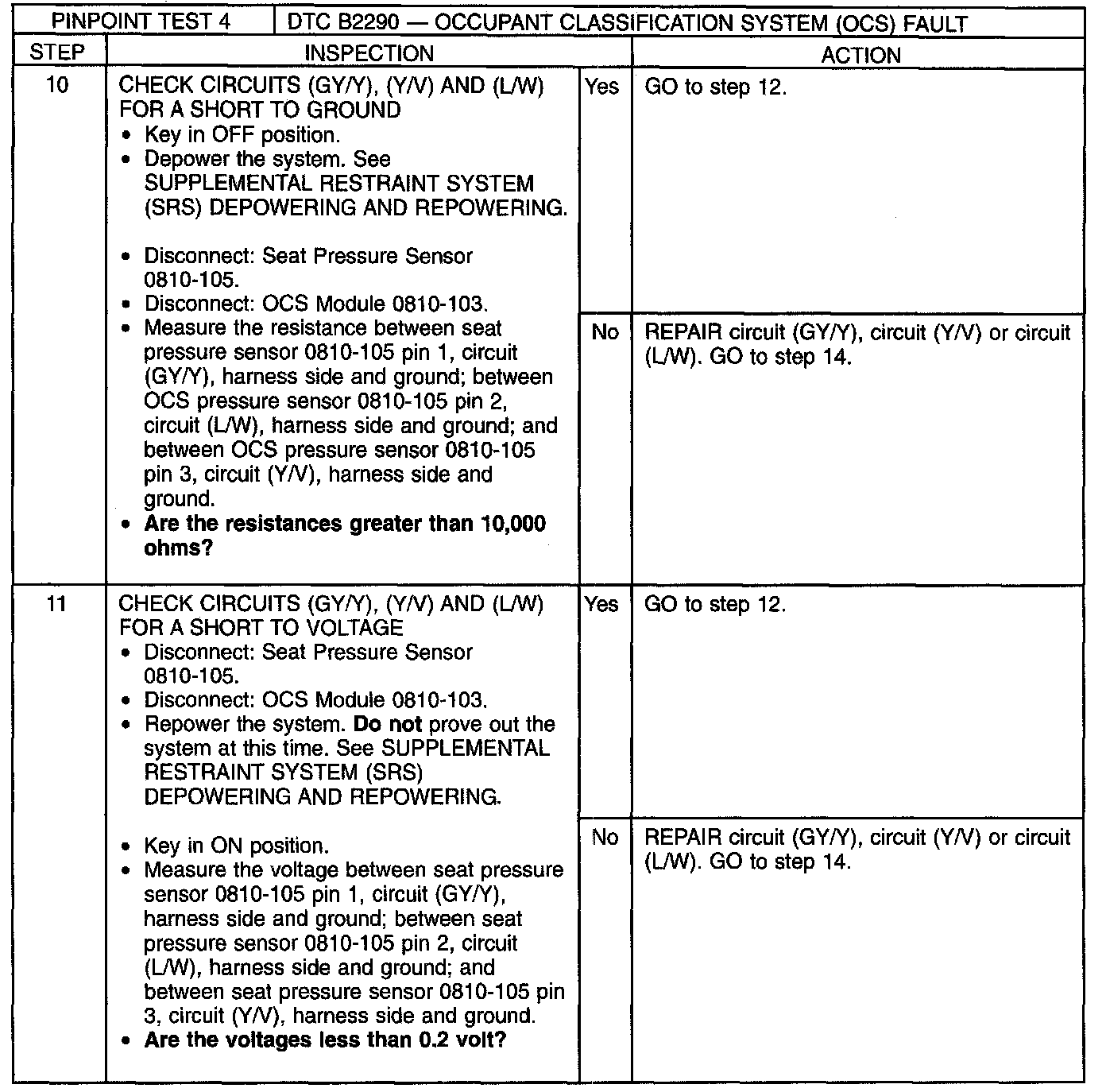
Step 10-Step 11:
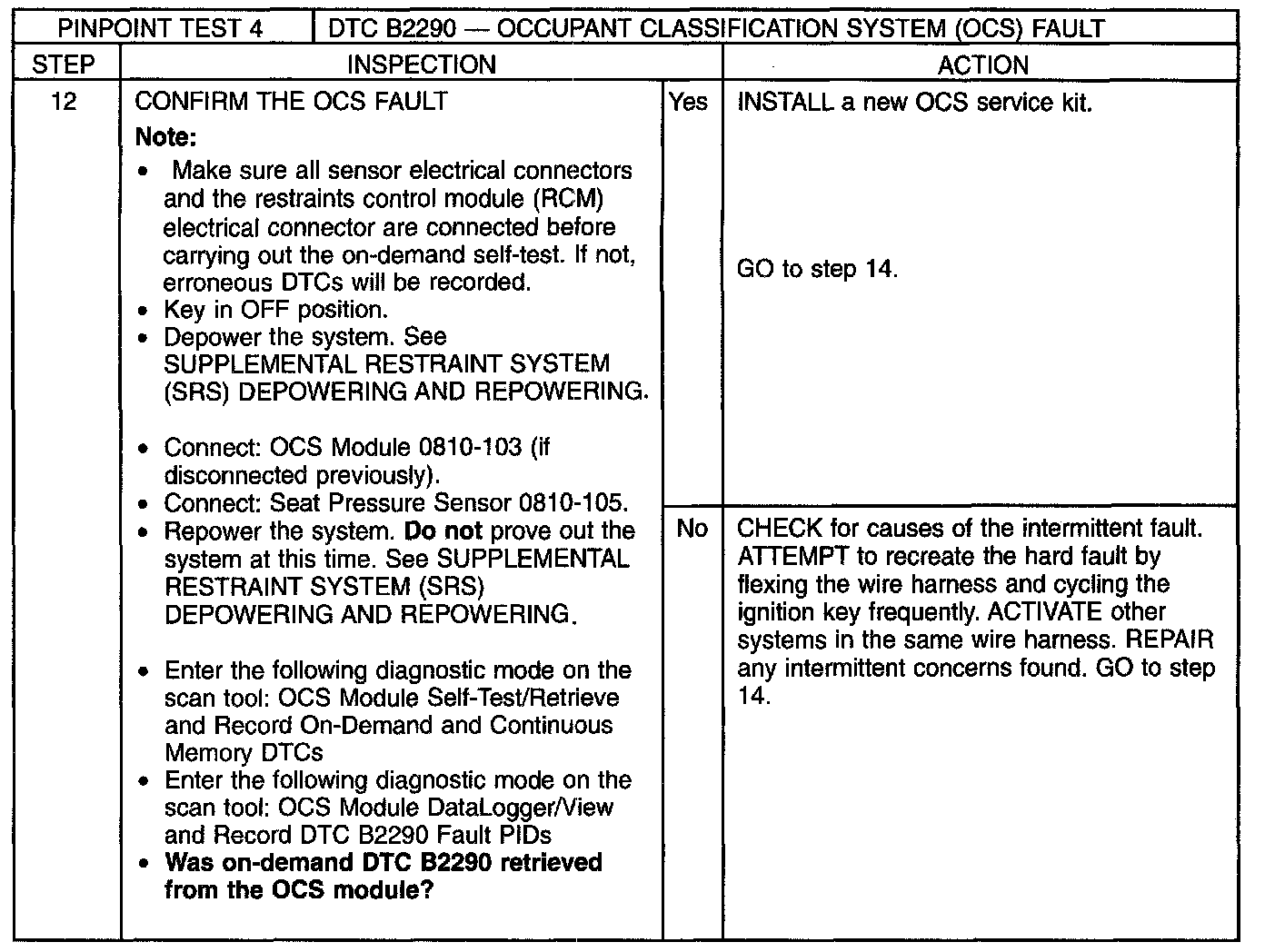
Step 12:
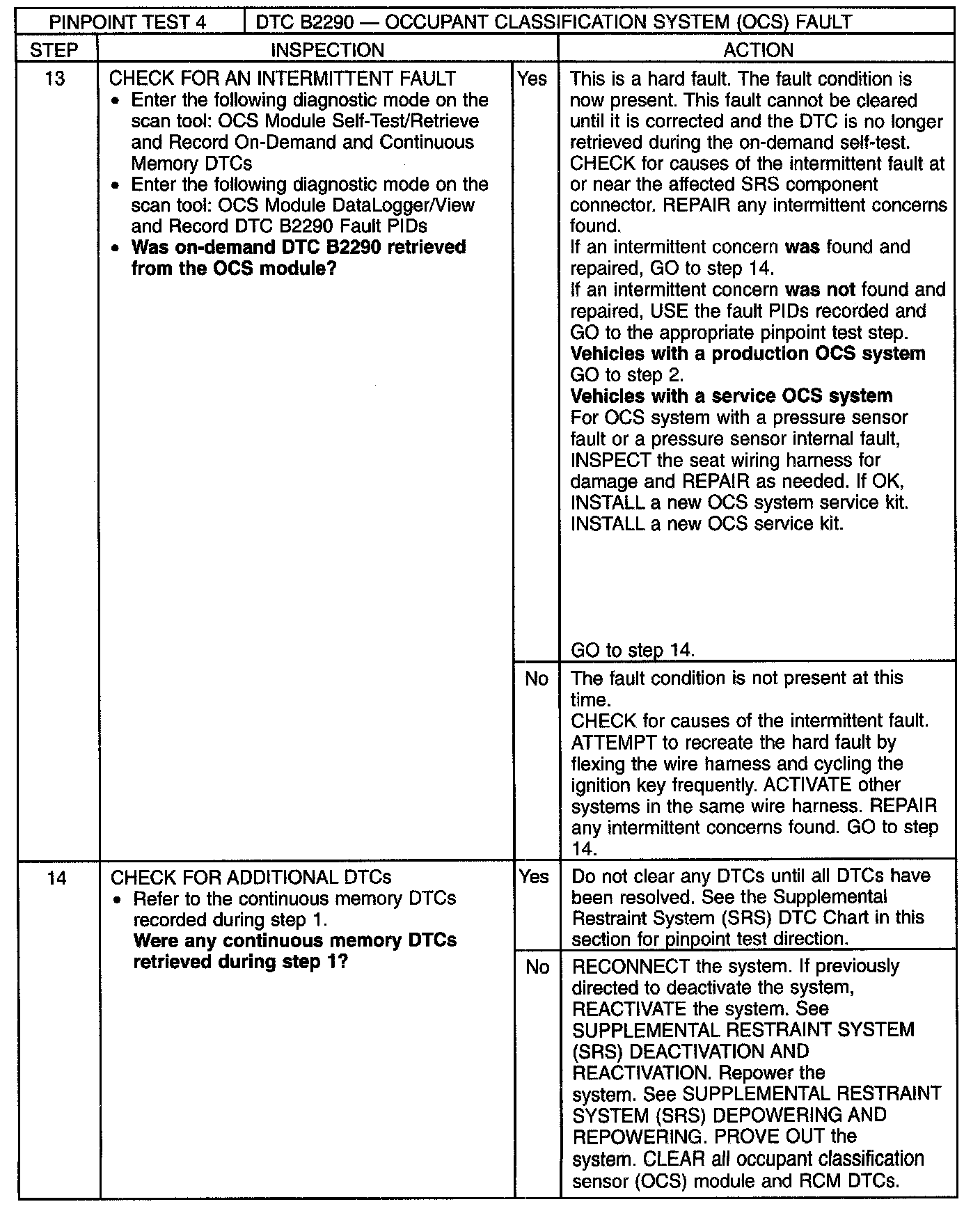
Step 13-Step 14: