Exhaust Gas Recirculation: Testing and Inspection
Fig. 32 Connecting A Vacuum Pump To The EGR System:
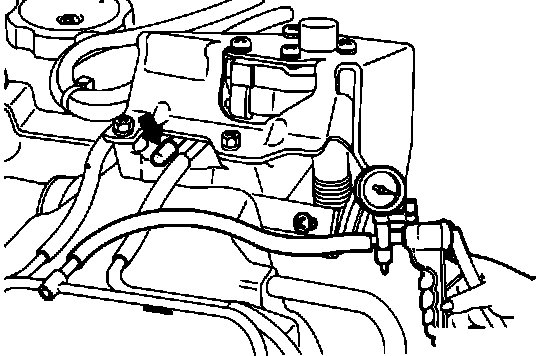
EGR SYSTEM INSPECTION
1. Disconnect the green striped vacuum hose from the throttle body and connect a hand vacuum pump to the disconnected hose.
2. While the engine is cold (coolant temperature less than 50 degrees C or 122 degrees F) apply vacuum with the engine at idle and verify that vacuum leaks.
3. Allow the engine to warm up and apply 50 mm Hg or 1.9 in. Hg of vacuum while the engine is idling and verify that vacuum holds.
4. Increase the vacuum to 170 mm Hg or 6.7 in. Hg and verify that vacuum holds and engine idle becomes unstable.
Fig. 33 Testing The EGR Valve:
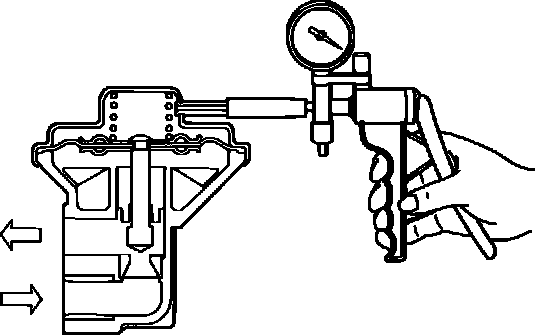
EGR VALVE INSPECTION
1. Remove the EGR valve from the vehicle and inspect it for sticking, carbon deposits, etc. If necessary clean the EGR valve with a suitable solvent.
2. Connect a hand vacuum pump to the EGR valve.
3. Apply 500 mm Hg 9.7 in. Hg of vacuum and verify that the diaphragm chamber is leak tight.
4. Apply 50 mm Hg or 1.9 in. Hg of vacuum and verify that air will not pass through the EGR valve.
5. Increase the vacuum to 170 mm or 6.7 in. Hg and verify that air will pass through the EGR valve.
6. Re-install the EGR valve and tighten to 19 - 28 Nm or 14 - 20 ft. lbs.
EGR Control Vacuum Nipple:
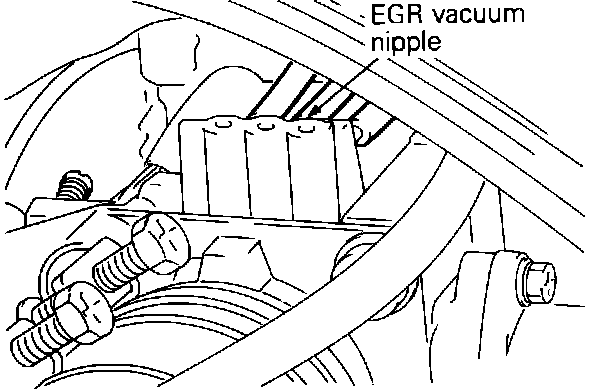
EGR VALVE CONTROL VACUUM INSPECTION
1. Warm up the engine (coolant temperature greater than 85 degrees C or 185 degrees F).
2. Disconnect the vacuum hose from the throttle body EGR vacuum nipple and connect a hand vacuum pump to the nipple.
EGR Control Vacuum vs Engine RPM:
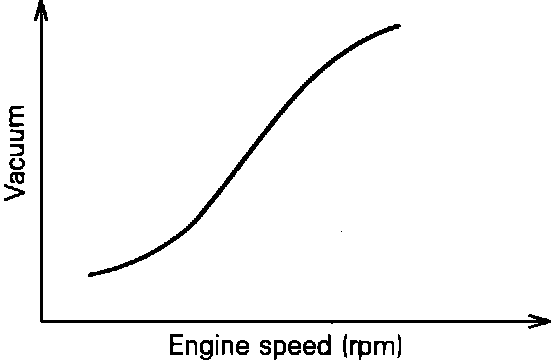
3. Race the engine and verify that vacuum rises with engine speed. If no vacuum is present the throttle body port may be plugged.
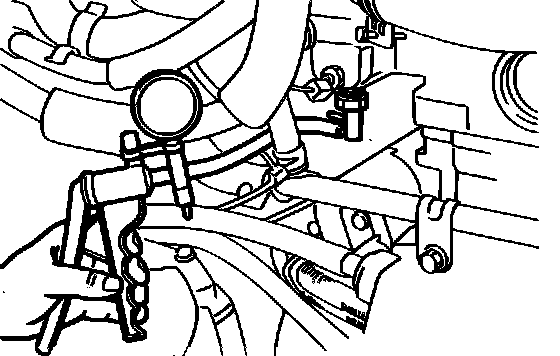
Fig. 34 Connecting A Vacuum Pump To The EGR System:
THERMO VALVE INSPECTION
1. Disconnect the vacuum hoses (white and green striped) from the thermo valve and connect a hand vacuum pump to the thermo valve.
2. While the engine is cold (coolant temperature less than 50 degrees C or 122 degrees F) apply vacuum and verify that vacuum leaks.
3. Allow the engine to warm up (coolant temperature greater than 80 degrees C or 176 degrees F), apply vacuum and verify that vacuum holds.
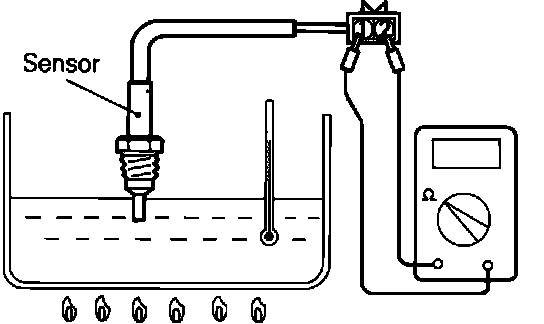
Fig. 35 Testing The Thermo Valve:
EGR TEMPERATURE SENSOR INSPECTION (CALIFORNIA VEHICLES ONLY)
1. Remove the EGR temperature sensor from the vehicle and place it in water.
2. Heat the water to 50 degrees C and verify that the sensor resistance is 60k - 83k ohms.
3. Heat the water to 100 degrees C or 212 degrees F and verify that the sensor resistance is 11k - 14k ohms.
4. When re-installing the sensor torque to 10 - 12 Nm or 7 - 9 ft. lbs.