Part 2
STEP 22. Check the CAN_L and H lines (communication lines only) between intermediate connector and the g and yaw rate sensor for short circuit. Measure the resistance at intermediate connector C-24.CAUTION: A digital multimeter should be used. For details refer to Service Precautions/Vehicle Damage Warnings.
CAUTION: The test wiring harness should be used. For details refer to Service Precautions/Vehicle Damage Warnings.
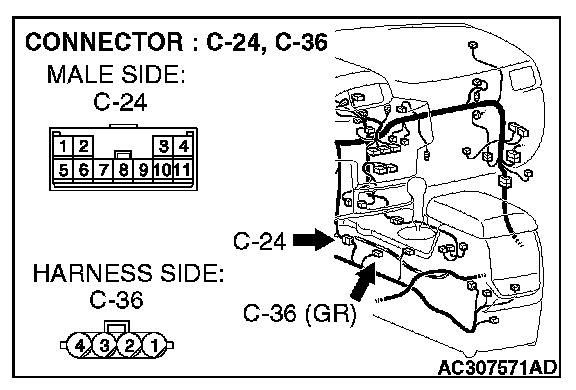
1. Disconnect intermediate connector C-24 and g and yaw rate sensor connector C-36, and measure the resistance at the wiring harness side of intermediate connector C-24.
2. Turn the ignition switch to the "LOCK" (OFF) position.
CAUTION: Disconnect the negative battery terminal. For details refer to Service Precautions/Vehicle Damage Warnings.
3. Disconnect the negative battery terminal.
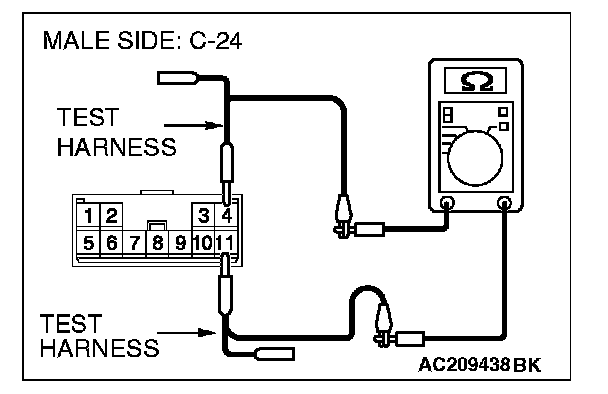
4. Measure the resistance between intermediate connector terminals 4 and 11.
OK: 1 kOhms or more
CAUTION: Strictly observe the specified wiring harness repair procedure. For details refer to Precautions on How to Repair The CAN Bus Lines.
Q: Does the resistance measure 1 kOhms or more?
YES:
NO:
STEP 23. Check the g and yaw rate sensor for short circuit. Measure the resistance at g and yaw rate sensor connector C-36.
CAUTION: A digital multimeter should be used. For details refer to Service Precautions/Vehicle Damage Warnings.
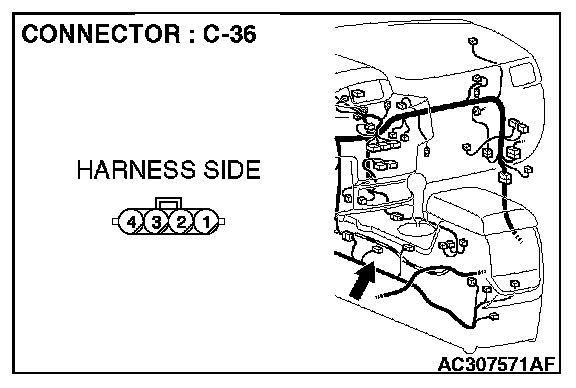
1. Disconnect g and yaw rate sensor connector C-36, and measure the resistance at the equipment side of g and yaw rate sensor connector C-36.
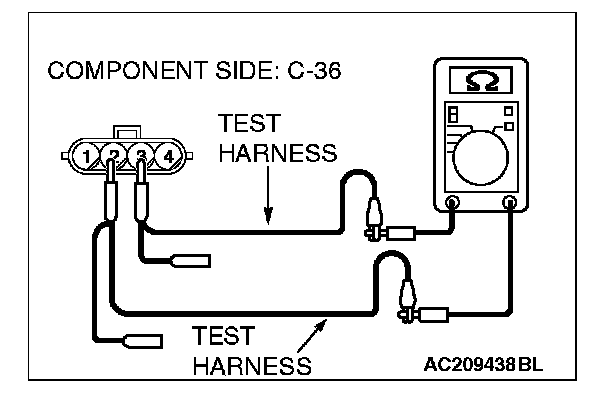
2. Measure the resistance between the g and yaw rate sensor connector terminals 2 and 3.
OK: 1 kOhms or more
Q: Does the resistance measure 1 kOhms or more?
YES:
NO:
STEP 24. Check the CAN_L and H lines (communication lines only) between joint connector (4) and the intermediate connector for short circuit. Measure the resistance at joint connector (4) C-101.
CAUTION: A digital multimeter should be used. For details refer to Service Precautions/Vehicle Damage Warnings.
CAUTION: The test wiring harness should be used. For details refer to Service Precautions/Vehicle Damage Warnings.
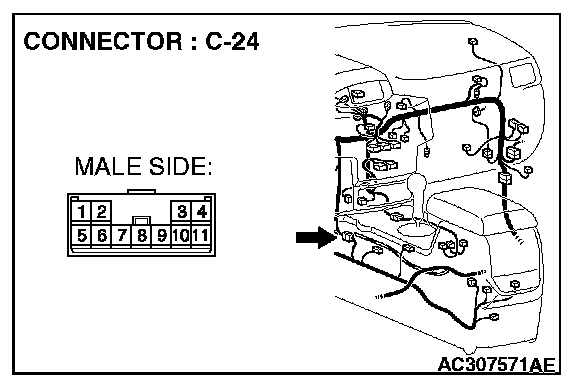
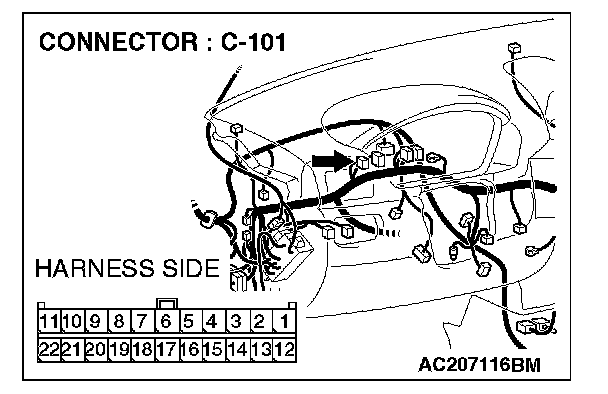
1. Disconnect intermediate connector C-24 and joint connector (4) C-101, and measure the resistance at the wiring harness side of joint connector (4) C-101.
2. Turn the ignition switch to the "LOCK" (OFF) position.
CAUTION: Disconnect the negative battery terminal. For details refer to Service Precautions/Vehicle Damage Warnings.
3. Disconnect the negative battery terminal.
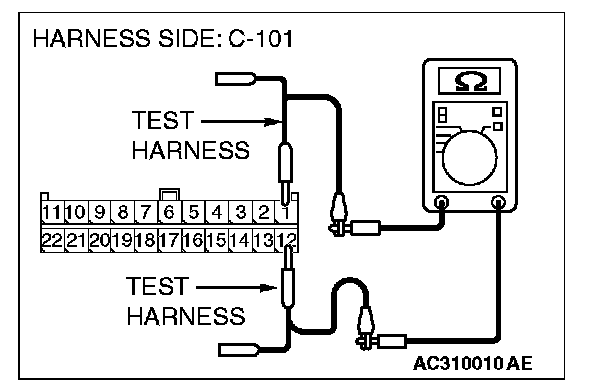
4. Measure the resistance between joint connector (4) terminals 1 and 12.
OK: 1 kOhms or more
CAUTION: Strictly observe the specified wiring harness repair procedure. For details refer to Precautions on How to Repair The CAN Bus Lines.
Q: Does the resistance measure 1 kOhms or more?
YES:
NO:
STEP 25. Check the CAN_L and H lines (communication lines including the steering wheel sensor) between joint connector (4) and the steering wheel sensor for short circuit. Measure the resistance at joint connector (4) C-101.
CAUTION: A digital multimeter should be used. For details refer to Service Precautions/Vehicle Damage Warnings.
CAUTION: The test wiring harness should be used. For details refer to Service Precautions/Vehicle Damage Warnings.
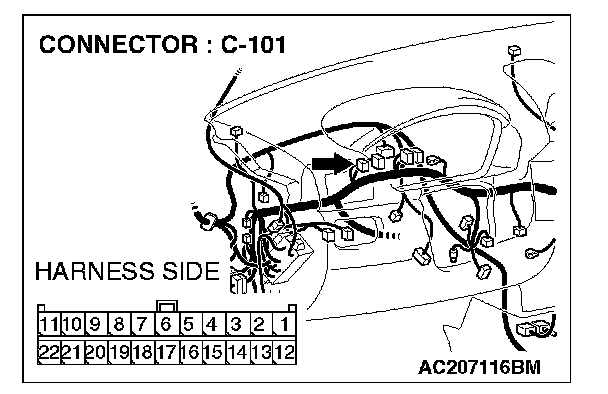
1. Disconnect joint connector (4) C-101, and measure the resistance at the wiring harness side of joint connector (4) C-101.
2. Turn the ignition switch to the "LOCK" (OFF) position.
CAUTION: Disconnect the negative battery terminal. For details refer to Service Precautions/Vehicle Damage Warnings.
3. Disconnect the negative battery terminal.
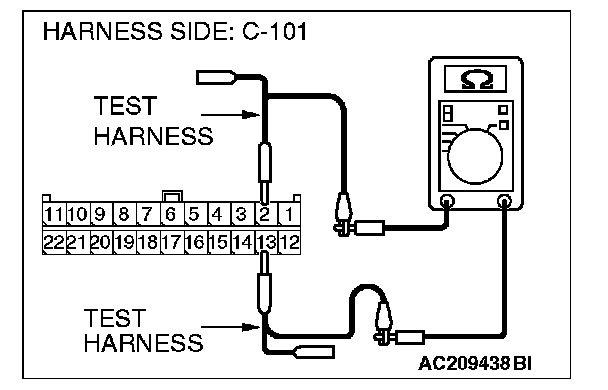
4. Measure the resistance between joint connector (4) terminals 2 and 13.
OK: 1 kOhms or more
Q: Does the resistance measure 1 kOhms or more?
YES:
NO:
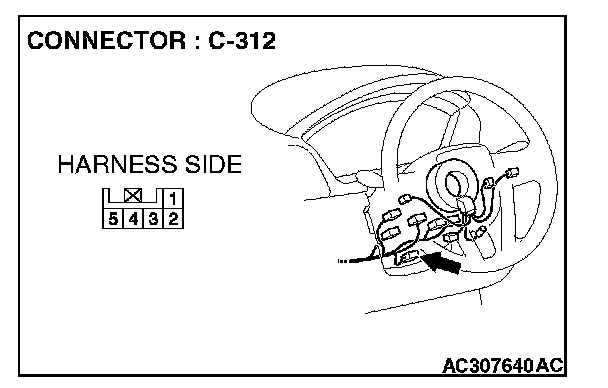
STEP 26. Check steering wheel sensor connector C-312 for loose, corroded or damaged terminals, or terminals pushed back in the connector.
CAUTION: The strand end of the twist wire should be within 10 cm (4 inches) from the connector. For details refer to Service Precautions/Vehicle Damage Warnings.
Q: Is steering wheel sensor connector C-312 in good condition?
YES: Go to Step 27.
NO: Repair the damaged parts.
STEP 27. Check the CAN_L and H lines (communication lines only) between joint connector (4) and the steering wheel sensor for short circuit. Measure the resistance at joint connector (4) C-101.
CAUTION: A digital multimeter should be used. For details refer to Service Precautions/Vehicle Damage Warnings.
CAUTION: The test wiring harness should be used. For details refer to Service Precautions/Vehicle Damage Warnings.
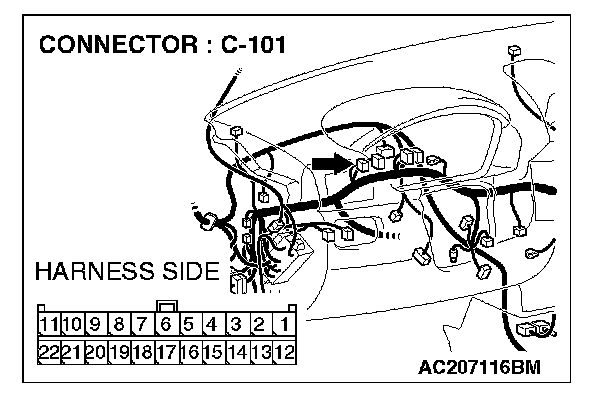
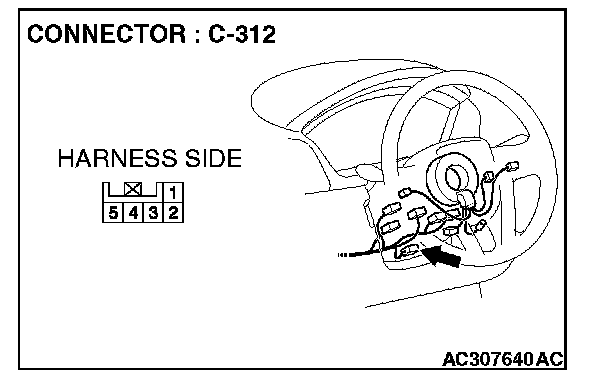
1. Disconnect joint connector (4) C-101 and steering wheel sensor connector C-312, and measure the resistance at the wiring harness side of joint connector (4) C-101.
2. Turn the ignition switch to the "LOCK" (OFF) position.
CAUTION: Disconnect the negative battery terminal. For details refer to Service Precautions/Vehicle Damage Warnings.
3. Disconnect the negative battery terminal.
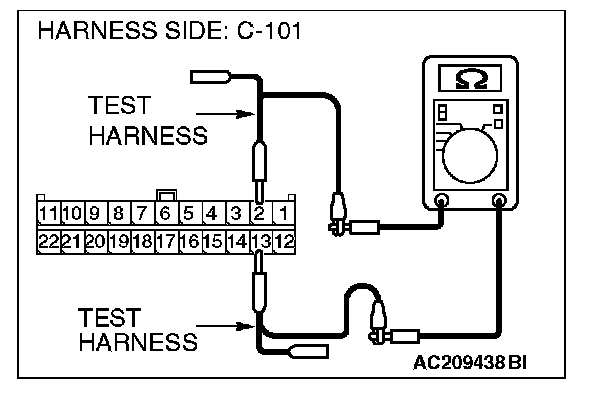
4. Measure the resistance between joint connector (4) terminals 2 and 13.
OK: 1 kOhms or more
CAUTION: Strictly observe the specified wiring harness repair procedure. For details refer to Precautions on How to Repair The CAN Bus Lines.
Q: Does the resistance measure 1 kOhms or more?
YES:
NO:
STEP 28. Check the steering wheel sensor for short circuit. Measure the resistance at steering wheel sensor connector C-312.
CAUTION: A digital multimeter should be used. For details refer to Service Precautions/Vehicle Damage Warnings.
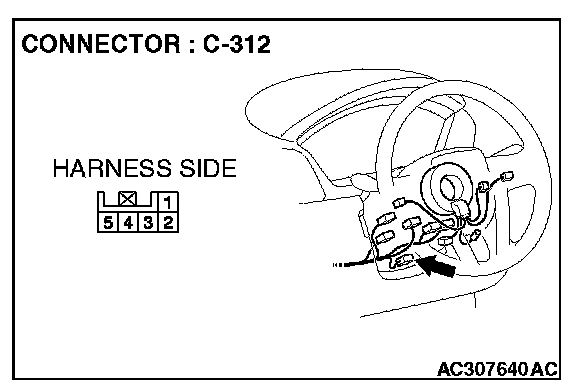
1. Disconnect steering wheel sensor connector C-312, and measure the resistance at the equipment side of steering wheel sensor connector C-312.
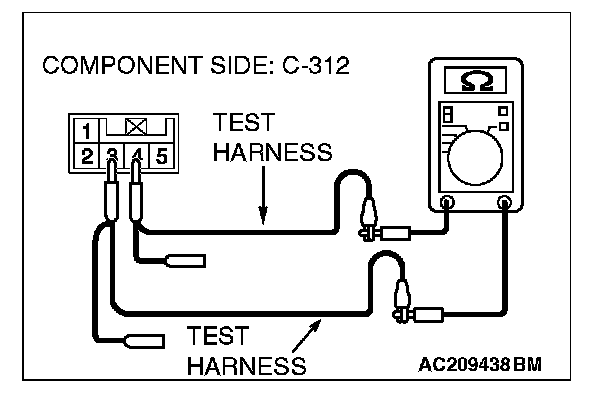
2. Measure the resistance between the steering wheel sensor connector terminals 3 and 4.
OK: 1 kOhms or more
Q: Does the resistance measure 1 kOhms or more?
YES:
NO:
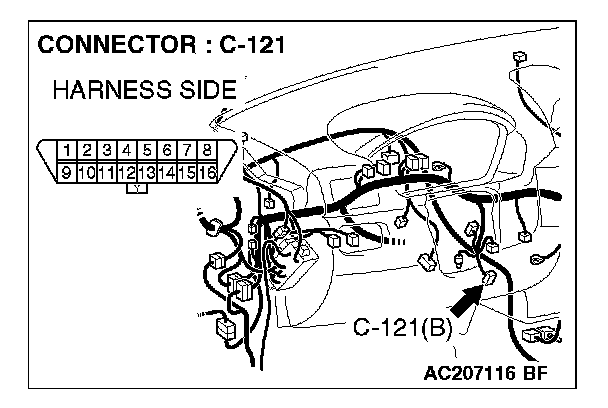
STEP 29. Check data link connector C-121 for loose, corroded or damaged terminals, or terminals pushed back in the connector.
CAUTION: The strand end of the twist wire should be within 1m10 cm (4 inches) from the connector. For details refer to Service Precautions/Vehicle Damage Warnings.
Q: Is data link connector C-121 in good condition?
YES: Go to Step 30.
NO: Repair the damaged parts.
STEP 30. Check the CAN_L and H lines (communication lines only) between joint connector (4) and the data link connector for short circuit. Measure the resistance at joint connector (4) C-101.
CAUTION: A digital multimeter should be used. For details refer to Service Precautions/Vehicle Damage Warnings.
CAUTION: The test wiring harness should be used. For details refer to Service Precautions/Vehicle Damage Warnings.
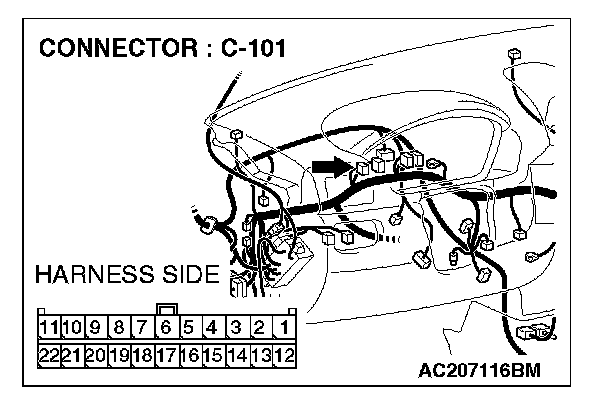
1. Disconnect joint connector (4) C-101, and measure the resistance at the wiring harness side of joint connector (4) C-101.
2. Turn the ignition switch to the "LOCK" (OFF) position.
CAUTION: Disconnect the negative battery terminal. For details refer to Service Precautions/Vehicle Damage Warnings.
3. Disconnect the negative battery terminal.
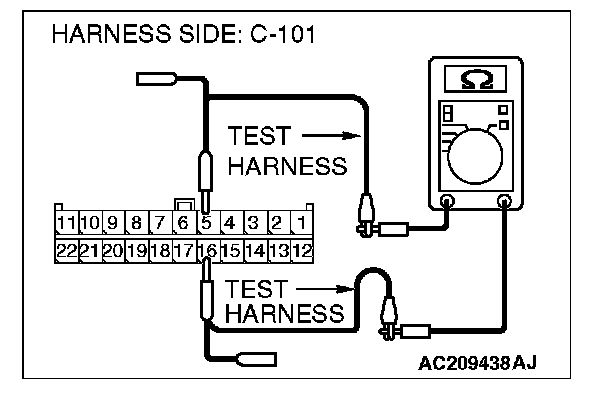
4. Measure the resistance between joint connector (4) terminals 5 and 16.
OK: 1 kOhms or more
Q: Does the resistance measure 1 kOhms or more?
YES:
NO:
STEP 31. Check the CAN_L and H lines (communication lines only) between joint connector (4) and the intermediate connector for short circuit. Measure the resistance at joint connector (4) C-101.
CAUTION: A digital multimeter should be used. For details refer to Service Precautions/Vehicle Damage Warnings.
CAUTION: The test wiring harness should be used. For details refer to Service Precautions/Vehicle Damage Warnings.
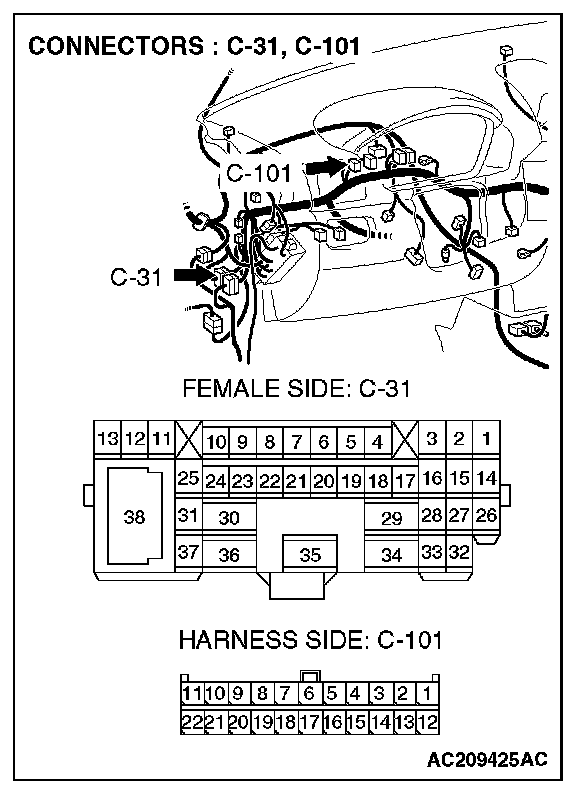
1. Disconnect intermediate connector C-31 and joint connector (4) C-101, and measure the resistance at the wiring harness side of joint connector (4) C-101.
2. Turn the ignition switch to the "LOCK" (OFF) position.
CAUTION: Disconnect the negative battery terminal. For details refer to Service Precautions/Vehicle Damage Warnings.
3. Disconnect the negative battery terminal.
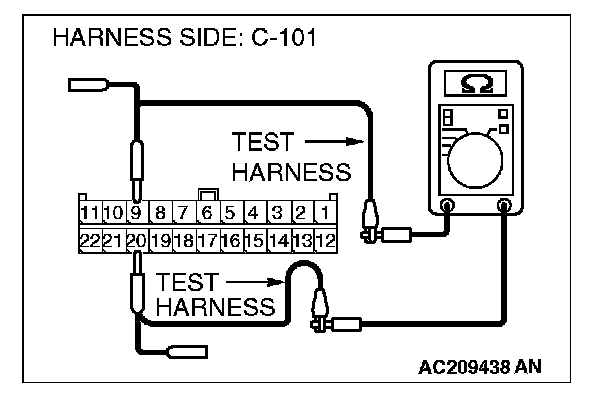
4. Measure the resistance between joint connector (4) terminals 9 and 20.
OK: 1 kOhms or more
CAUTION: Strictly observe the specified wiring harness repair procedure. For details refer to Precautions on How to Repair The CAN Bus Lines.
Q: Does the resistance measure 1 kOhms or more?
YES:
NO:
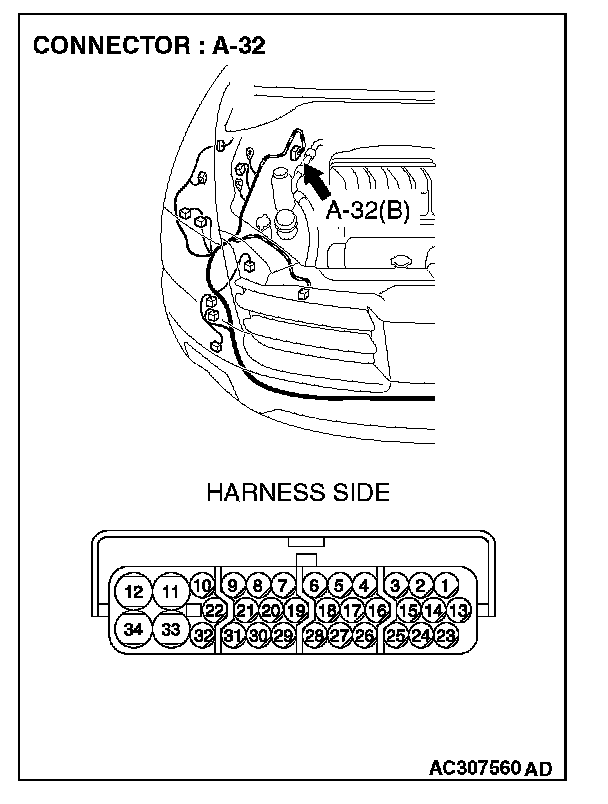
STEP 32. Check ASC/TCL-ECU connector A-32 for loose, corroded or damaged terminals, or terminals pushed back in the connector.
CAUTION: The strand end of the twist wire should be within 10 cm (4 inches) from the connector. For details refer to Service Precautions/Vehicle Damage Warnings.
Q: Is ASC/TCL-ECU connector A-32 in good condition?
YES: Go to Step 33.
NO: Repair the damaged parts.
STEP 33. Check the CAN_L and H lines (communication lines only) between the ASC/TCL-ECU connector and the intermediate connector for short circuit. Measure the resistance at intermediate connector C-31.
CAUTION: A digital multimeter should be used. For details refer to Service Precautions/Vehicle Damage Warnings.
CAUTION: The test wiring harness should be used. For details refer to Service Precautions/Vehicle Damage Warnings.
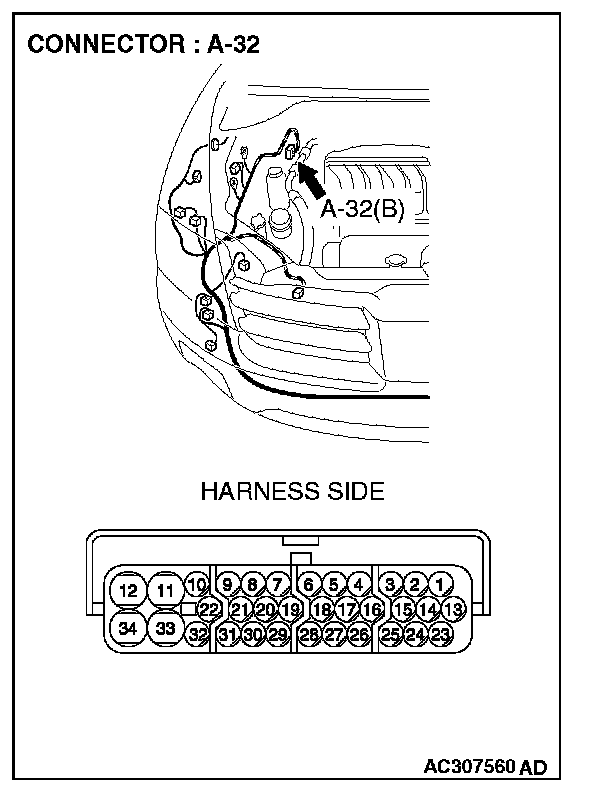
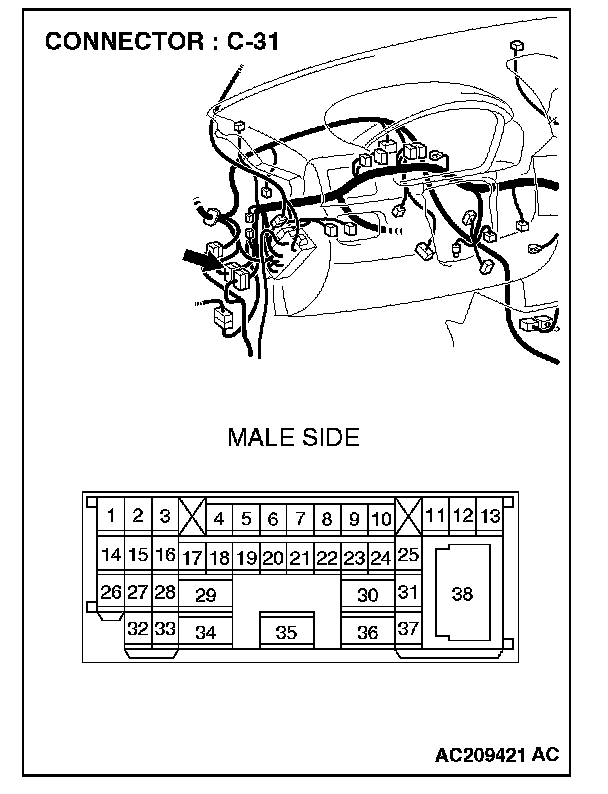
1. Disconnect intermediate connector C-31 and ASC/TCL-ECU connector A-32, and measure the resistance at the male side of intermediate connector C-31 (at front wiring harness side).
2. Turn the ignition switch to the "LOCK" (OFF) position.
CAUTION: Disconnect the negative battery terminal. For details refer to Service Precautions/Vehicle Damage Warnings.
3. Disconnect the negative battery terminal.
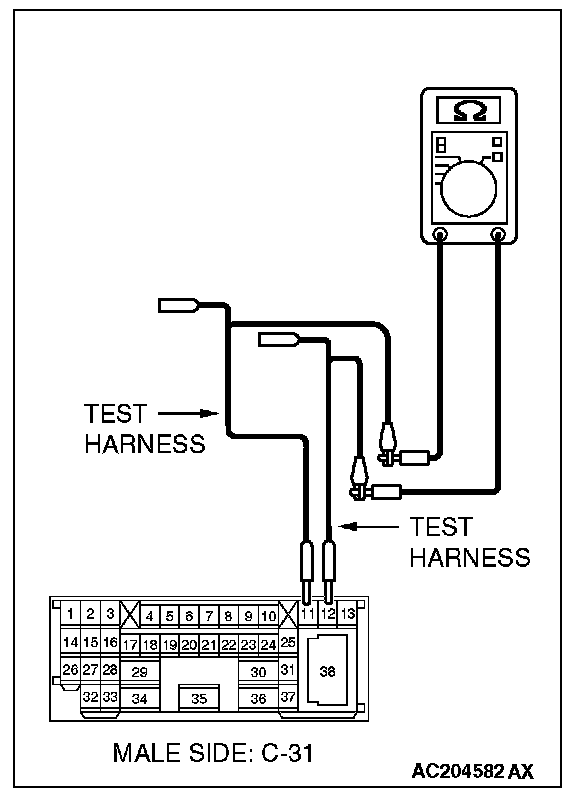
4. Measure the resistance between intermediate connector C-31 terminals 11 and 12.
OK: 1 kOhms or more
Q: Does the resistance measure 1 kOhms or more?
YES:
NO:
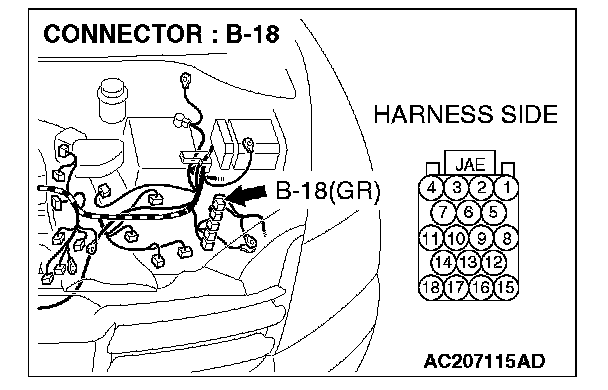
STEP 34. Check powertrain control module connector B-18 for loose, corroded or damaged terminals, or terminals pushed back in the connector.
CAUTION: The strand end of the twist wire should be within 10 cm (4 inches) from the connector. For details refer to Service Precautions/Vehicle Damage Warnings.
Q: Is powertrain control module connector B-18 in good condition?
YES: Go to Step 35.
NO: Repair the damaged parts.
STEP 35. Check the CAN_L and H lines (communication lines only) between the powertrain control module connector and the ASC/TCL-ECU connector for short circuit. Measure the resistance at powertrain control module connector B-18.
CAUTION: A digital multimeter should be used. For details refer to Service Precautions/Vehicle Damage Warnings.
CAUTION: The test wiring harness should be used. For details refer to Service Precautions/Vehicle Damage Warnings.
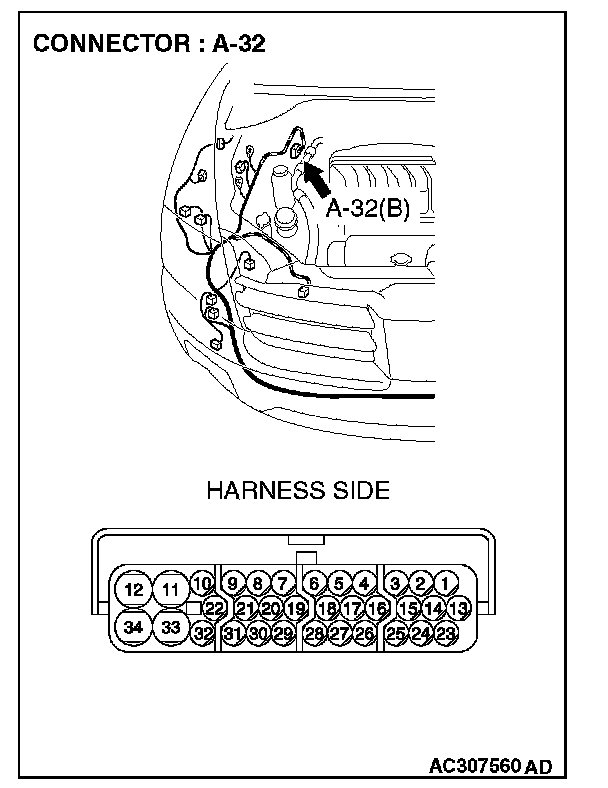
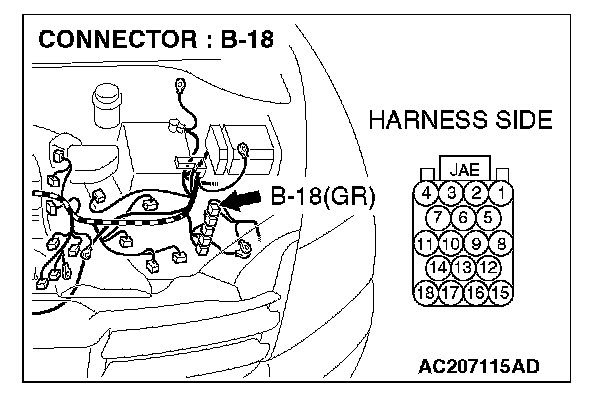
1. Disconnect powertrain control module connector B-18 and ASC/TCL-ECU connector A-32, and measure the resistance at the harness side of powertrain control module connector B-18.
2. Turn the ignition switch to the "LOCK" (OFF) position.
CAUTION: Disconnect the negative battery terminal. For details refer to Service Precautions/Vehicle Damage Warnings.
3. Disconnect the negative battery terminal.
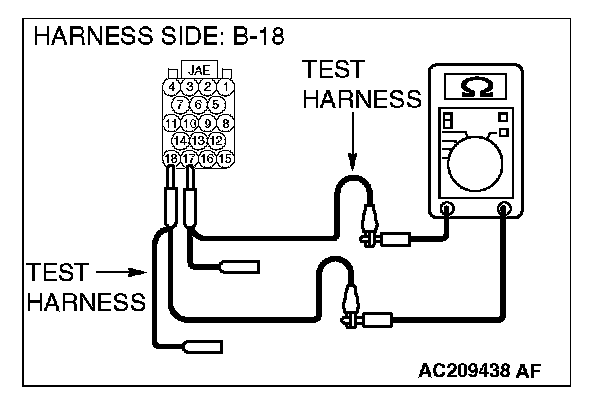
4. Measure the resistance between powertrain control module connector terminals 17 and 18.
OK: 1 kOhms or more
CAUTION: Strictly observe the specified wiring harness repair procedure. For details refer to Precautions on How to Repair The CAN Bus Lines.
Q: Does the resistance measure 1 kOhms or more?
YES:
NO:
STEP 36. Check the ASC/TCL-ECU for short circuit. Measure the resistance at ASC/TCL-ECU connector A-32.
CAUTION: A digital multimeter should be used. For details refer to Service Precautions/Vehicle Damage Warnings.
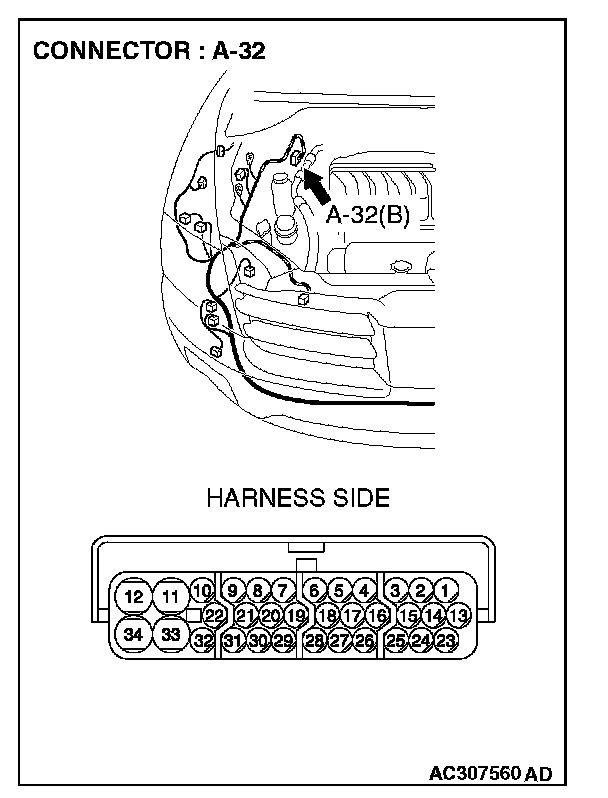
1. Disconnect ASC/TCL-ECU connector A-32, and measure the resistance at the equipment side of ASC/TCL-ECU connector A-32.
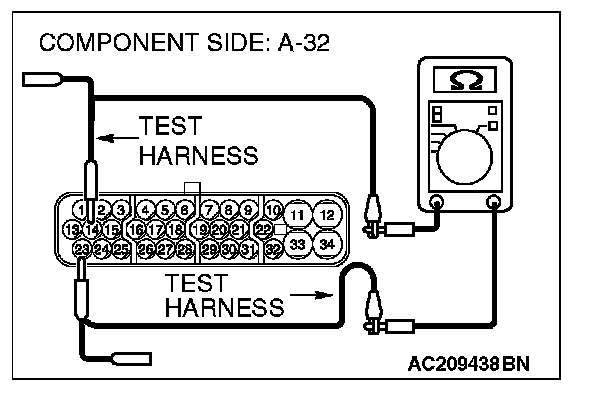
2. Measure the resistance between ASC/TCL-ECU connector terminals 14 and 23.
OK: 1 kOhms or more
Q: Does the resistance measure 1 kOhms or more?
YES:
NO:
STEP 37. Check the powertrain control module for short circuit. Measure the resistance at powertrain control module connector B-18.
CAUTION: A digital multimeter should be used. For details refer to Service Precautions/Vehicle Damage Warnings.
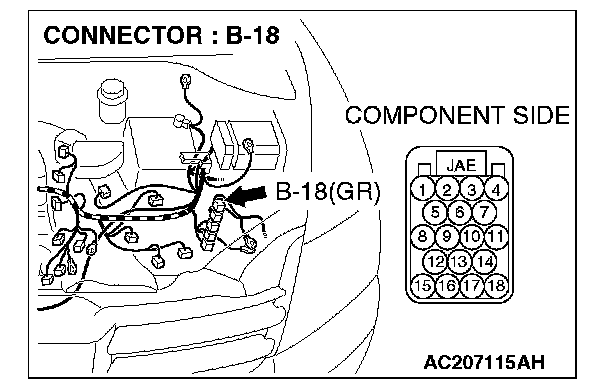
1. Disconnect powertrain control module connector B-18, and measure the resistance at the equipment side of powertrain control module connector B-18.
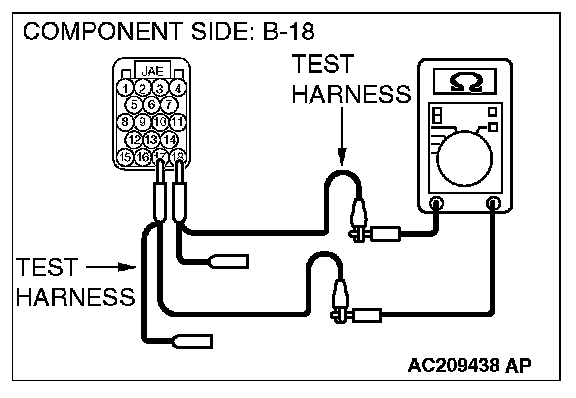
2. Measure the resistance between powertrain control module connector terminals 17 and 18.
OK: 120 ± 20 Ohms
Q: Does the resistance measure 120 ± 20 Ohms?
YES:
NO: