Brake Caliper: Service and Repair
DISC BRAKE ASSEMBLYDISASSEMBLY SERVICE POINTS
CAUTION: When disassembling the front disc brakes, disassemble both sides (left and right wheels) as a set.
<> CALIPER PISTON/PISTON BOOT REMOVAL
CAUTION:
^ When removing the pistons, be sure to use the handle of a plastic hammer and adjust the height of the two pistons while pumping in air slowly so that the pistons protrude evenly.
^ Do not remove one piston completely before trying to remove the other piston, because it will become impossible to remove the second piston.
^ Blow air little by little to remove the piston. The piston will pop out if a force of air is applied suddenly.
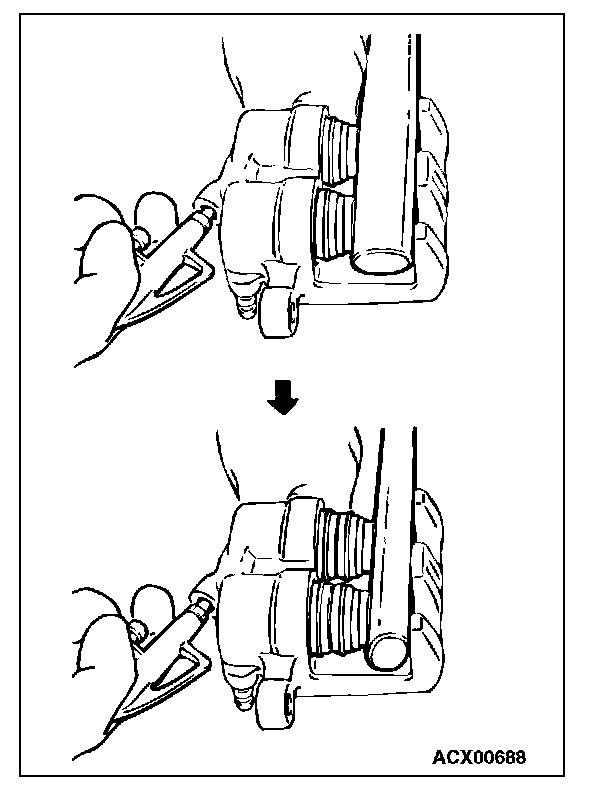
Blow compressed air slowly from the connecting portion of the brake hose to pull out the piston and the piston boots.
<> PISTON SEAL REMOVAL
CAUTION: Do not use a flat-tipped screwdriver or similar tool to remove the piston seal. These may damage the inner side of the cylinder.
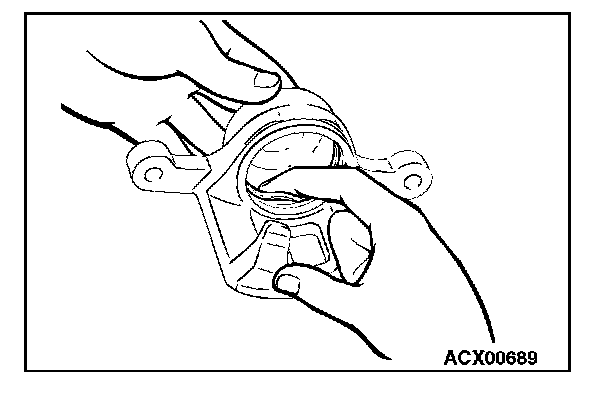
1. Remove the piston seal with your finger tip.
2. Clean the piston surface and inner cylinder with alcohol brake fluid DOT 3 or DOT 4.
DISASSEMBLY AND ASSEMBLY
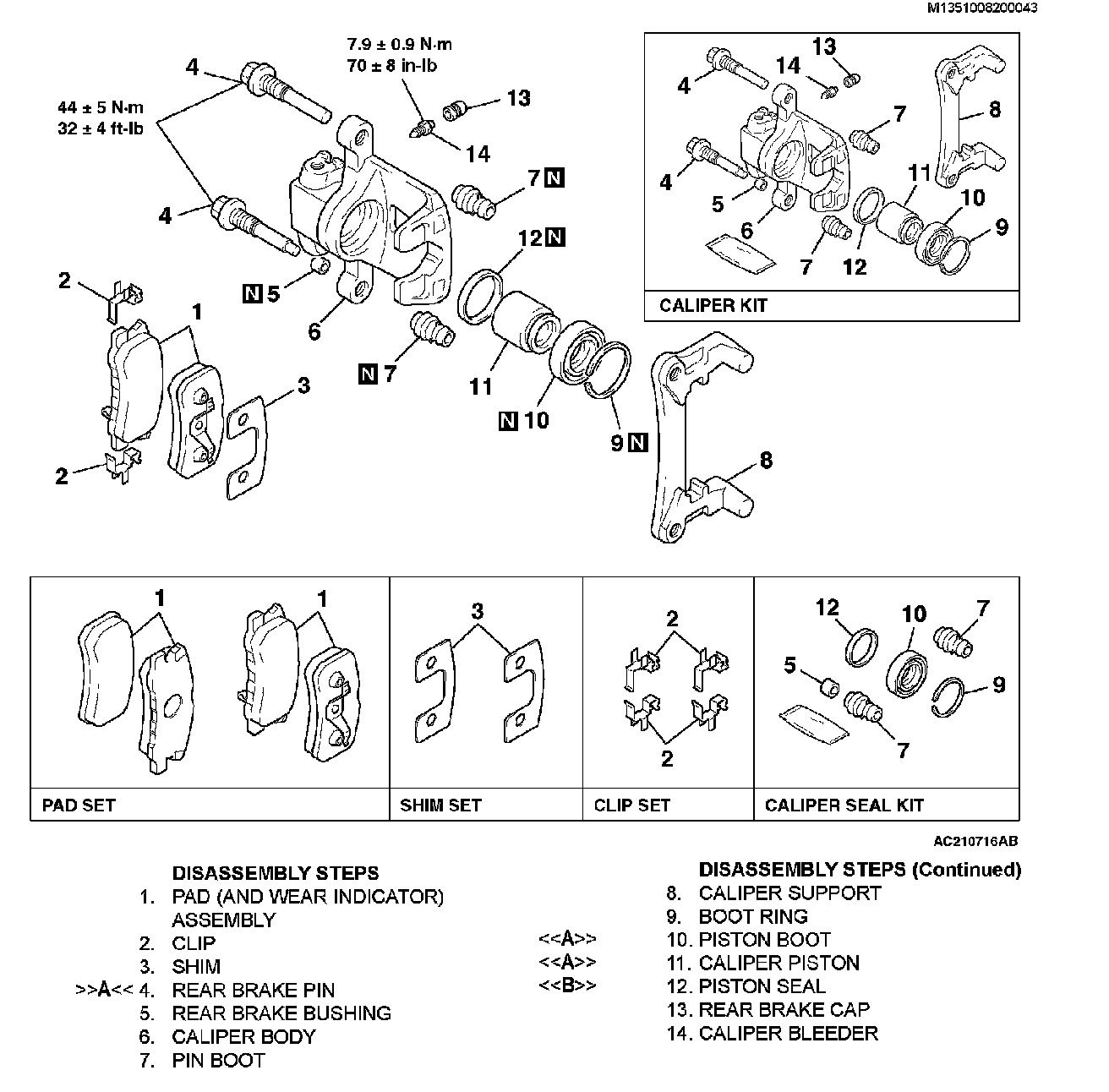
LUBRICATION POINTS
LUBRICATION POINTS:
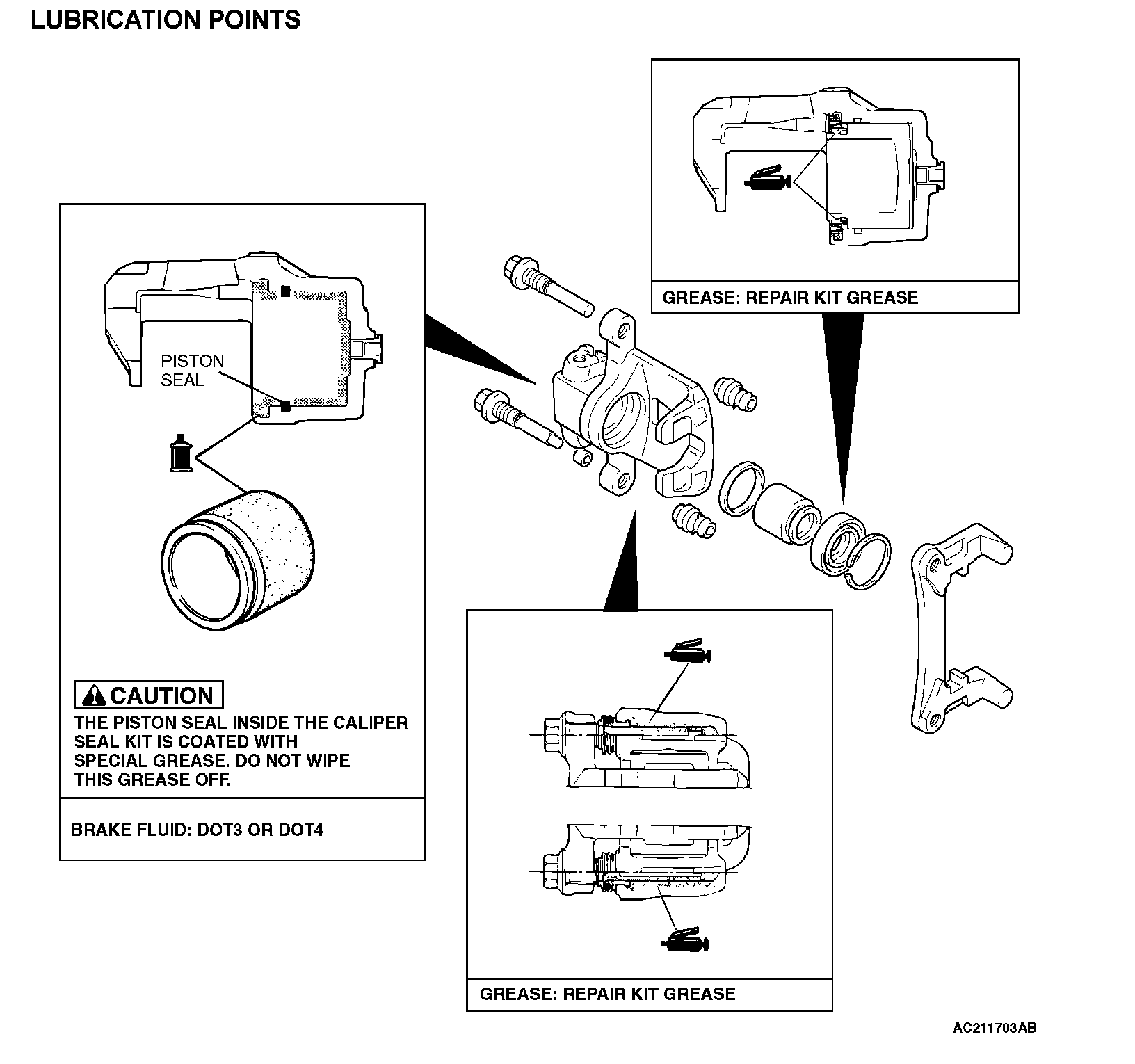
DISASSEMBLY SERVICE POINTS
CAUTION: When disassembling the disc brakes, disassemble both sides (left and right) as a set.
<> PISTON BOOT/CALIPER PISTON REMOVAL
CAUTION: Blow air little by little to remove the piston. The piston will pop out if a force of air is applied suddenly.
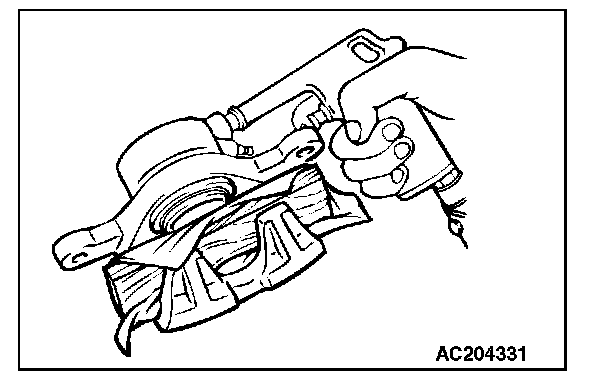
Place a piece of wood, etc. against the caliper body as shown. Blow compressed air through the brake hose connection hole to remove the piston boot and piston.
<> PISTON SEAL REMOVAL
CAUTION: Do not use a flat-tipped screwdriver or similar tool to remove piston seal. These may damage the inner side of the cylinder.
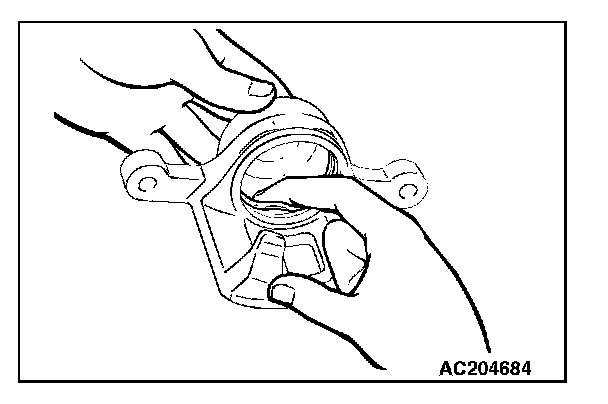
1. Remove the piston seal with your finger tip.
2. Clean piston surface and inner cylinder with alcohol or brake fluid DOT 3 or DOT 4.
ASSEMBLY SERVICE POINT
>>A<< REAR BRAKE PIN INSTALLATION
Attach a guide pin (with "g" on the bolt head) at the bleeder nipple side of the caliper body and a lock pin (with "I" on the bolt head) at the opposite side.
INSPECTION
^ Check the cylinder for wear, damage or rust.
^ Check the piston surface for wear, damage or rust.
^ Check the caliper body or sleeve for wear.
^ Check the pad for damage or adhesion of grease, check the backing metal for damage.
PAD WEAR CHECK
WARNING:
^ Always replace both brake pads on each wheel as a set (both front wheels or both rear wheels). Failure to do so will result in uneven braking, which may cause unreliable brake operation.
^ If there is significant difference in the thickness of the pads on the left and right sides, check the sliding condition of the piston and slide pins.
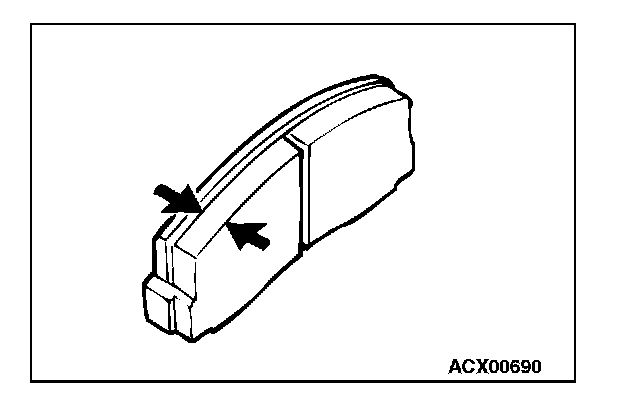
1. Measure thickness at the thinnest and most worn area of the pad.
Standard value: 10.0 mm (0.39 inch)
Minimum limit: 2.0 mm (0.08 inch)
2. Replace the pad assembly if pad thickness is less than the limit value.