Diagnostics Item 8
DIAGNOSTIC ITEM 8: Diagnose a terminator resistor at either end
CAUTION:
When servicing a CAN bus line, ground yourself by touching a metal object such as an unpainted water pipe. If you fail to do so, a component connected to the CAN bus line may be damaged.
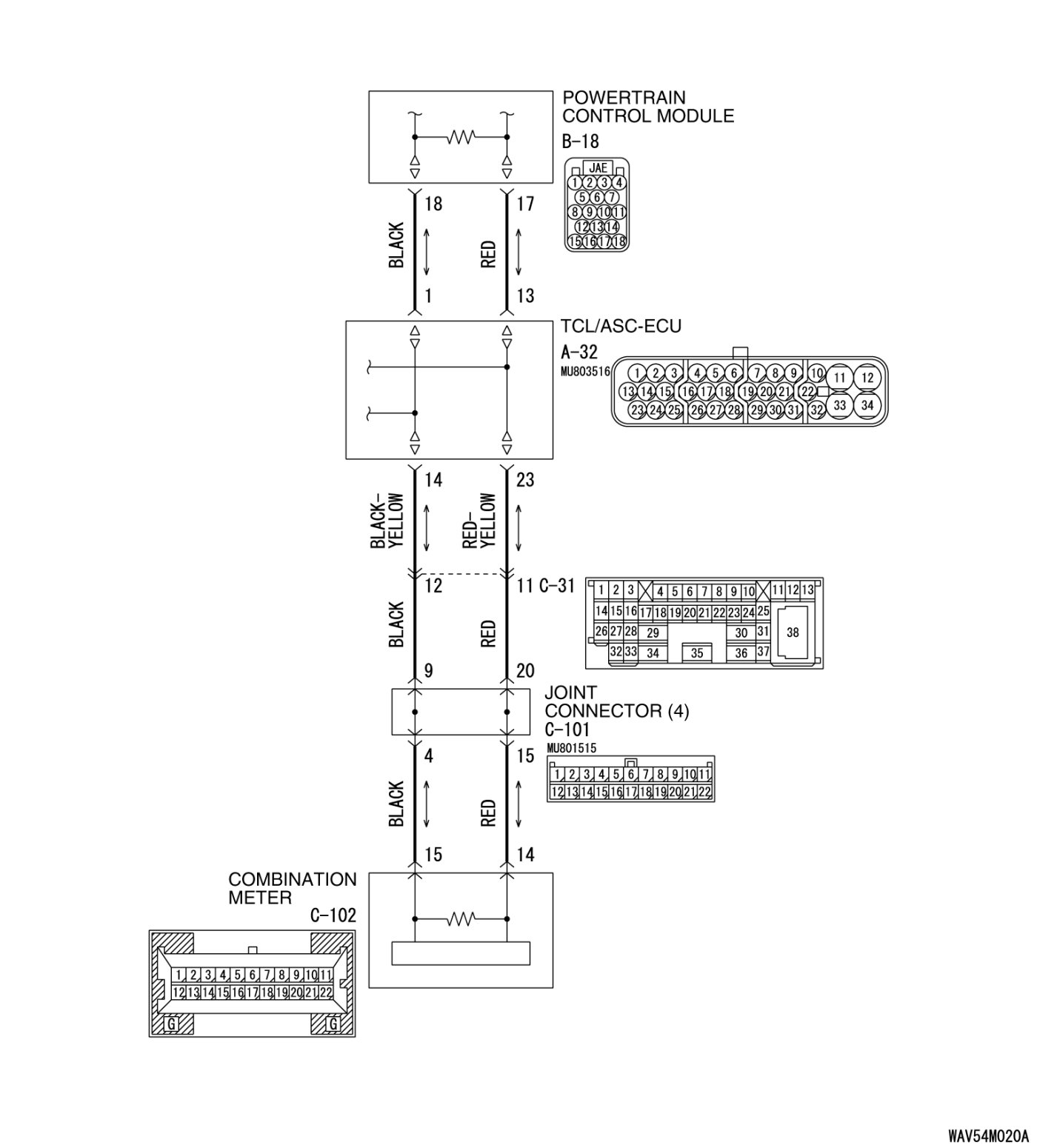
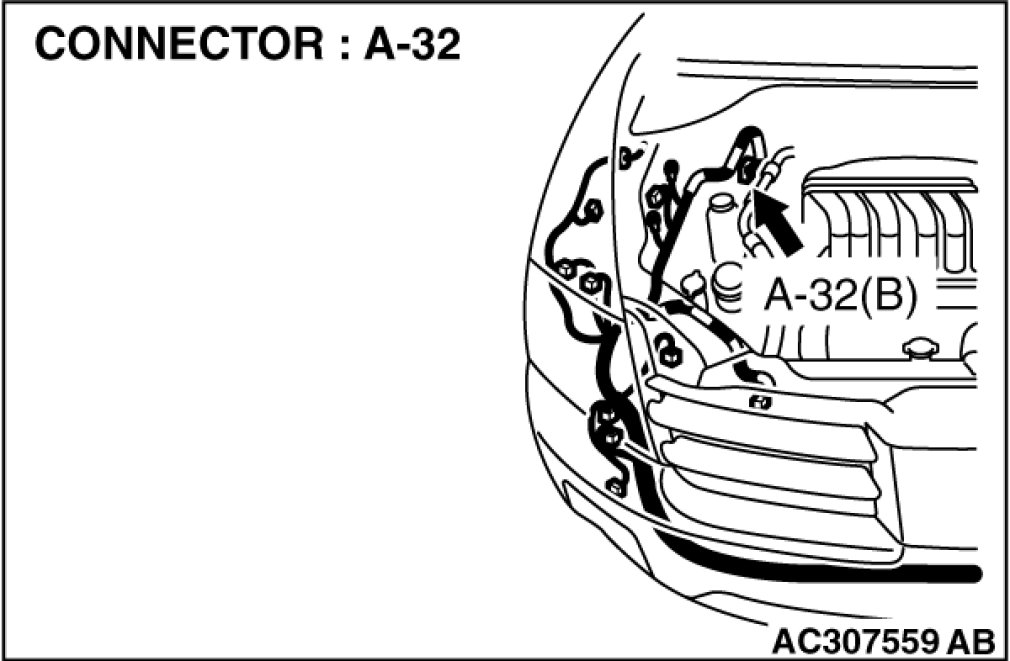
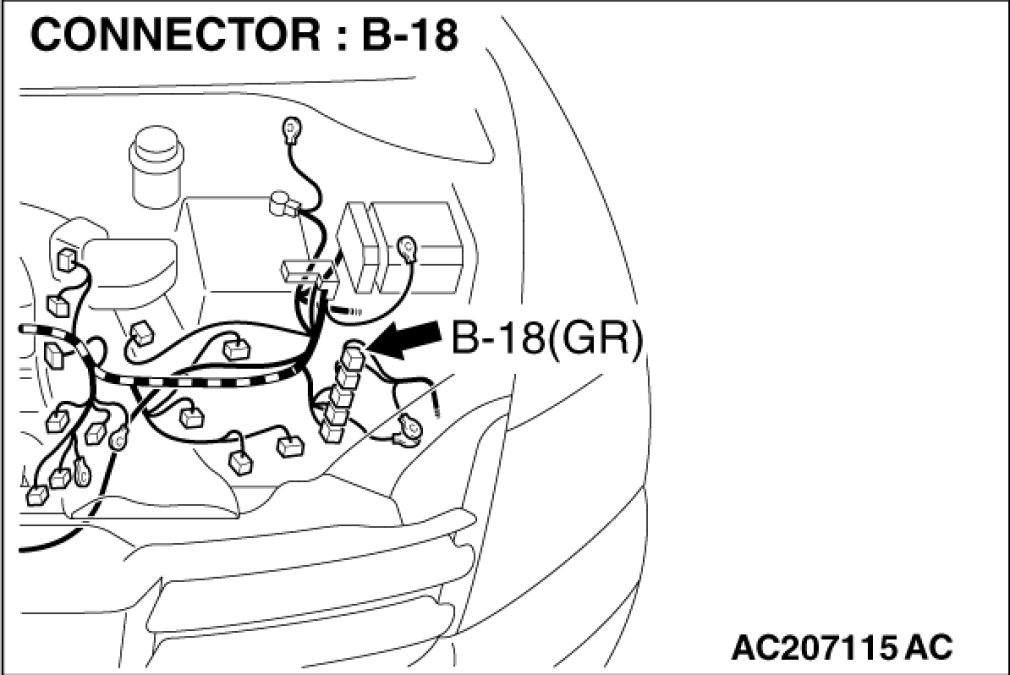
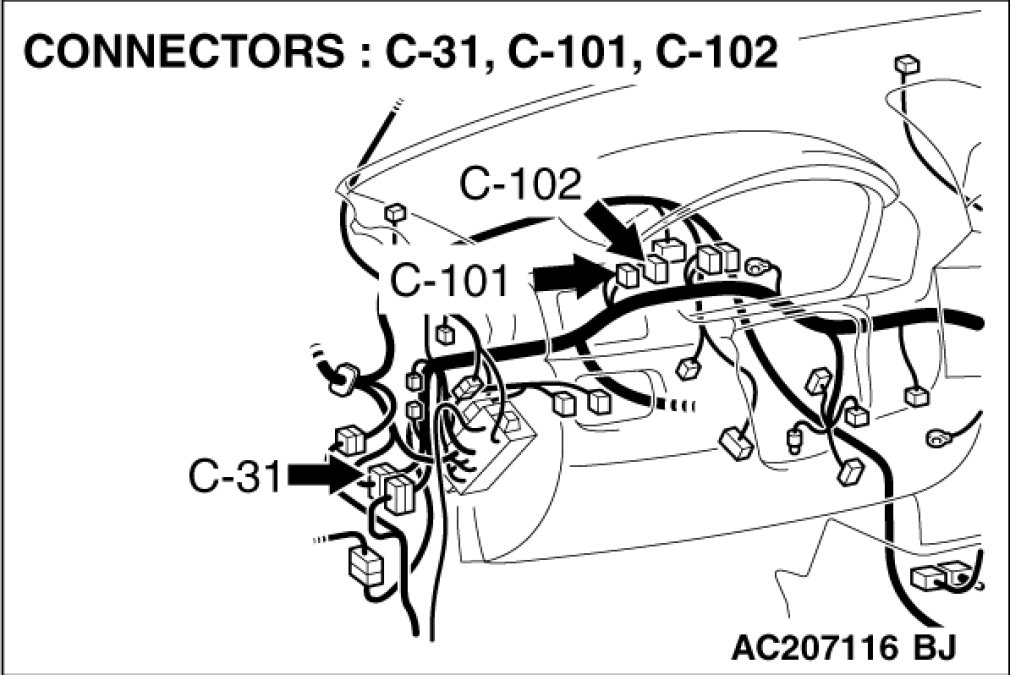
TROUBLE JUDGMENT
A terminator resistor at either end (including the CAN bus lines) may be damaged, when the resistance between the CAN bus lines (CAN_L and H lines) is 120 ± 20 ohms.
COMMENTS ON TROUBLE SYMPTOM
The CAN bus line harness wires or connectors may be damaged or the combination meter or the powertrain control module may be defective.
TROUBLESHOOTING HINTS
- The wiring harness or connectors may have loose, corroded, or damage terminals, or terminals pushed back in the connector
- The combination meter may be defective
- The TCL/ASC-ECU may be defective
- The powertrain control module may be defective
DIAGNOSIS
Required Special Tools:
- MB991223: Harness Set
- MB992006: Extra Fine Probe
- MB991952: ABS Check Harness
- MB991923: Power Plant ECU Check Harness
STEP 1. Check intermediate connector C-31 for loose, corroded or damaged terminals, or terminals pushed back in the connector.
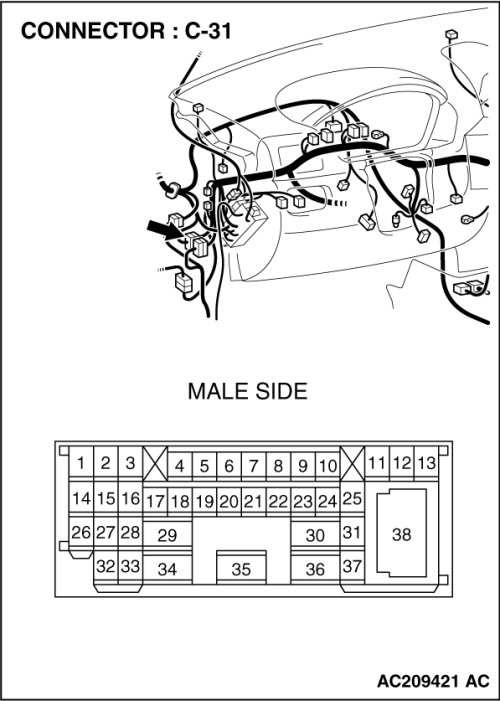
CAUTION:
The strand end of the twist wire should be within 10 cm (4 inches) from the connector. For details refer to Precautions When CAN Bus Line(s) are Repaired.
Q. Is intermediate connector C-31 in good condition?
YES Go to Step 2 .
NO Repair the damaged parts.
STEP 2. Check the front wiring harness side CAN bus lines (communication line including the powertrain control module). Measure the resistance at intermediate connector C-31.
CAUTION:
A digital multimeter should be used. For details refer to Precautions When CAN Bus Line(s) are Repaired.
CAUTION:
The test wiring harness should be used. For details refer to Precautions When CAN Bus Line(s) are Repaired.
(1)Disconnect intermediate connector C-31, and measure the resistance at the male side (at front wiring harness side).
(2)Turn the ignition switch to the "LOCK" (OFF) position.
(3)
CAUTION:
Disconnect the negative battery terminal. For details refer to Precautions When CAN Bus Line(s) are Repaired.
Disconnect the negative battery terminal.
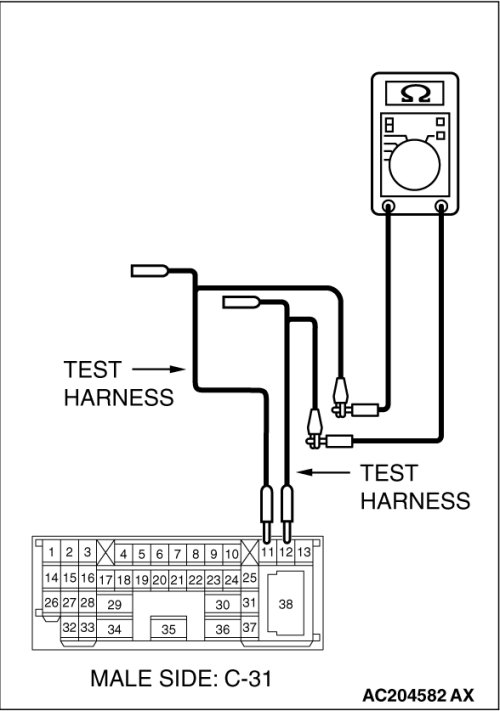
(4)Measure the resistance between intermediate connector C-31 terminals 11 and 12.
OK: 120± 20ohms
Q. Does the resistance measure 120± 20ohms ?
YES [The resistance measures 120 ± 20 ohms] Go to Step 3 .
NO [The resistance does not measure 120 ± 20 ohms] Go to Step 7 .
STEP 3. Check joint connector (4) C-101 and combination meter connector C-102 for loose, corroded or damaged terminals, or terminals pushed back in the connector.
NOTE:
For the removal of the joint connector, refer to Service and Repair.
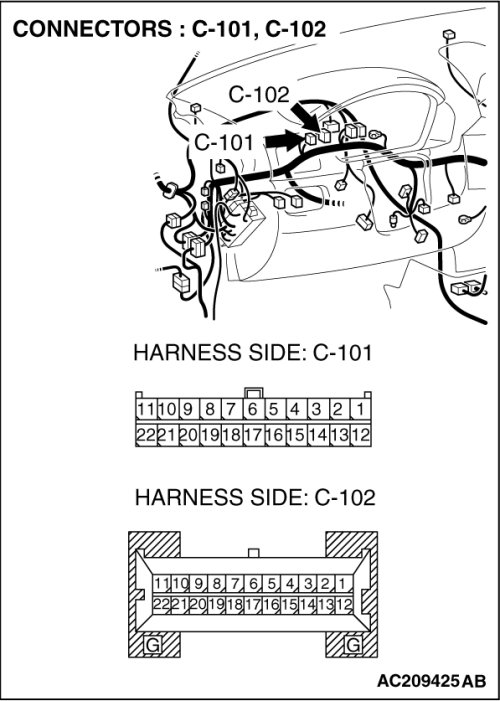
CAUTION:
The strand end of the twist wire should be within 10 cm (4 inches) from the connector. For details refer to Precautions When CAN Bus Line(s) are Repaired.
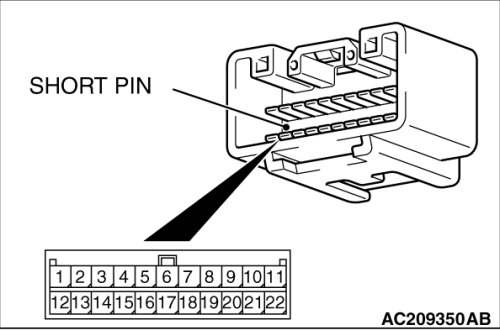
Check the joint connector at the wiring harness side for loose, corroded or damaged terminals, or terminals pushed back in the connector, and also check the short pin behind the connector for corrosion, deformation and delamination.
Q. Are joint connector (4) C-101 and combination meter connector C-102 in good condition?
YES Go to Step 4 .
NO Repair the damaged parts. Replace the joint connector as necessary.
STEP 4. Check the CAN bus lines (communication line including the combination meter) between joint connector (4) and the combination meter. Measure the resistance at joint connector (4) C-101.
CAUTION:
A digital multimeter should be used. For details refer to Precautions When CAN Bus Line(s) are Repaired.
CAUTION:
The test wiring harness should be used. For details refer to Precautions When CAN Bus Line(s) are Repaired.
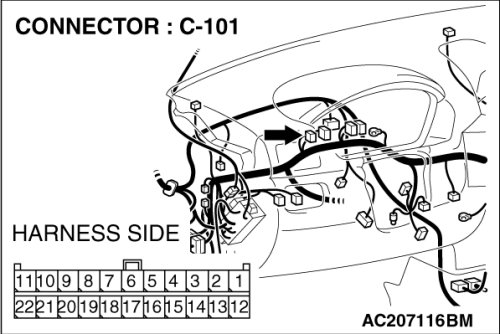
(1)Disconnect joint connector (4) C-101, and measure the resistance at the wiring harness side of joint connector (4) C-101.
(2)Turn the ignition switch to the "LOCK" (OFF) position.
(3)
CAUTION:
Disconnect the negative battery terminal. For details refer to Precautions When CAN Bus Line(s) are Repaired.
Disconnect the negative battery terminal.
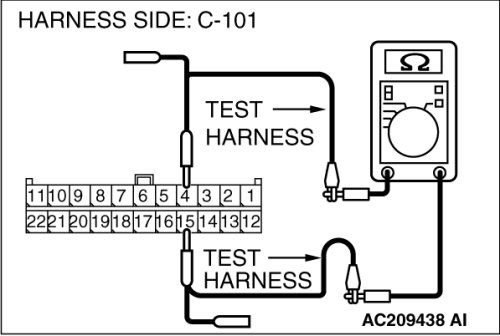
(4)Measure the resistance between joint connector (4) terminals 4 and 15.
OK: 120± 20ohms
Q. Does the resistance measure 120± 20ohms ?
YES [The resistance measures 120 ± 20 ohms] Diagnose CAN bus lines thoroughly by referring to Diagnostics Item 9 Diagnostics Item 10.
NO [The resistance does not measure 120 ± 20 ohms] Go to Step 5 .
STEP 5. Check the CAN bus lines (communication line only) between joint connector (4) and the combination meter. Measure the resistance at joint connector (4) C-101 and combination meter connector C-102.
CAUTION:
A digital multimeter should be used. For details refer to Precautions When CAN Bus Line(s) are Repaired.
CAUTION:
The test wiring harness should be used. For details refer to Precautions When CAN Bus Line(s) are Repaired.
(1)Disconnect joint connector (4) C-101 and combination meter connector C-102, and measure the resistance between each wiring harness side connector.
(2)Turn the ignition switch to the "LOCK" (OFF) position.
(3)
CAUTION:
Disconnect the negative battery terminal. For details refer to Precautions When CAN Bus Line(s) are Repaired.
Disconnect the negative battery terminal.
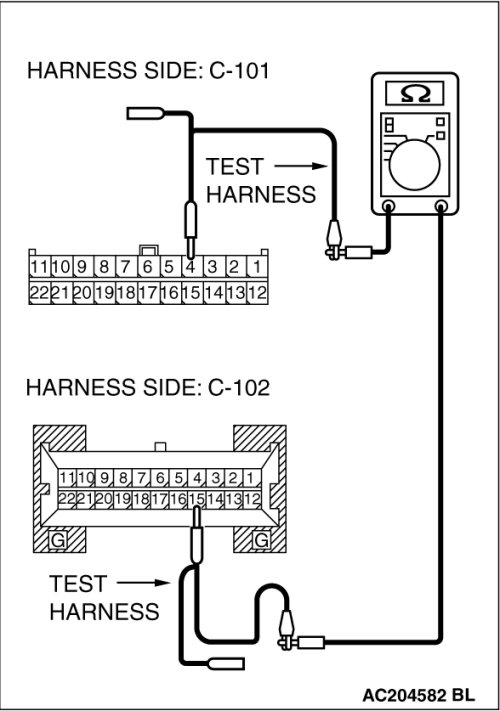
(4)Measure the resistance between joint connector (4) terminal 4 and combination meter connector terminal 15.
OK: 2 ohms or less
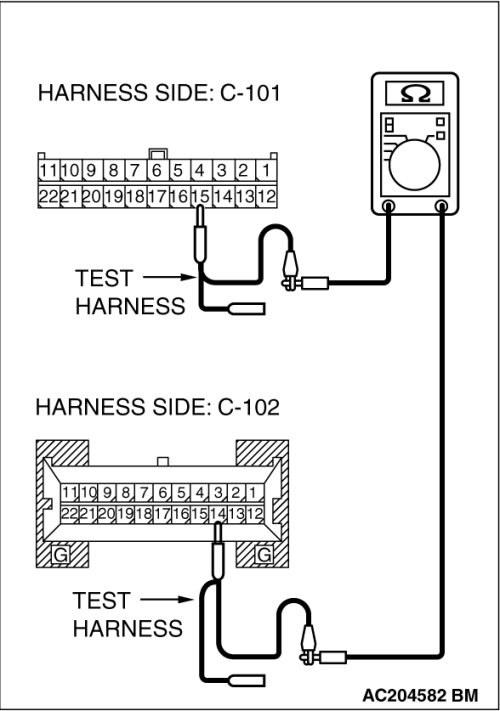
(5)Measure the resistance between joint connector (4) terminal 15 and combination meter connector terminal 14.
OK: 2 ohms or less
CAUTION:
Strictly observe the specified wiring harness repair procedure.
For details refer to Precautions on How to Repair the CAN Bus Line(s).
Q. Do all the resistances measure 2 ohms or less?
YES [All the resistances measure 2 ohms or less] Go to Step 6 .
NO [If either of the resistances measures more than 2 ohms or all the resistances measure more than 2 ohms] Repair the wiring harness between joint connector (4) and the combination meter connector.
STEP 6. Check the terminator resistor inside the combination meter.
Measure the resistance at combination meter connector C-102.
CAUTION:
A digital multimeter should be used. For details refer to Precautions When CAN Bus Line(s) are Repaired.
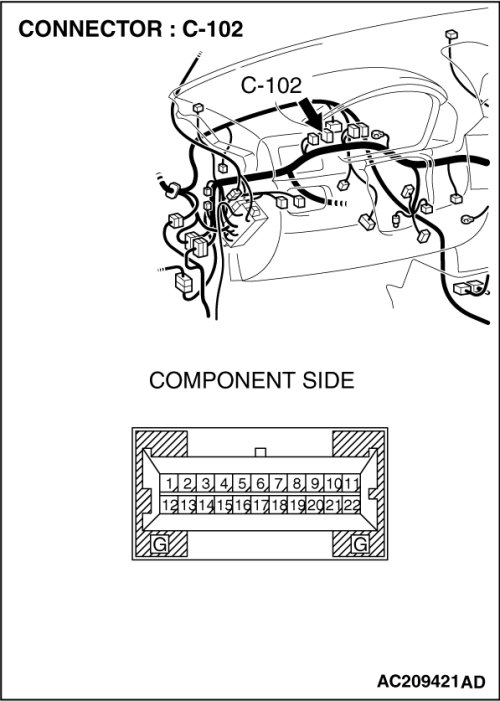
(1)Disconnect combination meter C-102, and measure the resistance at the equipment side of combination meter connector C-102.
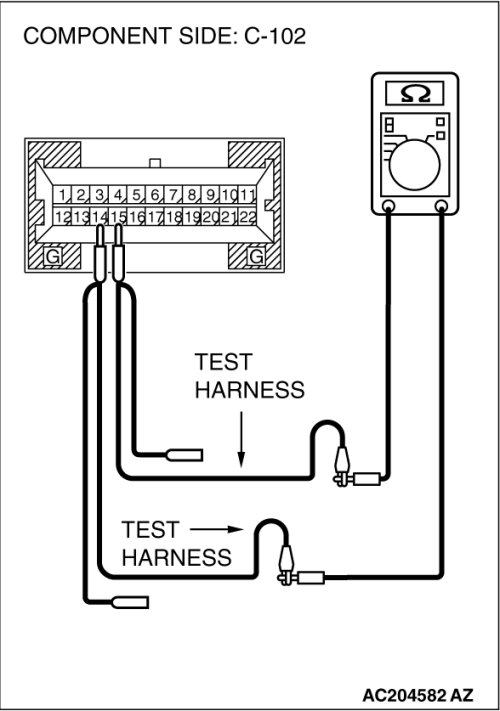
(2)Measure the resistance between combination meter connector terminals 14 and 15.
OK: 120± 20ohms
Q. Does the resistance measure 120± 20ohms ?
YES [The resistance measures 120 ± 20 ohms] Diagnose CAN bus lines thoroughly by referring to Diagnostics Item 9 Diagnostics Item 10.
NO [The resistance does not measure 120 ± 20 ohms] Replace the combination meter.
STEP 7. Check powertrain control module connector B-18 and TCL/ASC-ECU connector A-32 for loose, corroded or damaged terminals, or terminals pushed back in the connector.
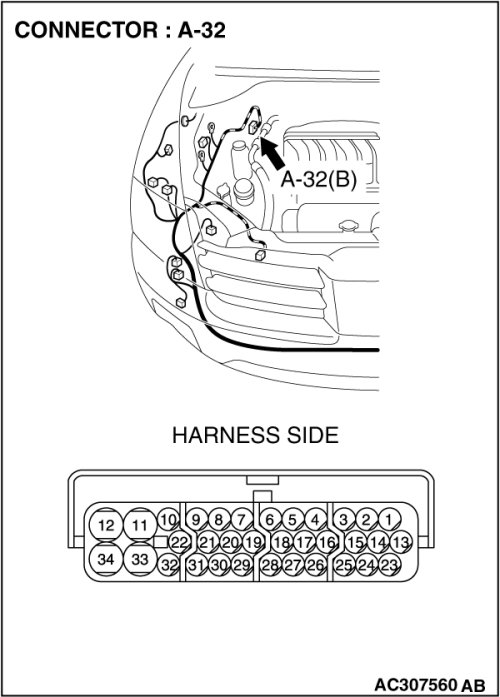
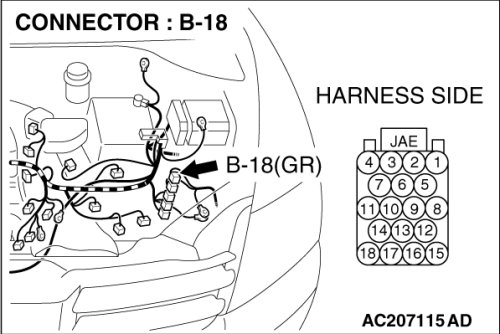
CAUTION:
The strand end of the twist wire should be within 10 cm (4 inches) from the connector. For details refer to Precautions When CAN Bus Line(s) are Repaired.
Q. Are powertrain control module connector B-18 and TCL/ASC-ECU connector A-32 in good condition?
YES Go to Step 8 .
NO Repair the damaged parts.
STEP 8. Check the CAN bus lines between the TCL/ASC-ECU and the powertrain control module (communication line including the powertrain control module). Measure the resistance at TCL/ASC-ECU connector A-32.
CAUTION:
A digital multimeter should be used. For details refer to Precautions When CAN Bus Line(s) are Repaired.
CAUTION:
The test wiring harness should be used. For details refer to Precautions When CAN Bus Line(s) are Repaired.
(1)Disconnect TCL/ASC-ECU connector A-32, and measure the resistance at the wiring harness side of TCL/ASC-ECU connector A-32.
(2)Turn the ignition switch to the "LOCK" (OFF) position. position
(3)
CAUTION:
Disconnect the negative battery terminal. For details refer to Precautions When CAN Bus Line(s) are Repaired.
Disconnect the negative battery terminal.
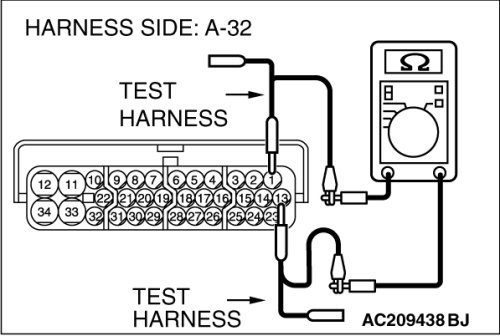
(4)Measure the resistance between TCL/ASC-ECU connector terminals 1 and 13.
OK: 120± 20ohms
Q. Does the resistance measure 120± 20ohms ?
YES [The resistance measures 120 ± 20 ohms] Diagnose CAN bus lines thoroughly by referring to Diagnostics Item 9 Diagnostics Item 10.
NO [The resistance does not measure 120 ± 20 ohms] Go to Step 9 .
STEP 9. Check the CAN bus lines (communication line only) between TCL/ASC-ECU and the powertrain control module. Measure the resistance between TCL/ASC-ECU connector A-32 and powertrain control module connector B-18.
CAUTION:
A digital multimeter should be used. For details refer to Precautions When CAN Bus Line(s) are Repaired.
CAUTION:
The test wiring harness should be used. For details refer to Precautions When CAN Bus Line(s) are Repaired.
(1)Disconnect TCL/ASC-ECU connector A-32 and powertrain control module connector B-18, and measure the resistance between each wiring harness side connector.
(2)Turn the ignition switch to the "LOCK" (OFF) position.
(3)
CAUTION:
Disconnect the negative battery terminal. For details refer to Precautions When CAN Bus Line(s) are Repaired.
Disconnect the negative battery terminal.
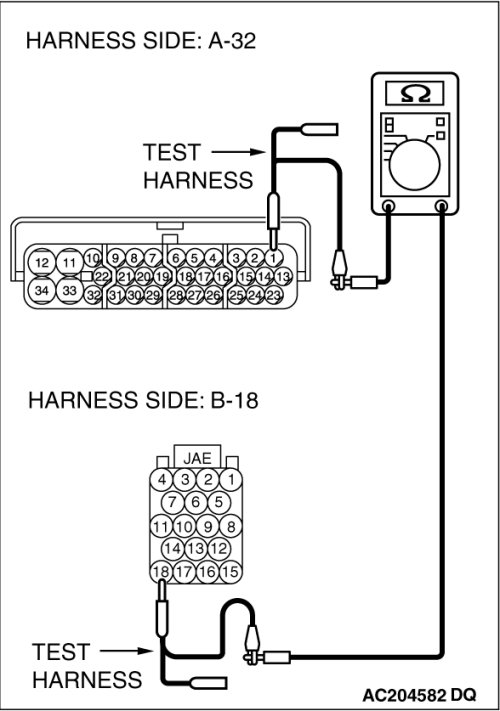
(4)Measure the resistance between TCL/ASC-ECU connector terminal 1 and powertrain control module connector terminal 18.
OK: 2 ohms or less
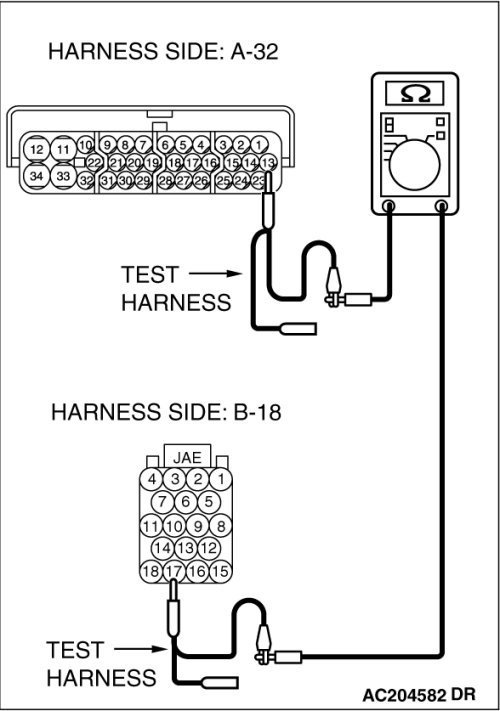
(5)Measure the resistance between joint connector (4) terminal 13 and powertrain control module connector terminal 17.
OK: 2 ohms or less
CAUTION:
Strictly observe the specified wiring harness repair procedure.
For details refer to Precautions on How to Repair the CAN Bus Line(s).
Q. Do all the resistances measure 2 ohms or less?
YES [All the resistances measure 2 ohms or less] Go to Step 10
.
NO [If either of the resistances measures more than 2 ohms or all the resistances measure more than 2 ohms] Repair the wiring harness between joint connector (4) and the powertrain control module connector.
STEP 10. Check the terminator resistor inside the powertrain control module. Measure the resistance at powertrain control module connector B-18.
CAUTION:
A digital multimeter should be used. For details refer to Precautions When CAN Bus Line(s) are Repaired.
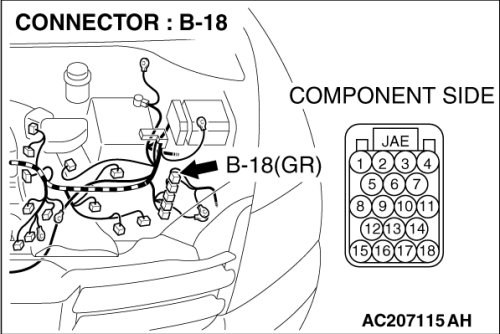
(1)Disconnect powertrain control module connector B-18, and measure the resistance at the equipment side of powertrain control module connector B-18.
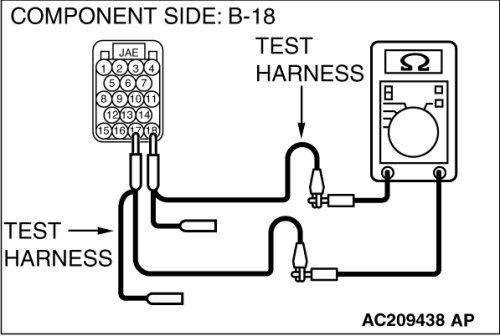
(2)Measure the resistance between powertrain control module connector terminals 17 and 18.
OK: 120± 20ohms
Q. Does the resistance measure 120± 20ohms ?
YES [The resistance measures 120 ± 20 ohms] Go to Step 11 .
NO [The resistance does not measure 120 ± 20 ohms] Replace the powertrain control module.
STEP 11. Check the CAN bus lines inside the TCL/ASC-ECU. Measure the resistance at TCL/ASC-ECU connector A-32.
CAUTION:
A digital multimeter should be used. For details refer to Precautions When CAN Bus Line(s) are Repaired.
CAUTION:
The test wiring harness should be used. For details refer to Precautions When CAN Bus Line(s) are Repaired.
(1)Disconnect TCL/ASC-ECU connector A-32, and measure the resistance at the equipment side of TCL/ASC-ECU connector A-32.
(2)Turn the ignition switch to the "LOCK" (OFF) position.
(3)
CAUTION:
Disconnect the negative battery terminal. For details refer to Precautions When CAN Bus Line(s) are Repaired.
Disconnect the negative battery terminal.
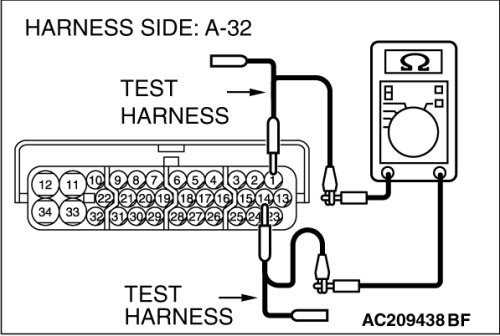
(4)Measure the resistance between TCL/ASC-ECU connector terminals 1 and 14.
OK: 2 ohms or less
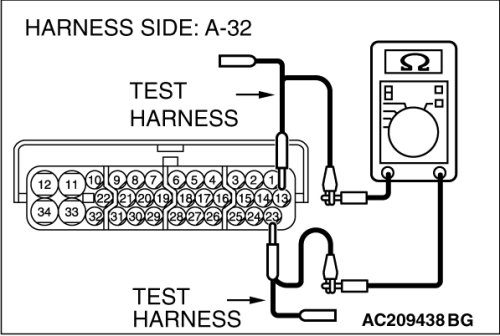
(5)Measure the resistance between TCL/ASC-ECU connector terminals 13 and 23.
OK: 2 ohms or less
CAUTION:
Strictly observe the specified wiring harness repair procedure.
For details refer to Precautions on How to Repair the CAN Bus Line(s).
Q. Do all the resistances measure 2 ohms or less?
YES [All the resistances measure 2 ohms or less] Diagnose CAN bus lines thoroughly by referring to Diagnostics Item 9 Diagnostics Item 10.
NO [If either of the resistances measures more than 2 ohms or all the resistances measure more than 2 ohms] Replace the TCL/ASC-ECU.