Compression Check: Testing and Inspection
MEASUREMENT OF COMPRESSION PRESSURE1. Warm up engine.
2. Turn ignition switch OFF.
3. Perform FUEL PRESSURE RELEASE.
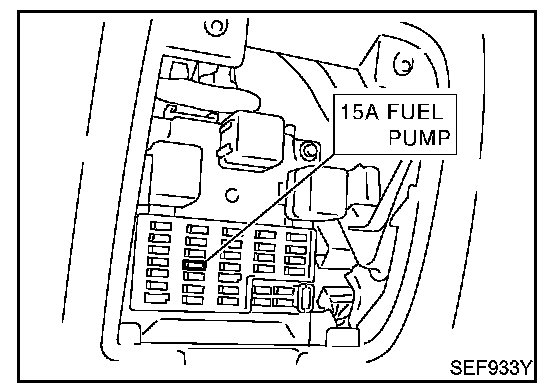
4. Disconnect fuel pump fuse to avoid injection during measurement.
5. Remove engine cover.
6. Remove air duct with air cleaner case.
7. Remove harness connectors and harness brackets around ignition coils.
8. Disconnect electronic throttle control actuator.
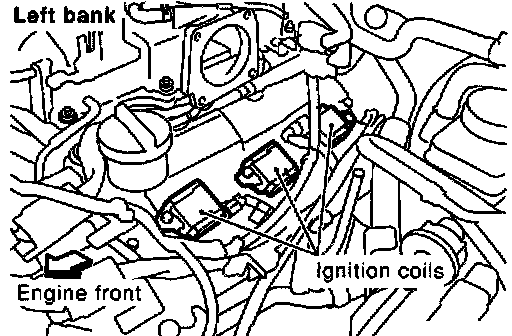
Left bank
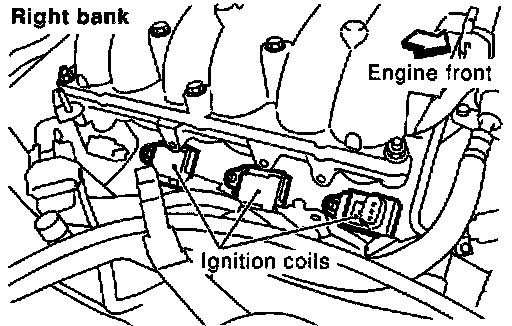
Right bank
9. Disconnect ignition coil with power transistor harness connectors, then remove ignition coils.
10. Remove all spark plugs.
^ Clean area around plug with compressed air before removing the spark plug.
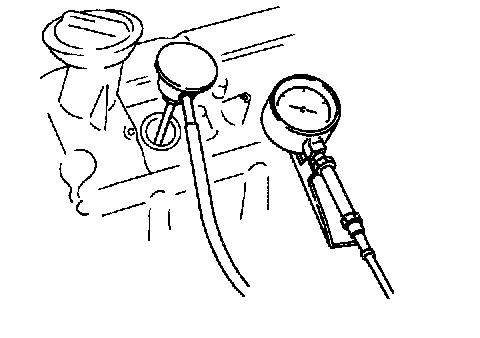

11. Attach a compression tester to No. 1 cylinder.
12. Crank engine and record highest gauge indication.
13. Repeat the measurement on each cylinder as shown above. Always use a fully-charged battery to obtain specified engine speed.
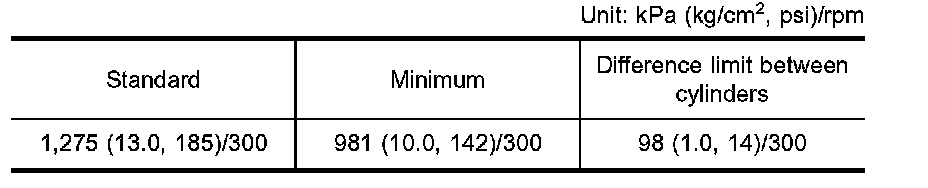
14. If compression in one or more cylinders is low:
a. Pour a small amount of engine oil into cylinders through spark plug holes.
b. Retest compression.
^ If adding oil helps compression, piston rings may be worn or damaged. If so, replace piston rings after checking piston.
^ If pressure stays low, a valve may be sticking or seating improperly. Inspect and repair valve and valve seat. If valve or valve seat is damaged excessively, replace them.
^ If compression stays low in two cylinders that are next to each other:
a. The cylinder head gasket may be leaking, or
b. Both cylinders may have valve component damage. Inspect and repair as necessary.
15. Install parts in reverse order of removal.
16. Perform "Self-diagnosis Procedure" if any DTC appears. Clearing Diagnostic Trouble Codes