Power Steering Fluid: Testing and Inspection
WM 480201 Checking hydraulic fluid (fluid level)
Checking fluid level
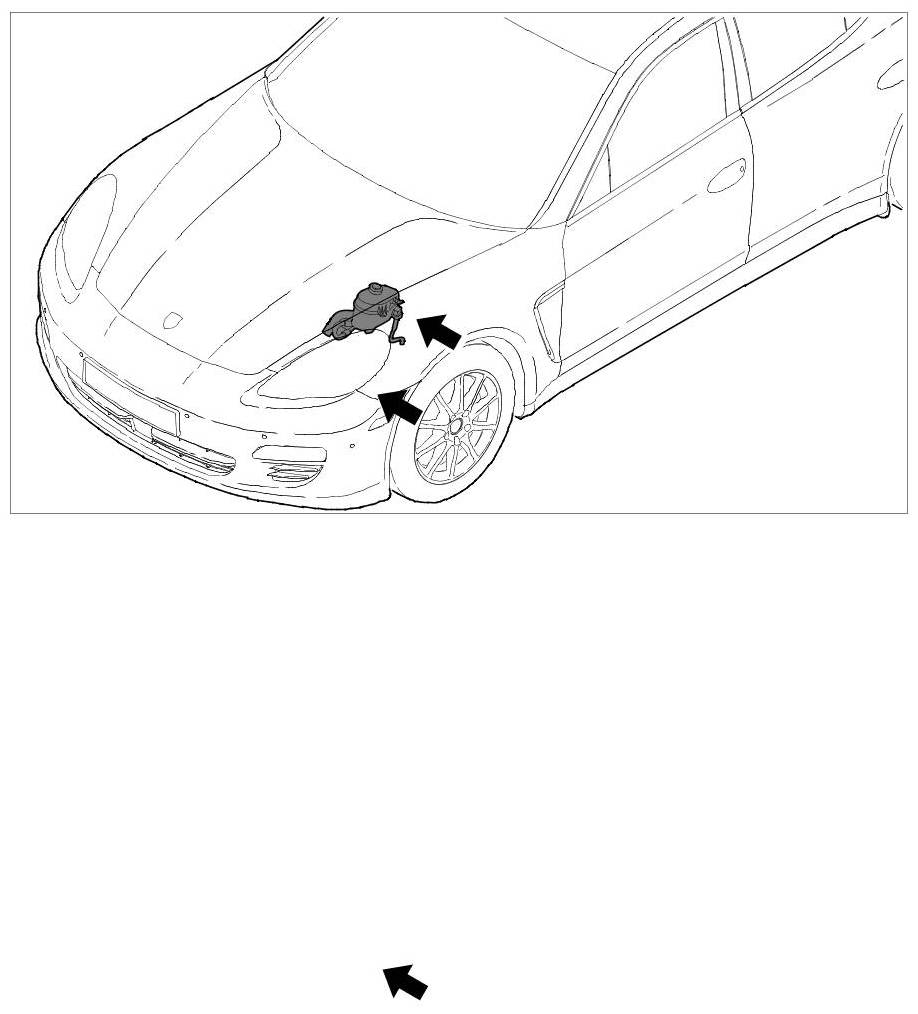
Overview (shown with PDCC)
1. Open the front lid.
WARNING
Caustic fluids
- Danger of chemical burns
-> Avoid contact with caustic fluid.
-> Wear personal protective gear.
-> Ensure that there is good ventilation.
-> If you do come into contact, wash off immediately with plenty of warm water and contact a doctor if necessary.
NOTICE
Aggressive fluids
- Risk of damage to components and surfaces
-> Do not spill fluids.
-> In the event of contact, wash the component or surface with water.
-> Replace components that are already damaged.
Information
On vehicles with PDCC, the power-steering fluid reservoir is located in the combined reservoir, which also supplies the PDCC system.
The procedure for checking the fluid level is the same on vehicles with and without PDCC.
2. Unscrew reservoir cap.
Information
Overfilling the system can cause Pentosin to overflow onto coolant hoses and other components. The engine must be run for approx. 20 seconds prior to the fluid level check. Check the fluid level.
3. The cap has a dipstick with a -MIN/Max marking-. The fluid level must be between the two markings when the engine is stopped and cold (approx. 20 °C).
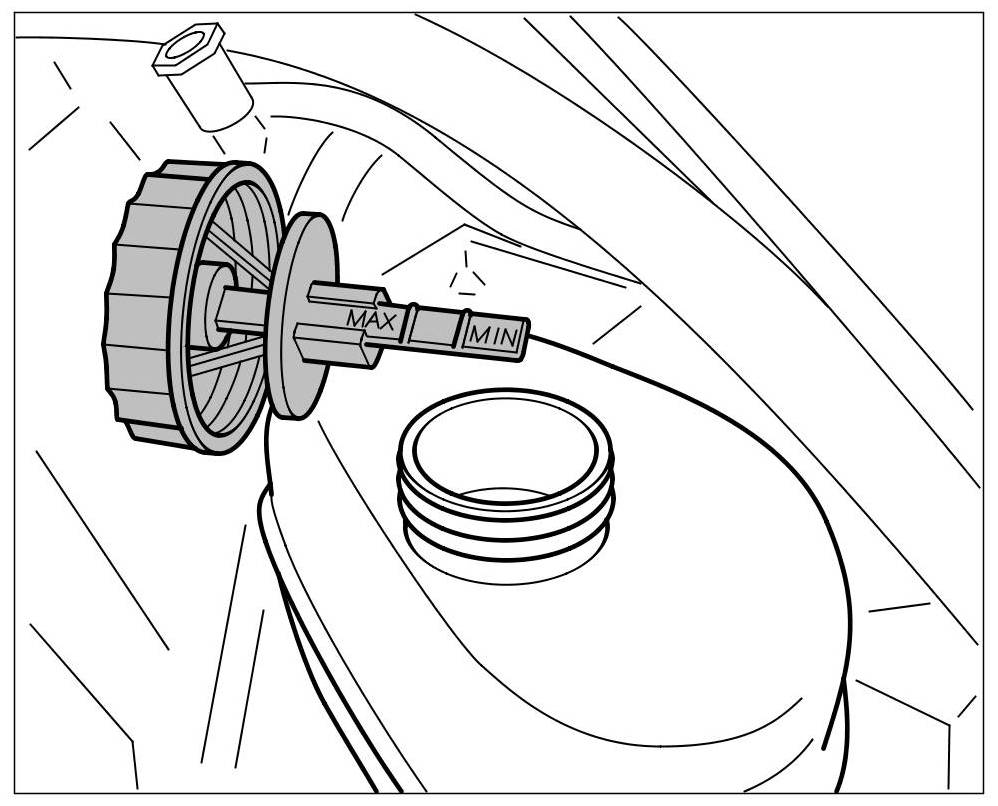
Markings on dipstick (shown without PDCC)
4. Fluid level below -MIN- :
4.1. Fill the reservoir with Pentosin.
4.2. Check the fluid level again.
4.3. Top it up again if necessary until the fluid level is between the two markings.
5. Fluid level above -MAX- :
5.1. Remove fluid using a clean fluid extractor.
5.2. Check the fluid level again.
5.3. Repeat the process until the fluid level is between the markings.
6. Close the front lid.