Fuel Pressure: Testing and Inspection
Checking Residual Pressure, 4-cyl.
WARNING: Checking residual pressure involves partial dismantling of the car's fuel system. The following points must therefore be observed in connection with this work:
^ Work only in a well-ventilated area. If approved equipment for the extraction of fuel vapour is available, be sure to use it.
^ Wear suitable gloves. Prolonged contact with fuel can cause skin irritation or dermatitis.
^ Keep a class BE fire extinguisher near at hand. Be mindful of the danger of sparks caused by short circuits and when connecting and disconnecting leads in electrical circuits.
^ No smoking anywhere in the vicinity,
^ Wear protective goggles.
1. Remove the valve cap. Connect the pressure gauge equipment part no. 83 93 852 and the adapter 83 94 744 Fuel pressure gauge adapter to the fuel-injection rail with the "safety" on. Take off the "safety" from the adapter.
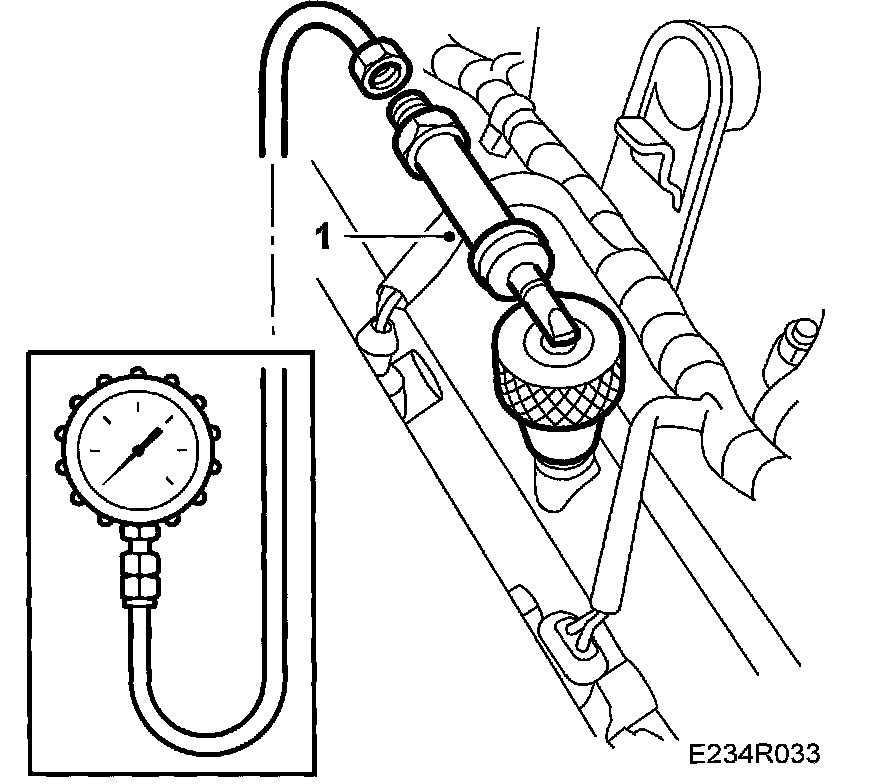
2. Run the pump with the diagnostic tool until the pressure gauge stops rising. Stop the pump. The residual pressure after 20 minutes must be min. 2.3 bar (33 psi).
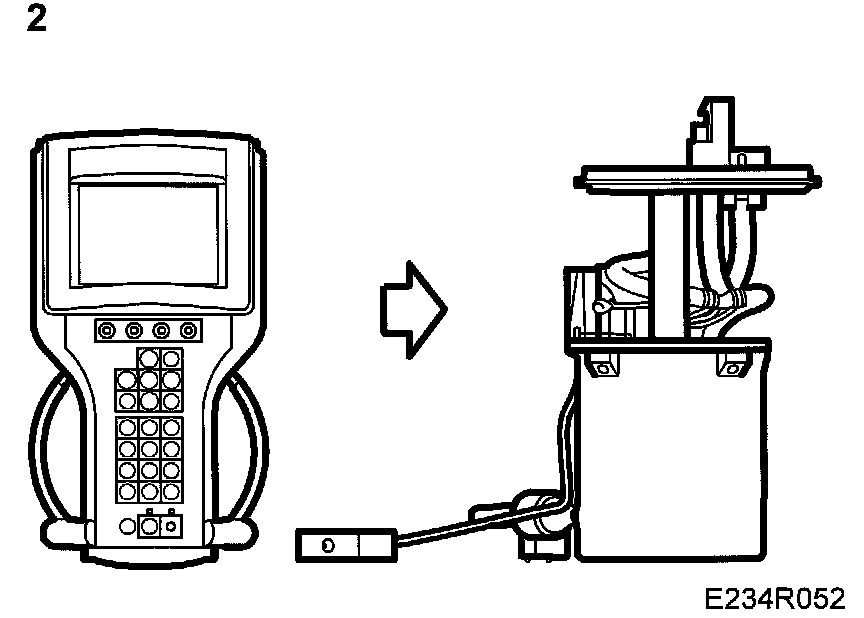
3. Take a reading on the pressure gauge equipment.
4. Put the "safety" on the adapter and remove the pressure gauge equipment from the service nipple. Screw on the valve cap.