Campaign - O2 Sensor Connector Corrosion
NUMBER: WXE-62 REVISEDDATE: 11/20/97
APPLICABILITY: 1997MY Impreza Outback Sport 2.2L
SUBJECT: HOOD SCOOP AIR DUCT and OXYGEN SENSOR WIRING HARNESS CONNECTOR MODIFICATION
This is a reprint of Service Program Bulletin WXE-62 that includes additional information. Please discard previous bulletin.
Subaru of America, Inc., (SOA) has determined that some 1997 model Subaru Impreza Outback Sport 2.2L vehicles may experience a corrosion of an oxygen sensor wiring harness connector due to water drainage from the hood scoop air duct. Under this condition, the OBD-II system identifies diagnostic trouble codes P0130 and P0135 and illuminates the "CHECK ENGINE" light, which will be noticeable to the driver. To prevent this condition from occurring, it is necessary to perform modifications on the hood scoop air duct and oxygen sensor wiring harness connector.
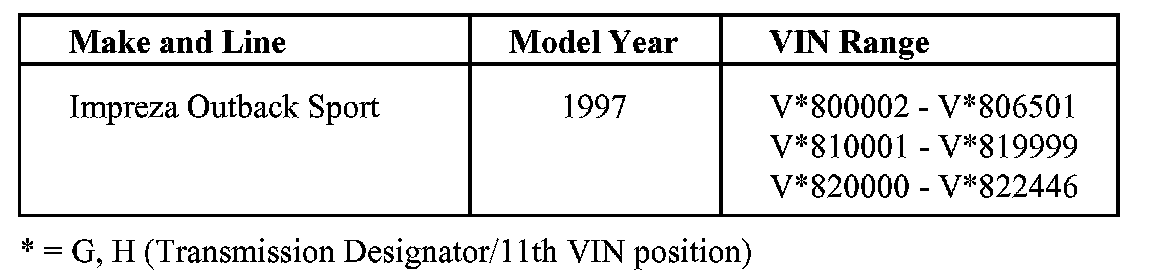
VEHICLES INVOLVED
Involved vehicles identified in the preceding chart may include vehicles which were not imported in the U.S. market. Computer listings containing the VIN, owner name and address data will be furnished to dealers under separate cover. The owner name and address will enable dealers to follow-up with owners of potentially affected vehicles.
These listings contain owners names and addresses obtained from State Vehicle Registration Records. The use of such motor vehicle registration data for any other purpose is a violation of law in several states. Accordingly, you are urged to limit the use of this listing only for the purpose of completion of this service program.
Dealers that do not receive a computer listing have no vehicles currently involved.
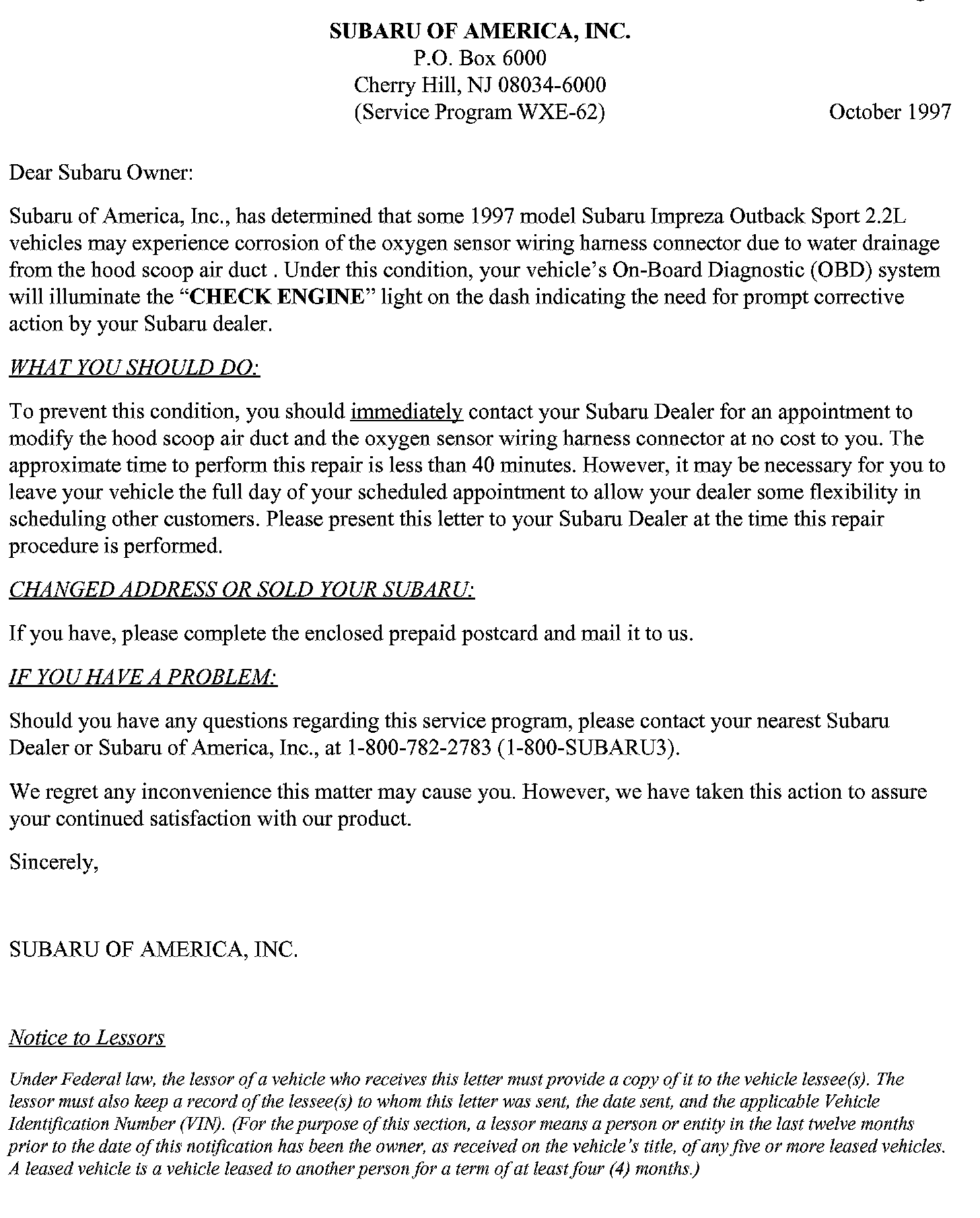
OWNER NOTIFICATION
SOA will prepare and mail an Owner Notification Letter to the owners of all potentially affected vehicles. The owner notification mailing is scheduled for late October 1997.
DEALER SERVICE PROGRAM RESPONSIBILITY
Dealers are to promptly service all vehicles subject to this service program and presented for repair at no charge to the owners, regardless of mileage, age of vehicle, or ownership, from this time forward in accordance with the service procedure section of this bulletin.
Dealers are also to promptly correct all affected vehicles in their inventory (new, used and demo) in accordance with the instructions in the service procedure section of this bulletin. Additionally, whenever a vehicle subject to this service program is taken into new or used vehicle inventory, or it is in your dealership for service in the future, you should take the necessary steps to be sure the service program correction has been made before selling or releasing the vehicle.
Dealers are to contact owners of vehicles sold since the date of the computer listing from your new vehicle inventory, provide them with a copy of the owner notification letter and arrange to make the required correction according to the instructions in the service procedure section of this bulletin.
Please do not let the customer wait longer than necessary for servicing the vehicle. Every effort should be made to reduce inconvenience to our customers. Please thank them for their interest in keeping their Subaru vehicle properly maintained.
PARTS INFORMATION
Quantities of the improved parts listed below will be available through your normal parts supply after October 13, 1997.

PARTS PRICING
SERVICE PROCEDURE
Modification procedures for repairing the hood scoop air duct and oxygen sensor wiring harness connector are outlined below:
A. Wiring Harness Repair:
1. Disconnect negative battery cable.
2. Disconnect front and rear 02 sensor connectors and engine to bulkhead connectors B-20, B-21, & B-22.
3. Inspect these connectors for water contamination and/or corrosion.
4. If corrosion is present, clean wire connectors with electrical contact cleaner or equivalent. If wire harness is beyond repair, replacement will be necessary.
5. Before reconnecting the connectors, tilt the bulkhead harness downward and inspect for water buildup in the corrugated protector.
6. If water is present, separate the corrugated protector, and use compressed air to remove the moisture from the harness and connector.
7. Rewrap the separated protector with electrical tape, apply dielectric grease to the face of the male and female engine connectors by pressing the face of each connector into the provided grease. This should be done by first placing the "grease" on a suitable flat surface. Then press the face of each connector into the grease. Do not over pack by hand. (An allocation of this grease was provided to each dealer.)
Warning:
Do not apply grease to either of the 02 sensor connectors as it will impair their performance!
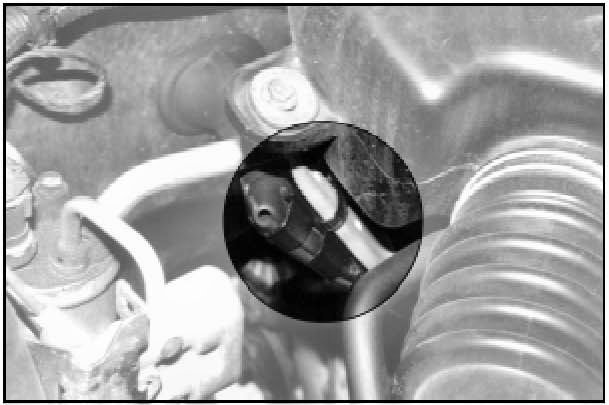
8. Install the front 02 sensor harness adapter supplied in the kit and tie-wrap it to the right air intake duct bracket.
9. Reconnect the battery connector. Using the select monitor, clear any codes if present. Confirm proper engine operation. Should any trouble codes remain, troubleshoot and repair according to the applicable service manual.
B. Hood Scoop Air Duct Repair
1. Remove lower hood scoop air duct panel and hood air duct assembly.
2. Clean both parts and the hood air duct opening with an all purpose cleaner. Be careful not to damage the painted surface of the hood air duct or the hood.
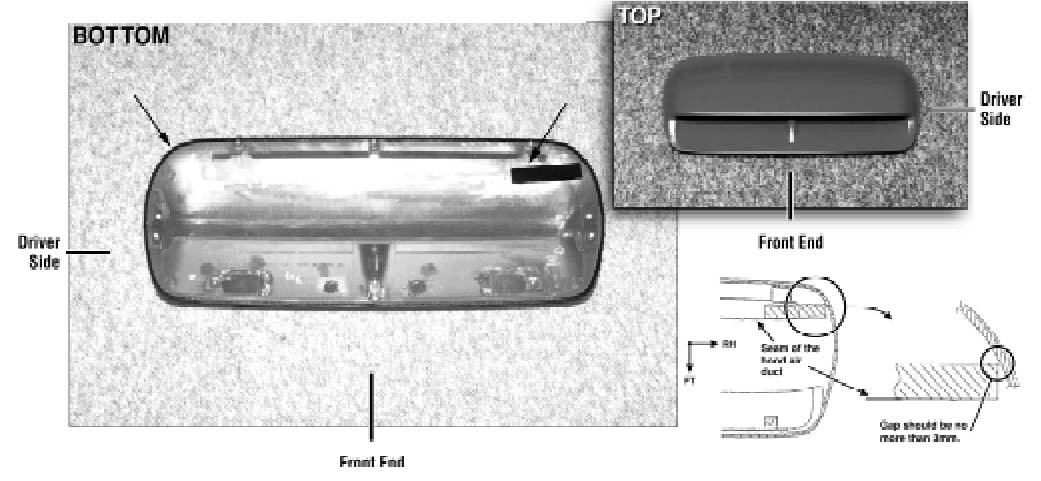
3. Apply the thin foam gasket material to the underside outer edge of the hood air duct.
3a. Apply the foam gasket material, measuring 20mm x 20mm x 100mm, following along the seam of the hood air duct (underside), as shown. Be careful not to overlap the edges of each sealer. The gap between the edges should be no more than 3mm.
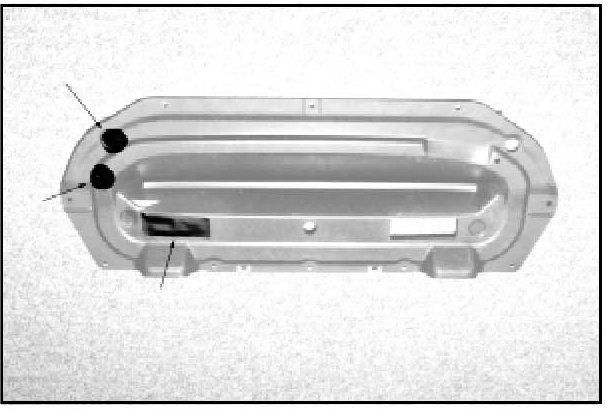
4. Install the 2 round PVC tape patches and the rectangular PVC patch to the underside (portion that faces the engine) of the lower hood air duct panel.
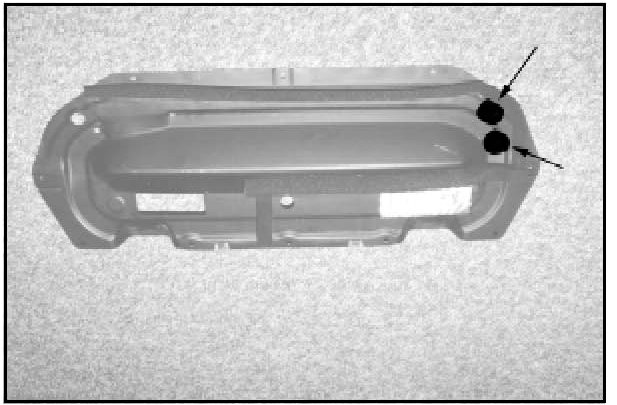
5. Turn the lower hood duct panel over and install the 2 remaining PVC patches.
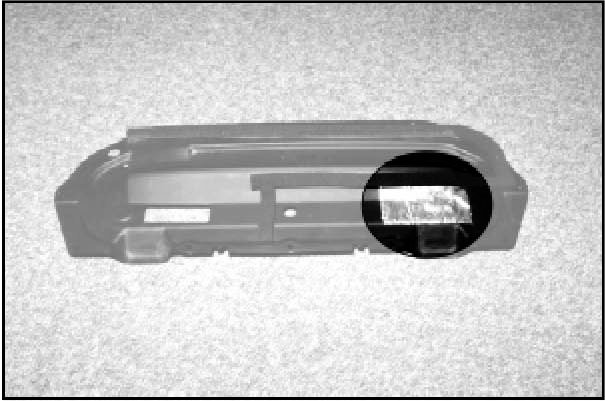
6. Install the rectangular foil backed butyl tape patch in a manner, which allows the patch to sag slightly in the center. This will prevent the bolt on the opposite side from piercing the patch.
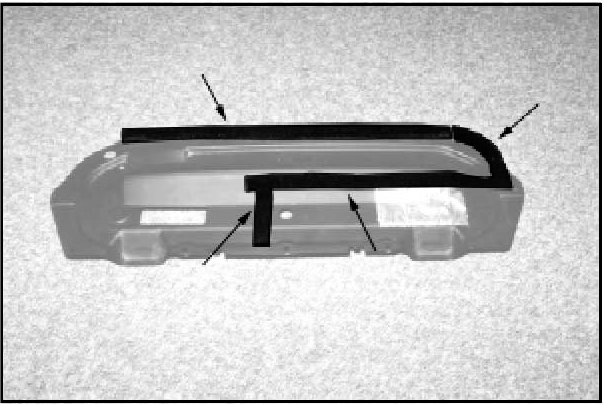
7. Using the template supplied, install the foam gasket material to the hood air duct panel.
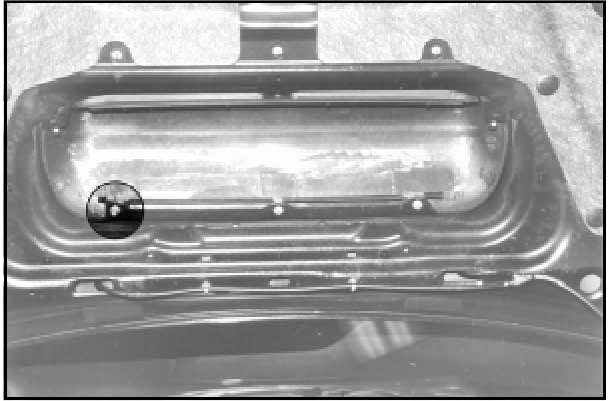
8. Re-install the hood air duct. Torque all mounting nuts to 75 Kg-cm (65 in.lbs). Apply grease to the lower right mounting stud and cover with black stud cap supplied.
9. Reinstall the lower hood air duct panel to the underside of the hood.
10. Apply a "Service Program WXE-62" completion label. This label should be affixed on a clean dry surface to the radiator core support panel in an area which will be visible when the vehicle is brought in for periodic servicing by the owner.
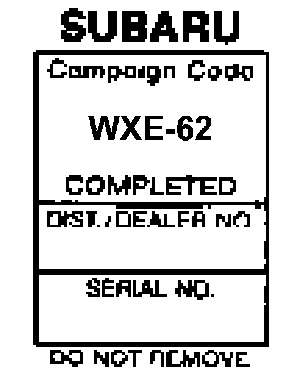
SERVICE PROGRAM IDENTIFICATION LABEL
Each vehicle corrected in accordance with the instructions outlined in this bulletin will require a "Service Program WXE-62" completion label. Each label provides a space to include the dealer code performing the service program. The information may be inserted with a typewriter or permanent ink pen.
A quantity of 25 labels are being provided to each dealer with this bulletin. Additional quantities of these labels are available through your area/distributor service office.
CLAIMS PROCESSING REIMBURSEMENT INFORMATION
Credit for the labor and parts to modify the hood scoop air duct and oxygen sensor wiring harness connector will be based on the submission of properly completed repair order information.
Dealers will be credited 0.6 labor hours at their warranty labor rate.
Star System, SNE, and SDC Dealers may enter the applicable claim information through their Dealer Communications System (DCS).
Non-Star System dealers in SOA regional areas will be reimbursed upon submission of a properly completed Customer Dealer Service (CDS) claim-entry form, along with all related documents to SOA's Customer Dealer Service Department.
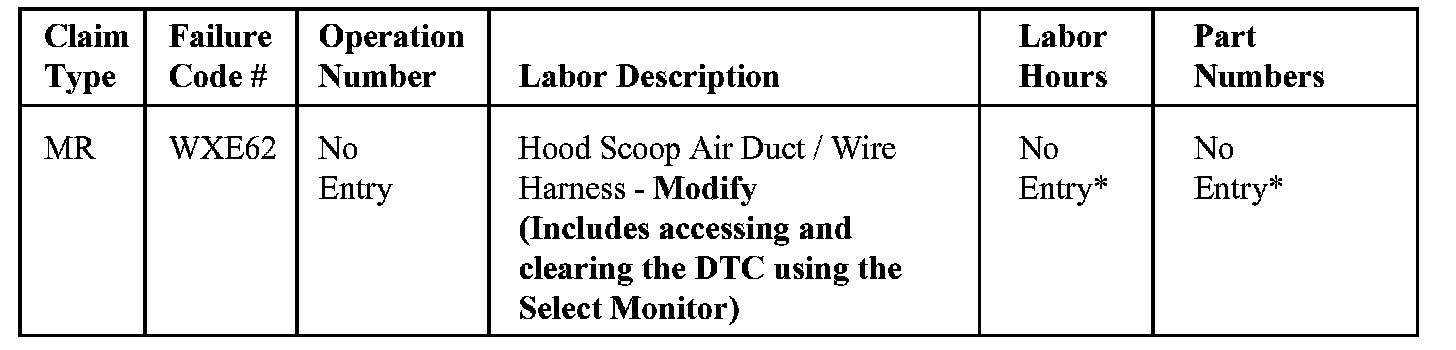
Listed here is the claim-entry information for this customer service program.
Note:
# = claim-entry field "Recall Code" using DCS software.
* = Labor (0.6 hours) and Parts will be calculated by the claims system upon MR claim submission.
We recommend that you establish a service file for this service program and keep all documents relating to this corrective repair action in that file. We also suggest that you discuss this service program with members of your staff so that they will be knowledgeable in the proper handing procedures. These steps should ensure in customer satisfaction.