Inspection After Disassembly
Engine Unit: Inspection After DisassemblyCRANKSHAFT END PLAY
^ Measure the clearance between thrust bearings and crankshaft arm when crankshaft is moved fully forward or backward with a dial indicator.
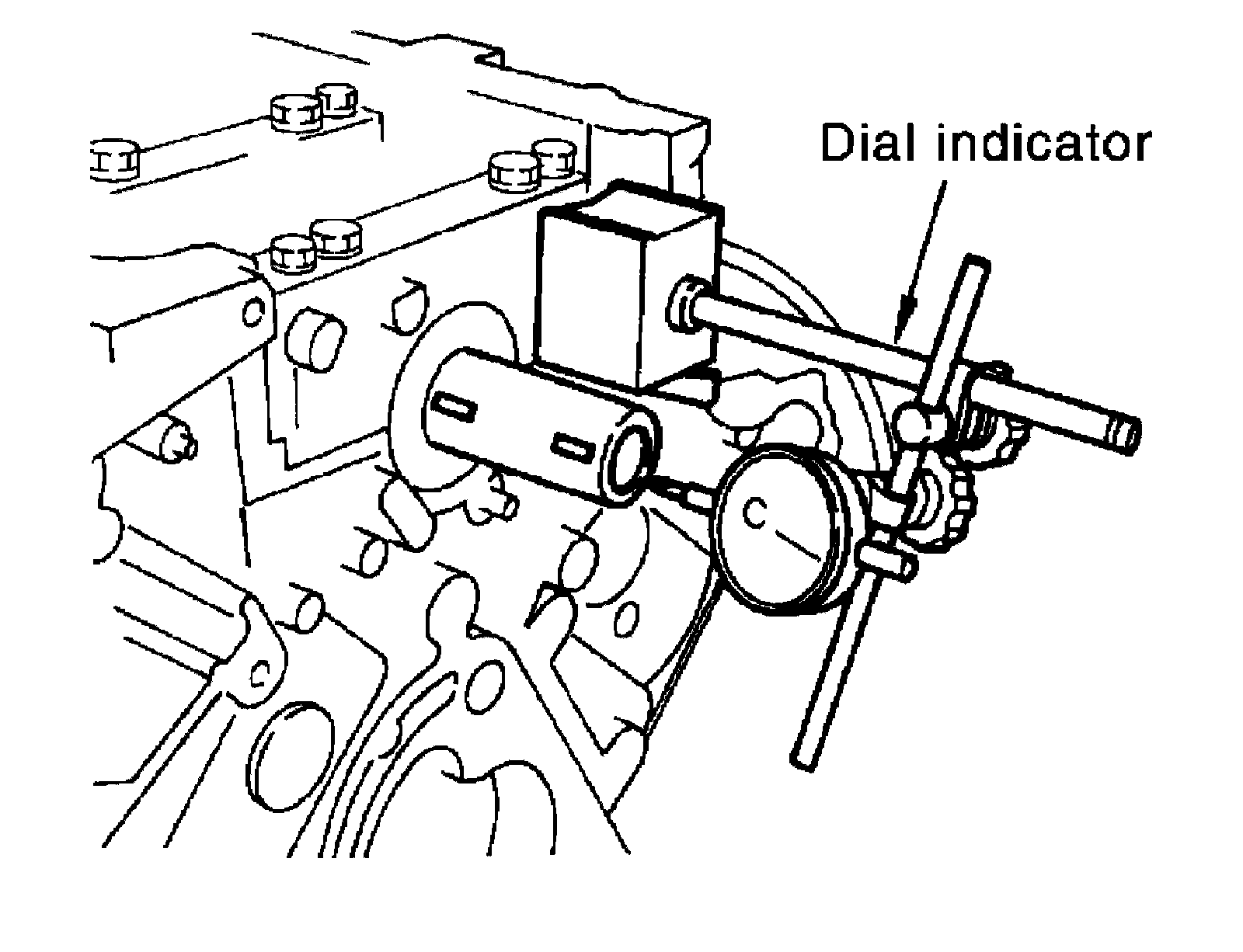
Standard: 0.10 - 0.26 mm (0.0039 - 0.0102 in)
Limit: 0.30 mm (0.0118 in)
^ If the measured value exceeds the limit, replace thrust bearings, and measure again. If it still exceeds the limit, replace crankshaft also.
CONNECTING ROD SIDE CLEARANCE
^ Measure the side clearance between connecting rod and crankshaft arm with a feeler gauge.
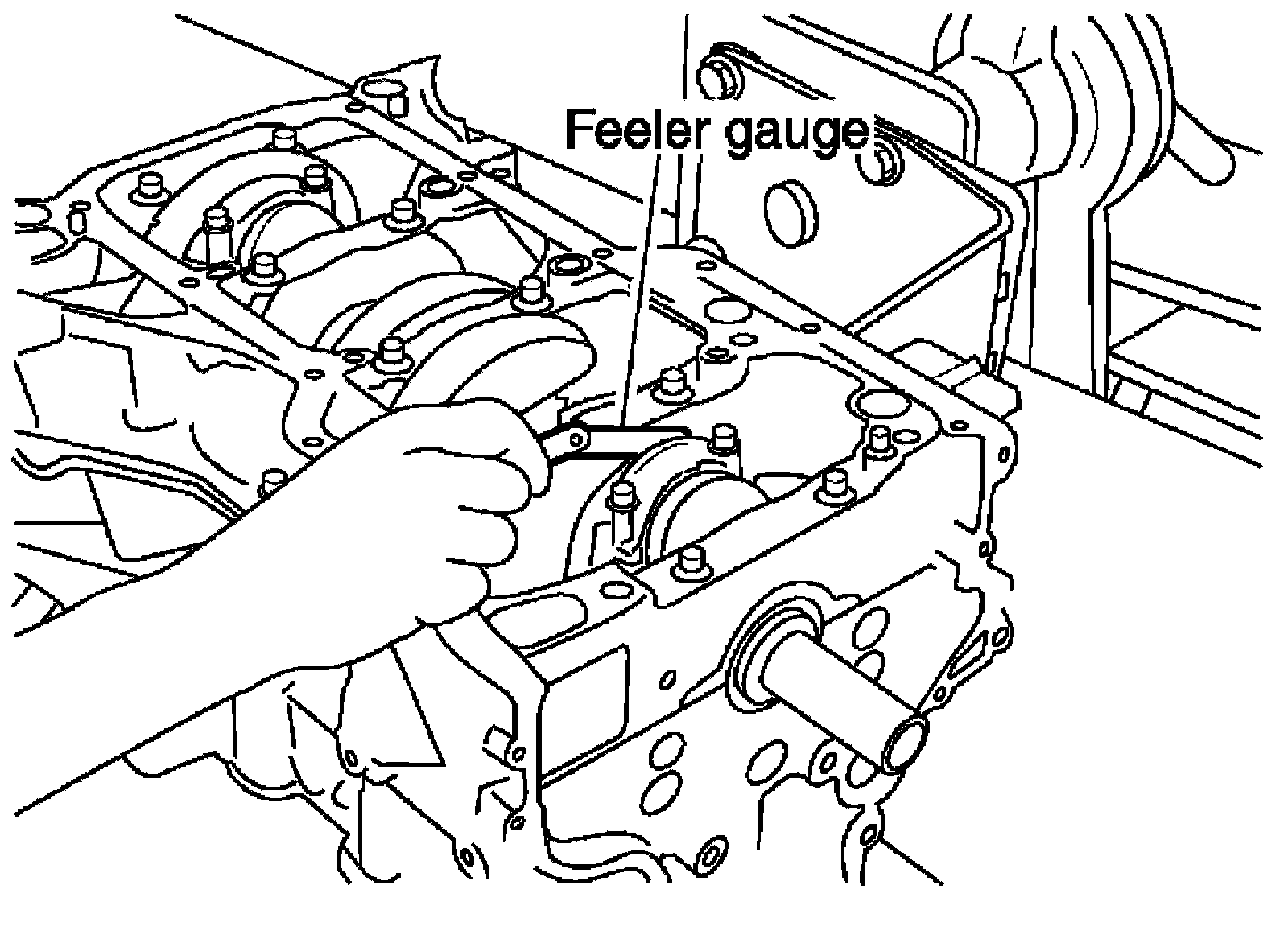
Standard: 0.20 - 0.35 mm (0.0079 - 0.138 in)
Limit: 0.50 mm (0.0197 in)
^ If the measured value exceeds the limit, replace connecting rod, and measure again. If it still exceeds the limit, replace crankshaft also.
PISTON TO PISTON PIN OIL CLEARANCE
Piston Pin Hole Diameter
Measure the inner diameter of piston pin hole with an inside micrometer.
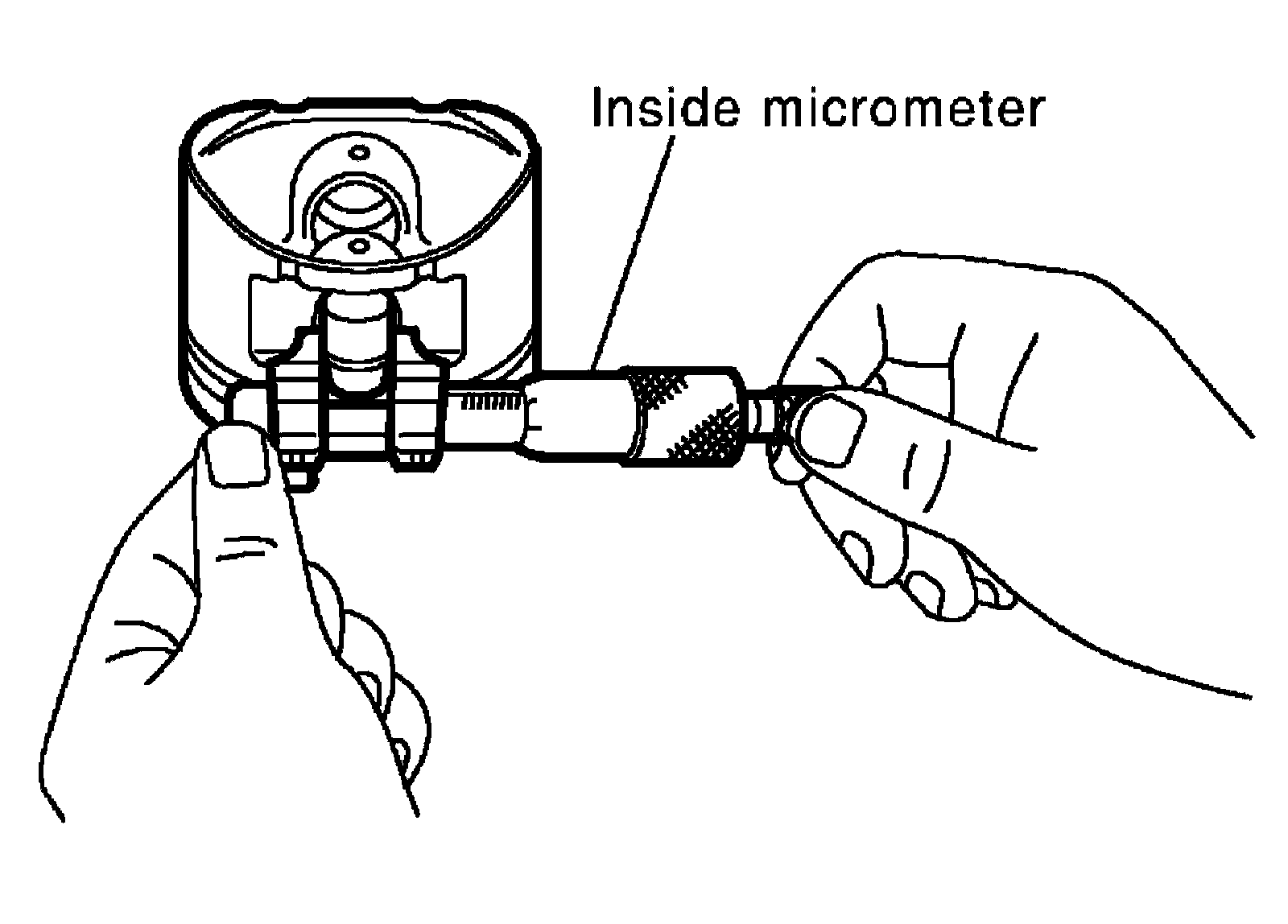
Standard: 19.993 - 20.005 mm (0.7871 - 0.7876 in)
Piston Pin Outer Diameter
Measure the outer diameter of piston pin with a micrometer.
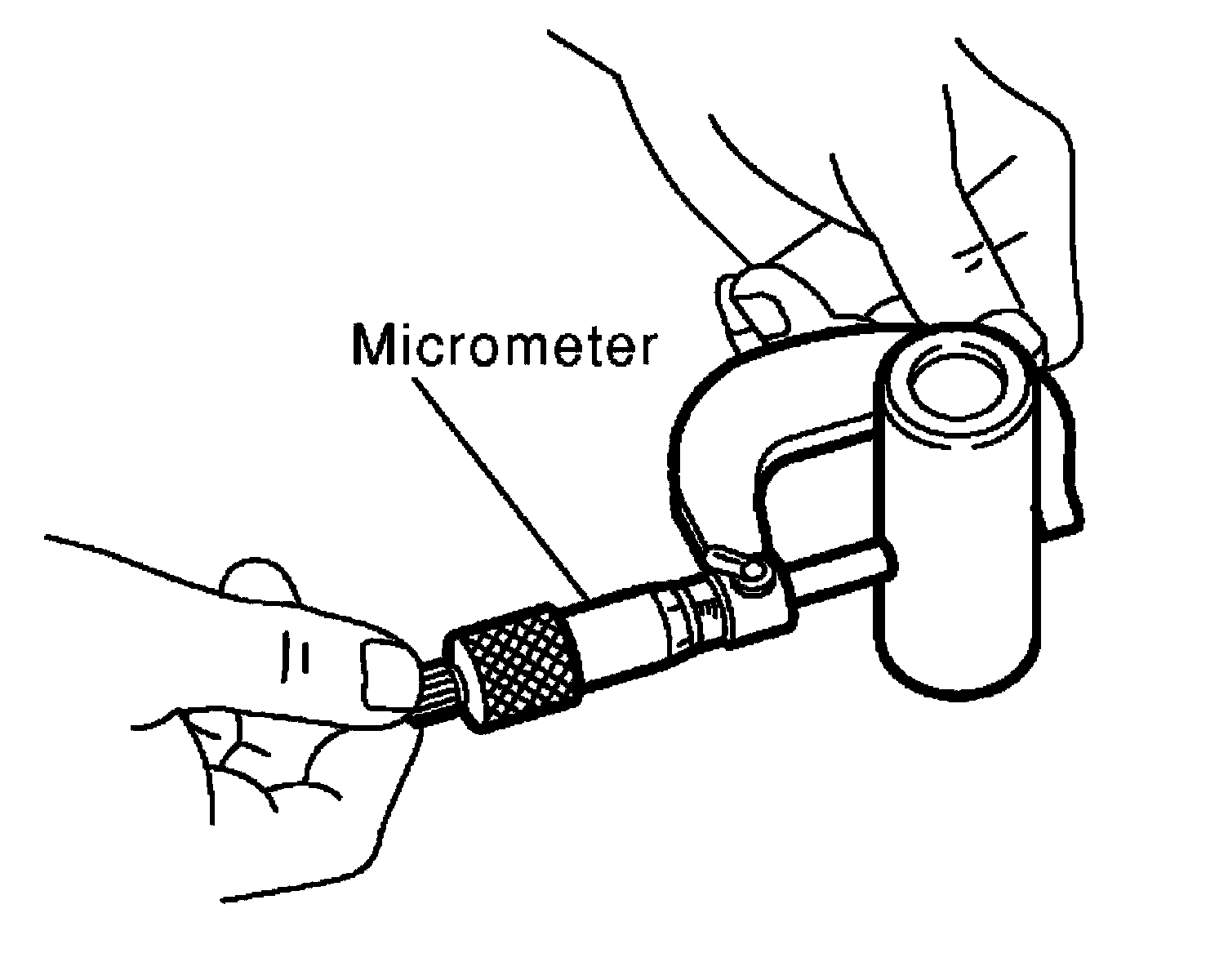
Standard: 19.989 - 20.001 mm (0.7870 - 0.7874 in)
Piston to Piston Pin Oil Clearance
(Piston to piston pin oil clearance) = (Piston pin hole diameter) - (Piston pin outer diameter)
Standard: 0.002 - 0.006 mm (0.0001 - 0.0002 in)
^ If oil clearance is out of the standard, replace piston and piston pin assembly.
^ When replacing piston and piston pin assembly, refer to [Service Data and Specifications].
NOTE:
^ Piston is available together with piston pin as assembly.
^ Piston pin (piston pin hole) grade is provided only for the parts installed at the plant. For service parts, no grades can be selected. (Only grade "0" is available.)
PISTON RING SIDE CLEARANCE
^ Measure the side clearance of piston ring and piston ring groove with a feeler gauge.
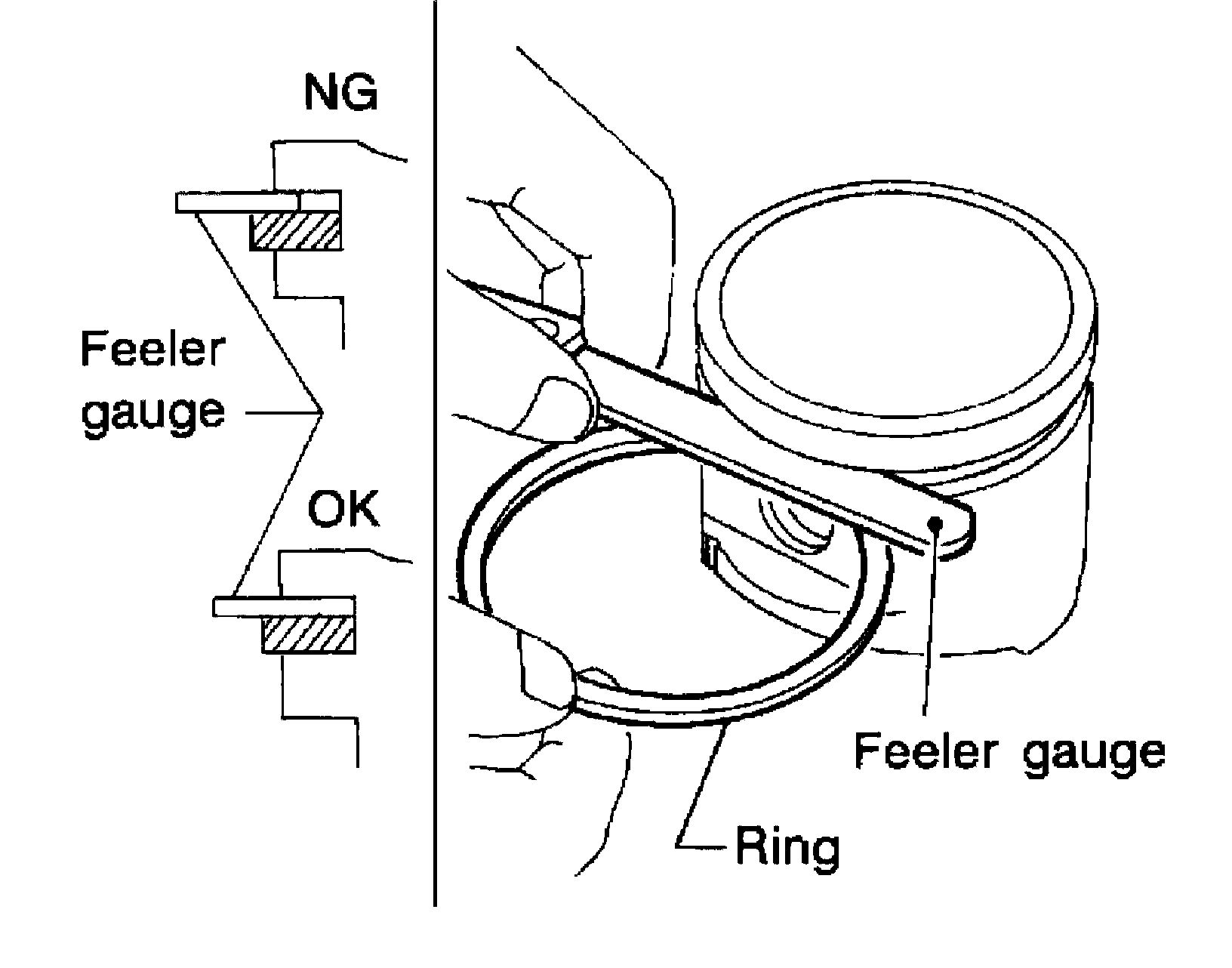
Standard:
Top ring: 0.045 - 0.080 mm (0.0018 - 0.0031 in)
2nd ring: 0.030 - 0.070 mm (0.0012 - 0.0028 in)
Oil ring: 0.065 - 0.135 mm (0.0026 - 0.0053 in)
Limit:
Top ring: 0.11 mm (0.0043 in)
2nd ring: 0.10 mm (0.0039 in)
^ If the measured value exceeds the limit, replace piston ring, and measure again. If it still exceeds the limit, replace piston also.
PISTON RING END GAP
^ Make sure that cylinder bore inner diameter is within the specification.
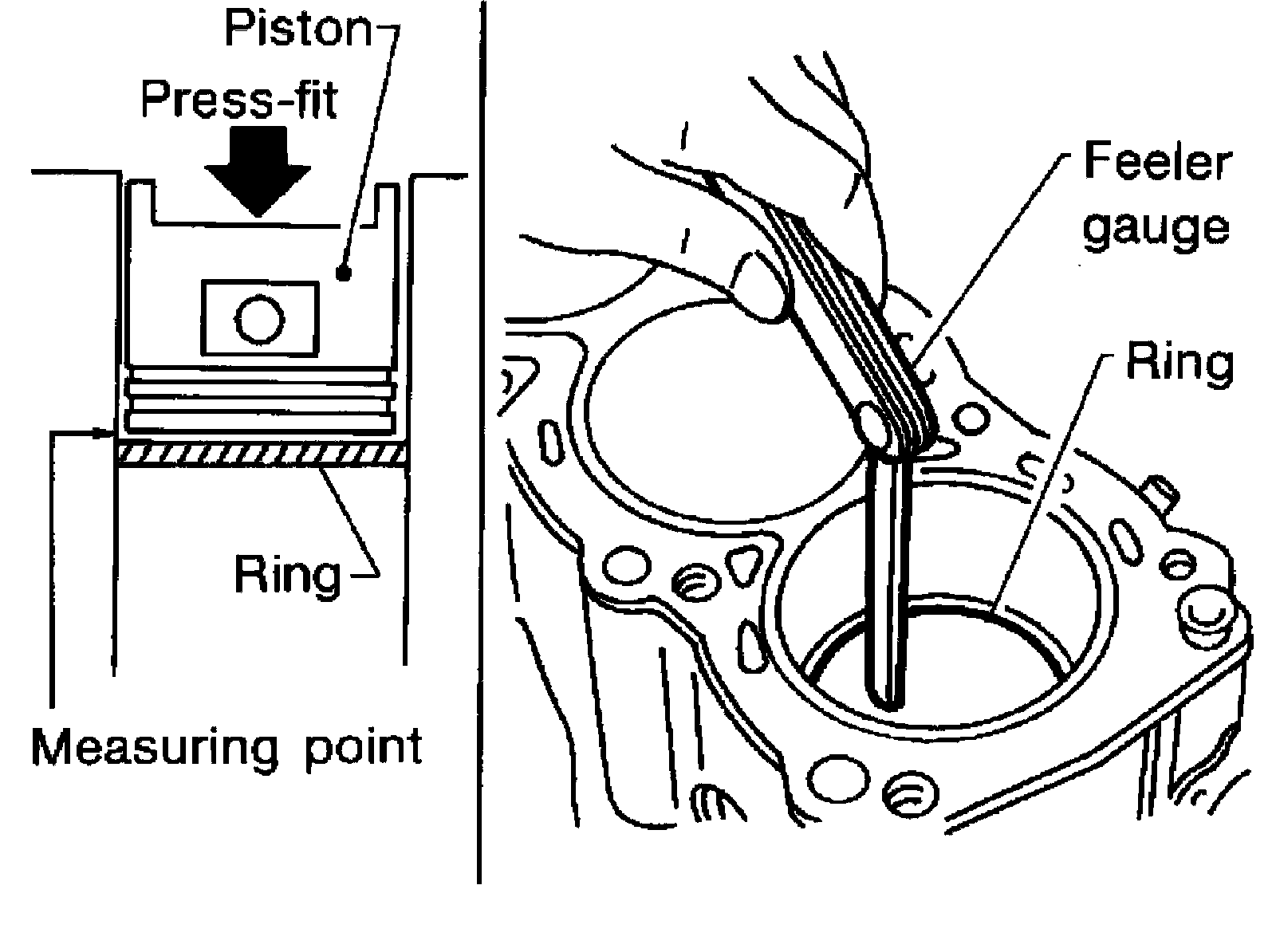
^ Lubricate with new engine oil to piston and piston ring, and then insert piston ring until middle of cylinder with piston, and measure piston ring end gap with a feeler gauge.
Standard:
Top ring 0.21 - 0.31 mm (0.0083 - 0.0122 in)
2nd ring: 0.32 - 0.47 mm (0.0126 - 0.0185 in)
Oil ring (rail ring): 0.20 - 0.60 mm (0.0079 - 0.0236 in)
Limit:
Top ring: 0.54 mm (0.0213 in)
2nd ring: 0.65 mm (0.0256 in)
Oil ring (rail ring): 0.95 mm (0.0374 in)
^ If the measured value exceeds the limit, replace piston ring, and measure again.
CONNECTING ROD BEND AND TORSION
^ Check with a connecting rod aligner.
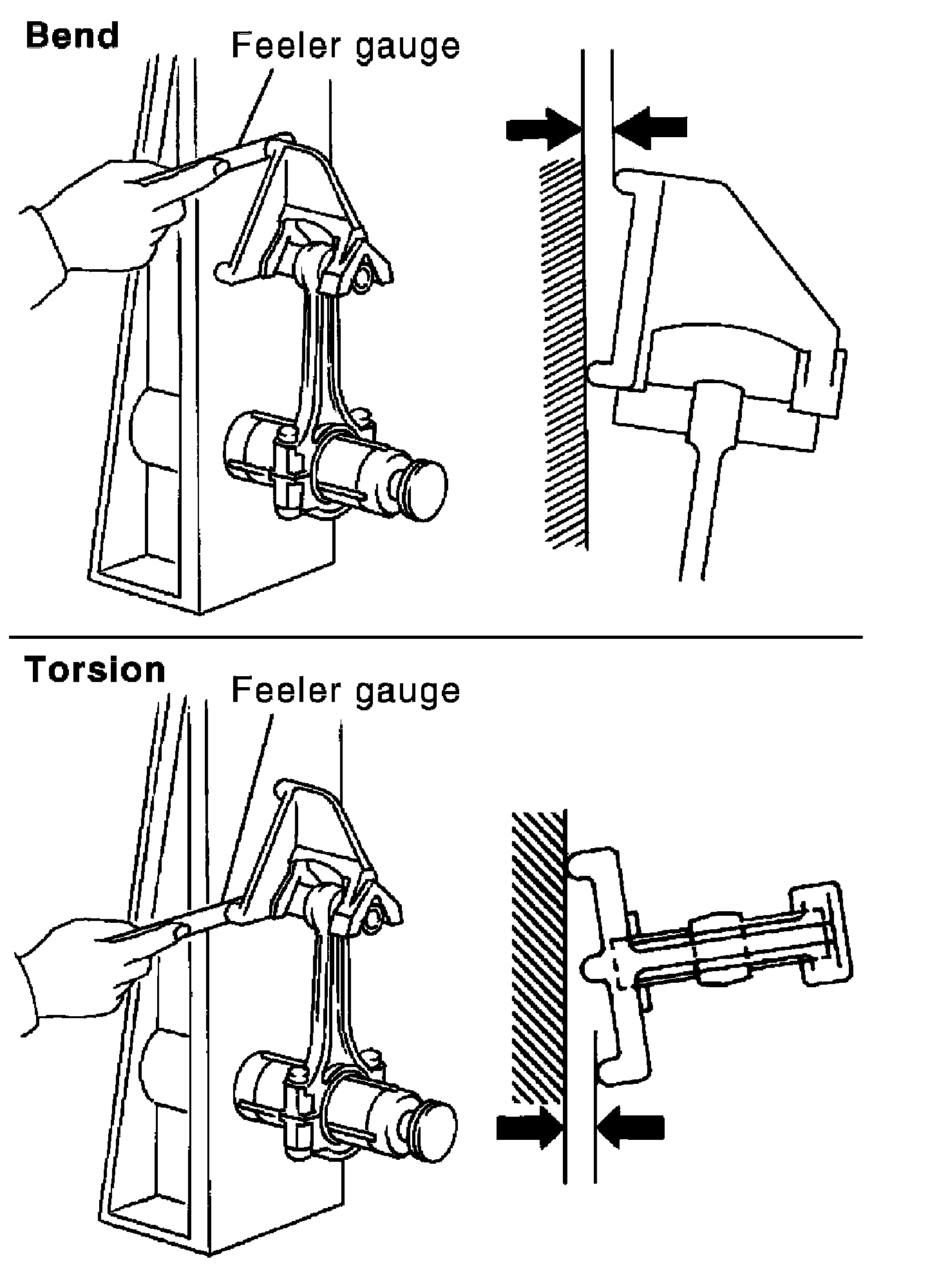
Bend:
Limit: 0.15 mm (0.0059 in) per 100 mm (3.94 in) length
Torsion:
Limit: 0.30 mm (0.0118 in) per 100 mm (3.94 in) length
^ If it exceeds the limit, replace connecting rod assembly.
CONNECTING ROD BIG END DIAMETER
^ Install connecting rod bearing cap without connecting rod bearing installed, and tightening connecting rod bolts to the specified torque.
^ Measure the inner diameter of connecting rod big end with an inside micrometer.
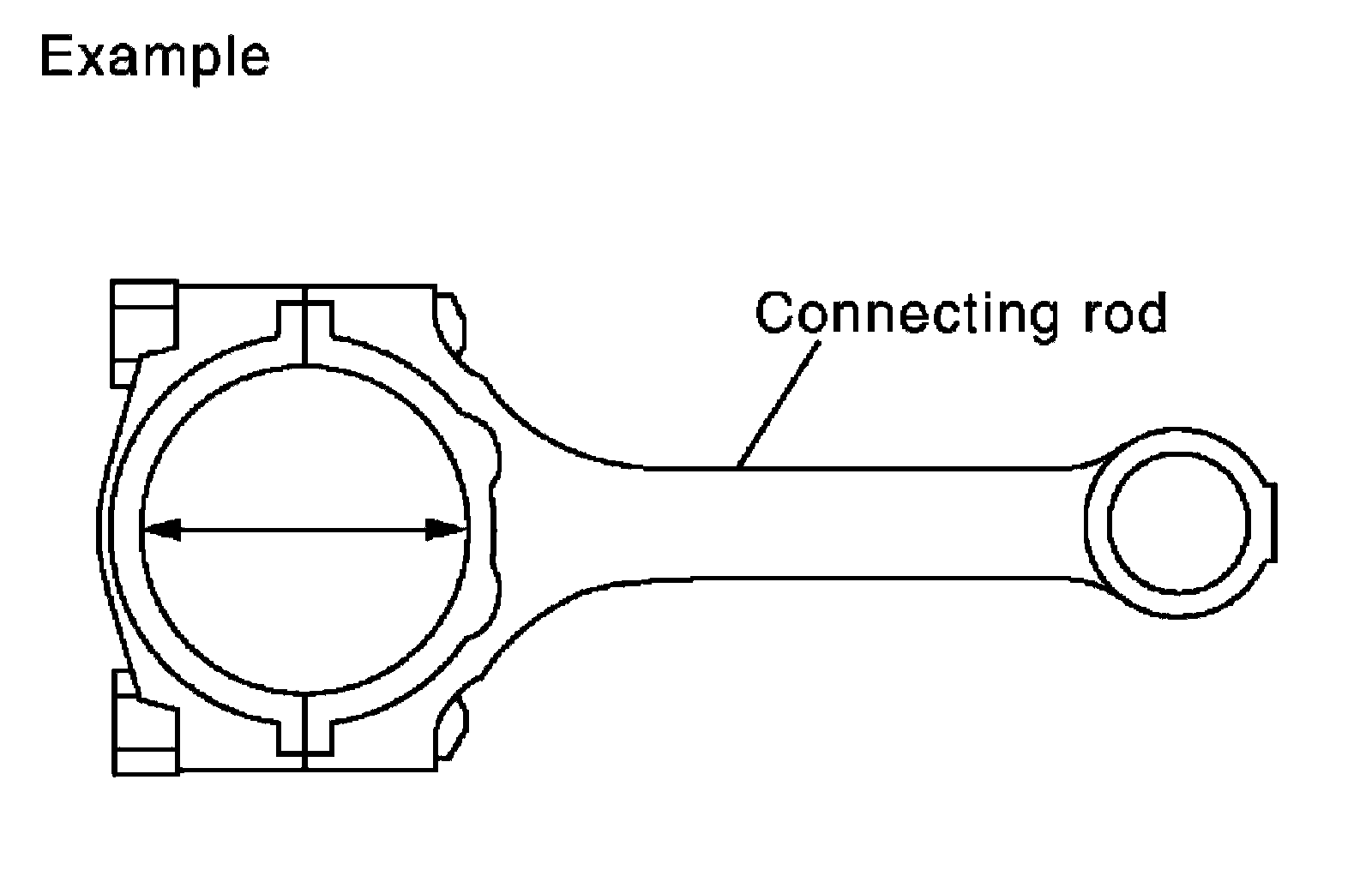
Standard: 48.000 - 48.013 mm (1.8898 - 1.8903 in)
^ If out of the standard, replace connecting rod assembly.
CONNECTING ROD BUSHING OIL CLEARANCE
Connecting Rod Bushing Inner Diameter
Measure the inner diameter of connecting rod bushing with an inside micrometer.
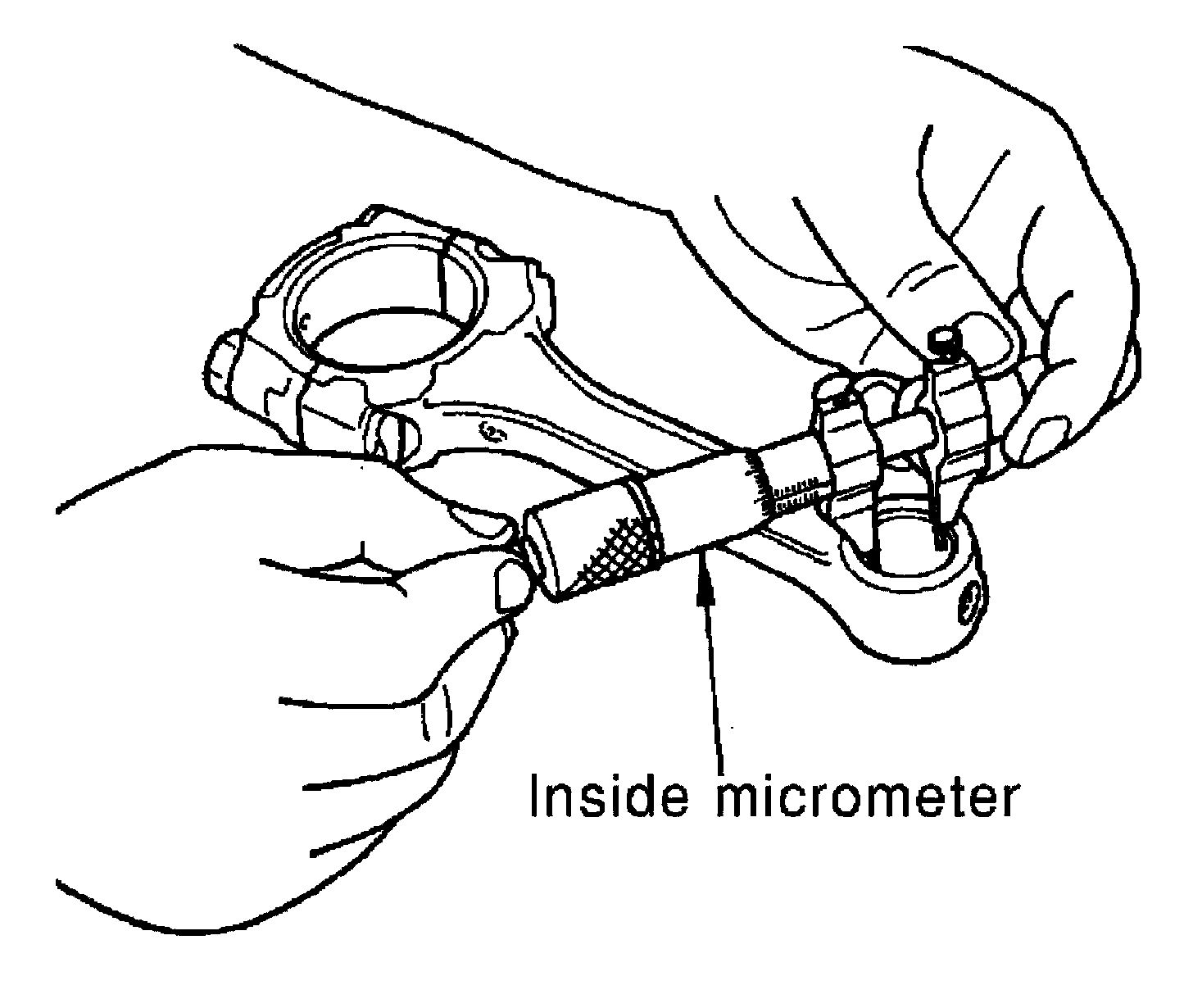
Standard: 20.000 - 20.012 mm (0.7874 - 0.7879 in)
Piston Pin Outer Diameter
Measure the outer diameter of piston pin with a micrometer.
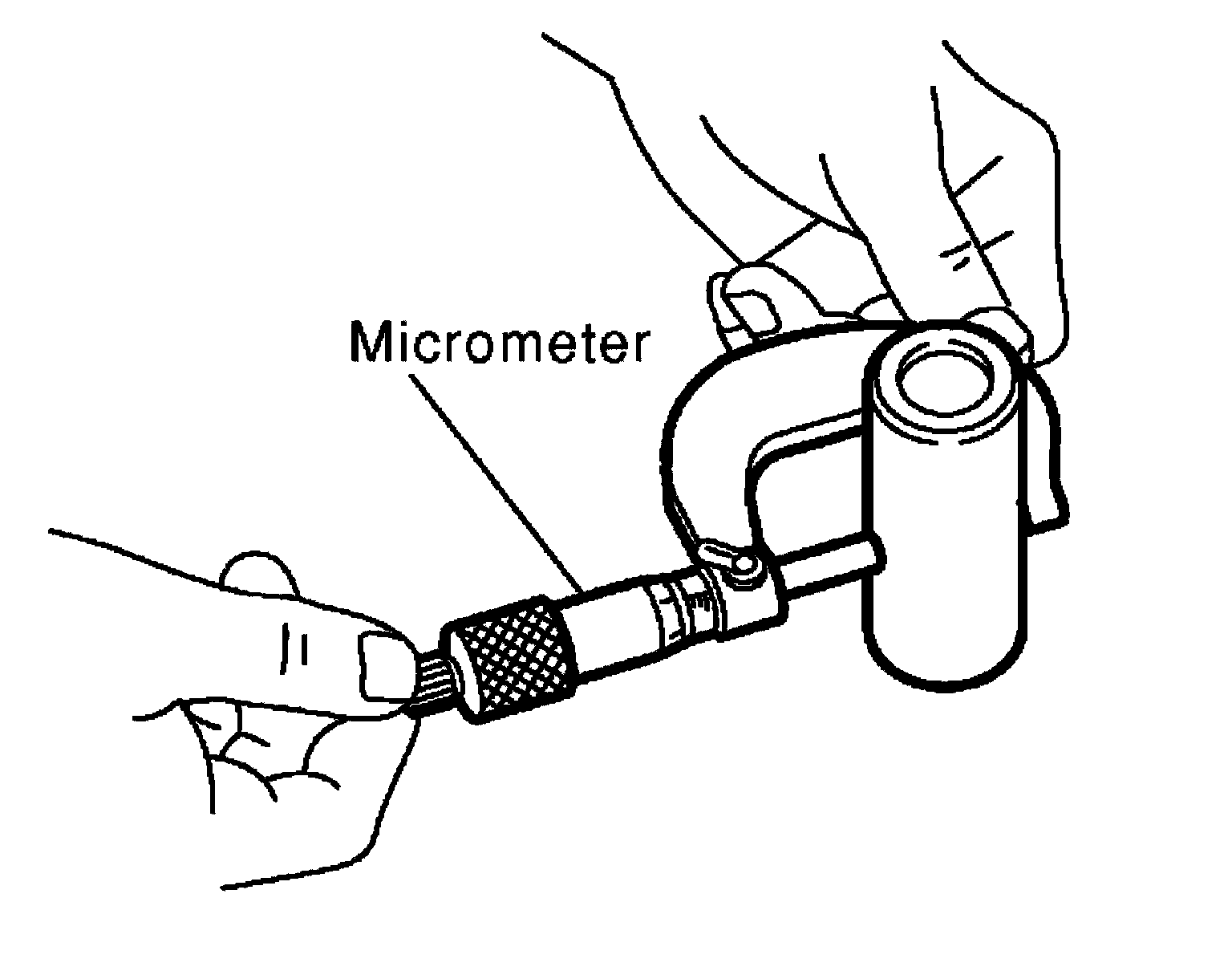
Standard: 19.989 - 20.001 mm (0.7870 - 0.7874 in)
Connecting Rod Bushing Oil Clearance
(Connecting rod bushing oil clearance) = (Connecting rod bushing inner diameter) - (Piston pin outer diameter)
Standard: 0.005 - 0.017 mm (0.0002 - 0.0007 in)
^ If the measured value is out of the standard, replace connecting rod assembly and/or piston and piston pin assembly.
^ If replacing piston and piston pin assembly, refer to [Service Data and Specifications].
^ If replacing connecting rod assembly, refer to [Service Data and Specifications] to select connecting rod bearing.
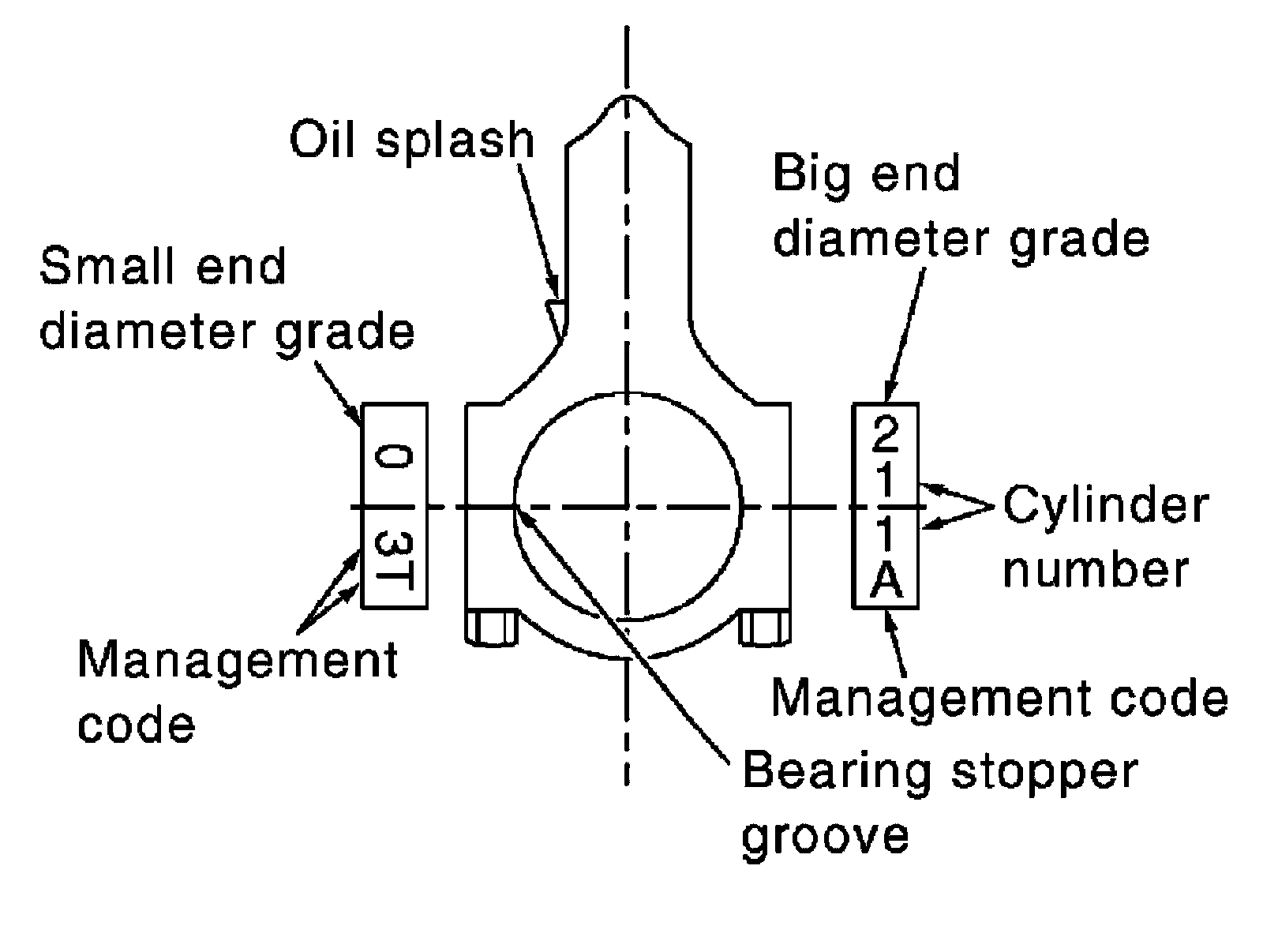
Factory installed parts grading:
^ Service parts apply only to grade "0".
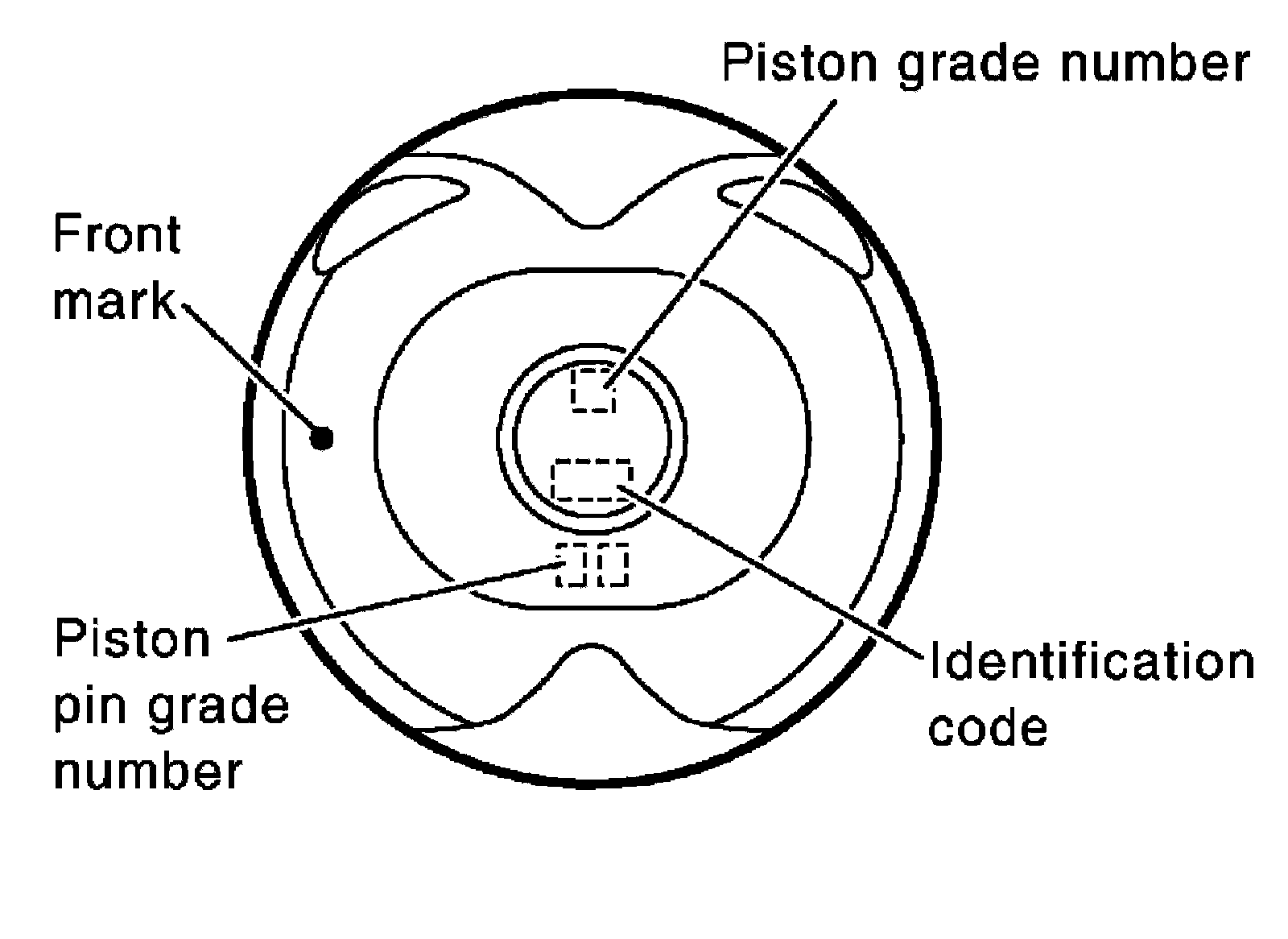
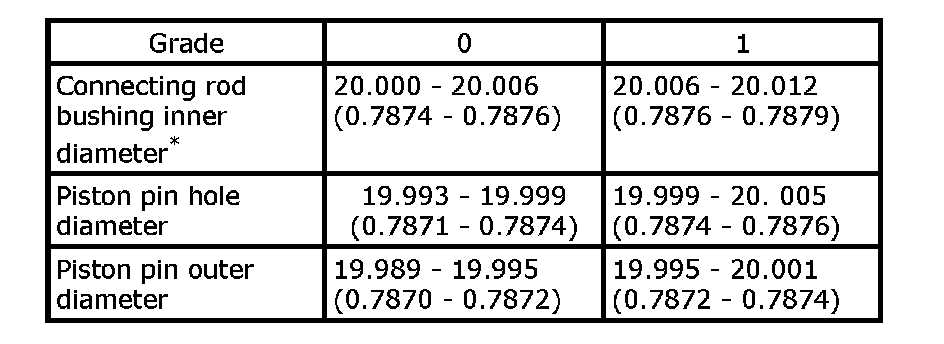
Unit: mm (in)
*: After installing in connecting rod.
CYLINDER BLOCK DISTORTION
^ Remove gasket on the cylinder block surface, and also remove engine oil, scale, carbon, or other contamination; using suitable tool.
CAUTION:
Do not allow any debris to enter engine oil or engine coolant passages.
^ Measure the distortion on the cylinder block upper face at some different points in six directions with straightedge and feeler gauge.
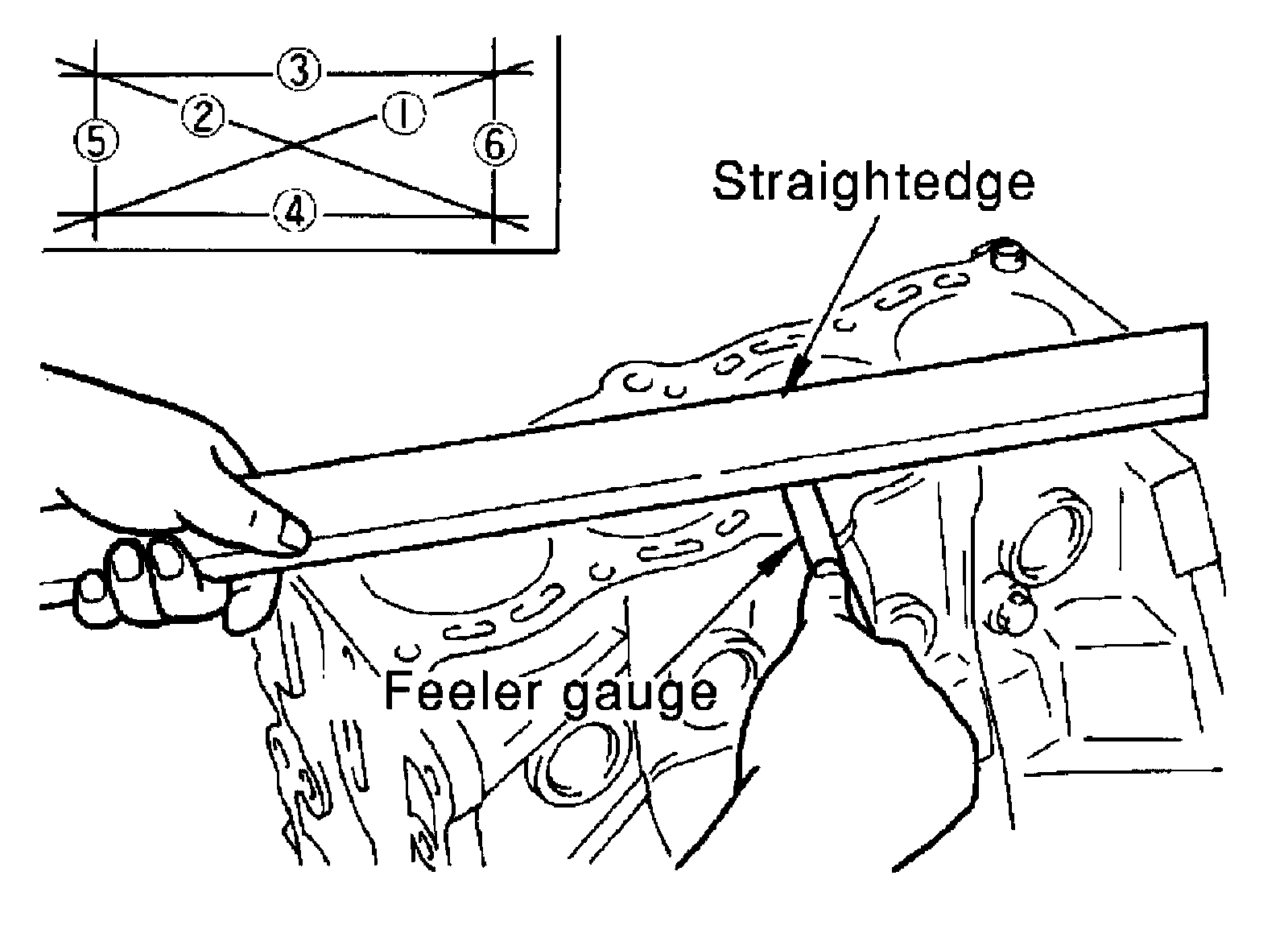
Limit: 0.1 mm (0.004 in)
^ If it exceeds the limit, replace cylinder block and lower cylinder block assembly.
NOTE:
Cylinder block cannot be replaced as a single part, because it is machined together with lower cylinder block.
MAIN BEARING HOUSING INNER DIAMETER
^ Install lower cylinder block without main bearings installed, and tighten lower cylinder block bolts to the specified torque.
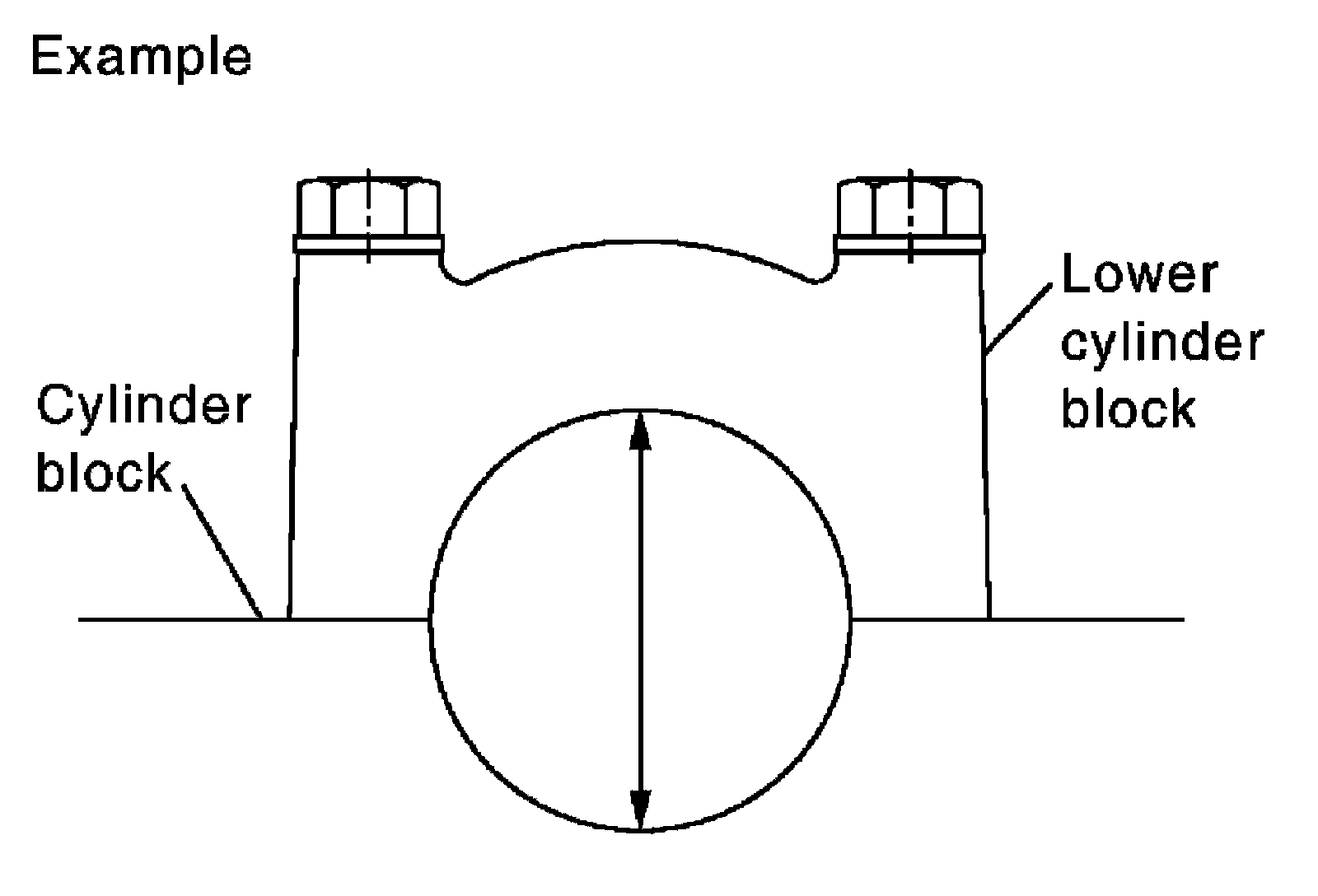
^ Measure the inner diameter of main bearing housing with a bore gauge.
Standard: 58.944 - 58.968 mm (2.3206 - 2.3216 in)
^ If out of the standard, replace cylinder block and lower cylinder block assembly.
NOTE:
Cylinder block cannot be replaced as a single part, because it is machined together with lower cylinder block.
PISTON TO CYLINDER BORE CLEARANCE
Cylinder Bore Inner Diameter
^ Using a bore gauge, measure the cylinder bore for wear, out-of-round and taper at six different points on each cylinder. [(X) and (Y) directions at (A), (B) and (C)] [(Y) is in longitudinal direction of the engine].
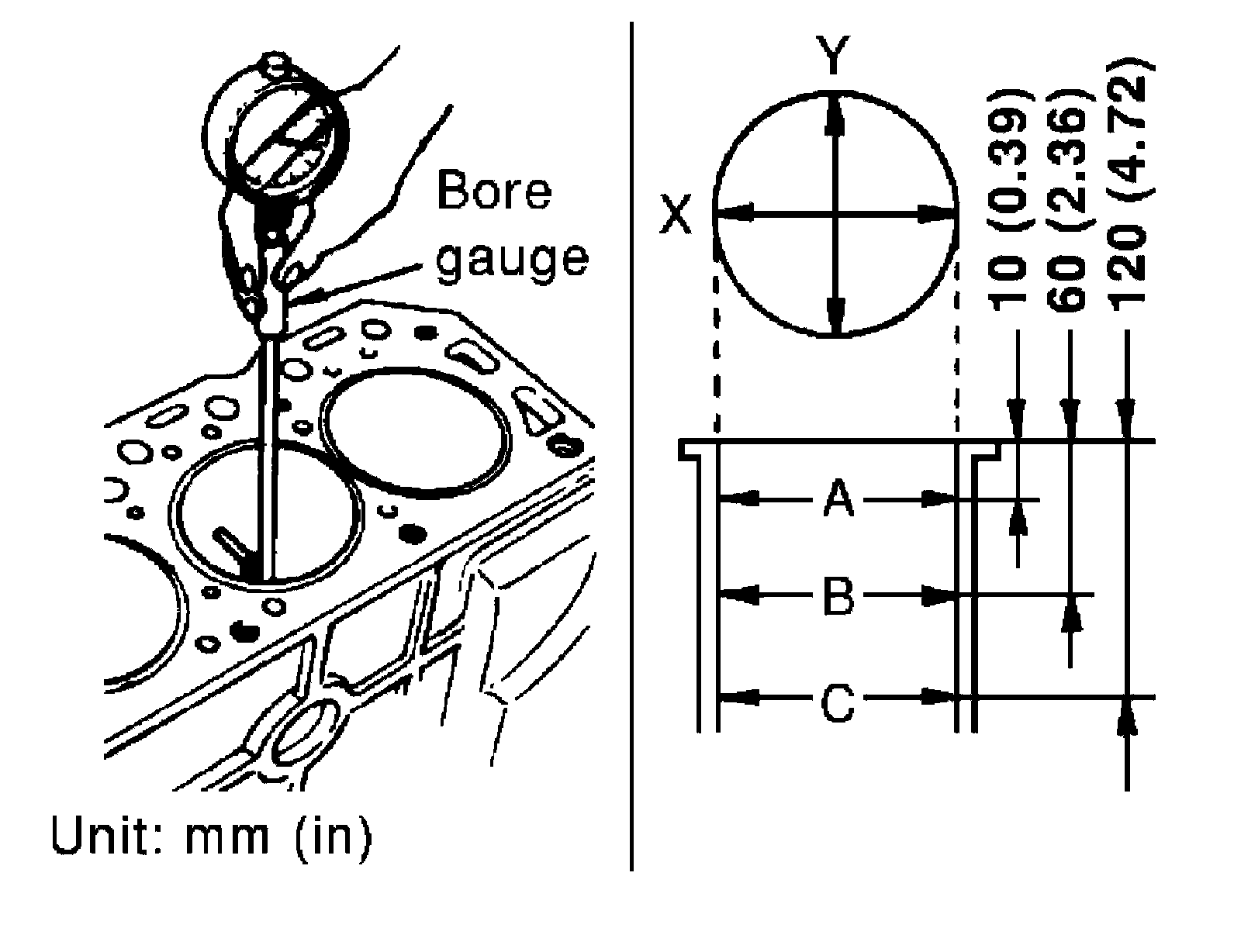
NOTE:
When determining cylinder bore grade, measure cylinder bore at (B) position.
Standard inner diameter:
89.010 - 89.030 mm (3.5043 - 3.5051 in)
Wear limit:
0.2 mm (0.008 in)
Out-of-round [Difference between (X) and (Y)]:
0.015 mm (0.0006 in)
Taper limit [Difference between (A) and (C)]:
0.01 mm (0.0004 in)
^ If the measured value exceeds the limit, or if there are scratches and/or seizure on the cylinder inner wall, hone or re-bore the cylinder inner wall.
Piston Skirt Diameter
Measure the outer diameter of piston skirt with a micrometer.
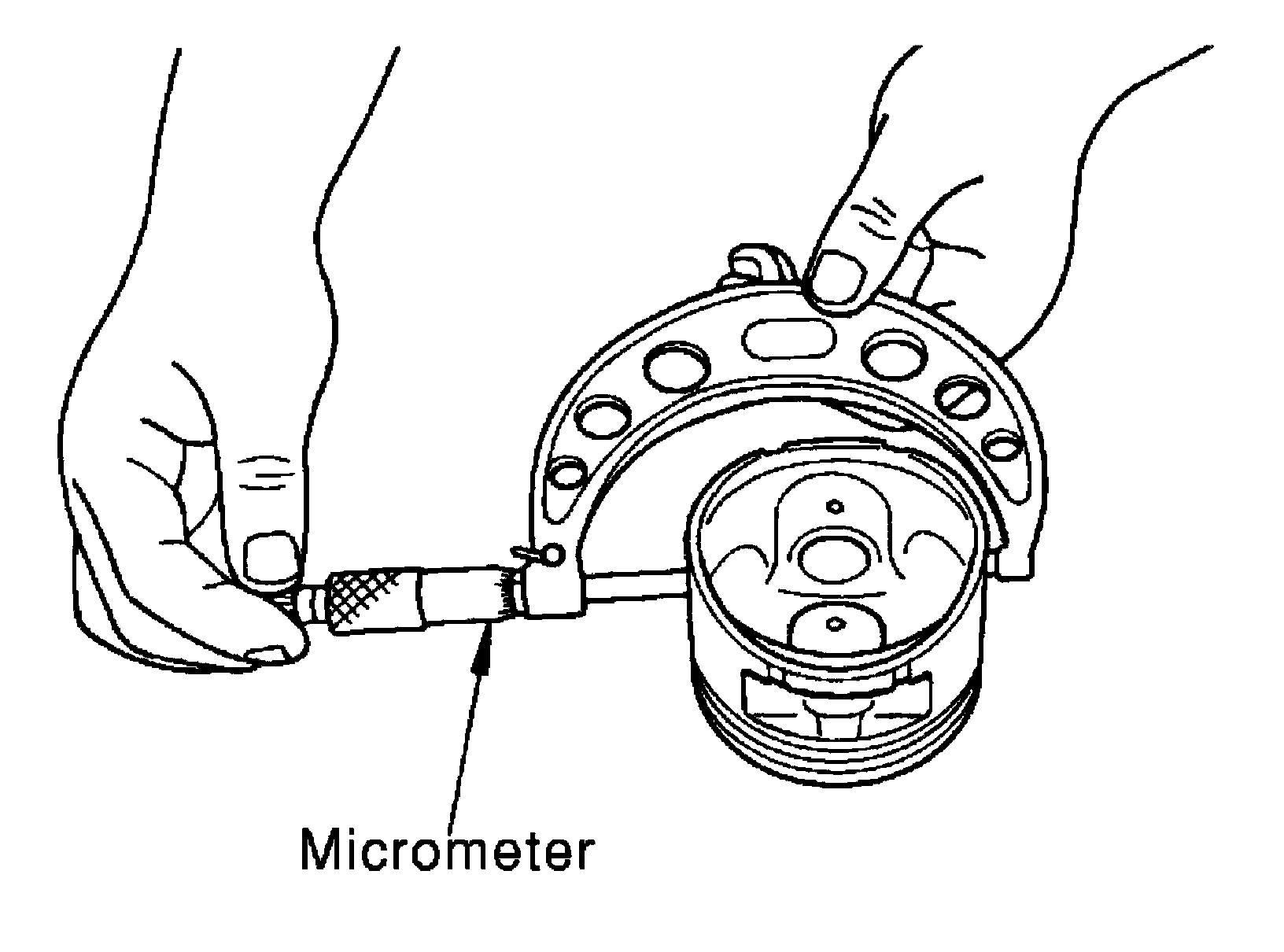
Measure point
: Distance from the top 42.98 mm (1.692 in)
Standard
: 88.990 - 89.010 mm (3.5035 - 3.5043 in)
Piston to Cylinder Bore Clearance
Calculate by piston skirt diameter and cylinder bore inner diameter [direction (X), position (B)]. (Clearance) (Cylinder bore inner diameter) - (Piston skirt diameter)
Standard: 0.010 - 0.030 mm (0.0004 - 0.0012 in)
Limit: 0.08 mm (0.0031 in)
^ If it exceeds the limit, replace piston and piston pin assembly.
Re-boring Cylinder Bore
1) Cylinder bore size is determined by adding piston to cylinder bore clearance to piston skirt diameter.
Re-bored size calculation: D = A + B - C where,
D: Bored diameter
A: Piston diameter as measured
B: Piston - to cylinder bore clearance (standard value)
C: Honing allowance 0.02 mm (0.0008 in)
2) Install lower cylinder block, and tighten bolts to the specified torque. Otherwise, cylinder bores may be distorted in final assembly.
3) Cut cylinder bores.
NOTE:
^ When any cylinder needs boring, all other cylinders must also be bored.
^ Do not cut too much out of cylinder bore at a time. Cut only 0.05 mm (0.0020 in) or so in diameter at a time.
4) Hone cylinders to obtain the specified piston to cylinder bore clearance.
5) Measure the finished cylinder bore for out-of-round and taper.
NOTE:
Measurement should be done after cylinder bore cools down.
CRANKSHAFT MAIN JOURNAL DIAMETER
^ Measure the outer diameter of crankshaft main journals with a micrometer.
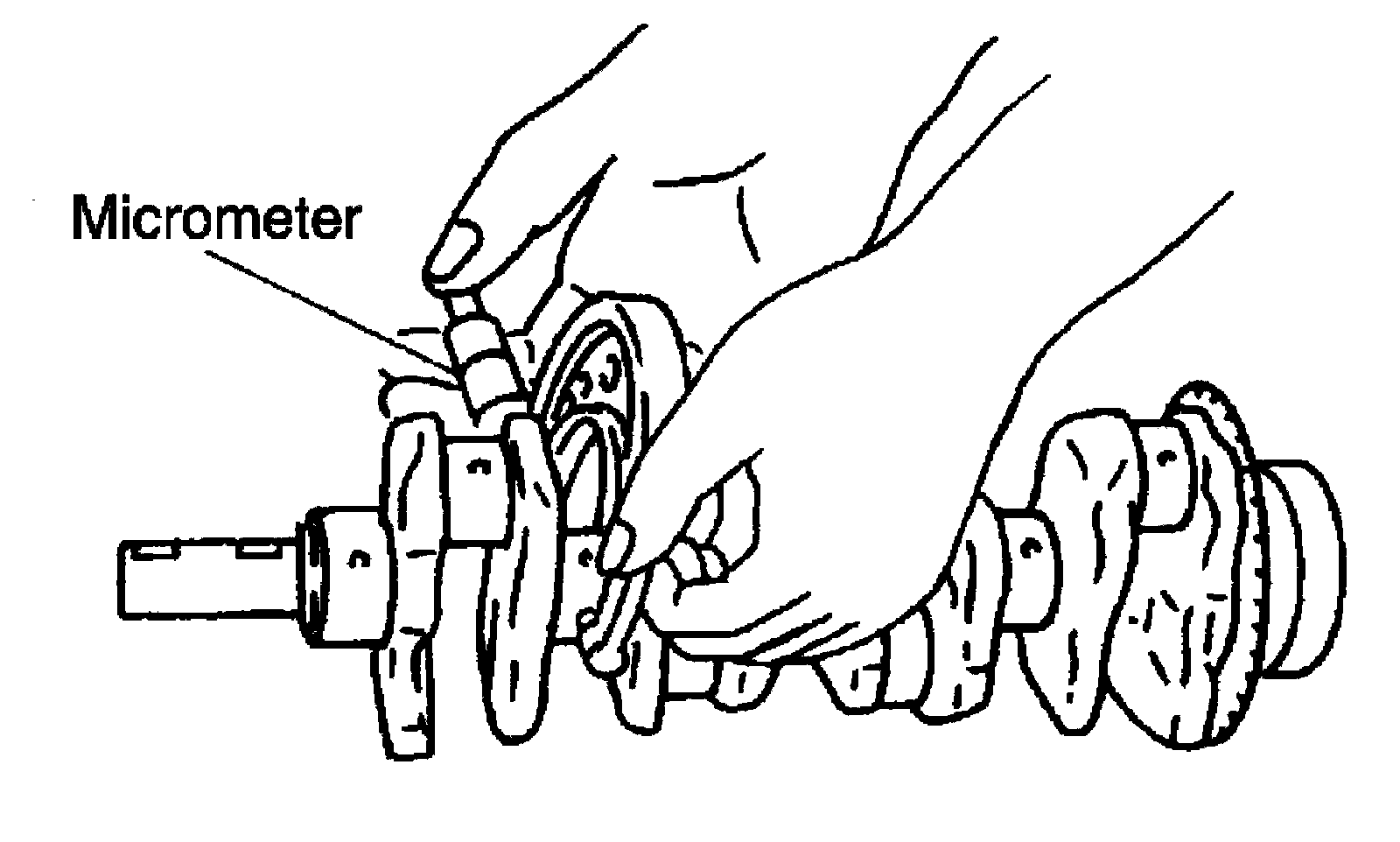
Standard: 54.955 - 54.979 mm (2.1636 - 2.1645 in) dia.
^ If out of the standard, measure the main bearing oil clearance. Then use undersize bearing.
CRANKSHAFT PIN JOURNAL DIAMETER
^ Measure the outer diameter of crankshaft pin journal with a micrometer.
Standard: 44.956 - 44.974 mm (1.7699-1.7706 in) dia.
^ If out of the standard, measure the connecting rod bearing oil clearance. Then use undersize bearing.
OUT-OF-ROUND AND TAPER OF CRANKSHAFT
^ Measure the dimensions at four different points as shown on each main journal and pin journal with a micrometer.
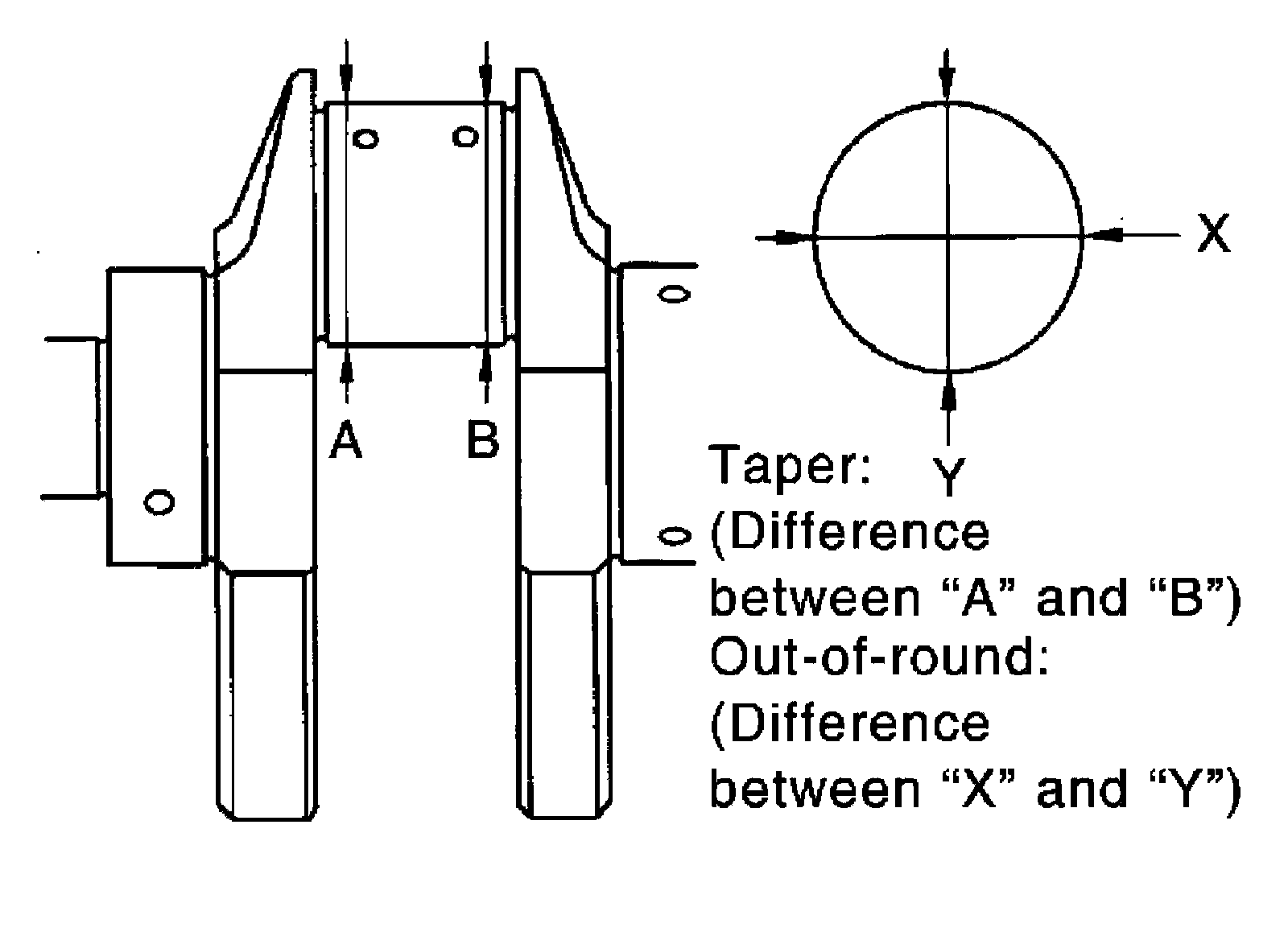
^ Out-of-round is indicated by the difference in dimensions between (X) and (Y) at (A) and (B).
^ Taper is indicated by the difference in dimension between (A) and (B) at (X) and (Y).
Limit:
Out-of-round [Difference between (X) and (Y)]
:0.0025 mm (0.0001 in)
Taper [Difference between (A) and (B)]
:0.0025 mm (0.0001 in)
^ If the measured value exceeds the limit, correct or replace crankshaft.
^ If corrected, measure the bearing oil clearance of the corrected main journal and/or pin journal. Then select main bearing and/or connecting rod bearing.
CRANKSHAFT RUNOUT
^ Place a V-block on a precise flat table to support the journals on the both end of crankshaft.
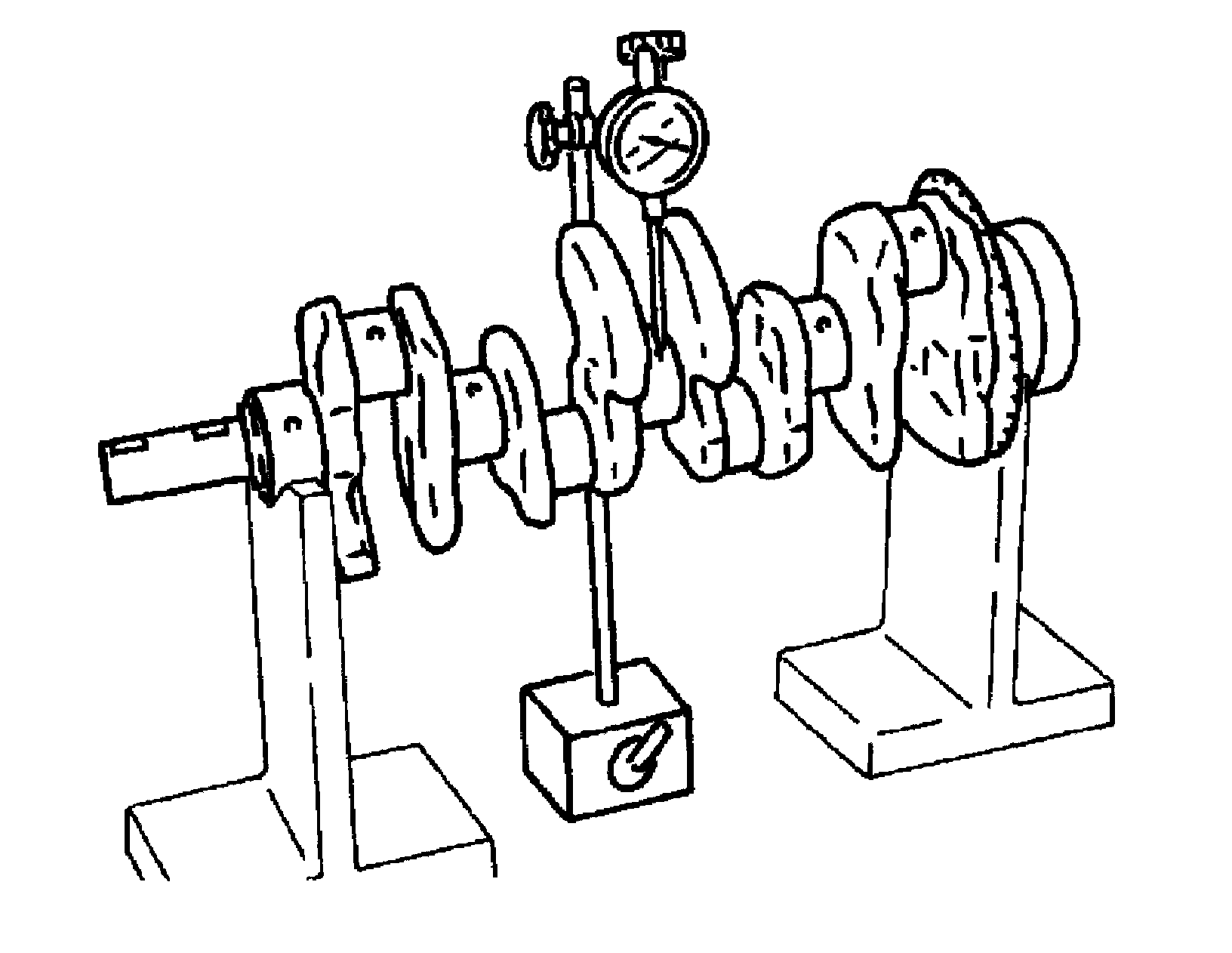
^ Place a dial indicator straight up on the No. 3 journal.
^ While rotating crankshaft, read the movement of the pointer on the dial indicator. (Total indicator reading)
Limit: 0.05 mm (0.0020 in)
^ If it exceeds the limit, replace crankshaft.
CONNECTING ROD BEARING OIL CLEARANCE
Method by Calculation
^ Install connecting rod bearings to connecting rod and cap, and tighten connecting rod bolts to the specified torque.
^ Measure the inner diameter of connecting rod bearing with an inside micrometer.
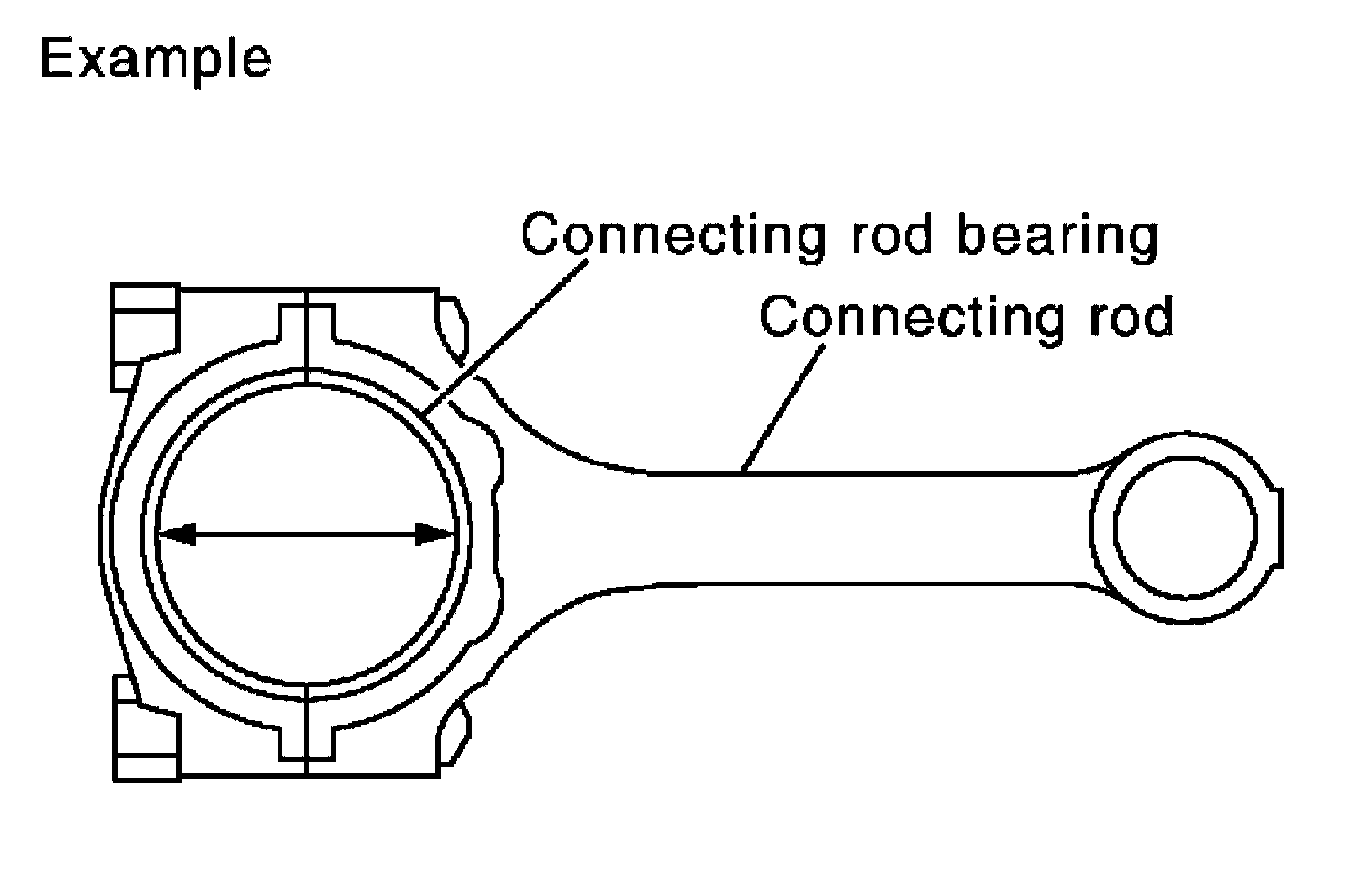
(Bearing oil clearance) = (Connecting rod bearing inner diameter) - (Crankshaft pin journal diameter)
Standard: 0.035 - 0.045 mm (0.0014 - 0.0018 in)
^ If the clearance exceeds the limit, select proper connecting rod bearing according to connecting rod big end diameter and crankshaft pin journal diameter to obtain the specified bearing oil clearance.
Method of Using Plastigage
^ Remove engine oil and dust on crankshaft pin and the surfaces of each bearing completely.
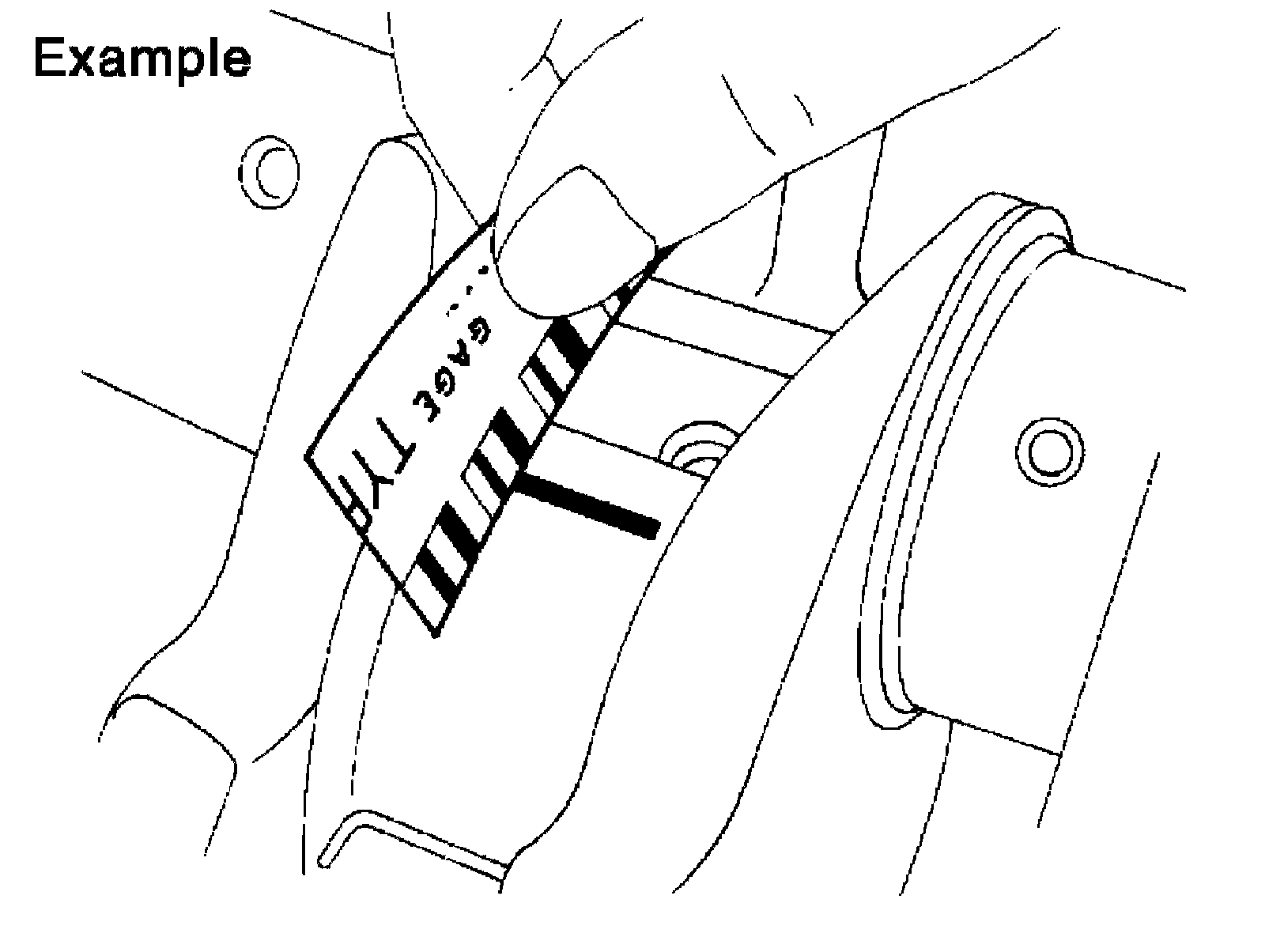
^ Cut a plastigage slightly shorter than the bearing width, and place it in crankshaft axial direction, avoiding oil holes.
^ Install connecting rod bearings to connecting rod and cap, and tighten connecting rod bolts to the specified torque.
CAUTION:
Do not rotate crankshaft.
^ Remove connecting rod cap and bearing, and using the scale on the plastigage bag, measure the plastigage width.
NOTE:
The procedure when the measured value exceeds the limit is same as that described in the "Method by Calculation".
MAIN BEARING OIL CLEARANCE
Method by Calculation
^ Install main bearings to cylinder block and lower cylinder block, and tighten lower cylinder block bolts to the specified torque.
^ Measure the inner diameter of main bearing with a bore gauge.
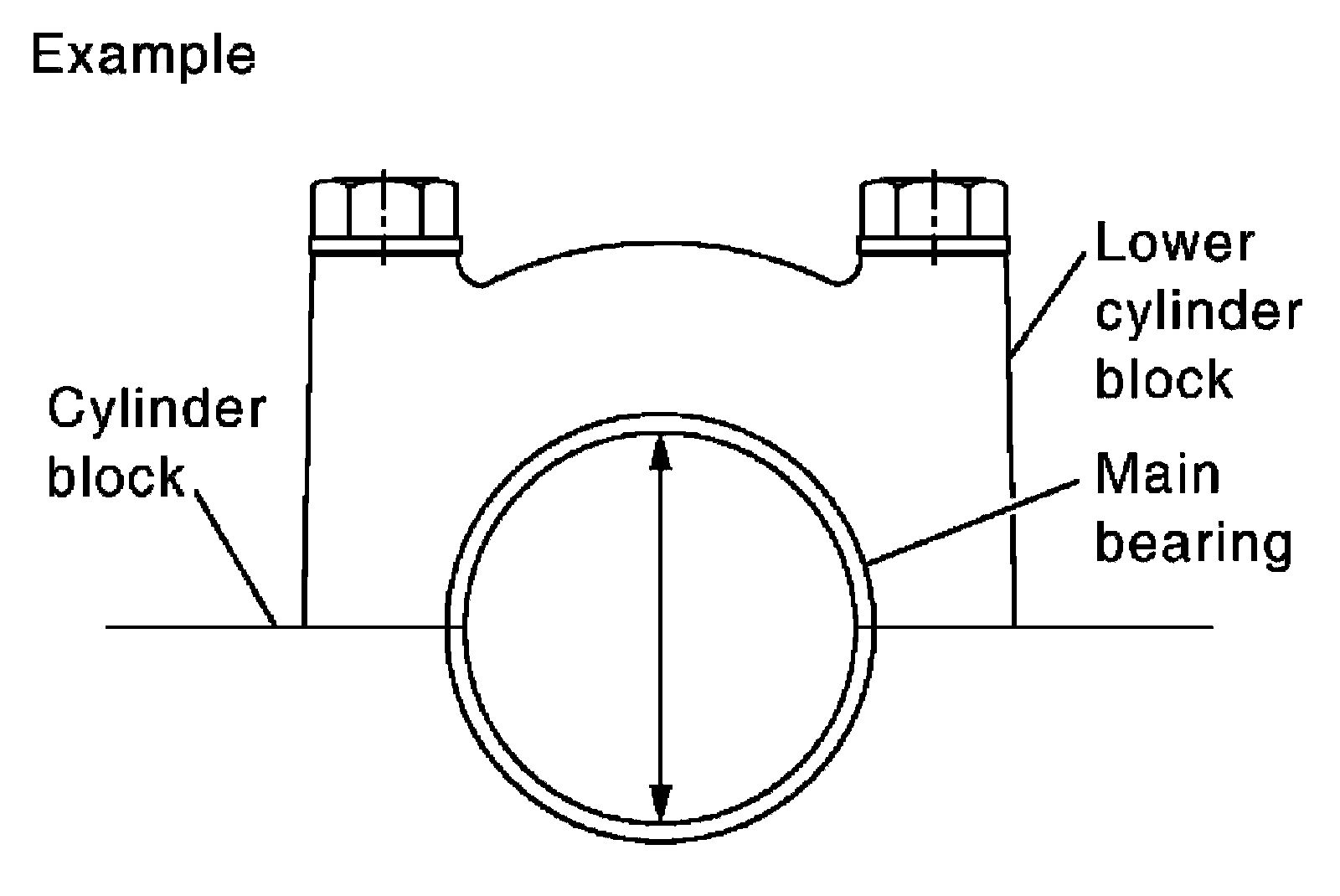
(Bearing oil clearance) = (Main bearing inner diameter) - (Crankshaft main journal diameter)
Standard:
No. 1, 3 and 5 journals
:0.028 - 0.042 mm (0.0011 - 0.0017 in)
No. 2 and 4 journals
:0.041 - 0.056 mm (0.0016 - 0.0022 in)
Limit: 0.1 mm (0.004 in)
^ If the clearance exceeds the limit, select proper main bearing according to main bearing inner diameter and crankshaft main journal diameter to obtain the specified bearing oil clearance.
Method of Using Plastigage
^ Remove engine oil and dust on crankshaft main journal and the surfaces of each bearing completely.
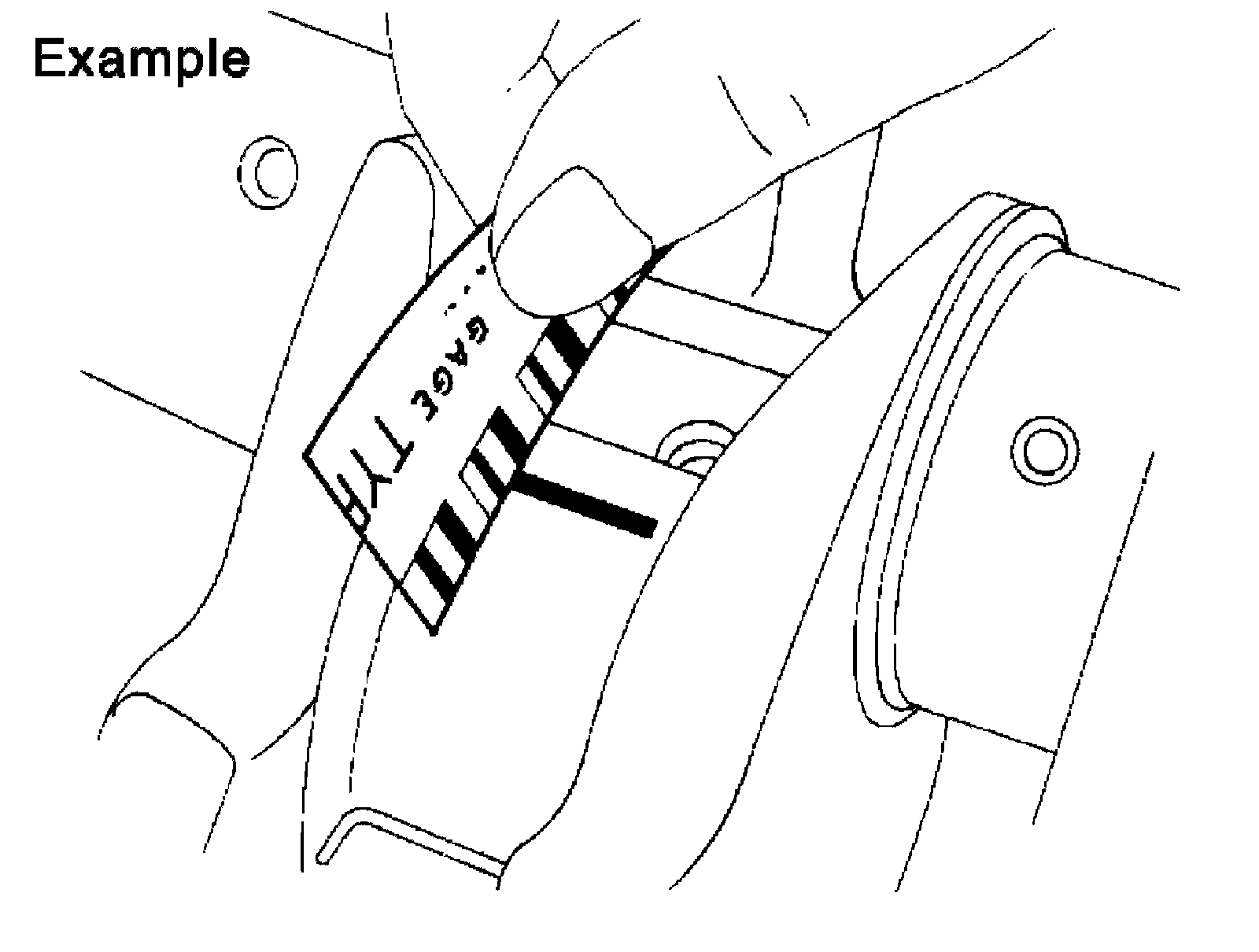
^ Cut a plastigage slightly shorter than the bearing width, and place it in crankshaft axial direction, avoiding oil holes.
^ Install main bearings to cylinder block and lower cylinder block, and tighten lower cylinder block bolts to the specified torque.
CAUTION:
Do not rotate crankshaft.
^ Remove lower cylinder block and bearings, and using the scale on the plastigage bag, measure the plastigage width.
NOTE:
The procedure when the measured value exceeds the limit is same as that described in the "Method by Calculation".
MAIN BEARING CRUSH HEIGHT
^ When lower cylinder block is removed after being tightened to the specified torque with main bearings installed, the tip end of bearing must protrude.
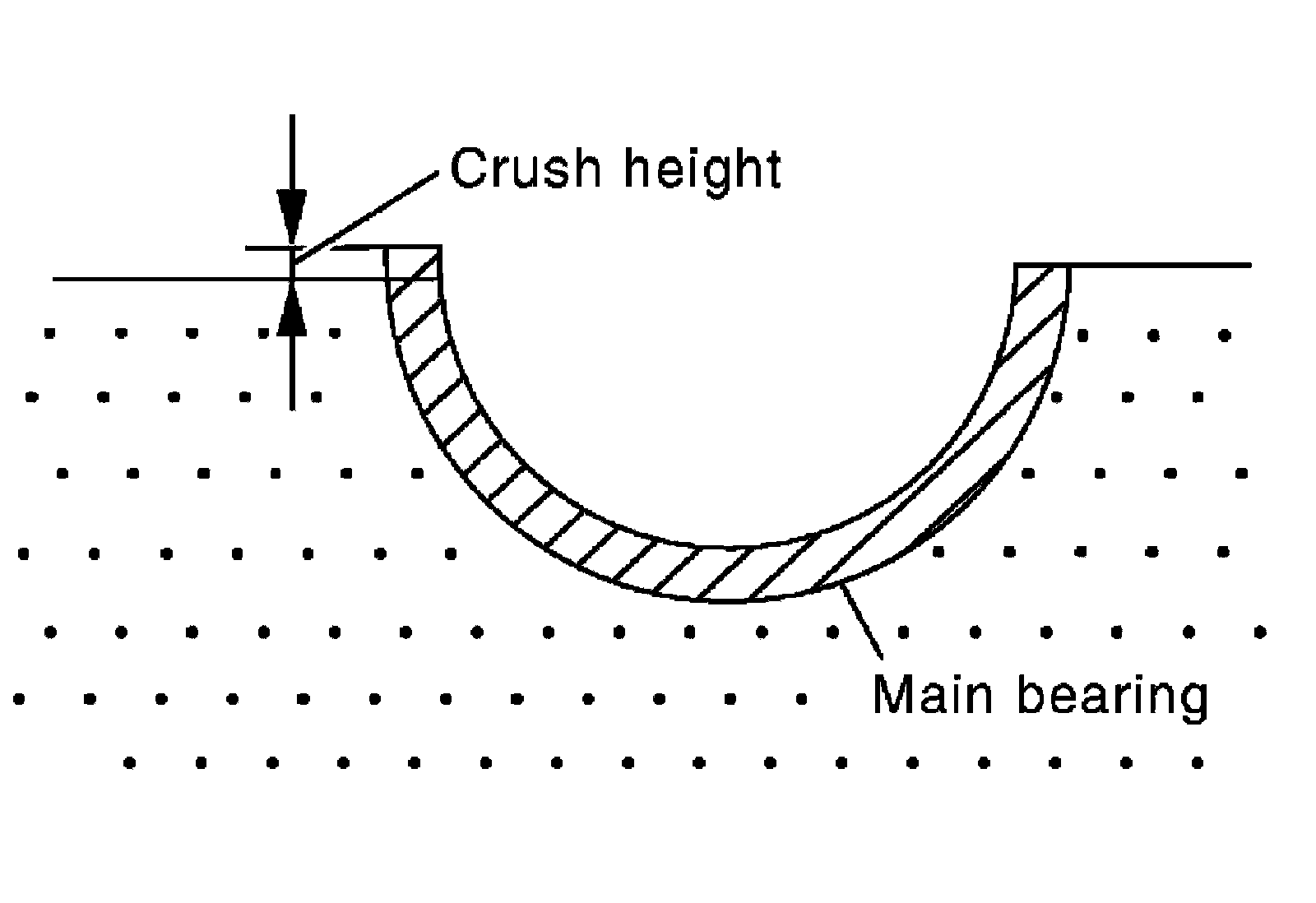
Standard: There must be crush height.
^ If the standard is not met, replace main bearings.
CONNECTING ROD BEARING CRUSH HEIGHT
^ When connecting rod bearing cap is removed after being tightened to the specified torque with connecting rod bearings installed, the tip end of bearing must protrude.
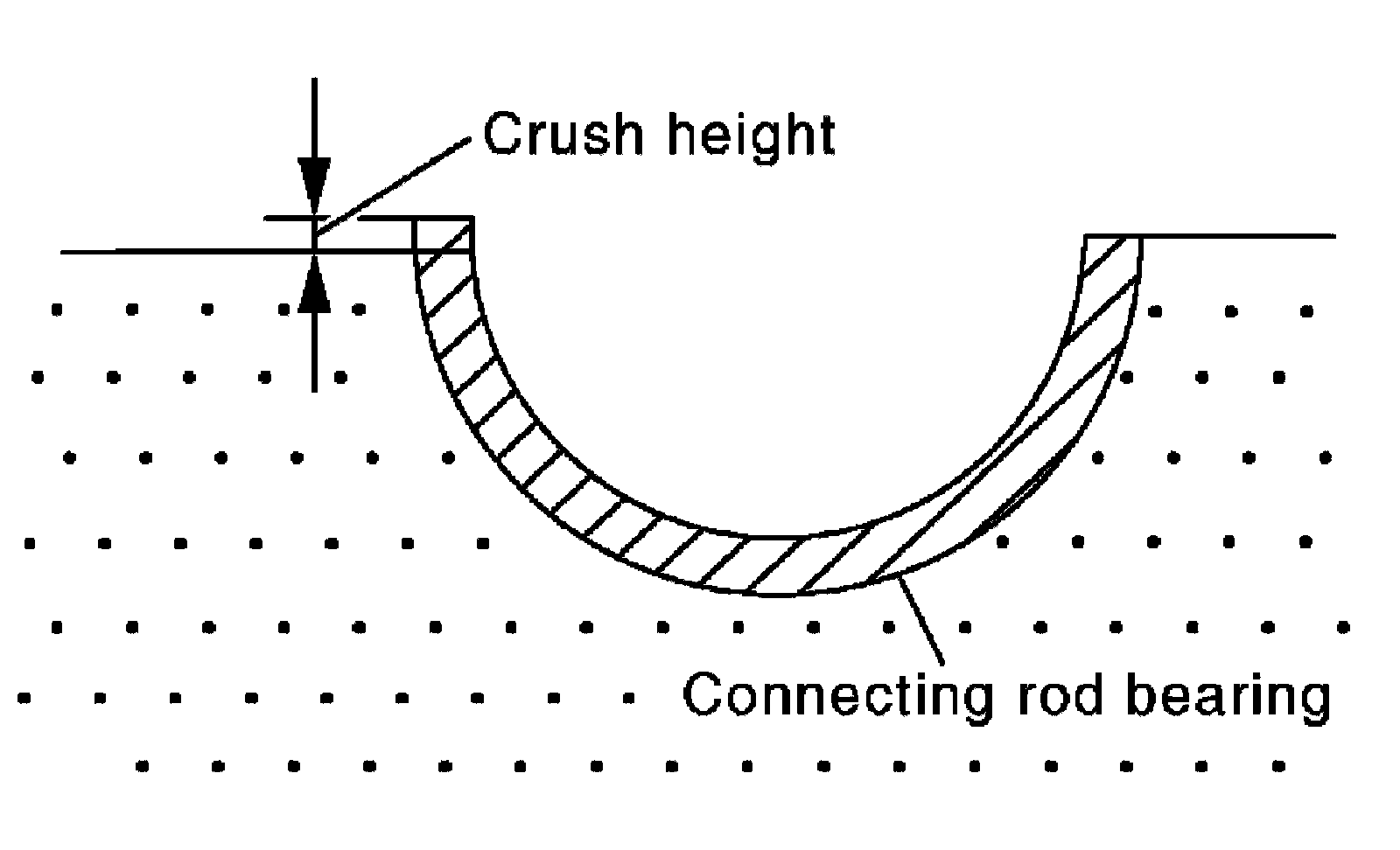
Standard: There must be crush height.
^ If the standard is not met, replace connecting rod bearings.
LOWER CYLINDER BLOCK MOUNTING BOLT OUTER DIAMETER
^ Perform only with M10 bolts.
^ Measure the outer diameters [(d1), (d2)] at two positions as shown.
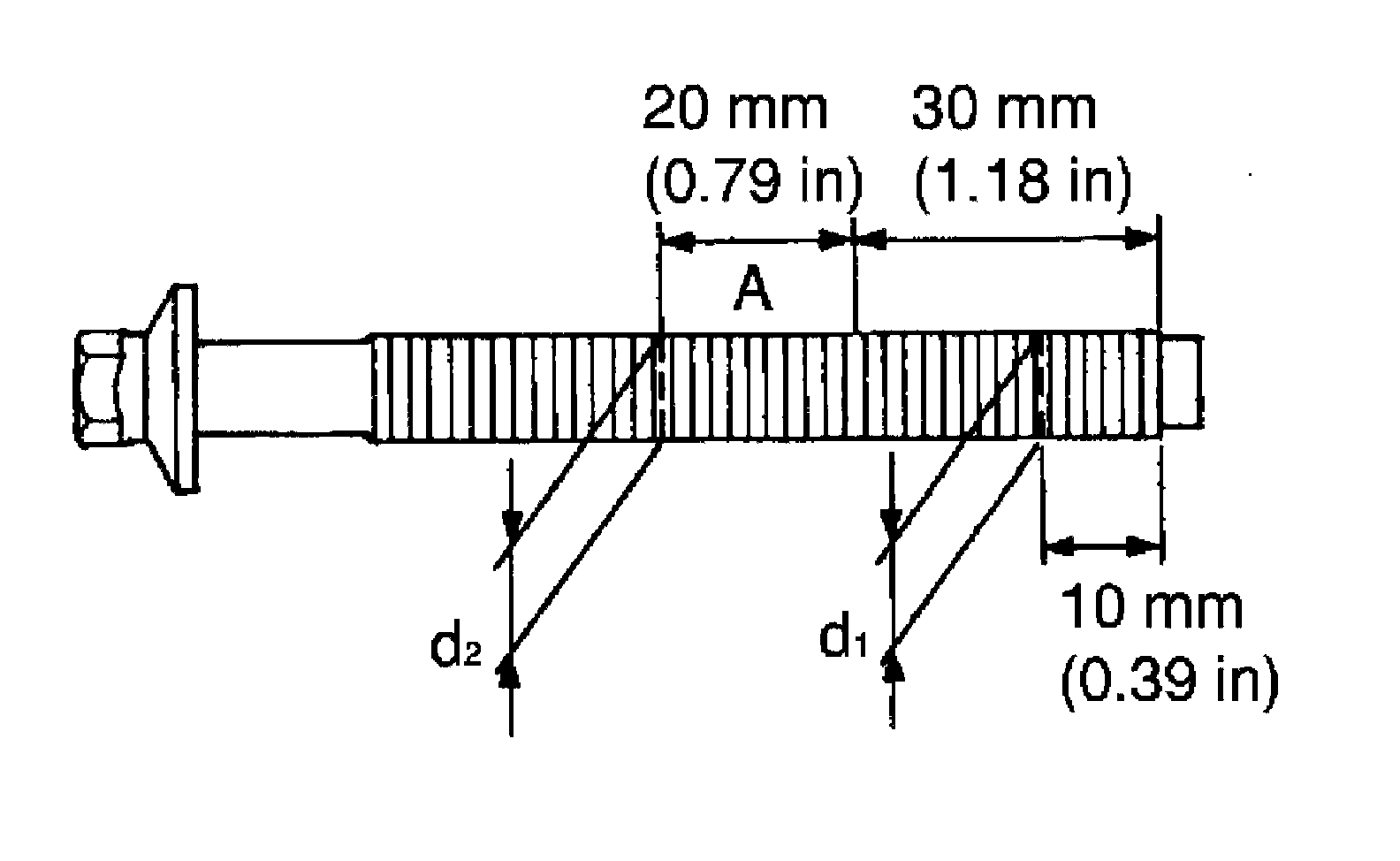
^ If reduction appears in (A) range, regard it as (d2).
Limit [(d1) - (d2)]: 0.13 mm (0.0051 in)
^ If it exceeds the limit (a large difference in dimensions), replace lower cylinder block bolt with a new one.
CONNECTING ROD BOLT OUTER DIAMETER
^ Measure the outer diameter (d) at position as shown.
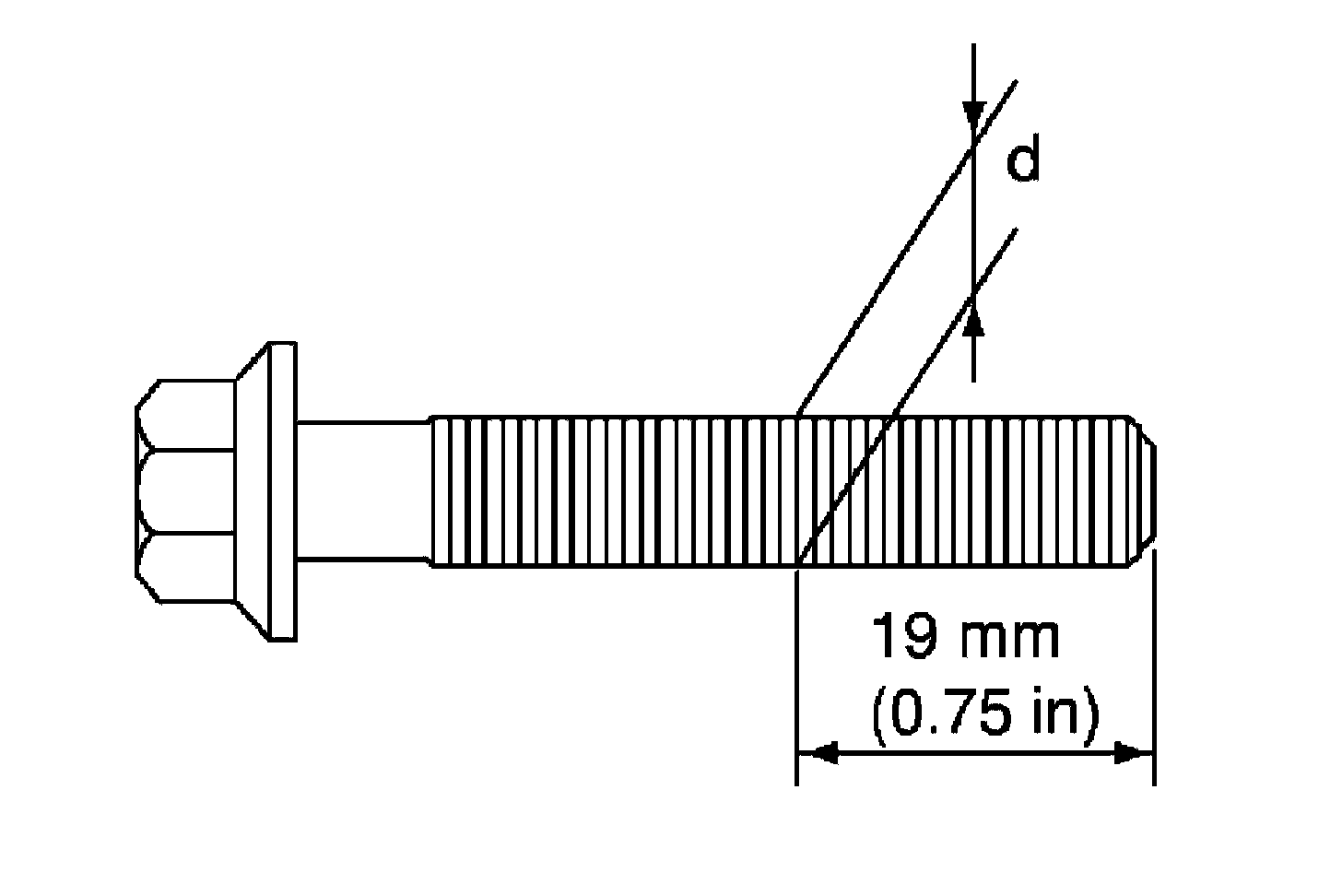
^ If reduction appears in a position other than (d), regard it as (d).
Limit: 7.75 mm (0.3051 in)
^ When (d) falls below the limit (when it becomes thinner), replace connecting rod bolt with a new one.
MOVEMENT AMOUNT OF FLYWHEEL (M/T MODELS)
CAUTION:
Do not disassemble double mass flywheel.
Movement Amount of Thrust (Fore-and-Aft) Direction
^ Measure the movement amount of thrust (fore-and-aft) direction when 100 N (10.2 kg, 22 lb) force is added at the portion of 125 mm (4.92 in) radius from the center of flywheel.
Standard: 1.3 mm (0.051 in) or less
^ If measured value is out of the standard, replace flywheel.
Movement Amount in Radial (Rotation) Direction
Check the movement amount of radial (rotation) direction with the following procedure:
1) Install a bolt to clutch cover mounting hole, and place a torque wrench on the extended line of the flywheel center line.
^ Tighten bolt at a force of 9.8 Nm (1.0 kg-m, 87 in-lb) to keep it from loosening.
2) Put a mating mark on circumferences of the two flywheel masses without applying any load (Measurement standard points).
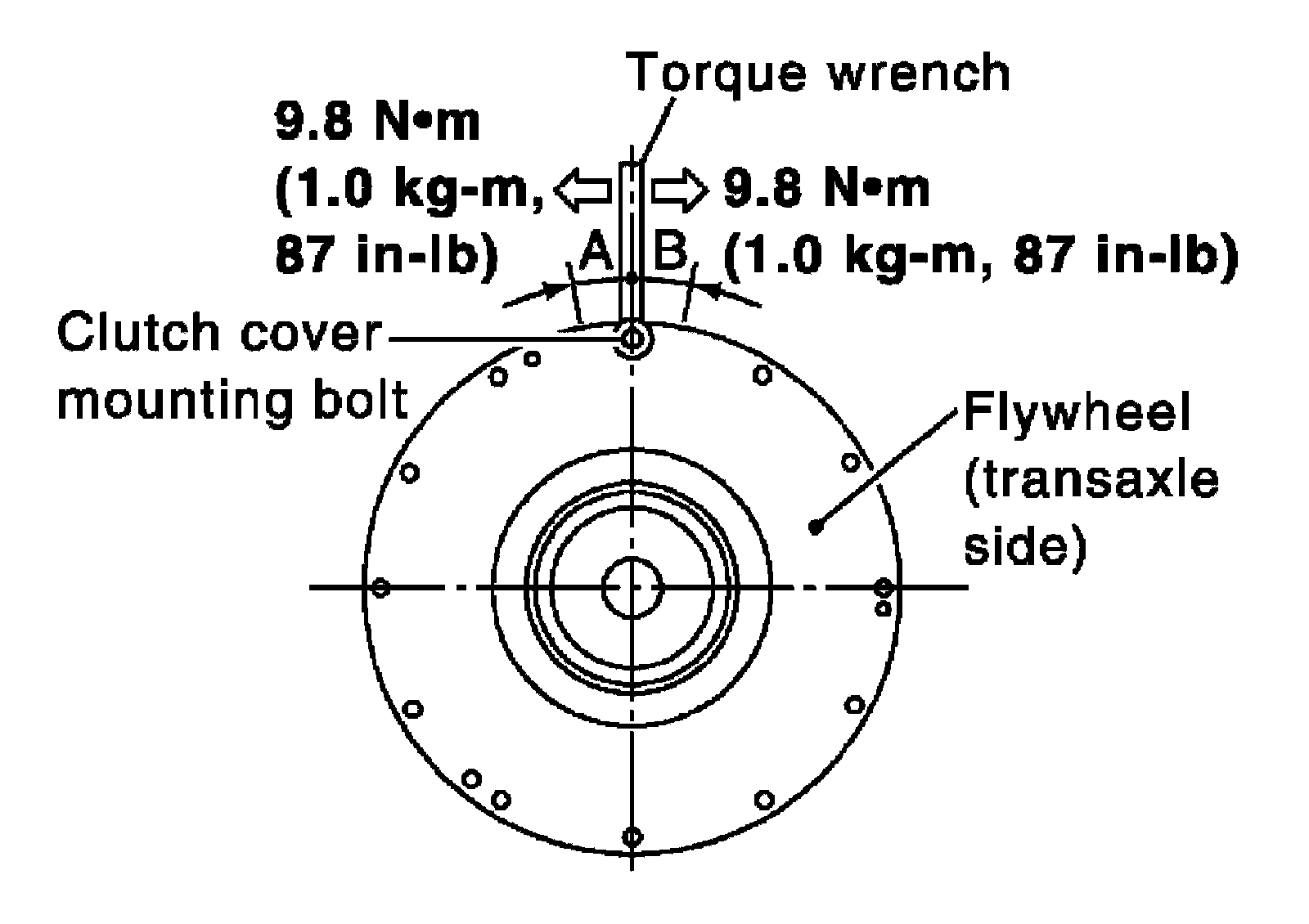
3) Apply a force of 9.8 Nm (1.0 kg-m, 87 in-lb) in each direction, and mark the movement amount on the mass on the transmission side.
4) Measure the dimensions of movement amounts (A) and (B) on circumference of flywheel on the transmission side.
Standard: 44.3 mm (1.744 in) or less.
^ If measured value is out of the standard, replace flywheel.
DRIVE PLATE (A/T MODELS)
^ Check drive plate and signal plate for deformation or cracks.
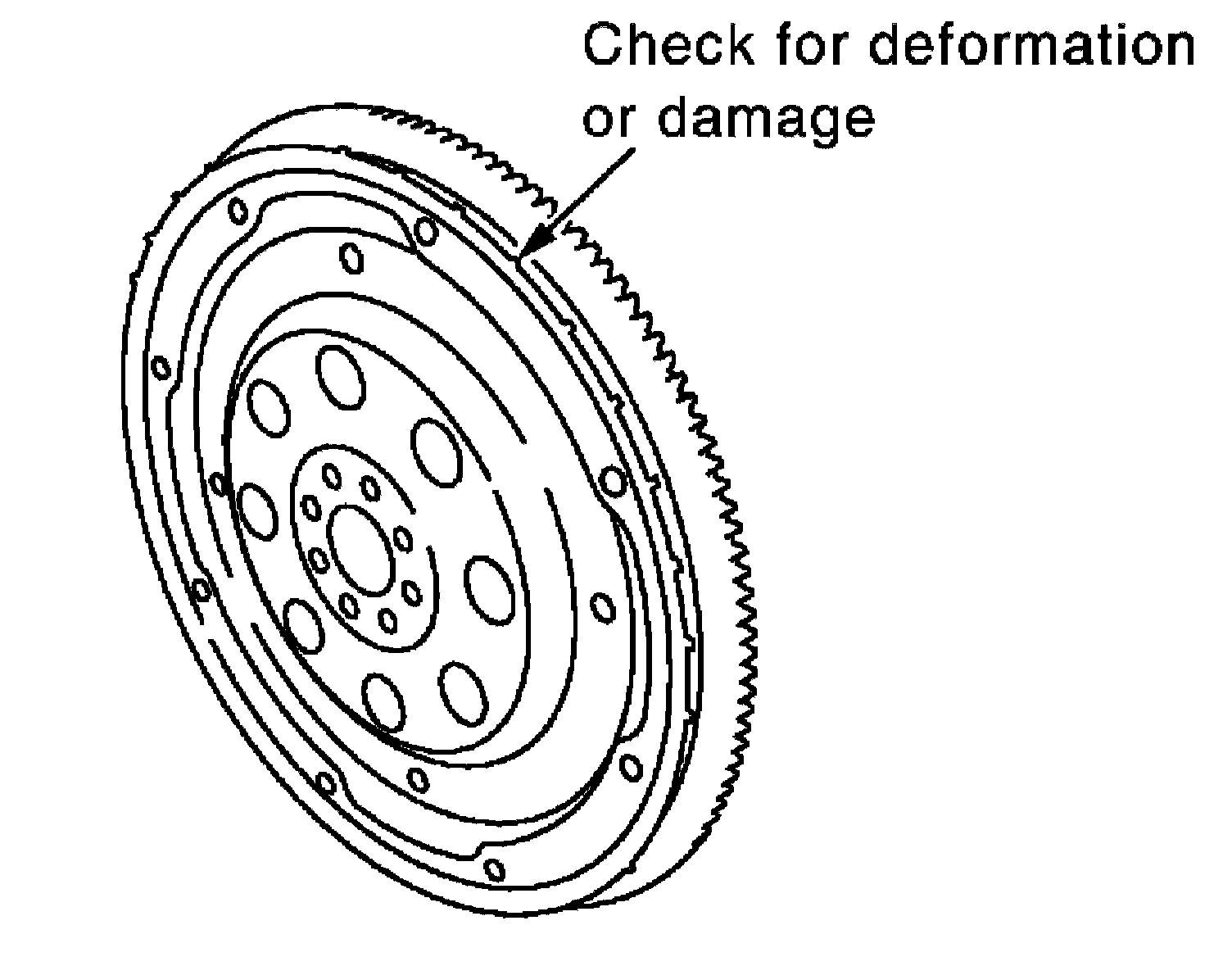
CAUTION:
^ Do not disassemble drive plate.
^ Do not place drive plate with signal plate facing down.
^ When handling signal plate, take care not to damage or scratch it.
^ Handle signal plate in a manner that prevents it from becoming magnetized.
^ If anything is found, replace drive plate.