Evaporative Emissions System: Testing and Inspection
INSPECTION1. Visually inspect lines and connections.
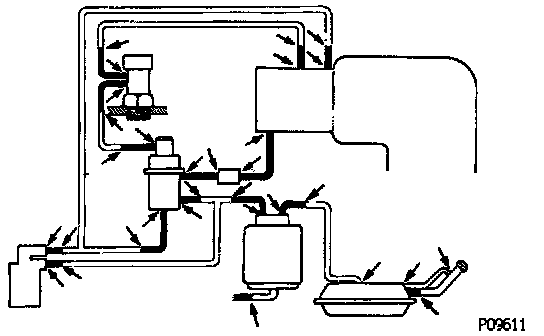
- Look for loosen connections, sharp bends or damage.
2. Visually inspect fuel tank.
- Look for deformation, cracks or fuel leakage.
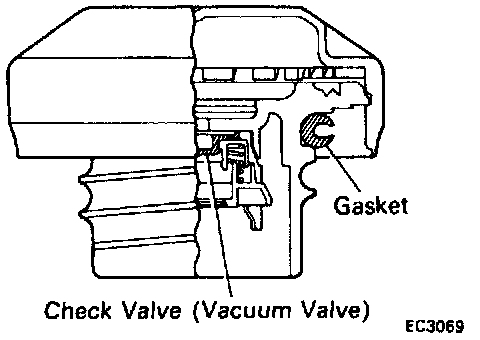
3. Visually inspect fuel tank cap.
- Check if the cap and/or gasket are deformed or damaged. If necessary, repair or replace the cap.
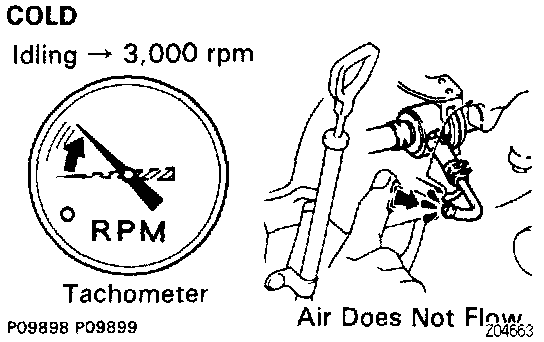
4. Inspect thermal vacuum valve operation with cold engine.
- The engine coolant temperature should be below 450 C (1 13°F).
- Disconnect the evaporative emissions hose from the union pipe.
- Start the engine.
- Gradually increase the engine speed from idling to 3,000 rpm and check that air suction is not felt at the union pipe.
5. Inspect operation of VSV and VCV with hot engine..
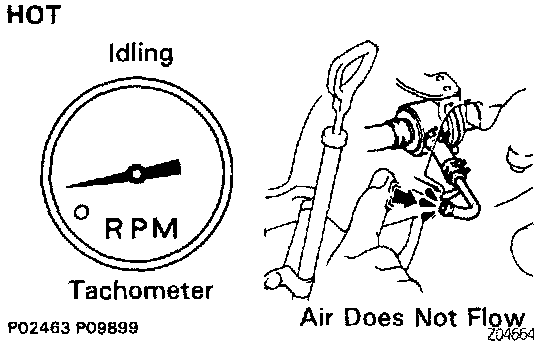
- Warm up the engine and turn off the A/C switch.
- With the engine idling, check that air suction is not felt at union pipe.
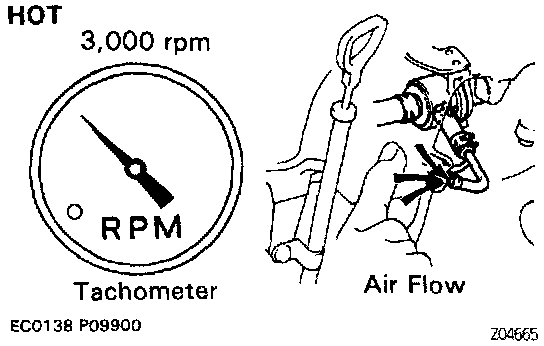
- Gradually increase the engine speed to 3,000 rpm and check that there is air suction at the union pipe.
- Reconnect the evaporative emissions hose to the union pipe. If no problem is found with this inspection, system is normal; otherwise inspect each part.