Normal Mode
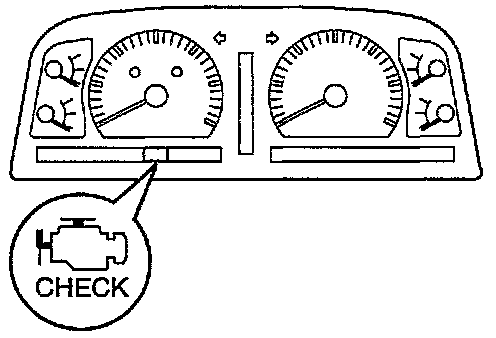
MIL CHECK
1. The MIL comes on when the ignition switch is turned ON and the engine is not running.
HINT: If the MIL does not light up, troubleshoot the combination meter
2. When the engine is started, the MIL should go off.
- If the lamp remains on, the diagnosis system has detected a malfunction or abnormality in the system
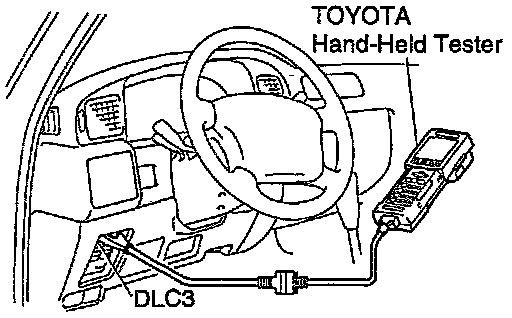
DTC CHECK
NOTICE (TOYOTA hand-held tester only): When the diagnostic system is switched from normal mode to check mode, it erases all DTCs and freeze frame data recorded in normal mode. So before switching modes, always check the DTCs and freeze frame data, and note them down.
1. Prepare the OBD II scan tool (complying with SAE J1978) or TOYOTA hand-held tester.
2. Connect the OBD II scan tool or TOYOTA hand-held tester to DLC3 in the fuse box at the lower left of the instrument panel.
3. Turn the ignition switch ON and turn the OBD II scan tool or TOYOTA hand-held tester switch ON.
4. Use the OBD II scan tool or TOYOTA hand-held tester to check the DTCs and freeze frame data. Note them down.
(For operating instructions, see the OBD II scan tool's instruction book.)
5. Testing and Inspection
NOTICE: When simulating symptoms with an OBD II scan tool (excluding TOYOTA hand-held tester) to check the DTCs, use normal mode. For codes on the DTC chart subject to "2 trip detection logic", turn the ignition switch off after the symptoms have been simulated for the first time. Then repeat the simulation process again. When the program has been simulated twice, the MIL lights up and the DTCs are recorded in the ECM.