Related Tests, Information and Procedures
BASIC INSPECTIONa. Check the fluid level.
HINT:
- Drive the vehicle until the engine and transmission become the normal operating temperature.
Normal operating temperature
(Fluid temperature): 70 to 80 °C (158 to 176 °F)
- Only use the COOL range on the dipstick as a rough reference when the ATF is replaced or the engine does not run
1. Park the vehicle on a level surface and apply the parking brake.
2. With the engine idling and the brake pedal depressed, shift the shift lever into all positions from P to L and put it back to the P position.
3. Pull out the dipstick and wipe it clean.
4. Push it back fully into the pipe.
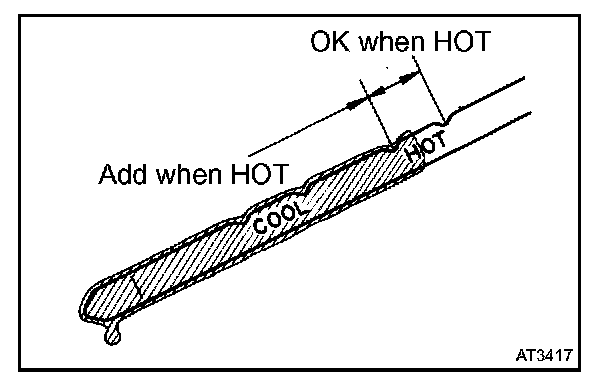
5. Pull it out and check that the fluid level is in the HOT range.
If the level is not within the range, add new ATF.
ATF: T-IV
NOTE: Do not overfill.
b. Check the ATF condition.
If the ATF smells burnt or the color is black, replace it.
c. Replace the ATF.
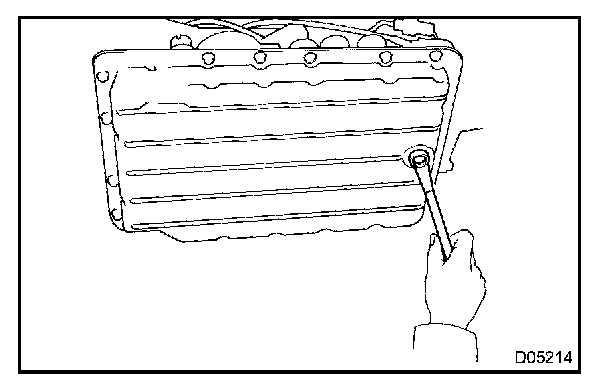
1. Remove the drain plug and drain the ATF.
2. Reinstall the drain plug securely.
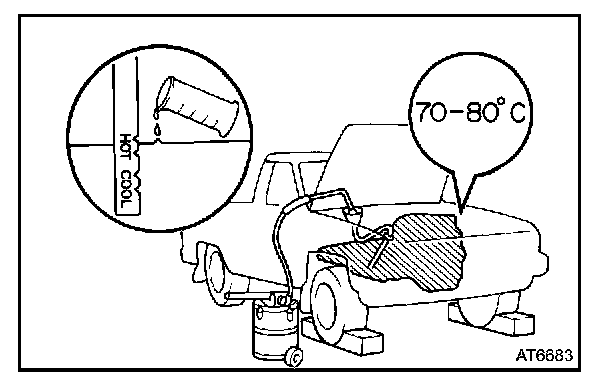
3. With the engine stopped, add new ATF through the oil filler pipe.
ATF: T-IV
Capacity: 2.2 liters (2.3 US qts, 2.0 Imp. qts)
4. Start the engine and move the shift lever into all positions from P to L, and then move it into the P position.
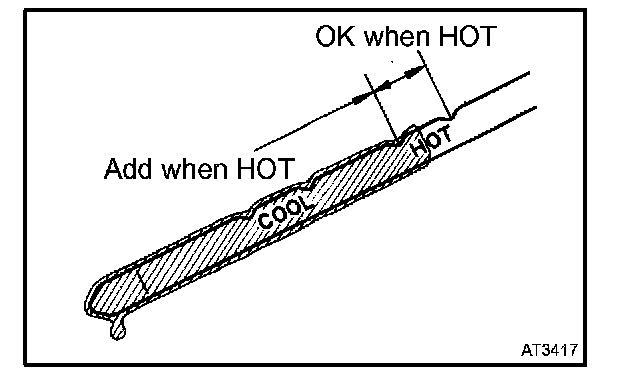
5. With the engine idling, check the fluid level. Add fluid up to the COOL level on the dipstick.
6. Check the fluid level at the normal operating temperature, 70 to 80 °C (158 to 176 °F), and add if necessary.
NOTE: Do not overfill.
d. Check the fluid leaks.
If there are leaks, it is necessary to repair or replace the O-rings, the gasket, the oil seals, the plugs or the other parts.
e. Inspect and adjust the shift lever position.
When moving the shift lever from the N position to the other positions, check that the lever can be shifted smoothly and accurately to each position and that the position indicator correctly indicates the position.
If the indicator is not aligned with the correct position, carry out the following adjustment procedures.
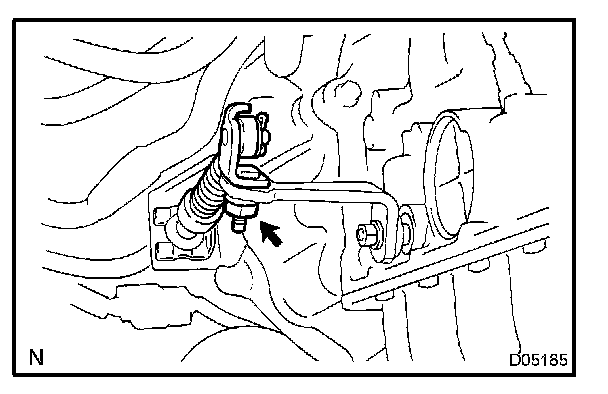
1. Loosen the nut on the control shaft lever.
2. Push the control shaft fully rearward.
3. Return the control shaft lever by 2 notches.
4. Move the shift lever to the N position.
5. While holding the shift lever lightly toward the R position, adjust the control lever nut.
6. Tighten the control shaft lever nut.
7. Start the engine and make sure that the vehicle moves forward when moving the shift lever from the N to P position, and rearward when moving the shift lever to the R position.
Torque: 12.5 N.m (130 kgf.cm, 9 ft.lbf)
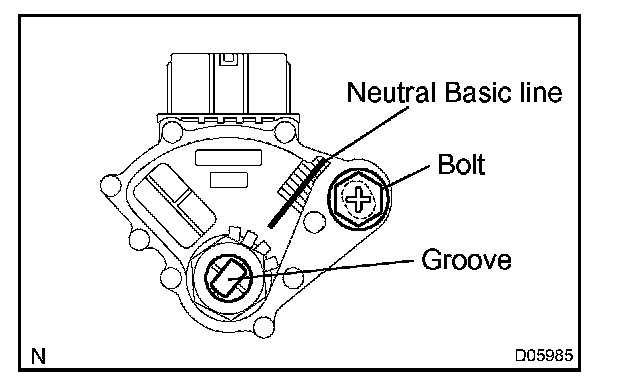
f. Inspect and adjust the park/neutral position.
If the engine does not start at the P and N positions, carry out the following adjustment procedure.
1. Loosen the park/neutral position switch bolt and move the shift lever to the N position.
2. Align the groove with the neutral basic line.
3. Tighten the bolt at the position.
Torque: 13 N.m (130 kgf.cm, 10 ft.lbf)
For further inspection of the park/neutral position switch.
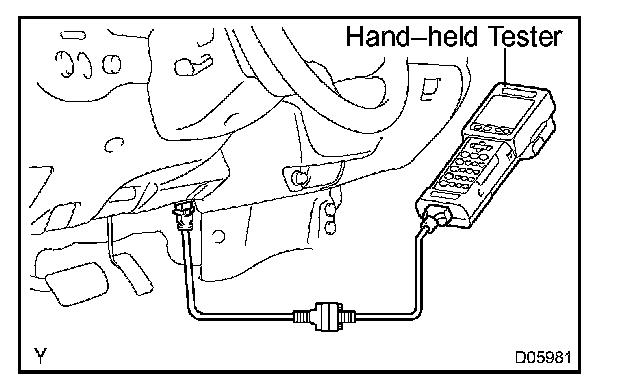
g. Check the idle speed.
Connect the OBD II scan tool or the hand-held tester to the DLC3 and inspect the idle speed.
Idle speed: 700 ± 50 rpm (in the N position and air conditioner OFF)