Computers and Control Systems: Description and Operation
CIS-E Fuel System:

The CIS - E Computerized Engine Control system consists of the basic CIS fuel injection system (Continuous Injection) and electronic controls which are added for more precise control of the air/fuel mixture and idle stabilization.
The CIS-E control unit (ECU) receives input signals from the airflow sensor plate potentiometer, coolant temperature sensor, knock control unit, throttle valve switches, A/C compressor and A/T transmission (if equipped), and the oxygen sensor. The ECU processes these input signals and calculates the appropriate correction values which are sent to the differential pressure regulator for adjustment of the air/fuel mixture, and the idle stabilizer valve for adjustment of the idle speed.
Knock System Layout:
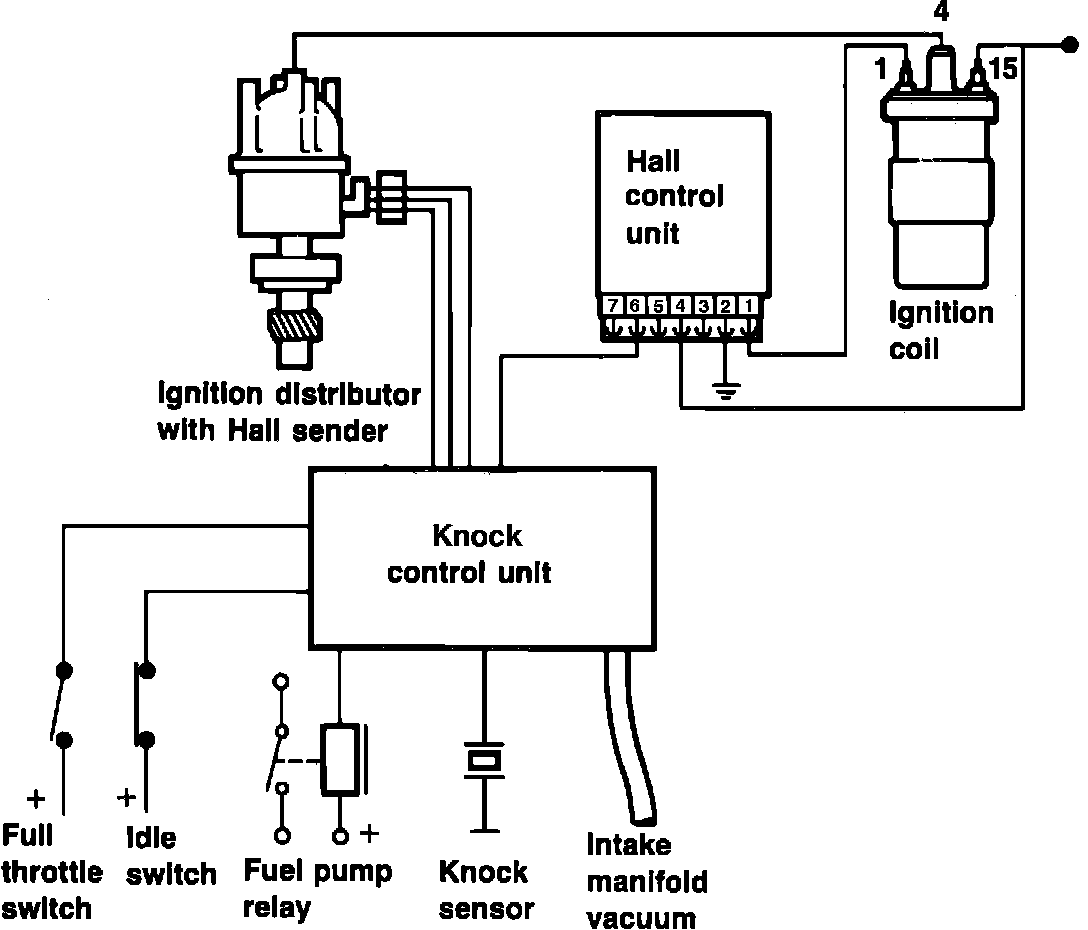
The TCI-h system (transistorized ignition coil/with Hall sender) is the basis for ignition control. However, timing advance functions are regulated by an additional knock sensor control unit. Information concerning engine load (vacuum signal), engine speed, throttle position, and engine knock (ping or pre-ignition) are compared to preprogramed ignition maps within the knock control unit. The knock control unit calculates the appropriate correction factor and modifies the ignition timing point signal for the TCI-h (Hall) control unit and eliminates the Knock. Furthermore, Knock regulation is done individually for each cylinder. If a cylinder begins to develop spark knock the control unit retards the ignition timing for that individual cylinder. When the spark knock has stopped the ignition timing will return to its optimum setting.