A/C Components In Engine Compartment, Servicing
A/C Components In Engine Compartment, Servicing
NOTE: System components identified with an * must only be serviced or replaced after discharging refrigerant system. Use recovery/recycling unit Kent Moore ACR3 or equivalent.
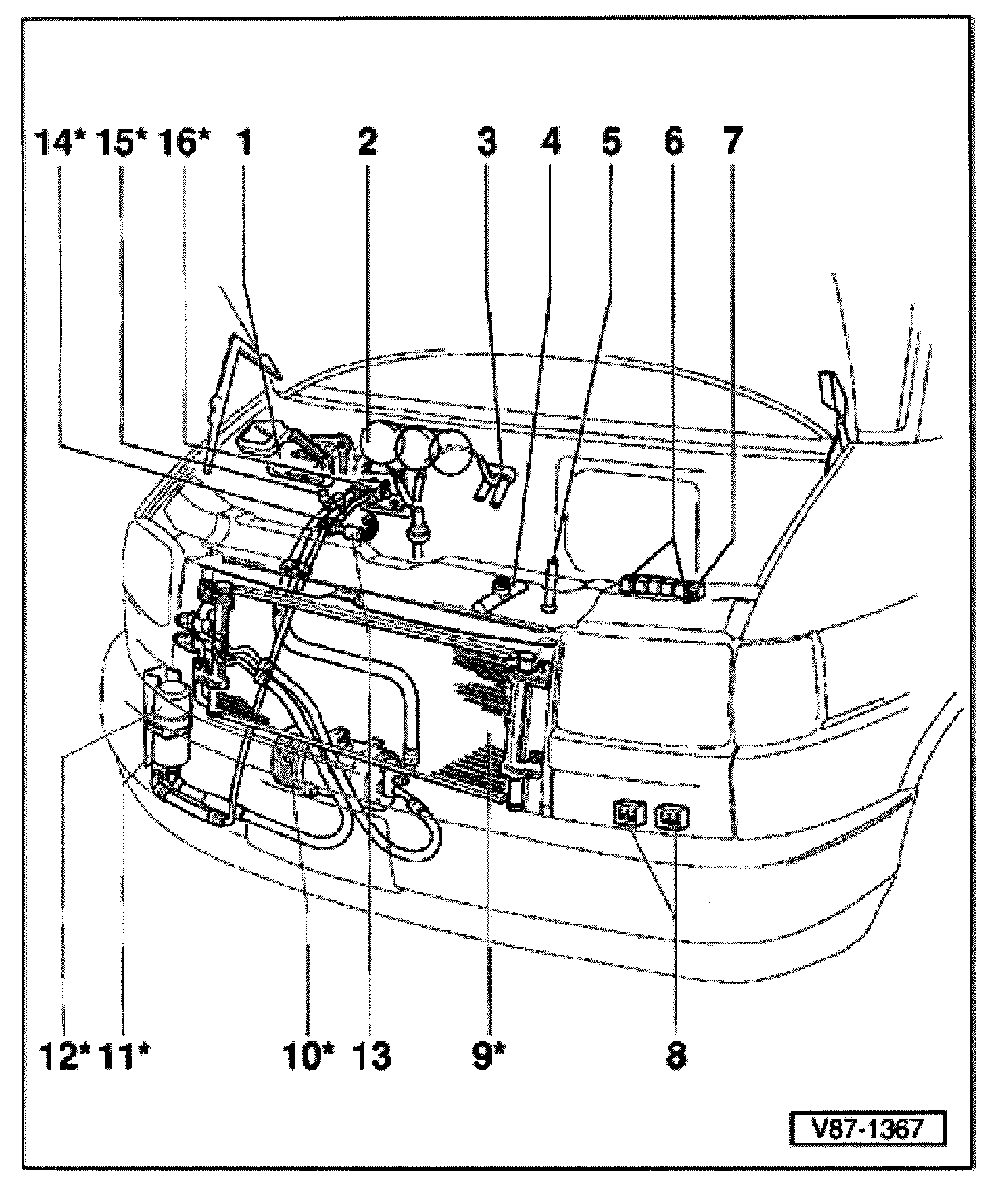
1 - Air intake duct, rear
- Removing and installing
2 - Vacuum reservoir
- Insert vacuum hose 30 mm (13/16 in.) into reservoir
- Vacuum hose layout
3 - Bulkhead opening for heater core and vacuum hose
4 - A/C thermoswitch -F45-
- Switches coolant fan third speed ON at temperatures above 112 °C (234 °F)
- Switches coolant fan third speed OFF at temperatures below 108 °C (226 °F)
- Switching occurs between terminals -2- and -3- of thermoswitch
- Switches A/C clutch -N25- OFF at temperatures above 120 °C (248 °F)
- Switches: A/C clutch ON at temperatures below 112 °C (234 °F)
- Switching occurs between terminals -1- and -4- of thermoswitch
- Removing and installing See Fig. 4
5 - Evaporator water drain hose with valve
- Installing See Fig. 2
- Clean any dirt, wax or undercoating from valve flap, valve flap must close
6 - Relays
- For exact relay location and wire routing (1992- 1999)
7 - Individual fuses (2x) for coolant fan -S24-
- 30 amps
- 2 piece
8 - Coolant fan control (FC) series resistance -N39-
9 - Condenser*
10 - A/C clutch -N25-*
11 - Pressure relief valve*
- Protects system against excessive pressure
- If pressure relief valve has opened, check system for cause of excessive pressure, repair as necessary
- Checking See Fig. 5
12 - Receiver drier*
13 - A/C pressure switch -F129-
- Checking See Fig. 3
- Removing and installing
- Tightening torque: 8 Nm (70 in. lb)
- Replace O-ring seal (note part number)
14 - Sight glass*
- To check refrigerant charge,
- Start engine
- Switch A/C ON
- Check sight glass for bubbles after A/C clutch switches ON
- If bubbles are present continuously with A/C clutch engaged, system is low on refrigerant
15 - Service valves
16 - Expansion valve*
- Ensure valve is protected from rain and splash water
- Ensure insulator is in good condition See Fig. 1
NOTE: System components identified with an * must only be serviced or replaced after discharging refrigerant system. Use Kent Moore ACR3 or equivalent.
Fig. 1 Expansion valve insulator, checking
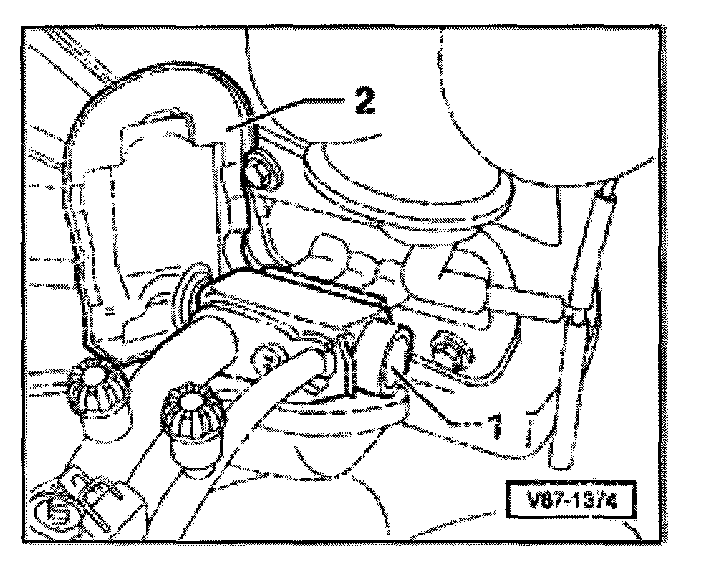
1 - Expansion valve
2 - Insulator
The insulator protects the expansion valve against high engine compartment temperatures to prevent a decrease in A/C system cooling performance.
Fig. 2 Evaporator water drain hose and valve, removing and installing
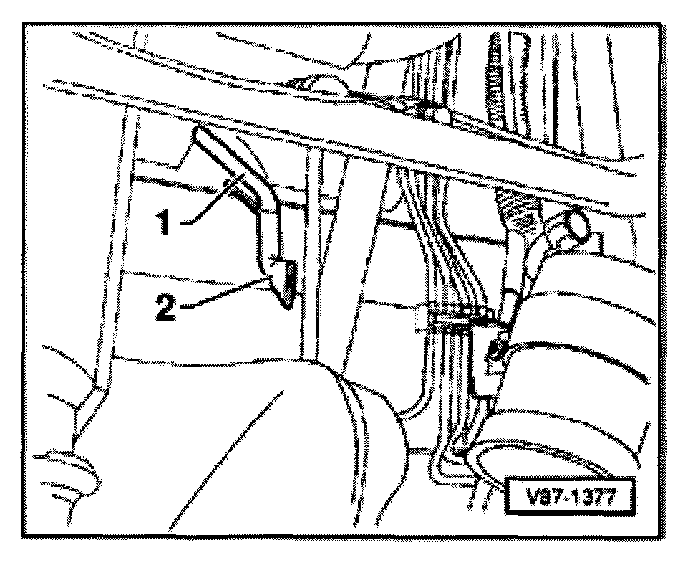
1 - Replace water drain hose, remove engine dampener for bulkhead, glove box and console for floor outlet
2 - Push valve on by hand
Fig. 3 A/C pressure switch -F129-, checking

- Ensure O-ring (10.8 mm x 1.8 mm) fits properly in groove (color: black)
Functions
- Switches A/C clutch -N25- OFF if system pressure is too low (low refrigerant charge) - switching occurs between blue wires
- Switch opens (compressor OFF): below 2.0 bar (29.0 psi)
- Switch closes (compressor ON): above 3.0 bar (43.5 psi)
- Switches A/C clutch -N25- OFF if system pressure is too high - switching occurs between blue wires
- Switch opens (compressor OFF): above 32.0 bar (464.1 psi)
- Switch closes (compressor ON): below 24.0 bar (348.1 psi)
- Switches coolant fan -V7- to second speed when A/C system pressure increases (switching occurs between red and black wires)
- Switch closes (2nd speed ON): above 16.0 bar (232.0 psi)
- Switch opens (2nd speed OFF): below 12.5 bar (181.3 psi)
- To remove, remove switch from Schrader valve tightening torque: 8 Nm (71 in. In)
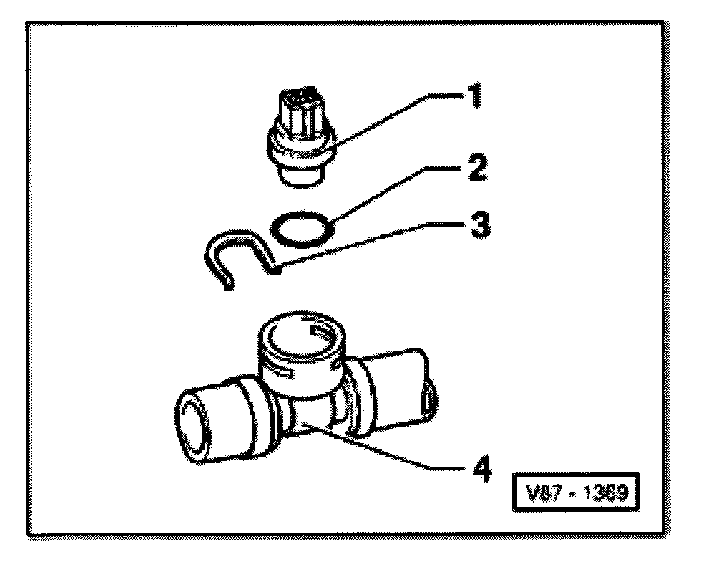
Fig. 4 A/C thermoswitch -F45-, removing and installing
CAUTION!
Relieve cooling system pressure before removing A/C thermoswitch.
1 - A/C thermoswitch -F45-
2 - O-ring
3 - Clip
4 - Coolant hose
Relieve cooling system pressure and drain cooling system
Remove clip -3- and remove thermoswitch from coolant hose
Reinstall in reverse sequence
Fig. 5 A/C refrigerant system R-12, safety devices
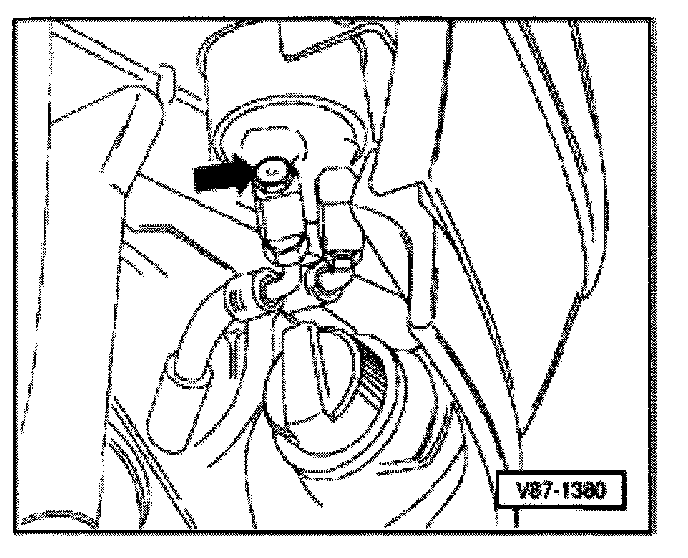
Pressure relief valve, protects A/C system against excessive pressure
If pressure relief valve -arrow- has opened,
- Check system for cause of excessive pressure, repair as necessary