Evaporative Emissions
Evaporative Emissions
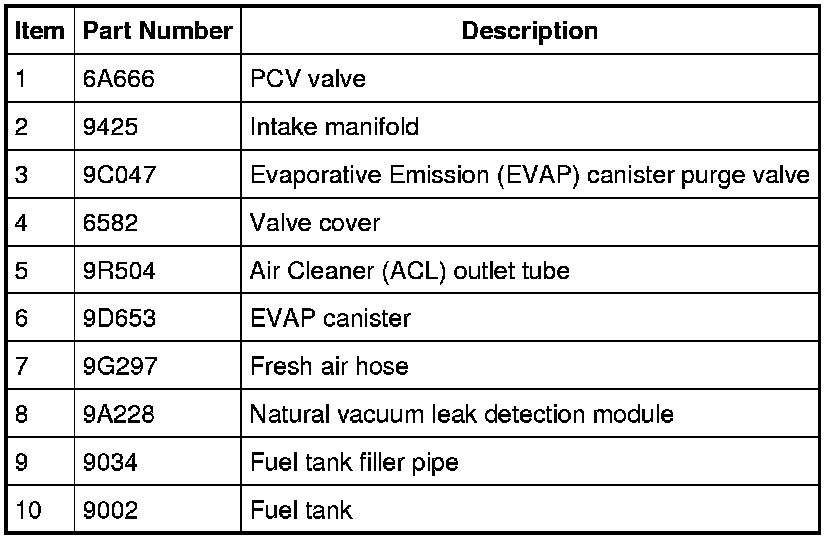
The Evaporative Emission (EVAP) system consists of the:
- EVAP canister.
- EVAP canister purge valve.
- fuel tank.
- fuel vapor tubes
- natural vacuum leak detection module.
The EVAP system:
- prevents hydrocarbon emissions from reaching the atmosphere.
- stores fuel vapors in the EVAP canister that are generated during vehicle operation hot soak or vehicle refueling, until they can be consumed by the engine during normal engine operation.
- routes the stored fuel vapors to the engine during engine operation.
The fuel vapors are routed:
- to the EVAP canister through a vapor tube.
- to the engine when the EVAP canister purge valve is opened.
The EVAP canister:
- is located under the rear of the vehicle.
- contains activated carbon.
- stores fuel vapors.
The EVAP canister purge valve:
- is normally closed.
- regulates the purging of the EVAP canister.
The natural vacuum leak detection module:
- completes a series of checks to confirm the integrity of the enhanced EVAP system components in the engine running state and the ignition OFF state.
Refer to Computers and Control Systems for additional information on the EVAP system.
Vehicle Emission Vacuum Routing