Flywheel: Service and Repair
REMOVAL1. Remove the transmission. See Transmission and Drivetrains.
NOTE: Note the position and direction of the engine flywheel before removal. The flywheel does not use a locating pin for alignment. Mark or scribe the end of the crankshaft and the flywheel before component removal. The engine flywheel must be reinstalled to the original position and direction. The engine flywheel will not initially seat against the crankshaft flange, but will be pulled onto the crankshaft by the engine flywheel bolts. This procedure requires a three stage tightening process.
If replacing the manual transmission flywheel, note the location of any existing balance weights (relative to the position of the flywheel locating hole). Install new balance weights into the new flywheel (if applicable). Flex plate balance weights must be installed into the new flywheel in the same location as the old flywheel. A properly installed balance weight will be either flush or below flush with the face of the flywheel.
2. Mark or scribe the end of the crankshaft and the flywheel.
3. Remove the engine flywheel bolts.
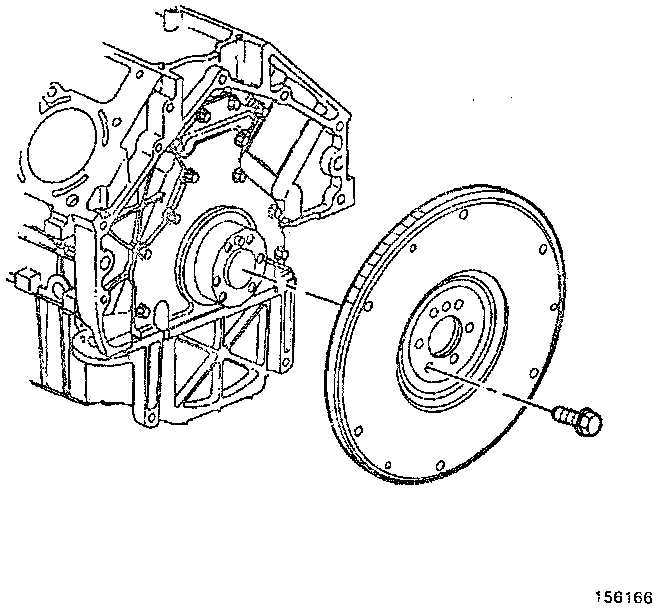
4. Remove the manual transmission engine flywheel.
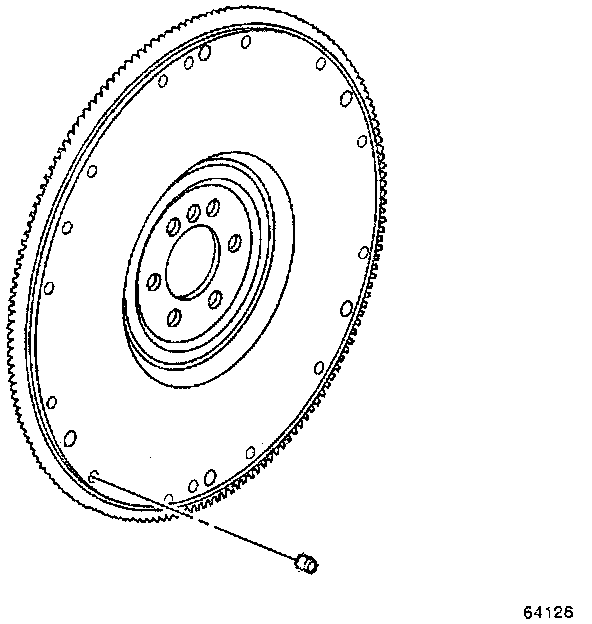
5. Note the position and location of the manual transmission flywheel balance weights.
6. Clean the flywheel in solvent.
WARNING: Wear safety glasses in order to avoid eye damage.
7. Dry the components with compressed air.
8. Inspect the manual transmission flywheel for loose or improperly installed balance weights. A properly installed balance weight should be installed until flush or below flush with the face of the flywheel.
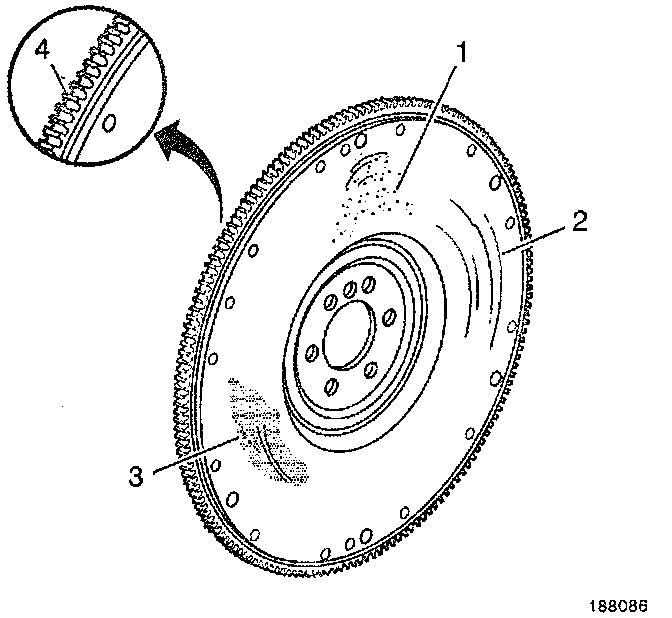
9. Inspect the manual transmission flywheel for the following:
^ Pitted surfaces (1).
^ Scored or grooved surfaces (2).
^ Rusted surface (3).
^ Damaged ring gear teeth (4).
^ Missing, bent, or damaged pressure plate locating pins. The two locating pins are installed into the flywheel and spaced 180 degrees apart.
INSTALLATION
1. Install the engine flywheel.
2. Install the transmission.