Air Bag Systems: Description and Operation
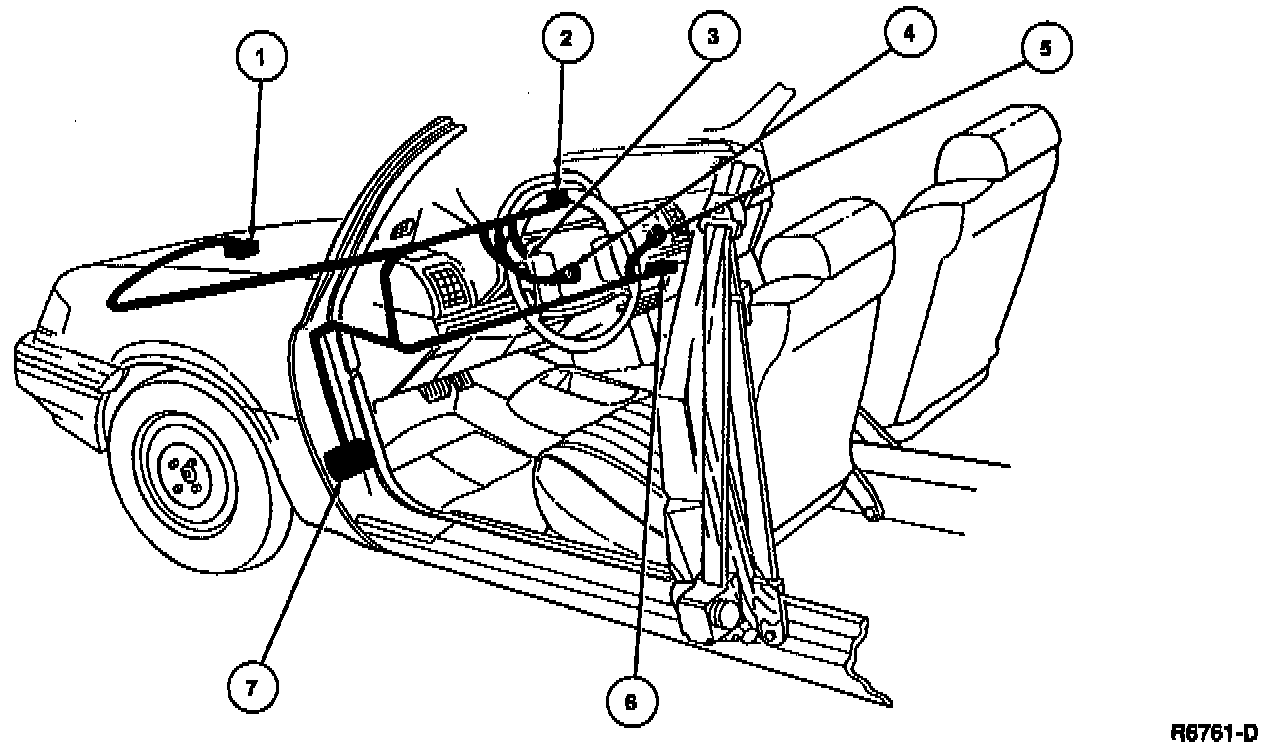
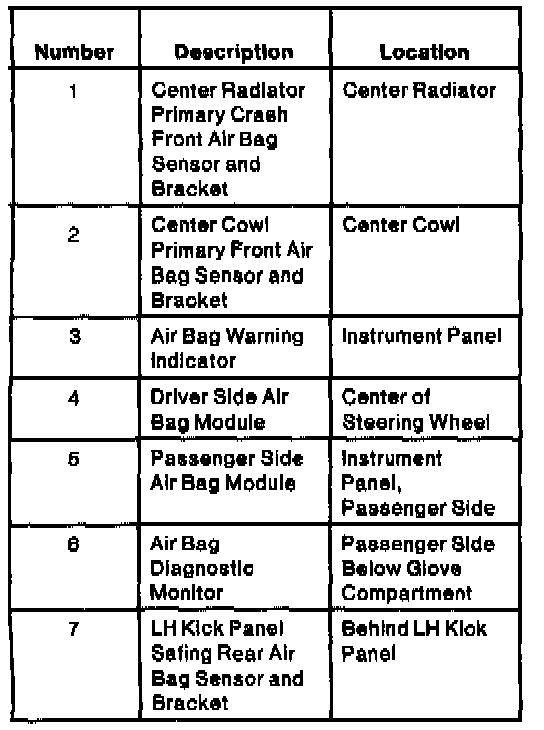
- The Supplemental Air Bag Restraint System is designed to provide increased collision protection for the front seat occupants in addition to that provided by the driver three-point safety belt system.
- Safety belt use is necessary to obtain the best occupant protection and to receive the full advantages of the supplemental air bag. Ford recommends the use of safety belt systems for all vehicle occupants.
The Supplemental Air Bag Restraint System consists of two basic sub-systems:
- Driver side air bag module and passenger side air bag module.
- Electrical system including center cowl primary crash front air bag sensor and bracket, center radiator primary crash front air bag sensor and bracket, LH kick panel safing rear air bag sensor and bracket, and air bag diagnostic monitor.
The electrical system components include:
- Air bag diagnostic monitor with integrated back-up power supply.
- Air bag system warning indicator.
- Wiring harness and air bag sliding contact.
- Center cowl primary crash front air bag sensor and bracket, center radiator primary crash front air bag sensor and bracket, LH kick panel safing rear air bag sensor and bracket.
- Igniter within the driver side air bag module and passenger side air bag module.
The air bag system is designed to:
- Operate in frontal or front-angled collisions.
- Activate in a crash with severe frontal deceleration, more severe than hitting a parked car of similar size and weight head-on at about 45 km/h (28 mph).
- Sense the severity of the crash rather than vehicle speed so some frontal collisions at speeds above 45 km/h (28 mph) may not be severe enough to require air bag inflation.