Caster and Camber
Caster and camber adjustment is provided by shims on the front suspension upper arm. The two different shims initially provided from the assembly plant include one 2 mm (0.078 inch) thick shim and one 6 mm (0.236 inch) thick shim for a total shim stack thickness of 8 mm (0.315 inch) at each leg of the front suspension upper arm. The shims are to be added, deleted or switched from the front and rear legs of the front suspension upper arms as required to adjust the alignment. Use of only these hardened shims is suggested to provide adequate reliability and durability.
Camber adjustment is obtained by removing or adding an equal number of shims to the front and rear leg of the adjusting arm.
Caster adjustment is obtained by removing shims from the front leg and installing them on the rear leg or vice-versa. If the same amount is switched from one leg to the other, the caster will be revised but the camber will not be affected.
If unequal amounts are removed and added to the front and rear legs, both the caster and camber will be revised.
To ease the access from the fender opening over the tire to the front suspension upper arm assembly, the following tools are recommended:
^ Wrench D87T-3068-A or equivalent.
^ Pivoting ratchet.
^ A 24-inch extension for the ratchet.
^ Crow's foot wrenches and adapters.
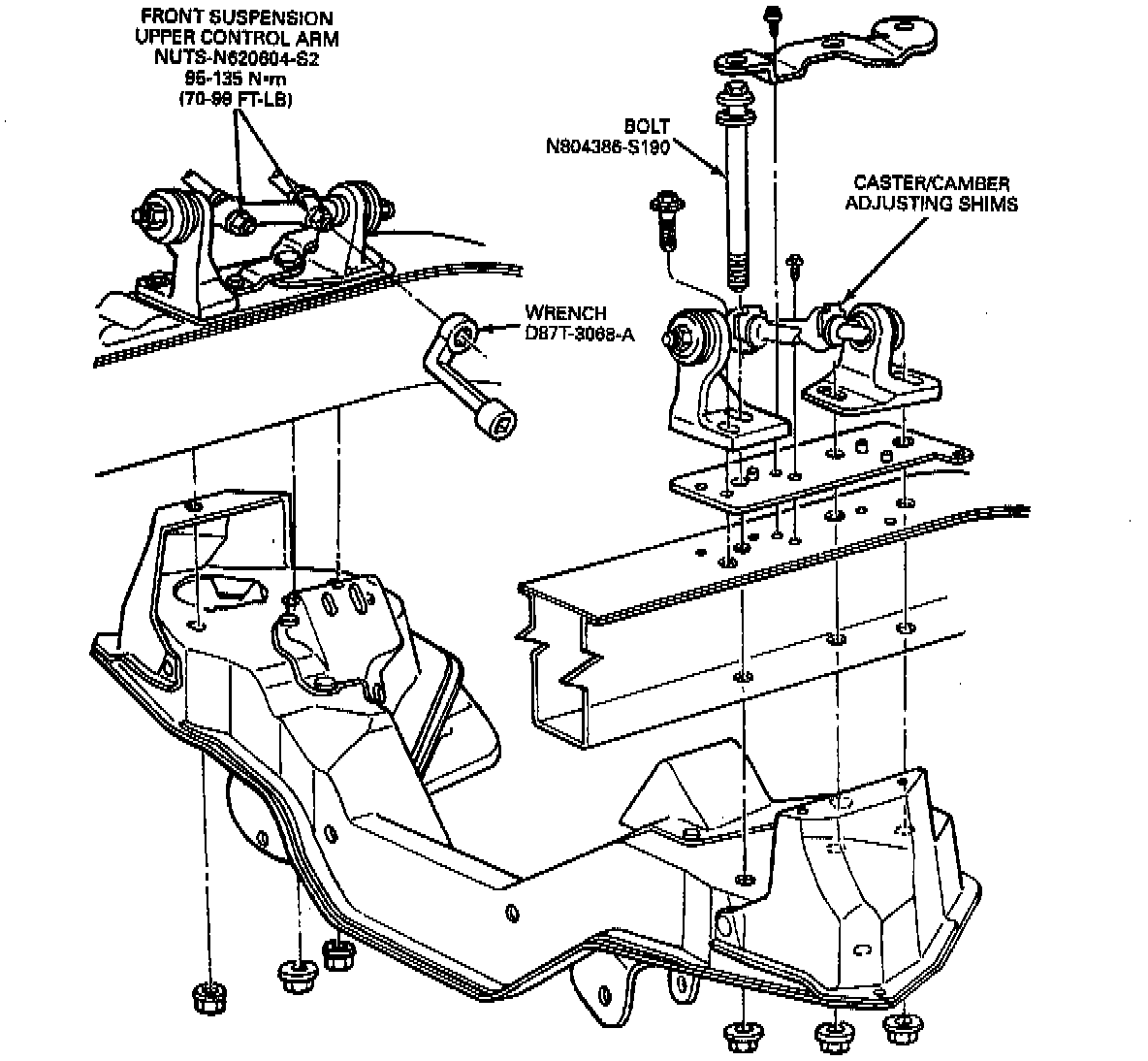
1. Position unit on front end alignment equipment and check status of caster, camber and toe-in.
2. Adjust caster and camber by loosening the two front suspension upper arm retaining nuts, adding or removing the necessary amount of shims.
NOTE: Do not loosen front suspension upper arm-to-frame and crossmember bolts for caster/camber adjustment unless shims do not provide adequate adjustment.

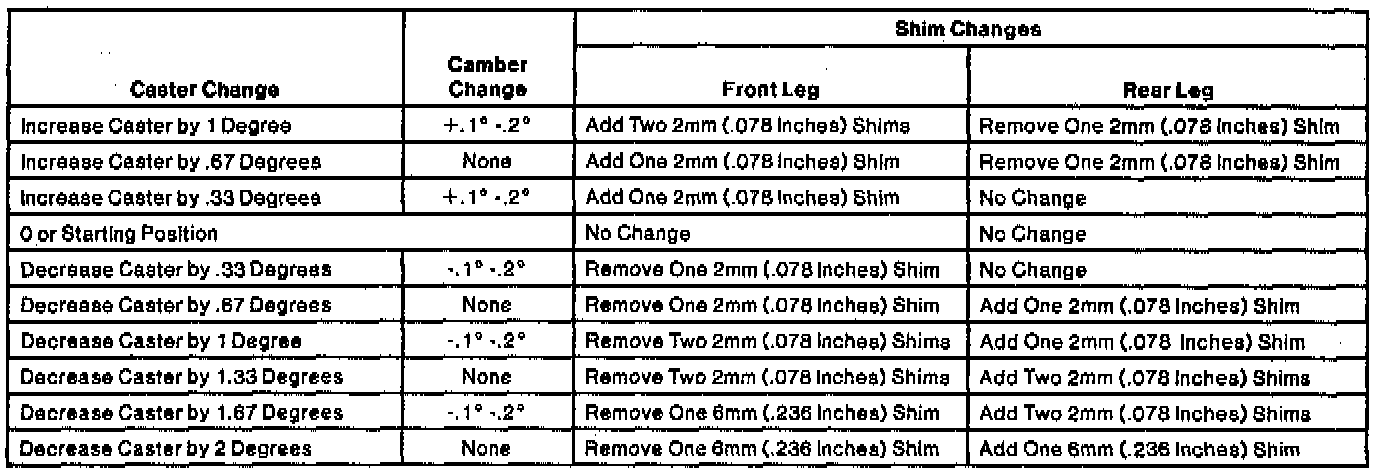
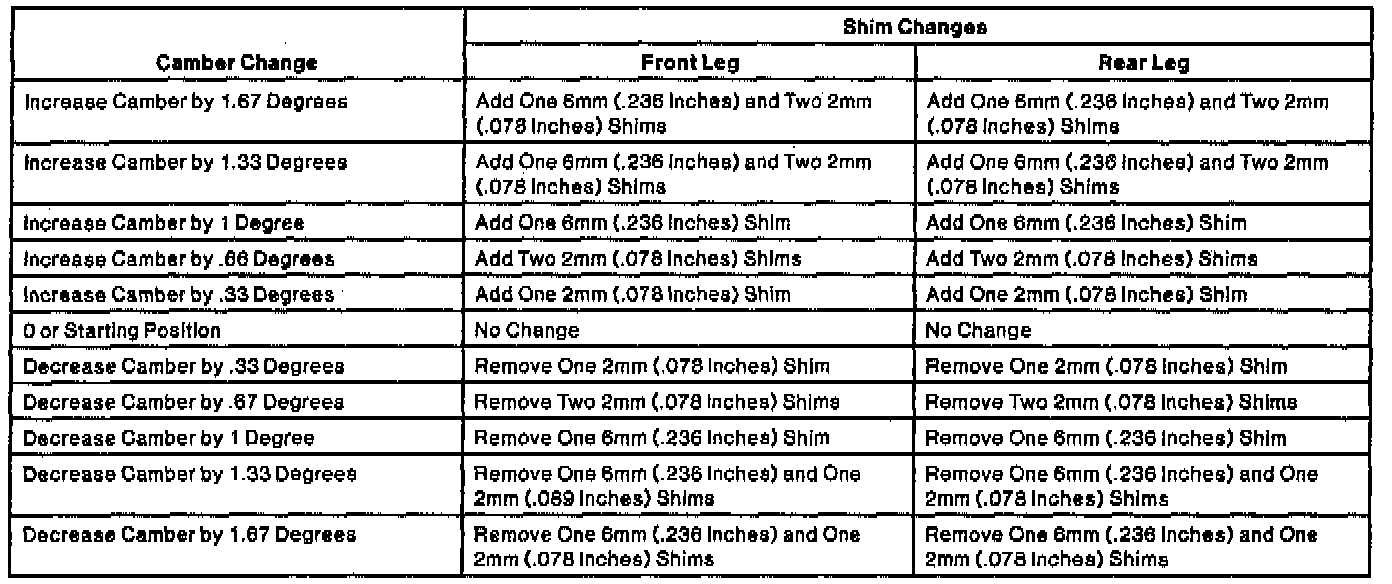
3. When using shims, refer to the above charts.
4. Retighten front suspension upper arm nuts to 95-135 Nm (70-100 ft. lbs.) to prevent the loss of shims or the movement of the front suspension upper ball joint.
5. Adjust toe-in.