Ignition System: Description and Operation

CONFIGURATION
The ignition system is:
- An Electronic Distributorless Ignition System (EDIS) controlled by an Electronic Engine Control (EEC) integrated into the Powertrain Control Module (PCM).
COMPONENTS
The ignition system consists of the:
- Crankshaft Position (CKP) sensor.
- Ignition coil.
- Ignition wires and bracket.
- Spark plugs.
DESCRIPTION
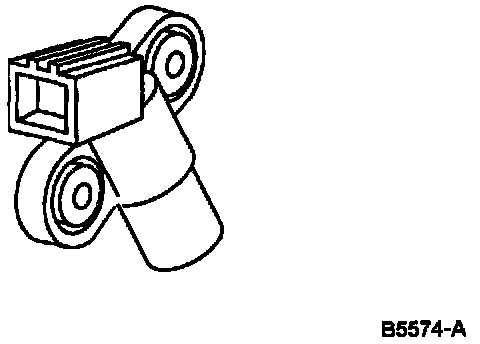
The crankshaft position sensor:
- Is a variable reluctance sensor.
- Senses a missing tooth on crankshaft gear.
- Generates a crankshaft position signal which is sent to the PCM. The PCM counts this signal for engine RPM.
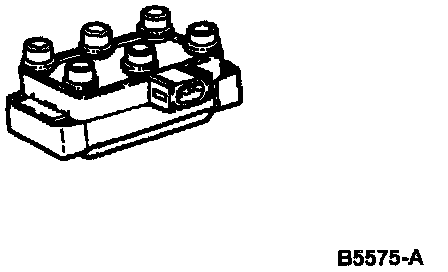
The ignition coil:
- Changes low voltage pulses from the PCM to high voltage pulses.
- Sends high voltage pulses to the spark plugs through the spark plug wires.
- Has three transformers.
- Has six spark plug wires, one to each end of each transformer.
- Is mounted on top of the intake manifold.
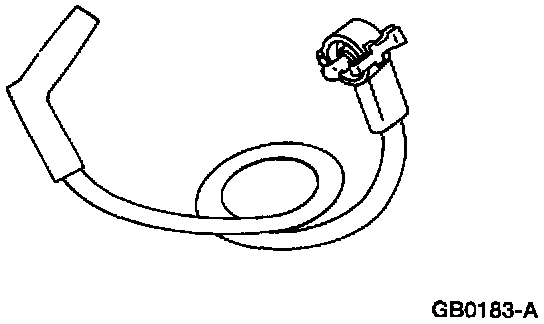
Spark plug wires carry high voltage pulses from the ignition coil to the spark plugs.

The spark plugs:
- Change high voltage pulses to spark at gap which ignites fuel and air mixture.
- Have a platinum enhanced active electrode for long life. The active electrode is different for LH and RH sides.

The spark plugs on the RH side (cylinders 1, 2 and 3) spark plugs are AWSF-42EG.

The spark plugs on the LH side (cylinders 4, 5 and 6) are AWSF-42E.
NOTE:AWSF-42EE spark plugs are used for replacement; the electrodes are platinum enhanced so they can replace either a RH or LH spark plug.