Diagnostics C
DIAGNOSTICS "C" - CLIMATE CONTROLLED SEAT SHUTS OFF AFTER MORE THAN 40 SECONDS, BUT LESS THAN 15 MINUTESTurn the engine off and the ignition key to the "ON" position.
Faults that cause the climate controlled seat to shut off after more than 40 seconds are usually mechanical in nature, such as incorrect foam installation, duct blockages, or a misaligned TED.
If the climate controlled seat shuts down prematurely, there must be a DTC(s) stored in the CCSM. Check the appropriate (driver or passenger side) CCSM for DTC(s).
If a B2731 (Differential Temperature Fault) is set, take note of whether there are additional DTCs in the CCSM. If a B2729 or B2730 is also set in the CCSM, refer to the diagnostics in this section for information on that code. If the B2731 is the only DTC set in the CCSM, the temperature fault could be with either the cushion or the back. Perform the checks for both B2729 and B2730 until the fault is determined.
If a B2729 (Cushion Over-Temperature Detected) is set, disengage the front seat cushion J-retainer at the back of the cushion and pull back the cushion cover.
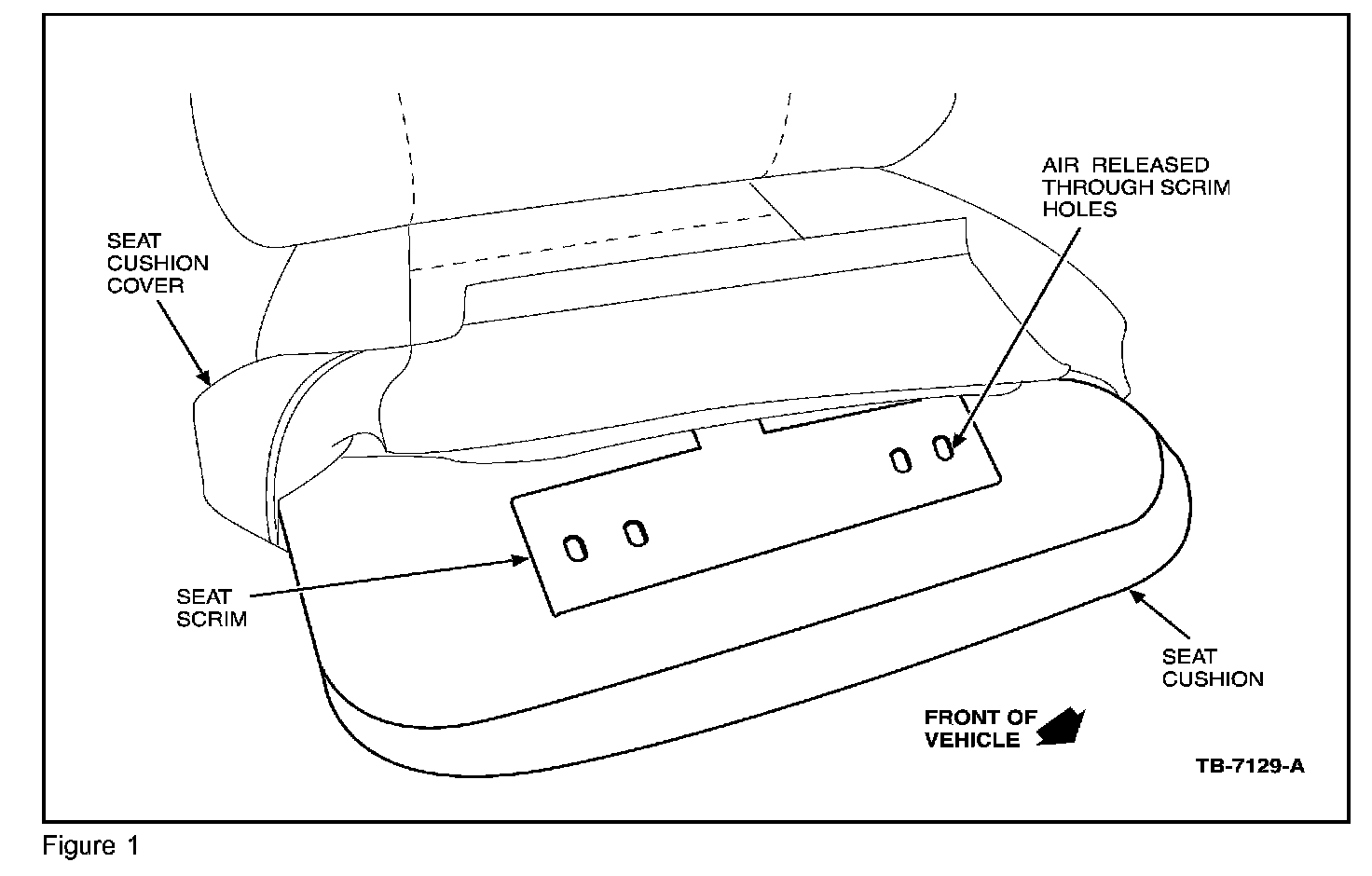
^ Make sure that there are air channels in the seat cushion. The channels are indentations in the foam under the seat scrim (Figure 1). If channels do not exist in the cushion, the cushion is for a non-climate controlled seat and must be replaced with the correct part.
^ Make sure that the air channeling holes in the scrim (the thin, white covering that adheres to the seat cushion - see Figure 1) line up with the cushion air channels, and that the scrim is not compressed or crushed to the point of damage.
NOTE
IT IS NORMAL FOR THE SCRIM TO BE COMPRESSED FROM THE WEIGHT OF THE SEAT OCCUPANT. SCRIM SHOULD BE REPLACED ONLY IF EXTENSIVE DAMAGE IS EVIDENT.
Re-engage the cushion J-retainer. Carefully reach under the seat cushion to make the following checks.
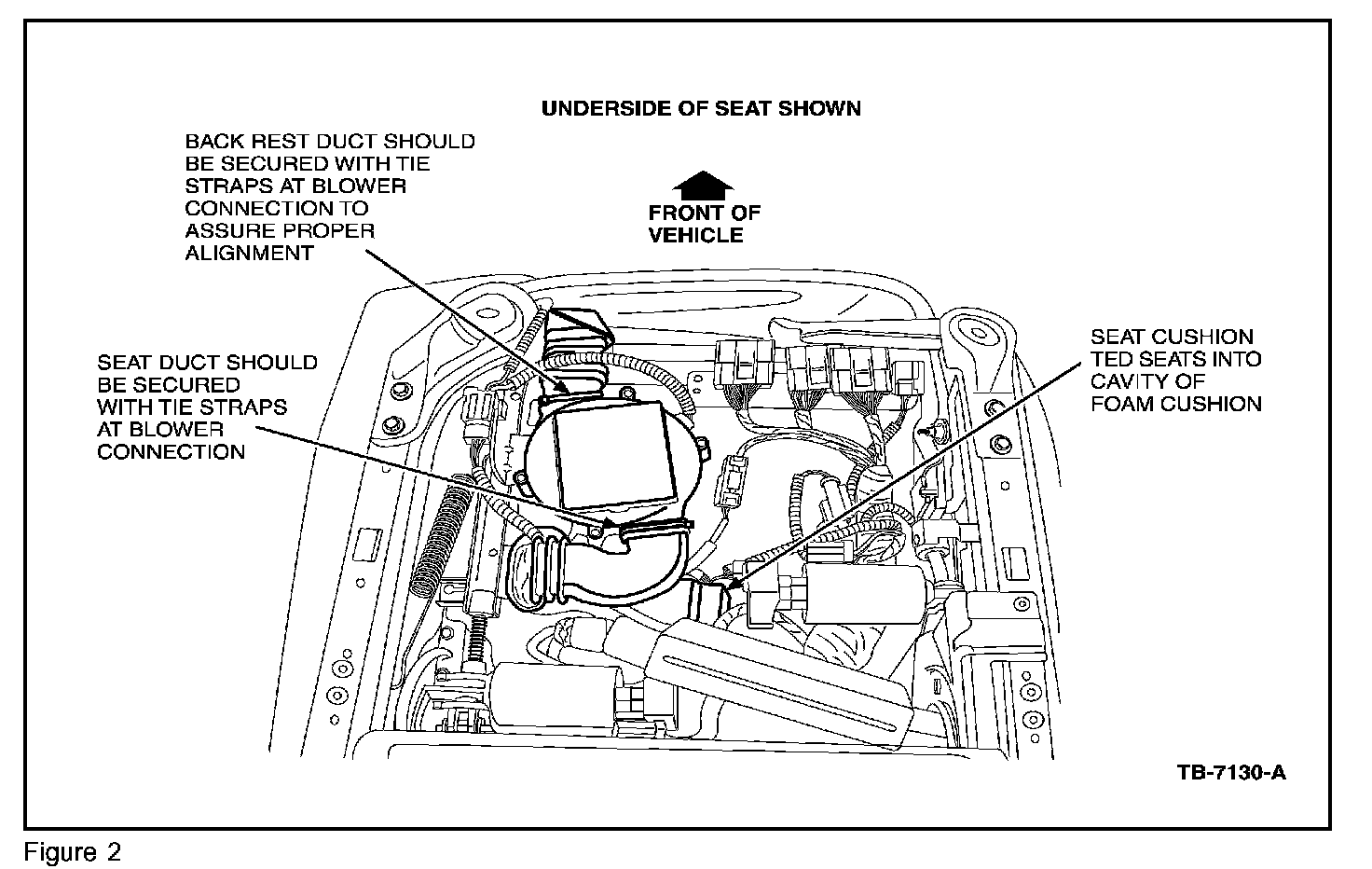
^ Check the TED to make sure it is properly aligned. The underside of the seat cushion integrates a round cavity into which the TED must seat (see Figure 2). If the TED is misaligned or is incorrectly seated in the cavity, the seat may overheat and shut down.
^ Check to make sure that the seat cushion ducts are properly fastened and aligned (see Figure 2). The cushion duct attaches to the blower with a cable (zip) tie. Make sure that this connection is secure.
If a B2730 (Back Over-Temperature Detected) is set:
Disengage the seat backrest J-retainer at the back of the seat, and ease the backrest cover up several inches to allow checks.
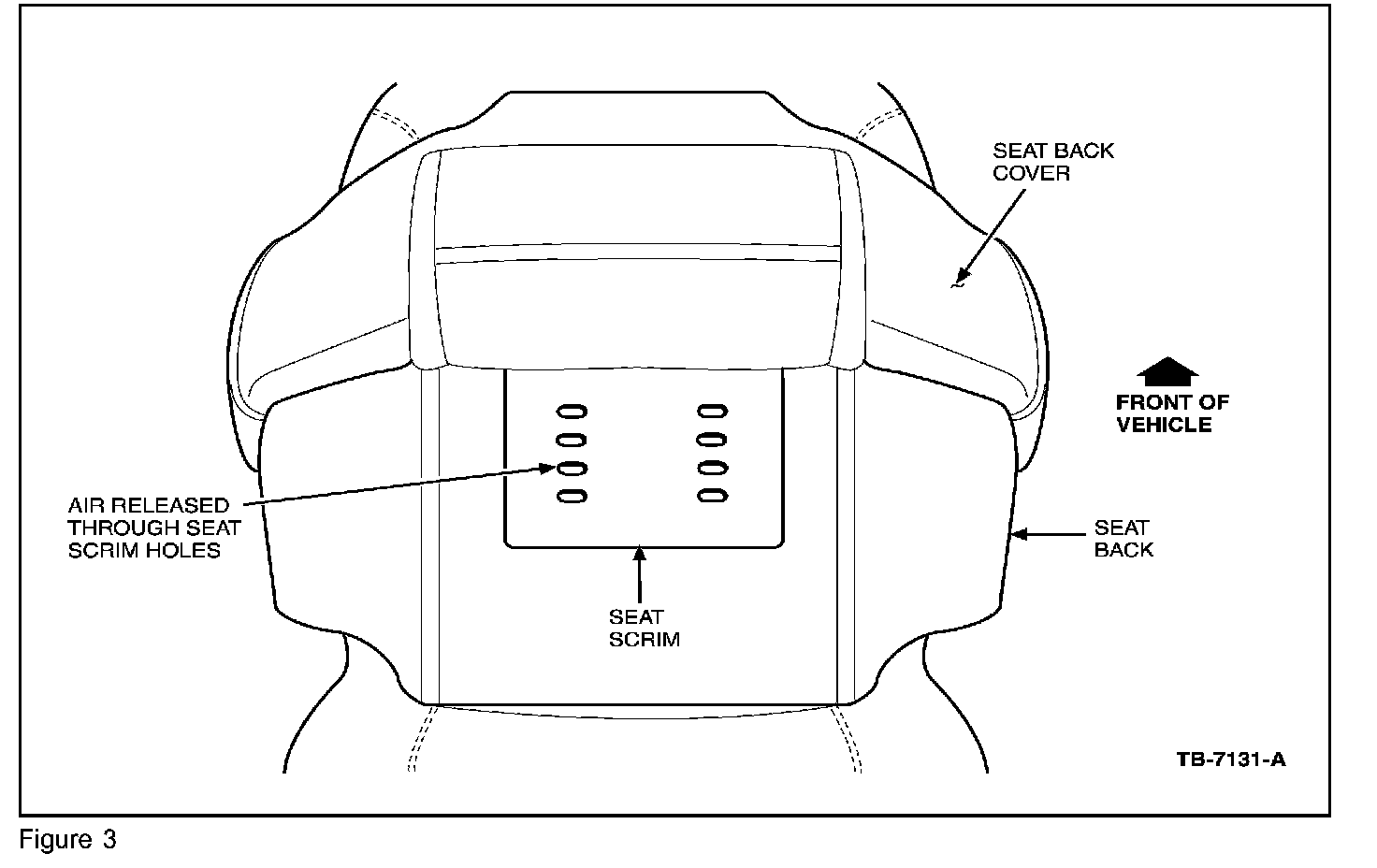
^ Make sure that there are air channels in the seat backrest cushion. The channels are indentations in the foam under the seat scrim (see Figure 3). If channels do not exist in the cushion, the cushion is for a non-climate controlled seat and must be replaced with the correct part.
^ Make sure that the channeling holes in the scrim (the thin, white covering that adheres to the seat backrest cushion - see Figure 1) line up with the backrest cushion air channels, and that the scrim is not compressed or crushed to the point of damage.
NOTE
IT IS NORMAL FOR THE SCRIM TO BE COMPRESSED FROM THE WEIGHT OF THE SEAT OCCUPANT. SCRIM SHOULD BE REPLACED ONLY IF EXTENSIVE DAMAGE IS EVIDENT.
Leave the backrest cover loose, and carefully ease a hand up between the back of the seat backrest and the cover. Use hand to follow the plastic duct up to about the center of the seat.
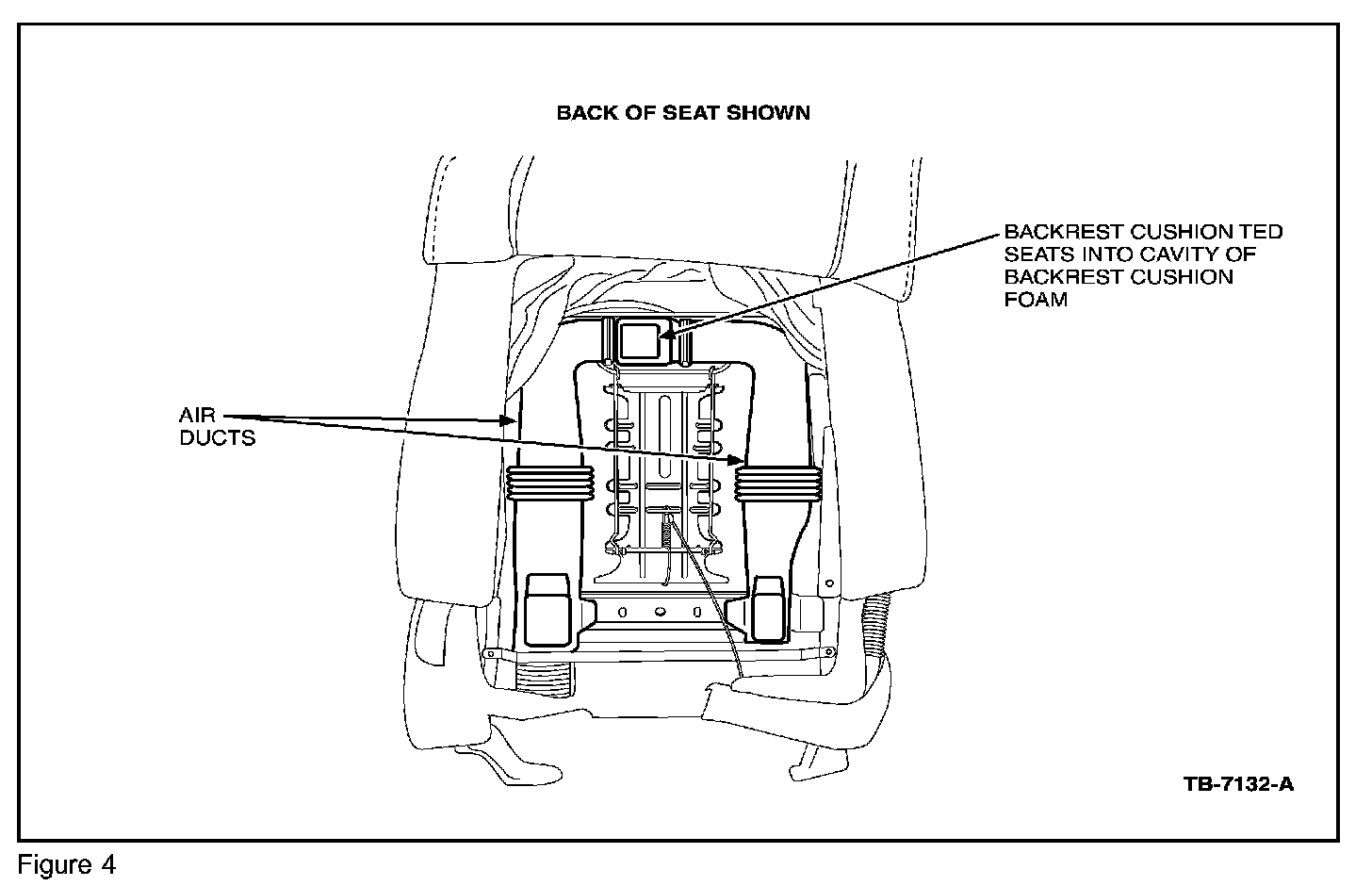
^ Check the seat backrest TED to make sure it is properly aligned. The seat backrest cushion integrates a round cavity into which the TED must seat (see Figure 4). If the TED is misaligned or is incorrectly seated in the cavity, the seat may overheat and shut down.
NOTE
IF CODES B2729, B2730, AND B2731 ARE STILL PRESENT AFTER PERFORMING THE ABOVE DIAGNOSTICS, BE AWARE THAT SOME 2003-2004 EXPEDITION/NAVIGATOR VEHICLES BUILT PRIOR TO 12/8/2003 AND EQUIPPED WITH CLIMATE CONTROLLED SEATS MAY EXHIBIT PREMATURE SHUTDOWN OF THE SEAT WHEN IT IS IN THE HEAT MODE ON THE SECOND OF SUBSEQUENT HEAT CYCLES. THIS PARTICULAR CONDITION WILL NOT OCCUR DURING THE FIRST HEAT CYCLE, IT WILL OCCUR ON THE SECOND OR THIRD HEAT CYCLE AND IS USUALLY ACCOMPANIED BY OVERHEAT (B2729, B2730) AND/OR DIFFERENTIAL TEMPERATURE (B2731) DTC IN THE CCSM. THIS CONDITION MAY ALSO BE AGGRAVATED OR MORE LIKELY TO OCCUR IF THE OCCUPANT IN THE AFFECTED SEAT FALLS IN THE UPPER PERCENTILE OF THE BODY WEIGHT RANGE. THIS MAY BE DUE TO THE TEMPERATURE RAMP-UP STRATEGY AND TEMPERATURE FAULT DETECTION EMPLOYED BY THE ORIGINAL CCSM. TO SERVICE, REPLACE THE AFFECTED CCSM WITH NEW SERVICE PART NUMBER, 2L1Z-14C724-AC.
Re-attach the seat backrest cover at the rear of the seat.
Carefully reach under the seat to check to make sure that the seat backrest ducts are properly fastened and aligned (see Figure 2). The backrest duct attaches to the blower with a cable (zip) tie. Make sure that this connection is secure.
If a B2792 (Heat Switch Short to Ground) or B2793 (Cool Switch Short to Ground) is set, refer to online Workshop Manual Section 501-10 DTC Index for direction.