Brake Master Cylinder - Bench Bleed
Brake Master Cylinder - Bench BleedWARNING: Use of any other than the approved DOT 3 brake will cause permanent damage to brake components and will render the brakes inoperative. Failure to follow these instructions may result in personal injury.
WARNING: Carefully read cautionary information on product label. For EMERGENCY MEDICAL INFORMATION seek medical advice. In the USA or Canada on Ford/Motorcraft products call: 1-800-959-3673. For additional information, consult the product Material Safety Data Sheet (MSDS) if available. Failure to follow these instructions may result in personal injury.
CAUTION: Bleeding the master cylinder on Hybrid vehicles requires a full system pressure bleed. For additional information, refer to Brake System Bleeding - Hybrid.
CAUTION: Do not allow the brake master cylinder reservoir to run dry during the bleeding operation. Keep the brake master cylinder reservoir filled with clean, specified brake fluid. Never reuse the brake fluid that has been drained from the hydraulic system.
CAUTION: Brake fluid is harmful to painted and plastic surfaces. If brake fluid is spilled onto a painted or plastic surface, immediately wash it with water.
NOTE: When any part of the hydraulic system has been disconnected for repair or a new component is installed, air may enter the system, causing spongy brake pedal action. This requires the bleeding of the hydraulic system after it has been correctly connected.
1. Support the brake master cylinder body in a soft jaw vise.
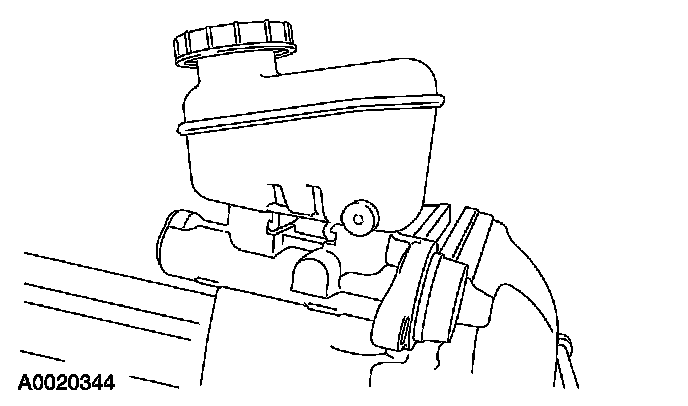
2. Remove the master cylinder cap and install short brake tubes to the master cylinder outlet ports with the ends submerged in the brake master cylinder reservoir
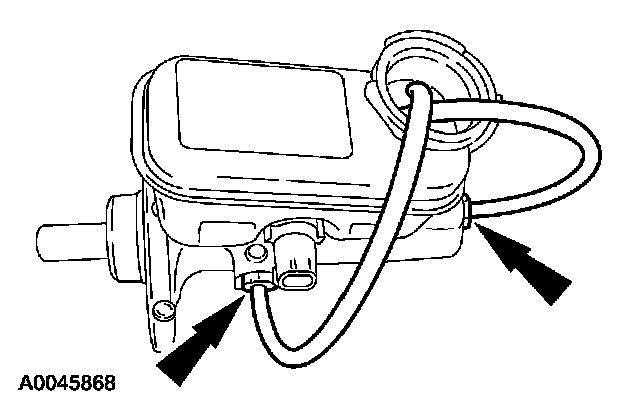
3. NOTE: If equipped with a manual transmission, plug the master cylinder feed port.
Fill the brake master cylinder reservoir with clean, specified brake fluid.
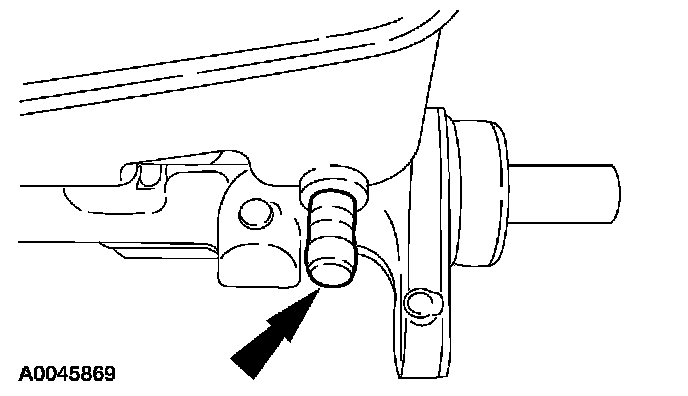
4. Slowly depress the primary piston until bubble - free brake fluid flows from both brake hoses.
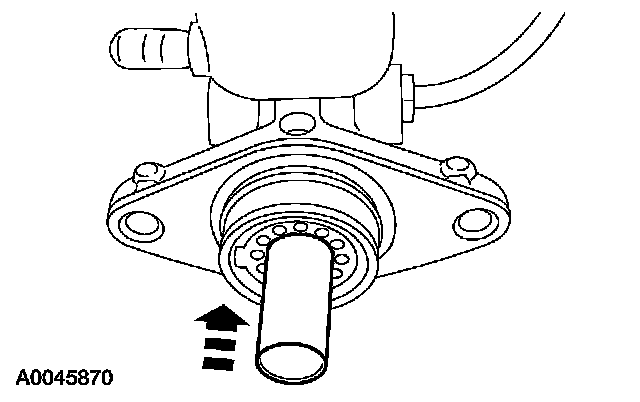
5. Remove the brake tubes from the master cylinder.
6. Install plugs in the front and rear brake outlet port.
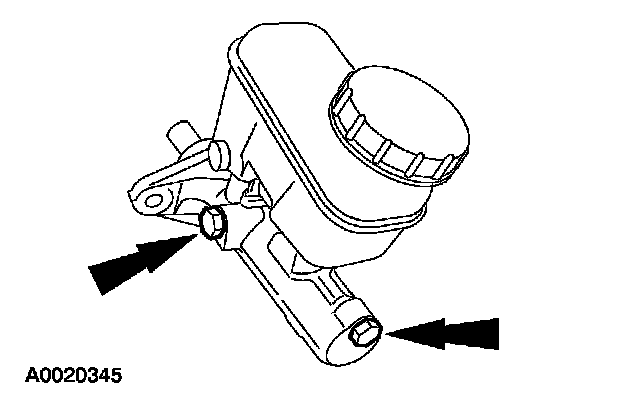
7. Install the reservoir cap and install the brake master cylinder in the vehicle.
^ Remove the master cylinder outlet port plugs before installing the tubes.