Engine
EngineThe 3.0L (183 CID) 6-cylinder engine has the following features:
^ A V-block with 6 cylinders and splayed crankpins
^ Overhead valves
^ Hydraulic valve tappets for automatic lash adjustment
^ Connecting rod parting faces that are unique with an interference fit
^ Sequential multiport fuel injection (SFI)
^ Electronic ignition system with 3 coil packs
The 3.0L engine is a 2 valve-per-cylinder, push rod engine. The engine uses a distributorless ignition system. The camshaft is mounted in the cylinder block and acts against push rods to open and close the valves. The camshaft is driven off the front of the cylinder block by a timing chain. The chain is driven by a sprocket that is located on the crankshaft. The piston assembly is an aluminum piston with a cast iron connecting rod. The oil pump is driven by the camshaft via a gear that also drives the camshaft synchronizer.
Identification
Always refer to these labels when installation of new parts is necessary, or when checking engine calibrations. The engine parts often differ within a CID family. Verification of the identification codes will make sure that the correct parts are obtained. These codes contain all the pertinent information relating to the dates, optional equipment and revisions. The Ford Master Parts Catalog contains a complete listing of the codes and their application
Code Information
The engine code information label, located on the side of the valve cover and the front side of the valve cover, contains the:
^ engine build date.
^ engine plant code.
^ engine code.
Exhaust Emission Control System
Operation and necessary maintenance of the exhaust emission control devices used on this engine are covered in Computers and Control Systems.
Induction System
The SFI provides the fuel/air mixture needed for combustion in the cylinders. The 6 solenoid-operated fuel injectors:
^ are mounted in the lower intake manifold.
^ meter fuel to the air intake stream in accordance with engine demand.
^ are positioned so their tips direct fuel just ahead of the engine intake valves
PCV System
All engines are equipped with a closed-type PCV system recycling the crankcase vapors to the intake manifold
Lubrication System
The engine lubrication system operates as follows:
^ Oil is drawn into the oil pump through the oil pump screen cover and tube in the sump of the oil pan.
^ Oil is pumped through the oil filter on the left front side of the cylinder block.
^ Oil enters the main gallery where it is distributed to the crankshaft main journals and to the cylinder head.
^ From the main journals, the oil is routed through cross-drilled passages in the crankshaft to lubricate the connecting rod bearings. Controlled leakage through the crankshaft main bearings and connecting rod bearings is slung radially outward to cool and lubricate the cylinder walls as well as the entire connecting rod, piston and piston ring assembly.
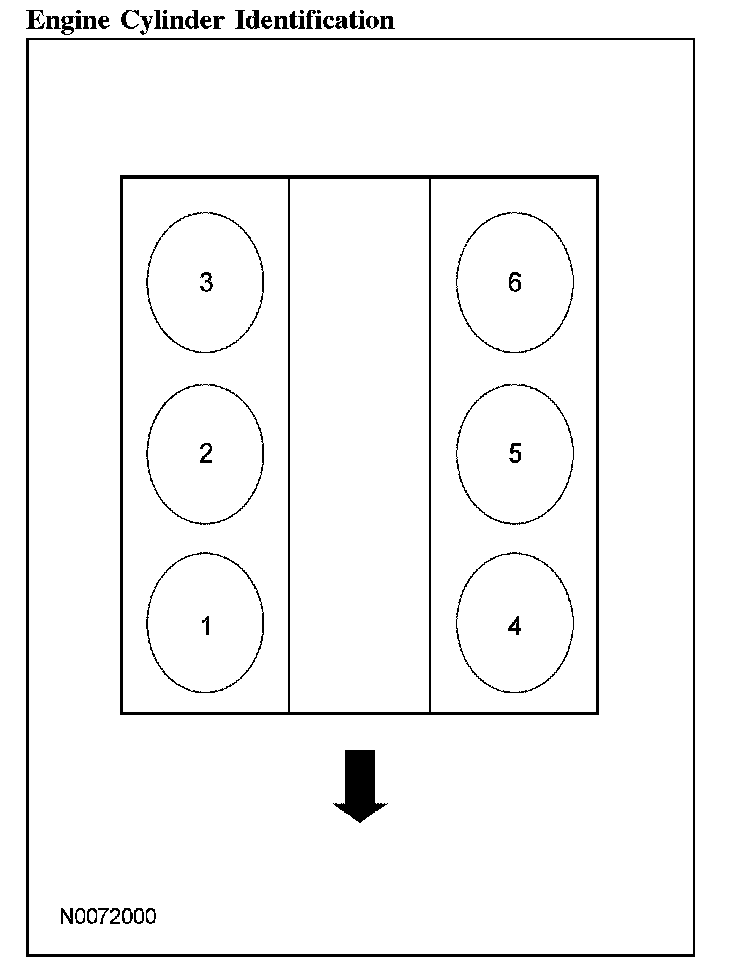
Engine Cylinder Identification
Engine Cylinder Identification: