Radiator Cap: Testing and Inspection
Pressure Cap Testing
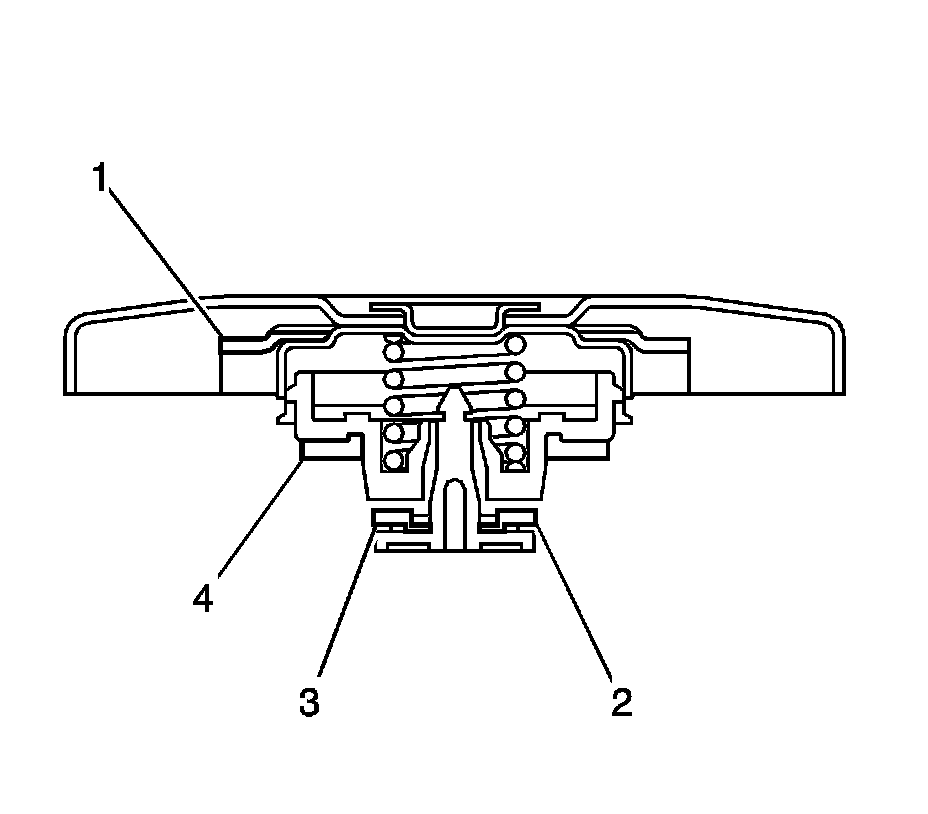
1. Inspect the radiator cap sub-assembly.
2. Measure the valve opening pressure.
If there are water stains or foreign matter on rubber seal (1, 2) or (3), clean the part(s) with water and finger scouring.
3. Inspect that the rubber seals (1, 2) and (3) are not deformed, cracked or swollen.
4. Inspect that the rubber seals (3) and (4) are not stuck together.
5. Apply engine coolant to rubber seals (2) and (3) before using a radiator cap tester.
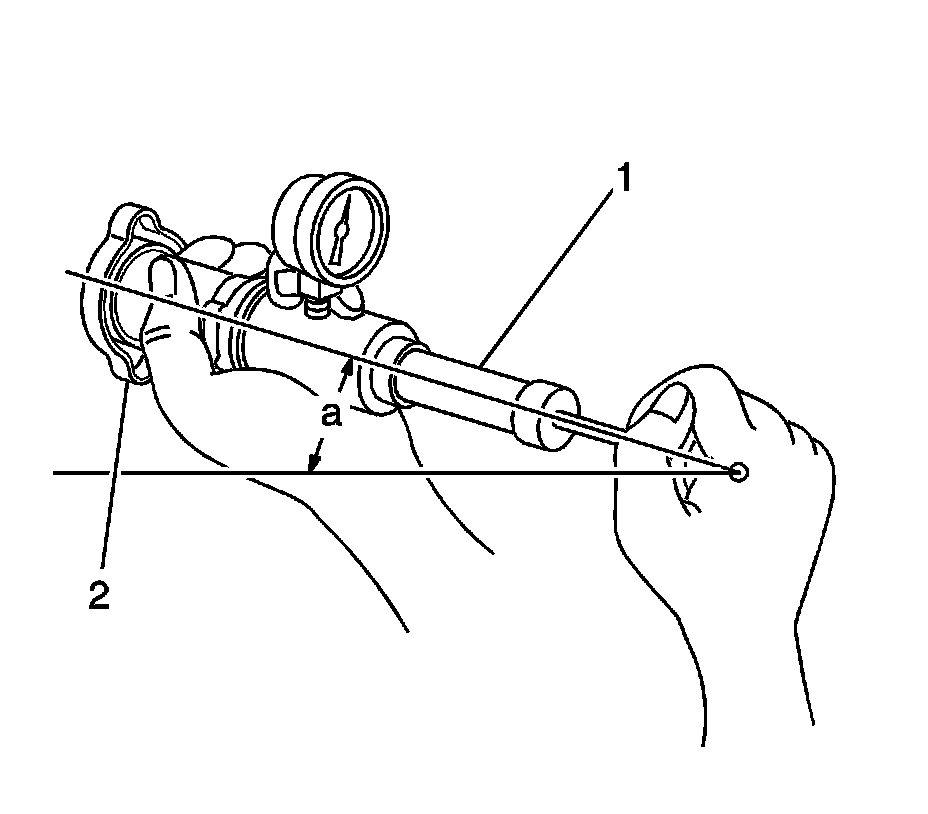
6. When using the cap tester, tilt it upwards 30 degrees or more.
Note: Even if the cap cannot maintain the maximum pressure, it is not defective.
7. Pump the cap tester several times, and check the maximum pressure (1).
Pumping speed is one pump per second.
If the maximum pressure is less than the minimum standard value, replace the radiator cap sub-assembly.